Blue flowers are far rarer in nature than red or yellow ones: a plant needs special pigments and cell acidity to produce the colour. That is why blue bouquets always look unusual and memorable. Here are the flowers that come in light and deep blue, what they mean, and which suit bouquets or gardens.
Light blue symbolises calm, trust, loyalty and sincerity; deep blue stands for depth of feeling, wisdom and stability. A blue bouquet suits a man, a colleague, a graduation or a wish for peace.
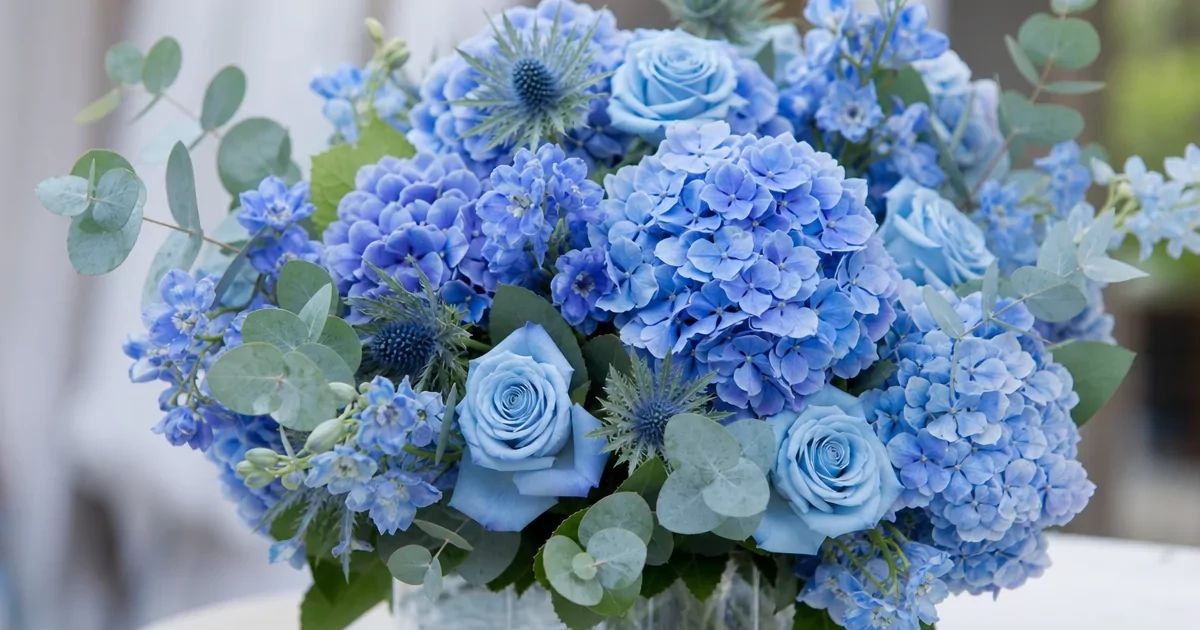
Hydrangea is the florist’s favourite blue flower: one head already looks like a bouquet. Its colour depends on soil acidity, which makes truly blue hydrangeas especially prized. More in bigleaf hydrangea.
Delphinium has tall spires from sky to deep blue that add height and lightness. Lisianthus comes in lilac-blue and lasts up to two weeks in a vase — see lisianthus varieties and care.
The iris is a blue-violet classic of spring and early summer and a symbol of wisdom and hope — see irises: legends and meaning. Hyacinths and grape hyacinths add fragrance to spring arrangements.
True blue roses do not exist in nature; the colour is achieved by dyeing. How they are made and whether to give them: blue roses.
Blue flowers for the garden
Spring: scilla, grape hyacinths, hyacinths and forget-me-nots carpet the ground under trees before the leaves appear. How to grow hyacinths: hyacinth.
Summer: cornflowers, delphiniums, bellflowers, ageratum, lobelia and salvia. Lavender adds a lilac-blue tone and scent — see lavender types and growing.
Autumn: New England asters, monkshood and late hydrangeas keep the blue palette going until frost.
What to pair blue flowers with
Blue and white make a fresh, nautical bouquet for a man or graduate. Blue and yellow is bright and patriotic. Light blue and pink is soft and romantic.
Mist hydrangeas daily and revive a wilted head by submerging it in cool water for 30–40 minutes. Put delphiniums and irises in a tall vase of cool water.
Dyed blue roses may tint the water slightly, which is normal. Change the water daily and recut the stems.
Blue bouquets with delivery
Blue hydrangeas, lisianthus and blue roses: we arrange an unusual blue bouquet and deliver it across Kyiv and Ukraine.
Graduated from Taras Shevchenko National University of Kyiv, Institute of Biology and Medicine (2001). BSc in Biology, MSc in Horticulture. Writes about plants, works at a garden centre selecting and repotting plants, and contributes to plant reference guides.






 Birthday
 Hydrangeas