
 Birthday
 Hydrangeas
The hyacinth is one of the most fragrant spring flowers: a dense spike of dozens of star-shaped florets smells so strongly that a single pot scents a whole room. Behind this flower lies a trail of Greek myths, Ottoman gardens and Dutch "hyacinth fever". Here are the legends linked to the hyacinth and how much of them is true, how it reached Europe, how to grow a flowering hyacinth in a pot for New Year or Women's Day, how to care for it after flowering and what to keep in mind for safety.
What kind of plant is the hyacinth

The garden hyacinth is Hyacinthus orientalis, a bulbous plant in the asparagus family. In the wild it grows on rocky slopes in Turkey, Syria and Lebanon and looks far more modest than garden varieties, with just a few blue flowers on a stem. Modern varieties carry 30–60 florets in blue, purple, pink, white, yellow and salmon.
Do not confuse the hyacinth with muscari. Muscari is sometimes called "grape hyacinth", but it is a separate genus with tiny barrel-shaped flowers. Related, but not the same.
Legends of the hyacinth

The flower's name comes from the Greek myth of Hyacinthus, a handsome youth and son of a Spartan king. His friend was the god Apollo. During a contest Apollo threw a discus, which bounced and fatally struck the young man. In another version the jealous west wind Zephyrus deliberately blew the discus off course. Apollo made a flower grow from Hyacinthus's blood and marked its petals with the letters AI, an ancient Greek cry of grief. Sparta held an annual festival, the Hyacinthia, in his honour.

A similar story is told of Ajax: after losing the dispute over Achilles's armour to Odysseus, the hero fell on his own sword, and from his blood grew a flower bearing the same letters — the first letters of his name.
Interestingly, the "hyacinth" of ancient writers was probably not our hyacinth at all. Our flower has no letters on its petals, so plant historians suggest the Greeks meant larkspur, iris or a wild gladiolus, which can have similar markings. The name from the myth was later passed to another flower.
How the hyacinth reached Europe

Hyacinths were highly prized in Ottoman gardens, and in the 16th century their bulbs reached Western Europe together with tulips. The real boom came in the 18th century in the Netherlands: Haarlem breeders created hundreds — by some accounts more than two thousand — varieties, with double forms especially prized. Rare bulbs sometimes fetched very high prices, though it never reached the scale of tulip mania.

Hyacinths also became fashionable at the French court of Louis XV, where they were grown in pots and special glass vases to enjoy blooms in winter. Today the Netherlands still produces most of the world's hyacinth bulbs. For the story of how the Dutch became a flower power, see Dutch flower traditions.


How to grow a hyacinth in a pot for a holiday
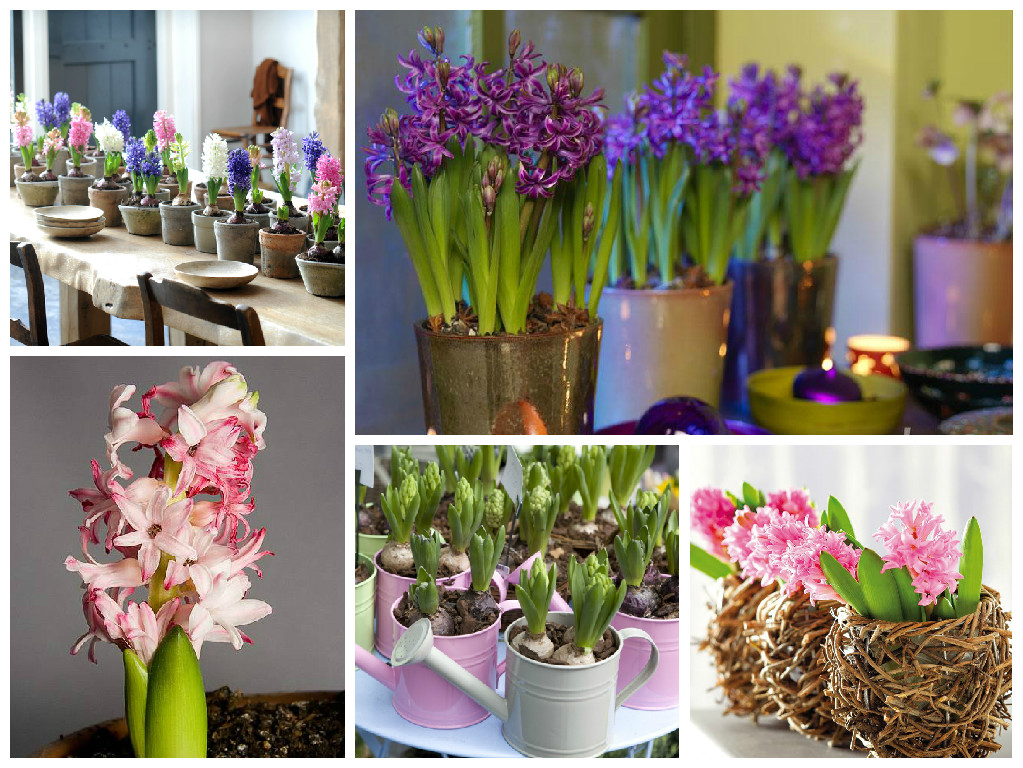
The hyacinth is ideal for forcing — making it flower out of season. To do this, the bulb needs an artificial "winter". The whole cycle takes 14–16 weeks: for flowers at New Year, plant in early September (preferably pre-chilled bulbs); for 8 March, in early November.
- Choosing a bulb. Pick large, firm bulbs with no mould or soft spots. Pre-chilled bulbs labelled "for forcing" are convenient, as they need less time in the cold.
- Planting. Use a 10–12 cm pot with drainage for each bulb. Set the bulb two-thirds deep with the tip above the soil. You can also force it in water: in a special narrow-necked vase the base of the bulb should sit just above the water so it does not rot.
- Cold. 10–12 weeks in the dark at 5–9 °C — a fridge vegetable drawer, a cellar or an unheated veranda. Keep the soil slightly moist.
- Light. When the shoot reaches 5–8 cm, move the pot to a bright window at 15–18 °C. The flowers open in 3–4 weeks.
.jpg)
Indoors a hyacinth blooms for about two weeks, longer in a cool room. Turn the pot so the spike grows straight, and tie heavy stems to a stick.
What to do after flowering
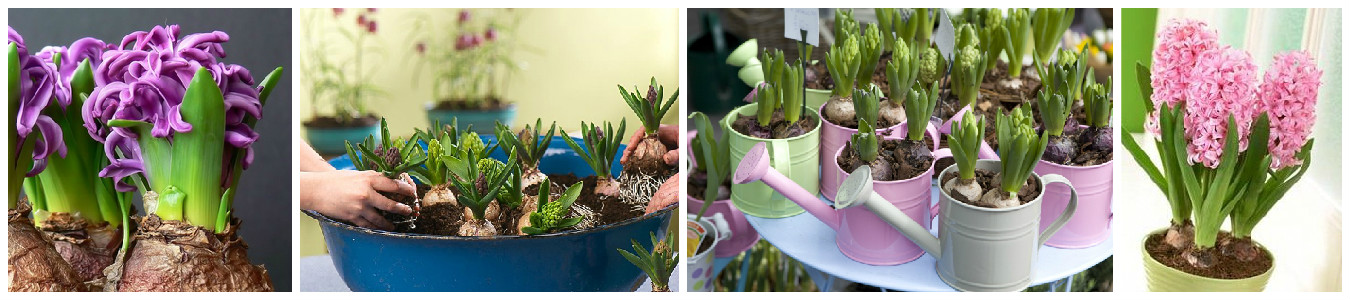
After flowering, cut off the flower stem but keep the leaves and water moderately until they yellow: the bulb is storing energy. Then lift the bulb, dry it and plant it in the garden in September–October, 12–15 cm deep. Forcing the same bulb indoors again rarely works, as it is exhausted, but in the garden it will flower again in a year or two, though the spike will be looser.
Hyacinths in the garden
Garden hyacinths bloom in April–May, alongside tulips and daffodils. They need a sunny spot and light soil with no standing water. Mulch the planting for winter; in summer, once the leaves yellow, you can lift the bulbs and store them somewhere dry and warm until autumn, which helps them form flower buds.
Hyacinths in bouquets
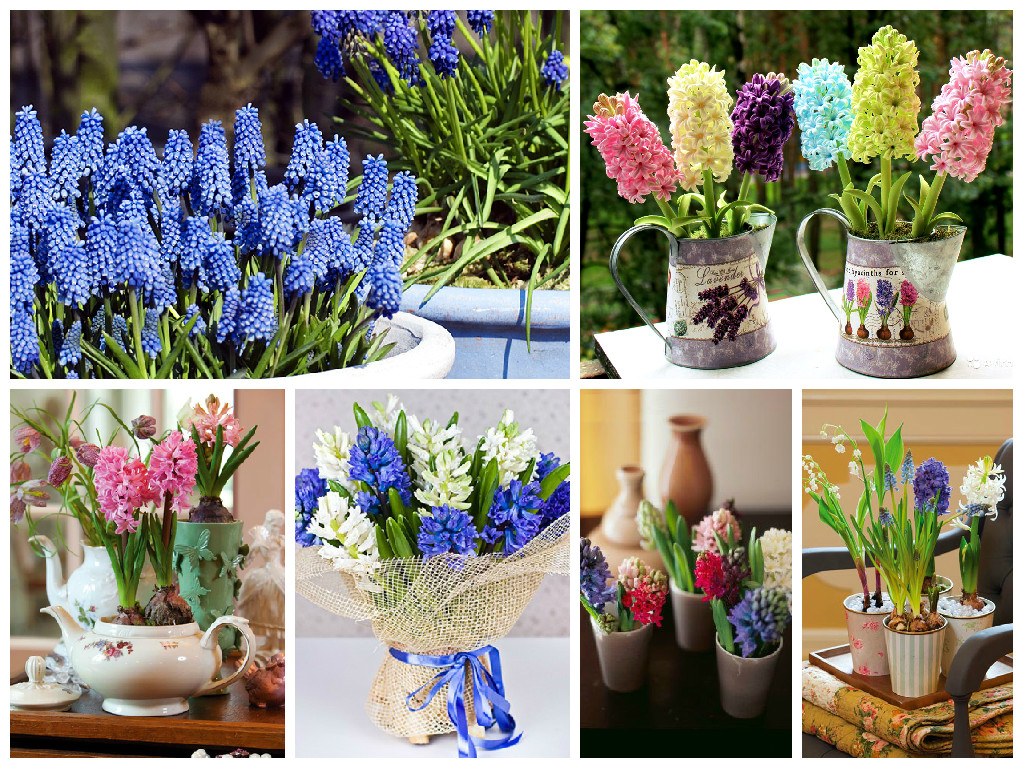
Cut hyacinths last 5–7 days in a vase and keep growing a little. Stand them in shallow cool water and cut the stems straight rather than at an angle. They pair beautifully with tulips, muscari, ranunculus and pussy willow. In the Victorian language of flowers the hyacinth stood for play and sport — an echo of the myth of Apollo and Hyacinthus.
Safety
Hyacinth bulbs contain calcium oxalate crystals that irritate the skin, so wear gloves when planting. All parts of the plant, especially the bulbs, are poisonous to people, cats and dogs. Store bulbs away from the kitchen, children and pets. In sensitive people the strong scent can cause headaches — if so, do not keep the pot in the bedroom.
Frequently asked questions
How long does a potted hyacinth bloom?
About two weeks, a little longer in a cool room.
Are hyacinth and muscari the same?
No. They are related but different plants: muscari has tiny barrel-shaped flowers and shorter stems.
Can I regrow a hyacinth from the bulb after forcing?
Yes, if you plant it in the garden. Forcing the same bulb again indoors usually fails.
When should I plant a hyacinth to bloom for 8 March?
In early November: 10–12 weeks in the cold, then 3–4 weeks in warmth and light.

View full-size photo
Author: Maria Svitlovir
Graduated from Taras Shevchenko National University of Kyiv, Institute of Biology and Medicine (2001). BSc in Biology, MSc in Horticulture. Writes about plants, works at a garden centre selecting and repotting plants, and contributes to plant reference guides.