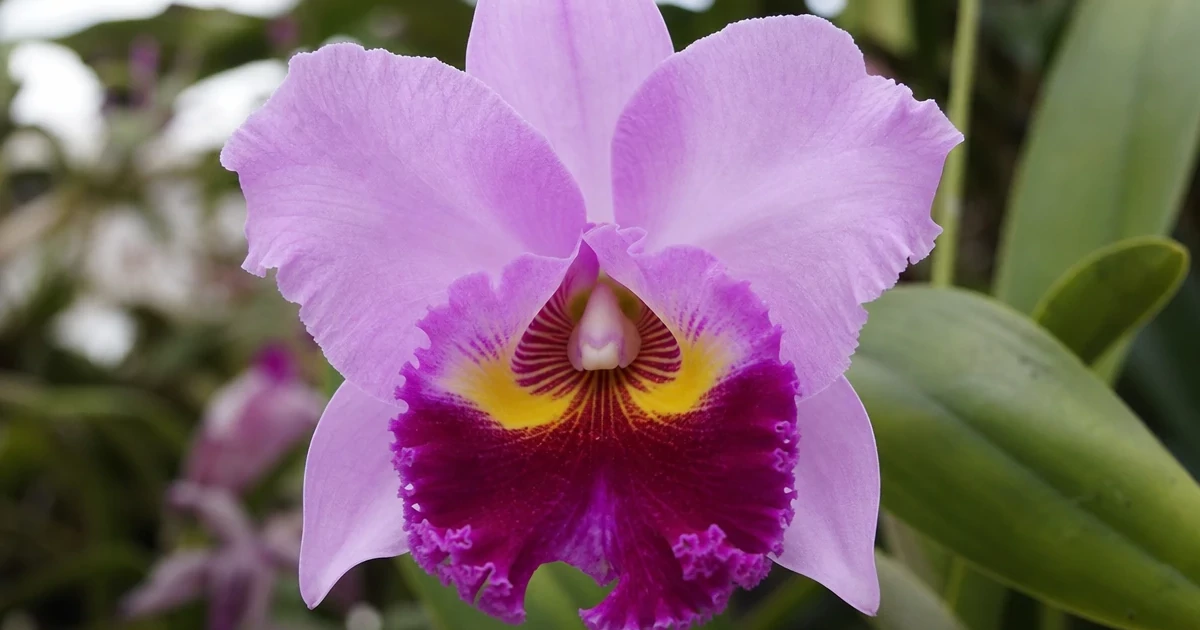
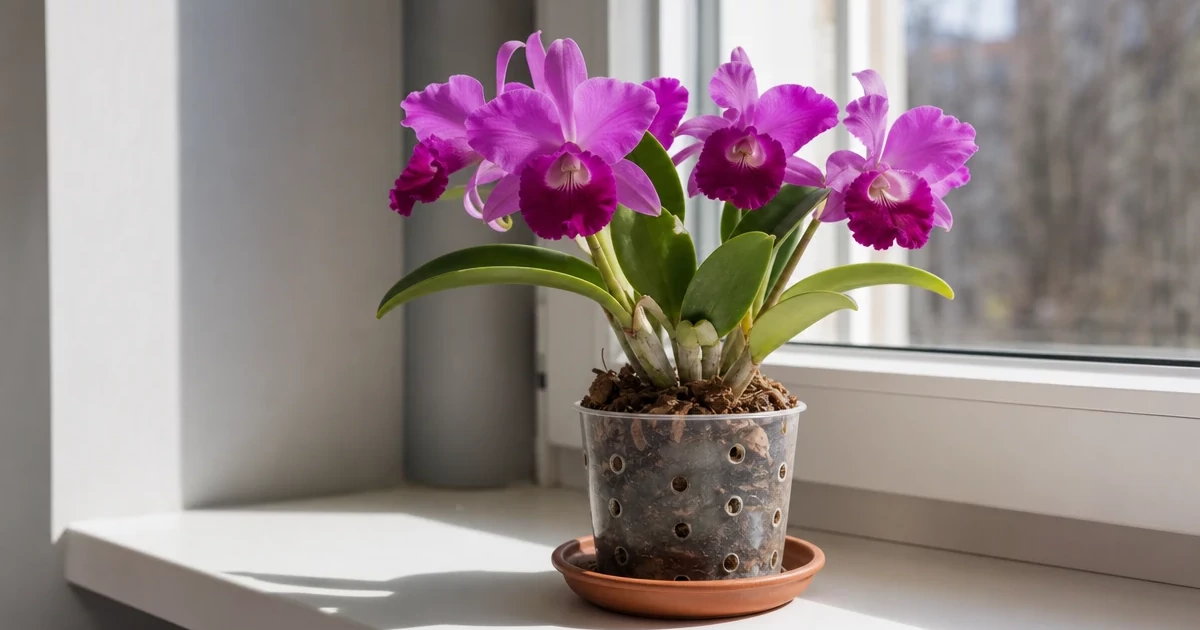
Cattleya is often called the queen of orchids: its flowers are large, often fragrant, with a broad ruffled lip. These were the orchids once pinned to evening gowns as corsages. At home a cattleya is fussier than a phalaenopsis, but give it enough light and the right watering and it will bloom every year.
Orchids and plants as gifts: potted plants and flowers in a box.
The genus Cattleya includes around a hundred species of epiphytic orchids from Central and South America, plus thousands of hybrids. It is named after the English horticulturist William Cattley, who flowered one of the first cattleyas in Europe in the early 19th century. The plant has thickened stems called pseudobulbs that store water and nutrients, so cattleyas cope with a short dry spell better than with overwatering.
Cattleyas are loosely split into unifoliate types, with one leaf per pseudobulb and large flowers, and bifoliate types, with smaller but more numerous flowers per spike.
The flower spike emerges from a sheath at the top of a mature pseudobulb. A cattleya usually fails to bloom because of too little light, no day–night temperature drop or too frequent watering. Many species rest after a new pseudobulb matures: water less until new growth starts. The flowers last about 2–4 weeks on the plant.
General orchid care is covered in “Orchid care at home”, and different orchid genera in “Types of orchids”.
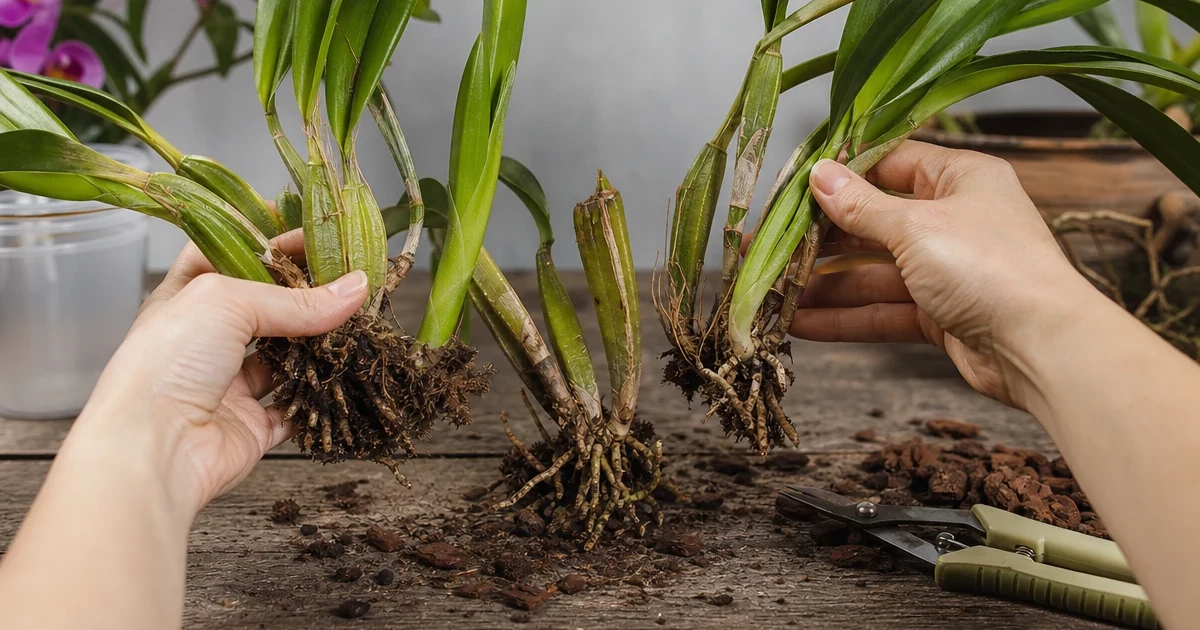
At home cattleyas are propagated by division when repotting. Cut the rhizome with a clean knife so each piece keeps at least 3–4 pseudobulbs and live roots. Dust the cuts with crushed charcoal, pot into bark and do not water for the first week, just mist the air around. Smaller divisions take longer to flower.
Many species and hybrids are, especially in the morning; the strength of the scent depends on the variety.
Either a long drought or roots that have rotted from overwatering. Check the roots when you repot.
It will probably grow but not flower. Without bright light, use a grow light.

Author: Maria Svitlovir
Graduated from Taras Shevchenko National University of Kyiv, Institute of Biology and Medicine (2001). BSc in Biology, MSc in Horticulture. Writes about plants, works at a garden centre selecting and repotting plants, and contributes to plant reference guides.
© Kyiv 2026 UFL Flower Shop

Trademark UFL №191476 is used under license of the rights holder.
All rights reserved. Any use of materials without a link to the site is prohibited.

 Birthday
 Hydrangeas