Orchids are one of the largest and most remarkable families of flowering plants. They range from tiny species with flowers a few millimetres across to giants with metre-long sprays, from epiphytes of tropical forests to modest inhabitants of Ukrainian meadows. Here is what makes orchids unique and which ones grow best at home. More flowers with photos, names and meanings are in our guide to types of flowers.
The orchid family, Orchidaceae, has around 28,000 species — one of the two largest flowering plant families, alongside the daisy family. There are even more man-made hybrids and cultivars, over 100,000. Orchids grow on every continent except Antarctica, but most species are tropical, and many live on trees as epiphytes. Vanilla is an orchid too — the best-known “edible” orchid, grown for its spice.
Botanists divide the family into five subfamilies. The largest are Epidendroideae (which includes most houseplant orchids) and Orchidoideae (many terrestrial species), while slipper orchids form the subfamily Cypripedioideae.
“Orchid” is the name of an entire family, Orchidaceae, with thousands of genera, while phalaenopsis is just one of those genera. Every phalaenopsis is an orchid, but not every orchid is a phalaenopsis. The confusion arises because well over 80 % of flowering potted orchids in shops are phalaenopsis, often labelled simply “orchid”. Other genera — dendrobium, cambria, cymbidium, vanda — have their own light, watering and winter needs, so check the exact name on the label before you buy.
Many orchids trick their pollinators by mimicking the scent, colour and even shape of female insects, and some tropical species are pollinated by hummingbirds.
Botanists group orchids by how they grow, and care follows from that.
By habitat there are epiphytes that live on trees and take moisture through aerial roots (most houseplant orchids), lithophytes that cling to rocks (some paphiopedilums) and terrestrial orchids — ludisia, some cymbidiums and all of Ukraine’s wild orchids. Epiphytes need bark rather than soil; terrestrial species need a loose peat-based mix.
[фото: monopodial phalaenopsis next to a sympodial cattleya with pseudobulbs]
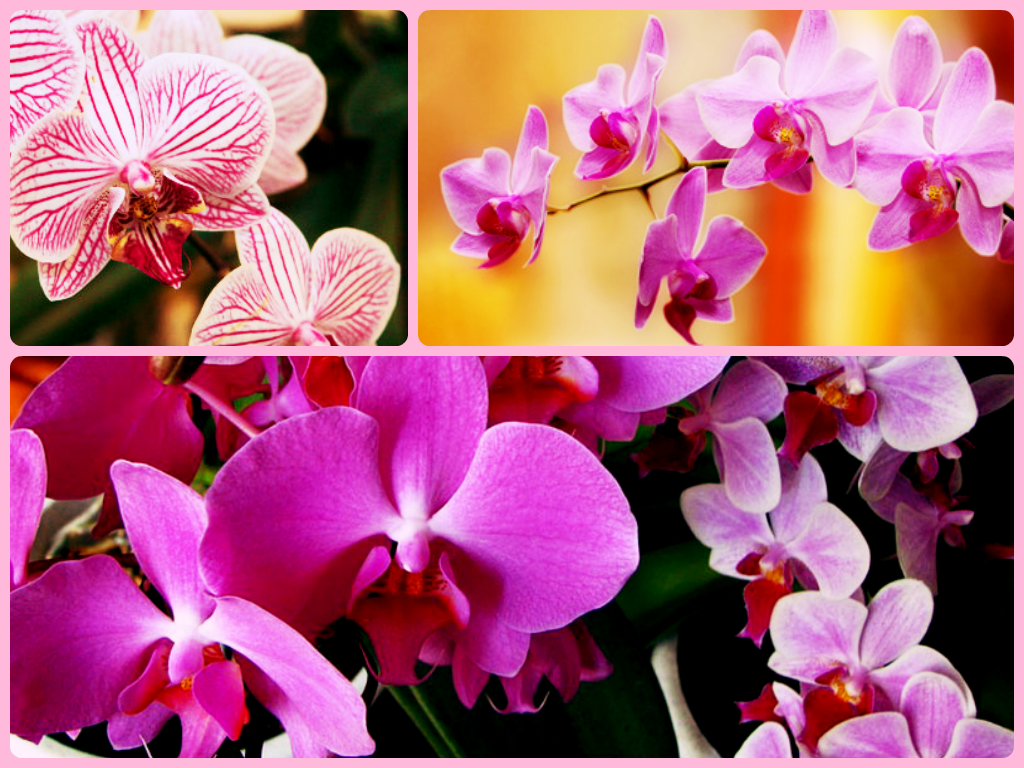
The "moth orchid": over 70 species and thousands of hybrids. Broad fleshy leaves in a rosette, aerial roots and a long spike with 5–15 flowers. There are minis (up to 20 cm), standard and large-flowered forms, in solid colours, spotted or veined. The best choice for beginners: it grows at room temperature and flowers for 2–4 months.
[photo: phalaenopsis]
One of the largest genera, with over 1,500 species. Most often sold are Dendrobium nobile, with flowers along cane-like pseudobulbs, and phalaenopsis-type dendrobiums with long sprays. D. nobile only sets buds after a cool, dry winter rest.
[photo: Dendrobium nobile]
A monopodial orchid with thick aerial roots, often grown without compost in a glass vase or basket. Known for its rare blue-violet colouring and net-patterned petals. It needs lots of light and high humidity, so it suits experienced growers.
[photo: vanda in a glass vase]
The "queen of orchids", with large scented flowers and a ruffled lip. It has pseudobulbs and tough leaves, and likes bright light and a day-night temperature drop. See our cattleya article for more.
[photo: cattleya]
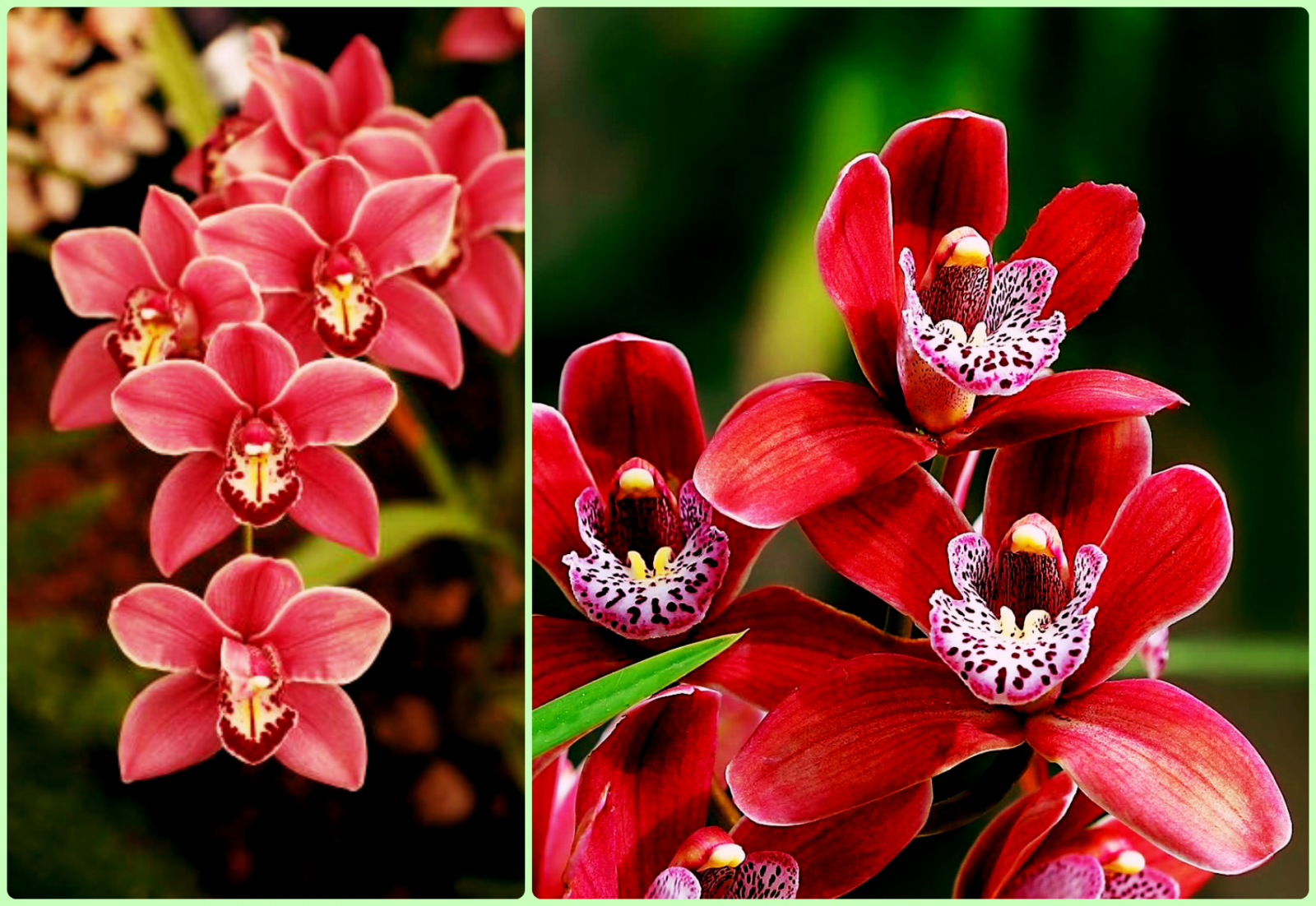
A large orchid with long narrow leaves forming a lush clump. The waxy flowers are very long-lasting, so cymbidiums are often used as cut flowers in bouquets. Indoors it needs a cool autumn and winter or it will not flower.
[photo: cymbidium]
Branched sprays of dozens of small yellow or brown-and-yellow flowers that look like "dancing ladies". Some hybrids, such as 'Sharry Baby', smell of chocolate and vanilla. It likes bright indirect light and hates waterlogging.
[photo: oncidium]
The thousands of phalaenopsis hybrids on sale fall into a few handy groups:
[фото: multiflora phalaenopsis with a branching spike]
[фото: Wild Cat harlequin phalaenopsis with wine-red spots]
Dendrobium is one of the largest orchid genera (over 1,500 species), and the groups need very different care:
[фото: Dendrobium nobile with flowers along the canes]
[фото: phalaenopsis-type dendrobium with a terminal spray]
Cymbidiums have long, narrow leaves and sturdy spikes of 10–20 waxy flowers that last up to 2–3 months. Standard hybrids reach 1 m or more and need space; miniatures are more compact with 4–6 cm flowers and suit flats better. To flower, a cymbidium needs cool autumn nights of 10–14 °C — on a glazed balcony until the first frosts, for example. In floristry it is one of the longest-lasting cut flowers: a spray lasts 3–4 weeks in a bouquet, and single blooms are used in buttonholes and wedding arrangements.
[фото: cymbidium with long flower spikes in a pot]
[фото: cut cymbidium spray in a bouquet]
Vandas are monopodial epiphytes with long grey-green aerial roots that growers often leave bare. They are grown in glass vases without any medium or in hanging baskets, misted or dunked daily. Vanda coerulea is one of the few orchids with genuinely blue-violet flowers; hybrids come in purple, pink, orange and spotted forms. Their miniature relatives are ascocentrums and ascocenda hybrids with vivid orange flowers. Vandas need very bright light and 60–80 % humidity.
Cattleyas are the “queens of orchids”, with ruffled, strongly scented flowers up to 15–20 cm across. Most on sale are complex hybrids with laelia and brassavola (brassocattleyas, laeliocattleyas). They are sympodial, with thick pseudobulbs and one or two leathery leaves, and need bright light, a clear day–night temperature drop and watering only once the bark is completely dry.
[фото: vanda with bare roots in a glass vase]
[фото: large ruffled cattleya flower]
Two groups of paphiopedilum suit homes well. Species with mottled, marbled leaves (such as the popular Maudiae type) are warm-growing, attractive even out of flower and best adapted to flats. Species with plain green leaves prefer cooler conditions and often have large, glossy flowers. There are also multifloral paphiopedilums carrying several flowers per stem. Slipper orchids have no pseudobulbs, so keep the mix slightly moist at all times; they do well on an east or north windowsill.
[фото: mottled-leaf paphiopedilum with a slipper flower]
Oncidiums produce branching sprays of dozens or hundreds of small yellow, brown-spotted or white flowers. The broad, skirted lip looks like a figure in a dress, hence the name “dancing lady”. They like bright light, moderate watering once the bark dries and flower well on an east or west window. Cambria is not a genus but a trade name for complex hybrids of oncidium, odontoglossum, miltonia and brassia, with starry, spotted and marbled flowers in reds, burgundies and whites. They grow at room temperature and flower for 6–8 weeks. Wrinkled pseudobulbs are a sign to water more generously.
[фото: oncidium with small yellow flowers on a branching spray]
The "lady's slipper", with a pouch-shaped lip and often mottled leaves. It has no pseudobulbs, so it dislikes drying out. It grows well in partial shade on an east- or north-facing window and flowers for 6–8 weeks.
[photo: paphiopedilum]
The "pansy orchid", with flat, pansy-like flowers often bearing a butterfly-shaped mask. It likes cool conditions, indirect light and evenly moist compost.
[photo: miltoniopsis]
A trade name for hybrids in the Oncidium alliance. Speckled star-shaped flowers, pseudobulbs and easy care make it a common second orchid after phalaenopsis.
[photo: cambria]
Green petals with brown blotches and a striped violet lip, plus a strong spicy scent. It flowers in winter and likes cool nights.
[photo: zygopetalum]
The "jewel orchid", grown for its velvety dark leaves with pink veins. The flowers are small and white on an upright spike. It grows in ordinary free-draining compost rather than bark.
[photo: ludisia with velvety leaves]
The "spider orchid", with very long narrow petals up to 15–20 cm. Easy-going; it likes bright indirect light.
[photo: brassia]
Short on space? Try compact forms: mini phalaenopsis in 6–9 cm pots, miniature cymbidiums, ascocentrums, miniature oncidiums (such as Twinkle, a cloud of tiny scented flowers), small dendrobiums and jewel orchids like ludisia and macodes with patterned leaves. Group them on one windowsill or on a wide tray of wet pebbles to keep humidity up. Miniatures dry out faster, so check the mix more often than with large plants.
[фото: several miniature orchids on a windowsill pebble tray]
| Leaves | Orchid |
|---|---|
| Broad fleshy leaves in a rosette, no pseudobulbs | Phalaenopsis |
| Tall cane-like pseudobulbs with leaves along them | Dendrobium |
| Oval pseudobulbs with 1–2 tough leaves | Cattleya, oncidium, cambria |
| Long narrow grassy leaves in a clump | Cymbidium |
| Leaves in two rows on one stem, thick aerial roots | Vanda |
| Mottled or spotted leaves in a fan, no pseudobulbs | Paphiopedilum |
| Velvety dark leaves with pink veins | Ludisia |
The natural orchid palette is huge: white, cream, yellow, pink, crimson, purple, green, brown, almost black, plus spotted, striped and contrasting-lip forms. True blue is almost absent; some vandas come closest. Bright blue or turquoise phalaenopsis in shops are dyed, and the next flowering will be the natural colour, usually white.
[photo: white, pink and yellow phalaenopsis side by side]
Most phalaenopsis have little scent, though some fragrant hybrids exist and are usually labelled as such.
[фото: Oncidium Sharry Baby with small burgundy flowers]
Most wild orchids are protected under CITES, so rare species should only be bought legally from nurseries, never collected from the wild.
Several dozen wild orchid species grow in Ukraine, including orchis, marsh orchids, butterfly orchids and the lady’s slipper. Many are listed in the Red Data Book of Ukraine, so picking or digging them up is prohibited.
The easiest way to match an orchid to your home is by temperature group:
| Group | Temperature | Light | Examples |
|---|---|---|---|
| Warm | 18–30 °C all year | Medium, indirect | Phalaenopsis, vanda, mottled-leaf paphiopedilum, ludisia |
| Intermediate | 15–27 °C, nights 3–5 °C cooler | Bright, indirect | Cattleya, oncidium, cambria, miltonia, brassia |
| Cool | Winter nights 10–14 °C | Bright, some direct sun | Cymbidium, Dendrobium nobile, zygopetalum, odontoglossum |
In a typical centrally heated flat the warm and intermediate groups are easiest; cool growers need a balcony or a cool room in autumn.
Leave vanda, cattleya, cymbidium and Dendrobium nobile for later — they need specific light, humidity or cool conditions. More on watering: watering houseplants.
[фото: ludisia with velvety leaves and golden veins]
Most indoor orchids need bright indirect light, a clear pot with bark-based mix, watering by soaking once the mix has dried out, and humid air.
Orchids suit any style. A white phalaenopsis in a matte ceramic pot is a classic for a minimalist living room or bedroom; several plants in different shades in one wide moss-lined bowl make a living arrangement. Vandas in glass vases look like sculpture by a bright window, and velvety ludisia brightens a desk even without flowers. Paphiopedilums and phalaenopsis suit a bathroom with a window, enjoying the humidity. Just avoid spots near radiators, air conditioners and the hob — temperature swings and dry air shorten flowering.
[фото: several phalaenopsis in a wide moss-lined bowl]
Phalaenopsis is the best gift orchid: it flowers for months, needs no special conditions and comes in every colour — white for weddings and anniversaries, pink and lilac for mothers and friends, vivid harlequins for lovers of the unusual. A mini phalaenopsis in a ceramic pot makes a good corporate gift, while a cymbidium or cambria will please an experienced grower. If the recipient has no time for care, choose a bouquet of cut orchids: cymbidium and phalaenopsis sprays last 2–4 weeks in a vase. Browse flowering houseplants.
[фото: white phalaenopsis in a ceramic pot as a gift]
Around 28,000 natural species and more than 100,000 hybrids.
Phalaenopsis — the ideal choice for beginners.
Practically not: the seeds germinate only in sterile lab conditions on a special nutrient medium.
Flowering orchids are available in orchid delivery in Kyiv.
Orchids are a whole family with thousands of species; phalaenopsis is just one genus within it, and the one most often sold as a houseplant orchid.
Phalaenopsis and paphiopedilum, 2–4 months; cymbidium up to 2–3 months. Cut cymbidiums last 3–4 weeks in a vase.
Vanda coerulea has naturally blue-violet flowers. Bright blue phalaenopsis are dyed, and the next blooms will be white.
Paphiopedilum and ludisia grow well on a north window or in partial shade; phalaenopsis is happy in indirect light.
Tens of thousands of hybrids are registered and new ones appear every year, so shops often label them only by colour or group (multiflora, mini, Big Lip).
Yes, if they share a temperature group — for example phalaenopsis, ludisia and paphiopedilum. Keep cool growers such as cymbidiums and Dendrobium nobile separate, as they need a cool autumn.

Author: Maria Svitlovir
Graduated from Taras Shevchenko National University of Kyiv, Institute of Biology and Medicine (2001). BSc in Biology, MSc in Horticulture. Writes about plants, works at a garden centre selecting and repotting plants, and contributes to plant reference guides.
© Kyiv 2026 UFL Flower Shop

Trademark UFL №191476 is used under license of the rights holder.
All rights reserved. Any use of materials without a link to the site is prohibited.


 Birthday
 Hydrangeas