
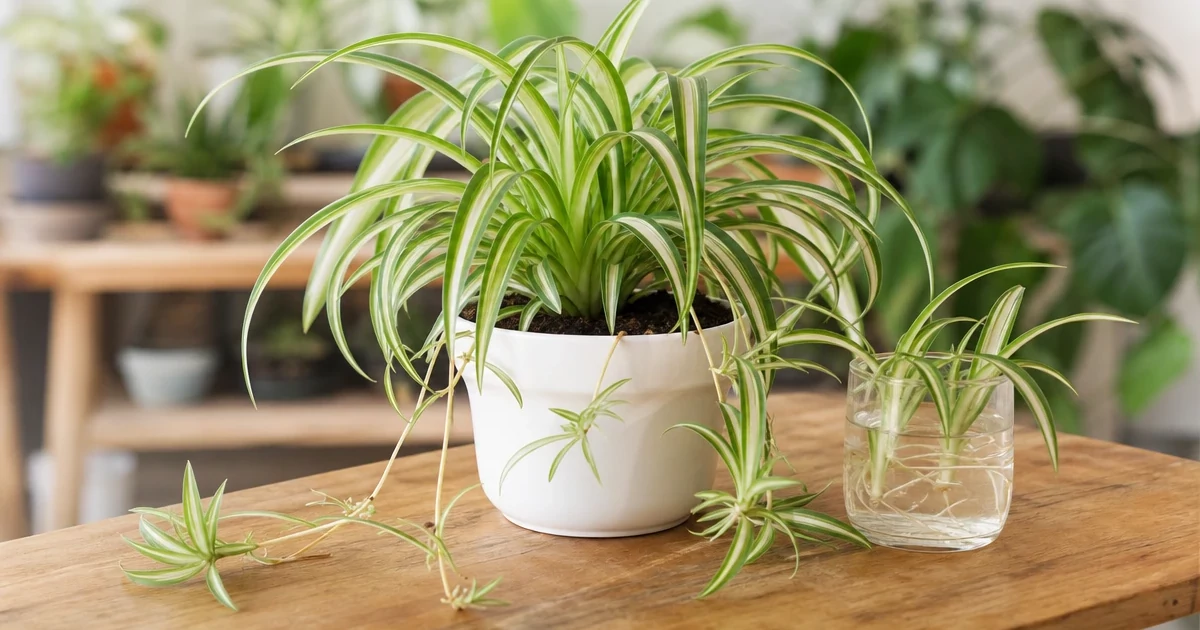
The spider plant is where many people start their houseplant collection. It forgives missed waterings, grows on a bright sill or further into the room, and generously produces babies that dangle on long runners. Here is how to care for chlorophytum so the leaves stay bright without brown tips, which varieties exist and how to propagate it in a few weeks.
The spider plant (Chlorophytum comosum) is a herbaceous perennial of the asparagus family native to southern Africa. Its narrow arching leaves form a lush rosette, and long flower stems with tiny white star-shaped flowers grow from the centre. Later, miniature rosettes — the babies or “spiderettes” — appear on these stems. Thick fleshy roots store water, so the plant copes easily with drought.
Spider plants do best in bright indirect light. They tolerate shade, but variegated types lose contrast and turn greener. Midday sun leaves pale scorch marks. With its dangling babies, the plant looks great in a hanging basket or on a high shelf — see trailing houseplants. Keep it at 18–25 °C, not below 10–12 °C in winter.
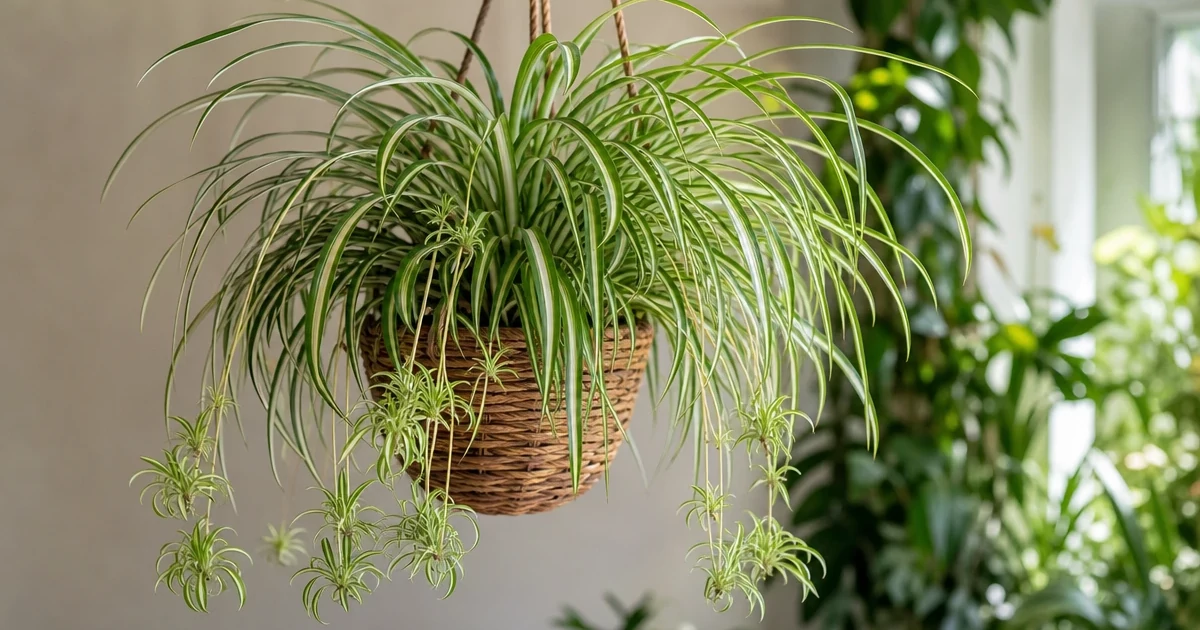
View full-size photoMature spider plant with babies on long runners in a hanging basket
In summer water when the top 2–3 cm of soil are dry — usually every 5–7 days; in winter every 10–14 days is enough. Thanks to its thick roots it survives short dry spells, but constant overwatering causes rot. Use rested, room-temperature water: chlorine and fluoride cause brown tips. It tolerates dry air but appreciates misting in summer.
Use all-purpose houseplant compost with added perlite. The roots grow fast and can even distort a plastic pot, so repot young plants every spring and mature ones every 2–3 years into a pot 3–4 cm wider, with drainage. See how to repot houseplants. Feed every 2–3 weeks from spring to autumn with a general fertiliser.
You can also root a baby while still attached by pinning it onto a nearby pot of compost. Orange spider plants and varieties without babies are propagated by division when repotting.
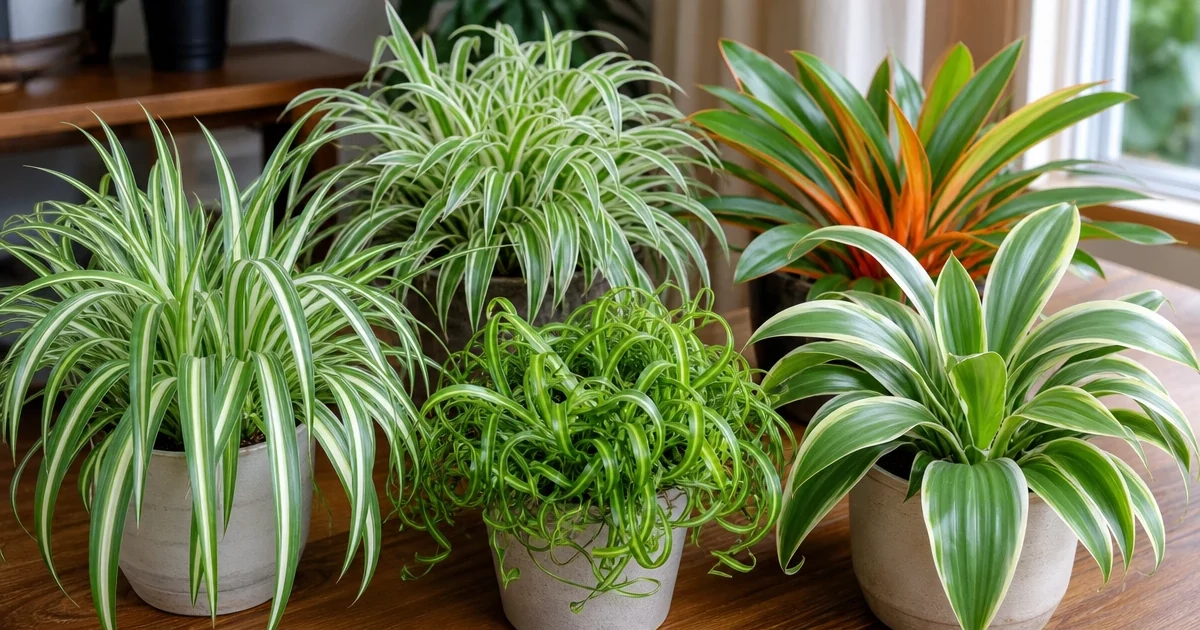
View full-size photoPopular spider plant varieties: Vittatum, Variegatum, Bonnie, Ocean, and Fire Flash
Trim dry tips with scissors. More in houseplant problems and symptoms.
Spider plants are often called air purifiers because they were part of NASA’s well-known 1989 study. Those experiments were run in sealed chambers, though, and a few pots have little effect on air quality in a real home — see do houseplants purify the air.
The spider plant is considered non-toxic to cats and dogs. Cats love chewing it; it does them little harm, but the plant suffers, so place it higher up. More tough plants: hard-to-kill houseplants; browse potted plants.
About every 5–7 days in summer and every 10–14 days in winter, once the top layer of soil is dry.
Usually it is still young, short of light or in too large a pot. Some varieties, such as the orange one, rarely produce babies.
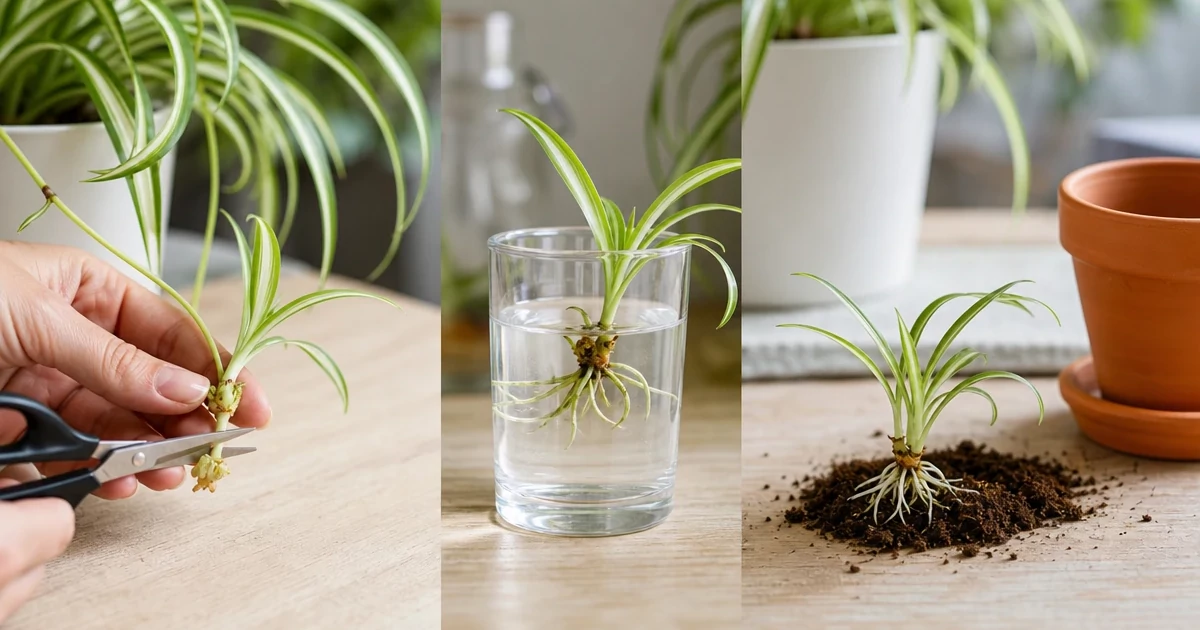
View full-size photoPropagating spider plant babies: rooting in water and preparing for potting
Yes, it is non-toxic and easy-going and releases nothing harmful at night.

Author: Maria Svitlovir
Graduated from Taras Shevchenko National University of Kyiv, Institute of Biology and Medicine (2001). BSc in Biology, MSc in Horticulture. Writes about plants, works at a garden centre selecting and repotting plants, and contributes to plant reference guides.
© Recklinghausen 2026 UFL Flower Shop

Trademark UFL №191476 is used under license of the rights holder.
All rights reserved. Any use of materials without a link to the site is prohibited.

 Birthday
 Hydrangeas