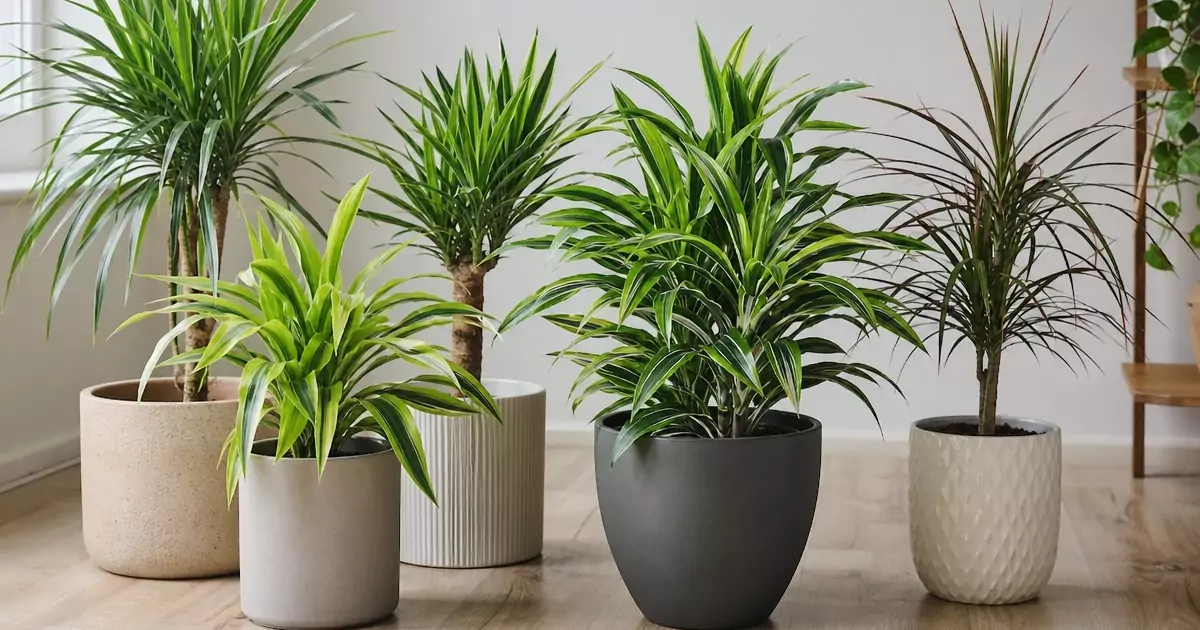
Dracaena is the “indoor palm” with a tuft of long leaves on a trunk that suits any interior; it lives for decades and some reach the ceiling. Here are the main dracaena types with names (marginata, fragrans, sanderiana and more), home care, why leaf tips turn brown, why it drops leaves and how to propagate it. More plants with names and tips in our houseplant catalogue.
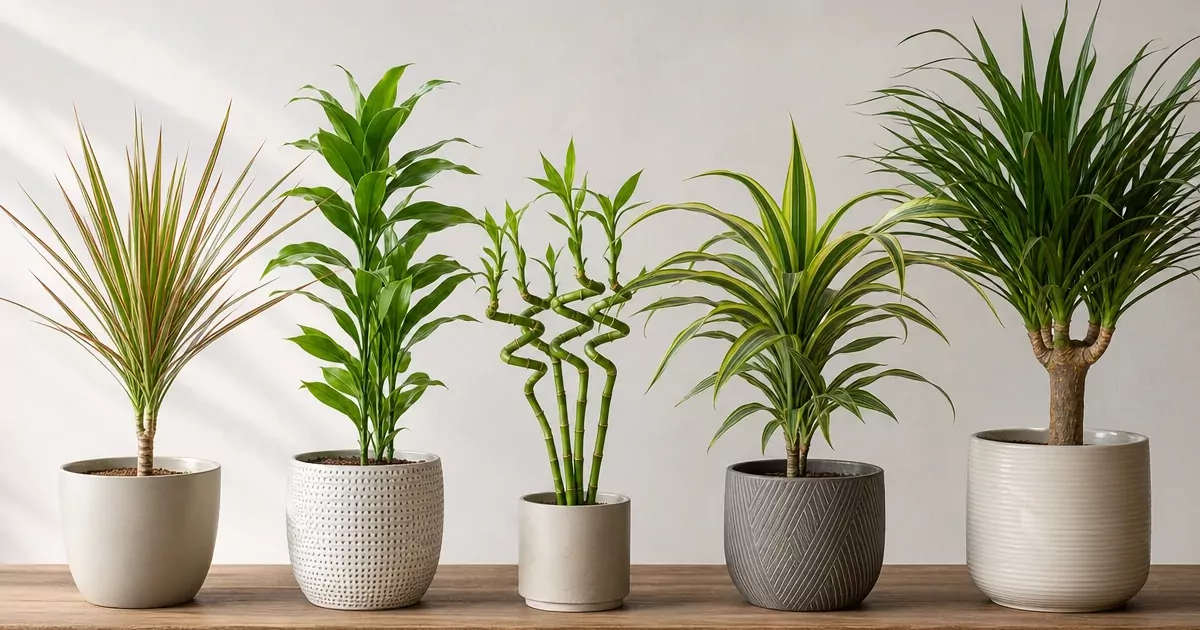
Dracaena marginata is the most popular: narrow stiff leaves edged in red or pink on slim, twisting trunks; easy-going and more tolerant of dry air than most.
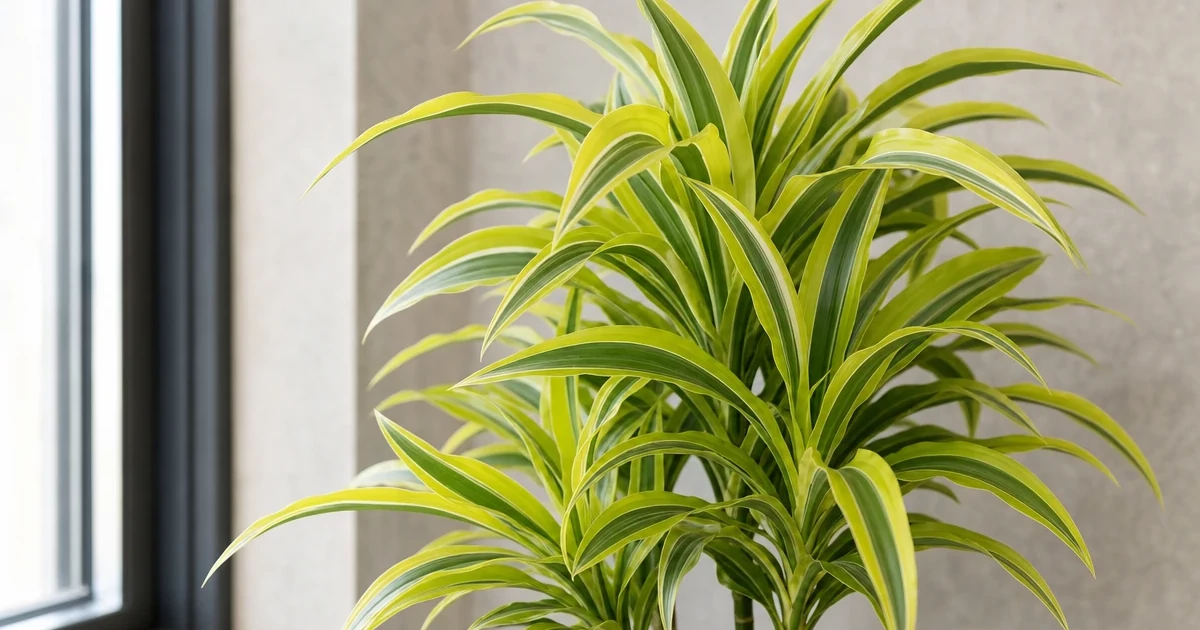
Dracaena fragrans has broad arching leaves, with a yellow central stripe in Massangeana, and may bloom with white flowers that scent the night.
Dracaena sanderiana, “lucky bamboo”, has green stems topped with leaves, sold growing in water and often twisted into spirals.
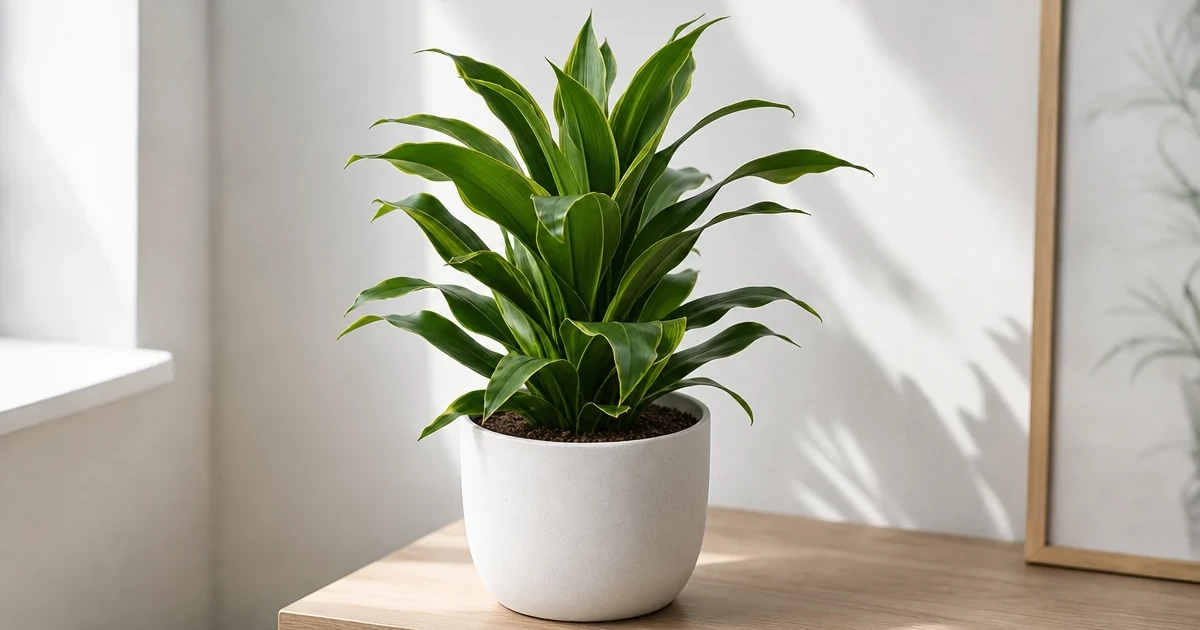
Dracaena reflexa has short leaves in tight spirals; the variegated Song of India has yellow edges.
The dragon tree, from the Canary Islands, has a thick trunk and red resin called dragon’s blood. Dracaena is often called a palm, though it is a different plant; see indoor palms for the difference.
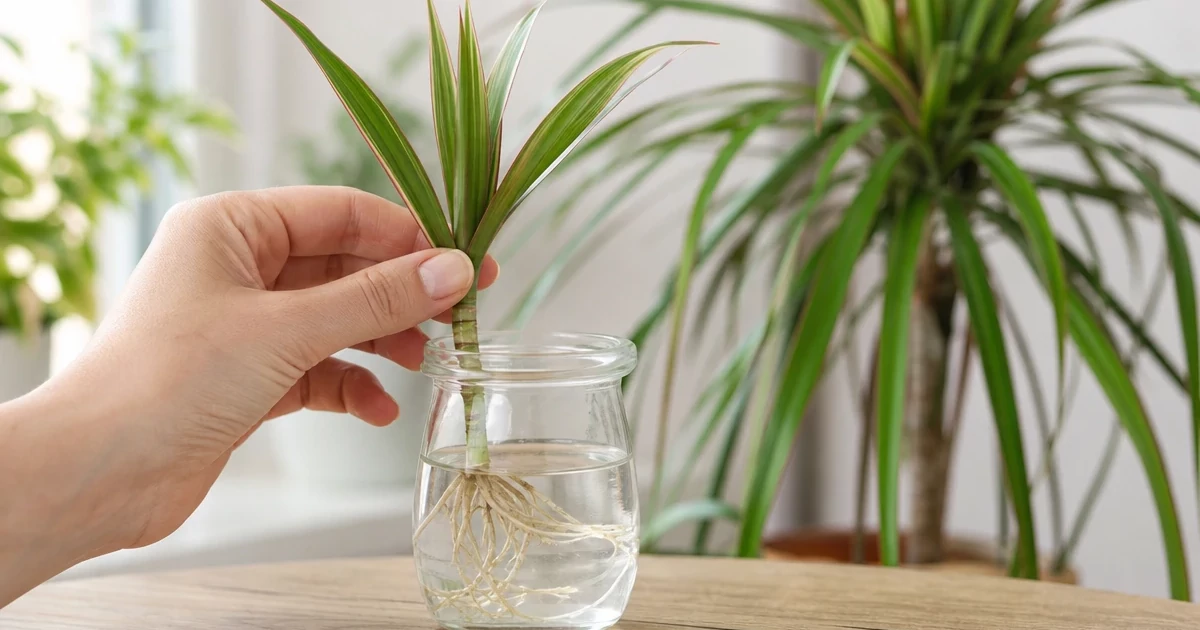
Top cuttings: cut a 10–15 cm leafy top and root it in water or moist mix.
Trunk sections of 5–7 cm laid flat or set upright in mix will sprout new shoots from dormant buds.
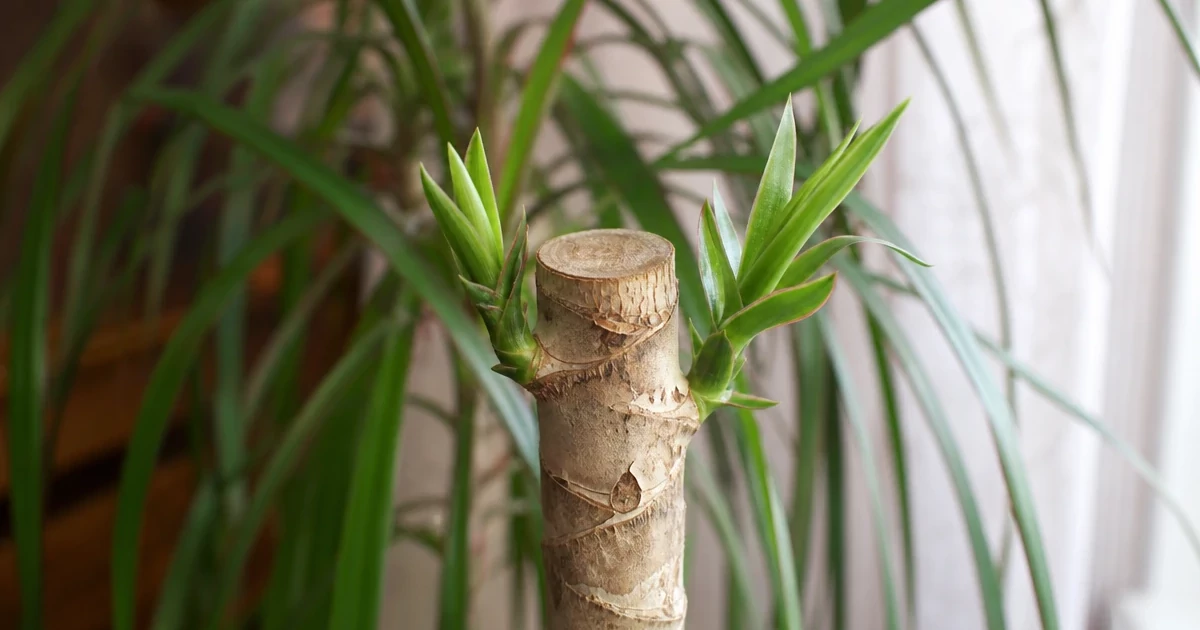
The stump left after cutting will also resprout, making the plant bushier.
Pruning a dracaena so it branches
A dracaena grows from a single tip and loses its lower leaves with age. In spring cut the top off at the height you want with a sharp knife, seal the cut with wax or pruning sealant and cover the stump with a bag for a few weeks: 2–4 buds will break below. The removed top is a ready-made cutting to root in water or moist compost, so one leggy plant becomes two compact ones.
A mature fragrant dracaena occasionally sends up a long spike of rounded clusters of small white or pinkish flowers. They open in the evening with a strong sweet scent and close by day. Flowering is more likely after a cool winter in a bright spot. The flowers drip sticky nectar, so cut the spike off once it has finished.
Is dracaena toxic?
Dracaena contains saponins and can cause vomiting and drooling in cats and dogs, so keep it out of their reach.
A living plant as a gift
Looking for an easy plant to brighten a home? A potted orchid blooms for months.
When the top 2–3 cm is dry: usually weekly in summer, less in winter.
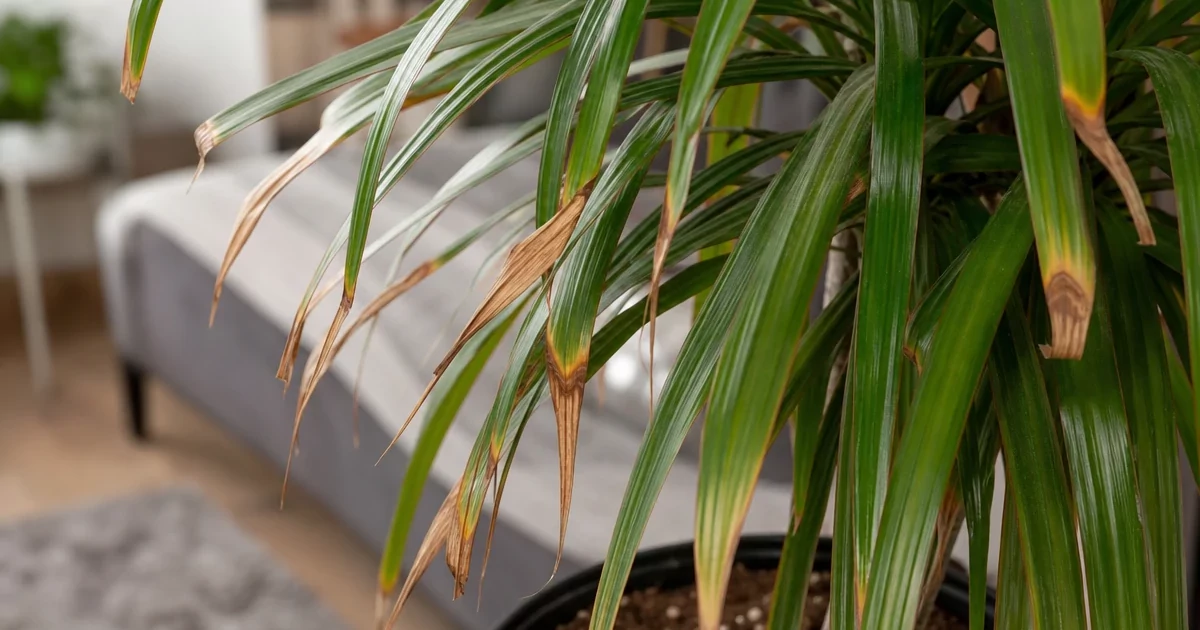
Why are dracaena leaf tips brown?
Dry air, irregular watering or hard, chlorinated water.
Why does dracaena drop its lower leaves?
It’s natural as the trunk forms; heavy leaf drop signals overwatering or cold.
Does dracaena flower indoors?
Rarely; Dracaena fragrans is the one most likely to bloom, with scented white flowers.
Author: Maria Svitlovir
Graduated from Taras Shevchenko National University of Kyiv, Institute of Biology and Medicine (2001). BSc in Biology, MSc in Horticulture. Writes about plants, works at a garden centre selecting and repotting plants, and contributes to plant reference guides.






 Birthday
 Hydrangeas