Roses are among the hungriest garden plants: in one season a bush grows new canes, leaves and several flushes of flowers, and all of that takes resources. Proper feeding gives bigger, brighter blooms and a bush that resists disease and frost better. Here is which nutrients roses need, what to feed them and when, how to spot deficiencies and which mistakes to avoid.
Approximate timing for central Ukraine; in the south, shift everything one or two weeks earlier.
What roses need
Nitrogen (N) drives cane growth and green leaves, so it matters most in spring. Phosphorus (P) builds roots and sets flower buds. Potassium (K) intensifies colour, strengthens tissue and improves disease resistance and winter hardiness. Among trace elements, roses most often lack magnesium and iron.
The main rule: more nitrogen in spring, balanced feeding in summer, and no nitrogen at all from mid-summer onwards. Late nitrogen pushes soft new growth that will not ripen in time and will die back in winter.
Seasonal feeding plan
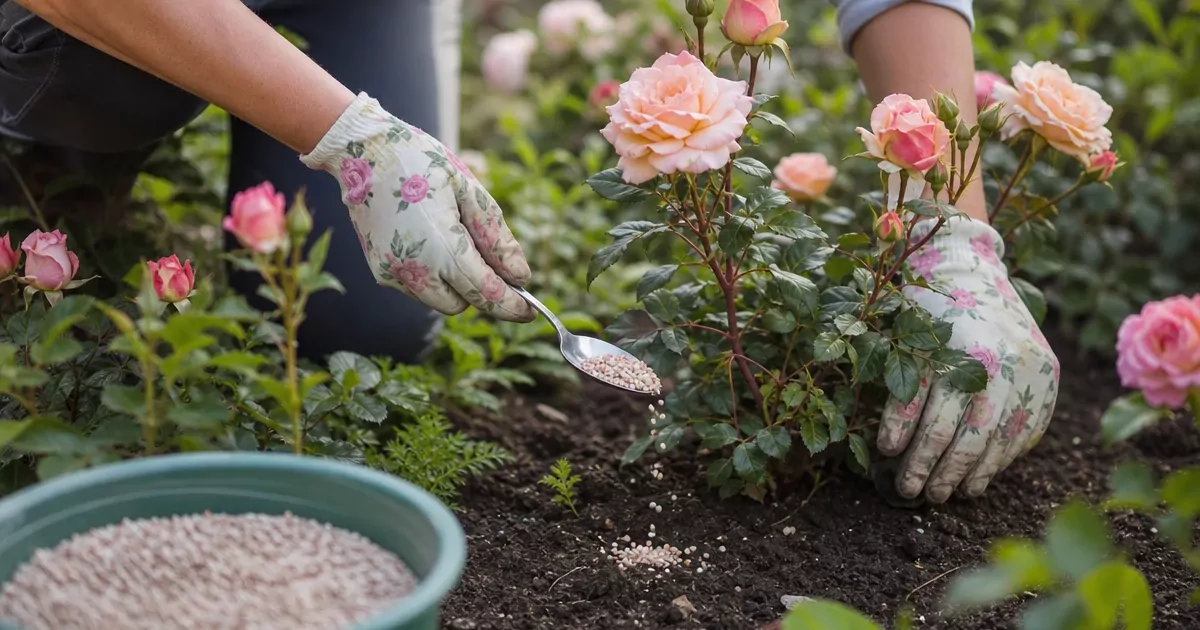
The first feed is given in spring after uncovering and pruning, once the soil has thawed and warmed. Use urea or ammonium nitrate (15–20 g in 10 litres of water per bush) or work 3–5 kg of well-rotted compost or manure into the soil around each bush. The nitrogen feed can be repeated after two or three weeks.
During budding, roses need a complete fertiliser higher in phosphorus and potassium, either a special rose feed or a general NPK used as directed. After the first flush, deadhead and give a complete feed plus organics: cow manure tea diluted 1:10 or poultry manure tea 1:20, steeped for one or two weeks.
From mid-August switch to phosphorus and potassium only: superphosphate (15–20 g) and potassium sulphate (10–15 g) in 10 litres of water per bush, or monopotassium phosphate as directed. This helps the canes ripen and the bush to overwinter better.
Signs of nutrient deficiency
Small pale leaves and weak canes point to nitrogen deficiency. A reddish-purple tint on the leaves and poor bud formation suggest a lack of phosphorus. Brown, scorched leaf edges and small flowers indicate potassium deficiency. Yellow young leaves with green veins mean iron chlorosis, and yellow patches between veins on older leaves mean magnesium shortage.
Diseases can cause similar symptoms, so check both sides of the leaves first. If you see spots, coating or pests, refer to our article on rose diseases and pests.
Rules that prevent mistakes
Feed only moist soil: water the bush first, then apply the solution so the roots are not burned. Work in the evening or on an overcast day. Never exceed the dose, as too much fertiliser does more harm than too little. Never use fresh manure on roses, only well-rotted.
Roses planted this season in a well-prepared hole usually need no feeding in their first year beyond a light foliar spray. Foliar feeds are made at half the strength used for watering and applied only in the evening to avoid leaf scorch.
Organic and home remedies
The best organic matter for roses is well-rotted manure and compost, which improve soil structure and feed gradually. Wood ash contains potassium but raises soil pH, so use it sparingly, about a cup per square metre, and never together with nitrogen fertilisers. Banana peel or eggshells break down slowly and cannot replace proper feeding. More on this in our article on natural fertilisers.
Cut roses in a vase need no garden fertiliser. For a bouquet, use a sachet of cut-flower food, and find the rest of the tips in our rose guide.
Roses delivered in Kyiv
While garden roses gather strength, cut ones are ready to delight. We deliver fresh roses in many varieties and colours across Kyiv.
Graduated from Taras Shevchenko National University of Kyiv, Institute of Biology and Medicine (2001). BSc in Biology, MSc in Horticulture. Writes about plants, works at a garden centre selecting and repotting plants, and contributes to plant reference guides.






 Birthday
 Hydrangeas