Even the finest rose bush can lose its leaves to black spot or be covered in aphids within weeks. The good news is that most problems are easy to spot early and stop — or better, prevent. Here are the most common garden rose diseases and pests in Ukraine, how to recognise them, how to treat them and how to protect your roses through the season. Healthier bushes start with proper rose feeding.
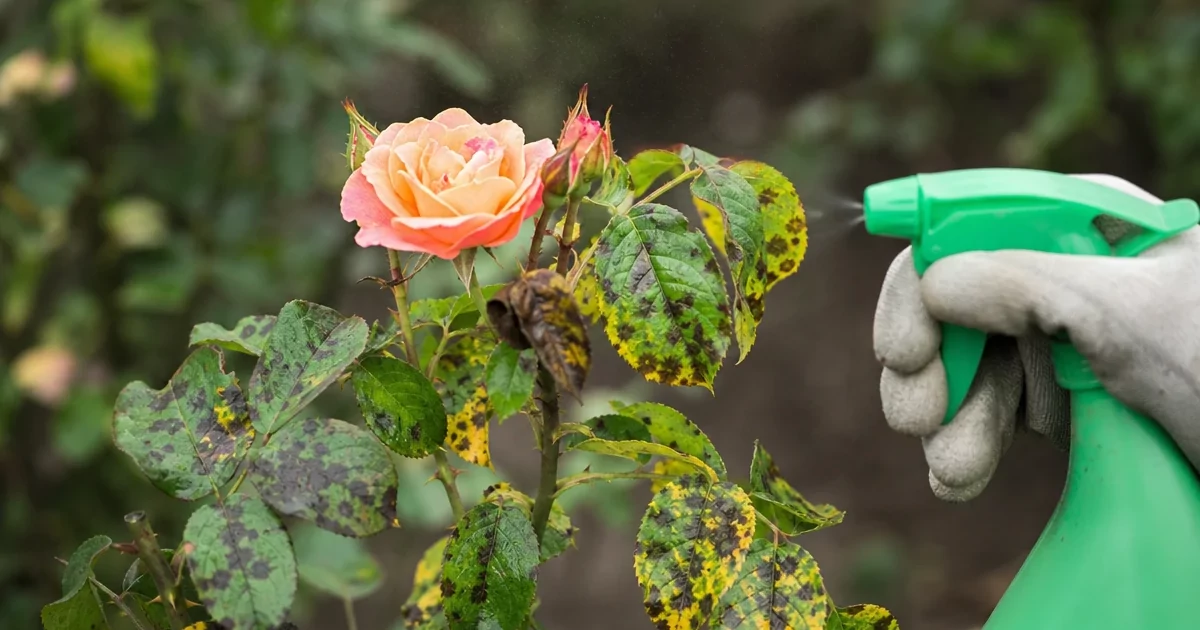
Black spot is the most common disease: dark spots with yellow halos appear on the leaves, which yellow and drop from the bottom of the bush up. It thrives in warm, wet weather.
Powdery mildew is a white floury coating on young leaves, buds and shoots that makes leaves curl. It appears with big day–night temperature swings, mostly in late summer.
Rust shows as orange spore pustules under the leaves; grey mould turns buds brown and fuzzy so they never open; canker causes brown, dark-edged patches on stems after winter.
Treatment: remove and destroy infected leaves and canes (not in the compost) and spray a systemic fungicide according to the label, repeating after 10–14 days. Indoor roses have their own issues — see indoor rose diseases.
Rose pests
Aphids form colonies of tiny green or black insects on shoot tips and buds, curling leaves and distorting buds. Early on, blast them off with water or spray soft or potassium soap solution.
Spider mites cause fine yellow speckling and thin webbing under the leaves and thrive in hot, dry weather. Spray the undersides with water regularly and use a miticide for heavy infestations.
Thrips damage petals (brown edges, distorted buds), and rose sawfly larvae skeletonise leaves. Both are controlled well by systemic insecticides.
Natural allies include ladybirds, lacewings and birds. Do not spray insecticides on flowering roses during the day to protect bees.
Prevention
Plant roses in a sunny, airy spot and avoid overcrowding so leaves dry quickly after rain. Choose resistant varieties, for example those with the ADR mark.
Water at the base in the morning, not over the leaves in the evening. Balanced feeding with potassium strengthens tissues, while excess nitrogen attracts aphids.
Yellowing lower leaves without spots often mean nitrogen shortage or overwatering; browning edges suggest sun scorch or dry air. If the bush is healthy but will not flower, see why roses don’t bloom.
Climbers against walls suffer more from powdery mildew and mites due to still air — see climbing roses.
Healthy roses with delivery
While your garden recovers, we deliver fresh rose bouquets across Kyiv and Ukraine, from classic red to spray and peony roses.
Graduated from Taras Shevchenko National University of Kyiv, Institute of Biology and Medicine (2001). BSc in Biology, MSc in Horticulture. Writes about plants, works at a garden centre selecting and repotting plants, and contributes to plant reference guides.






 Birthday
 Hydrangeas