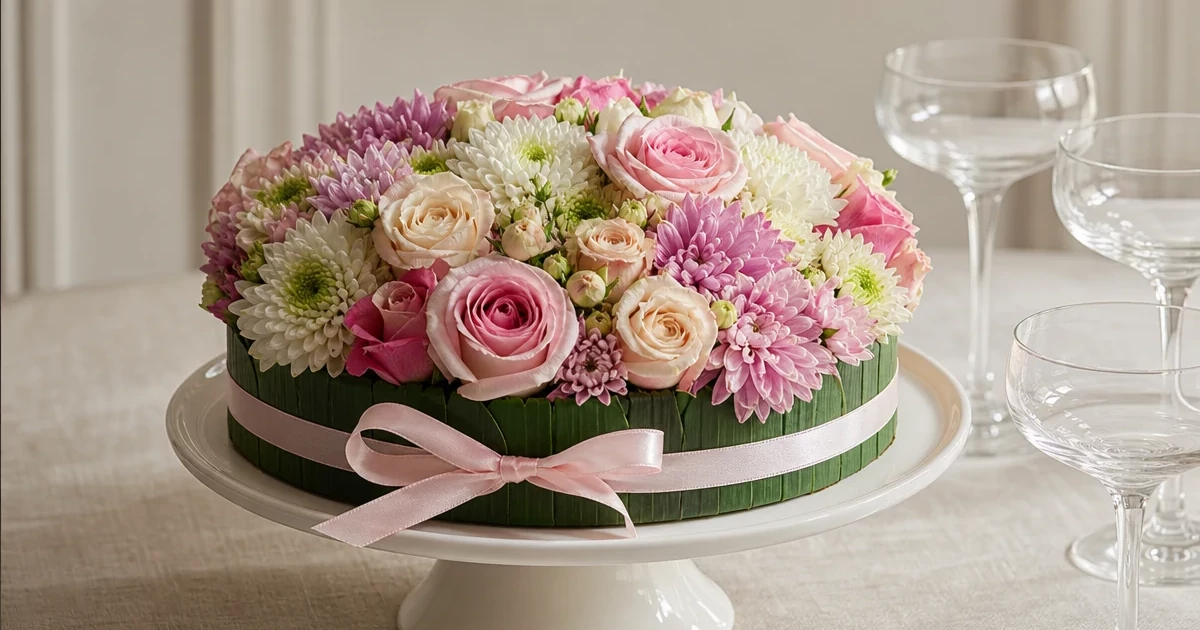
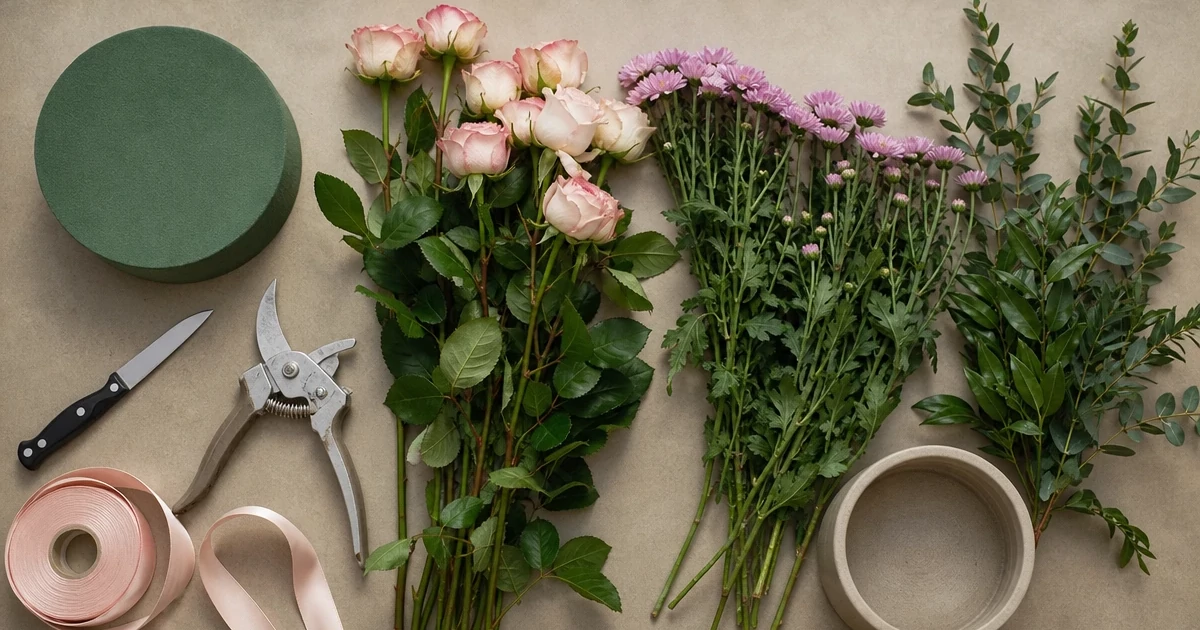
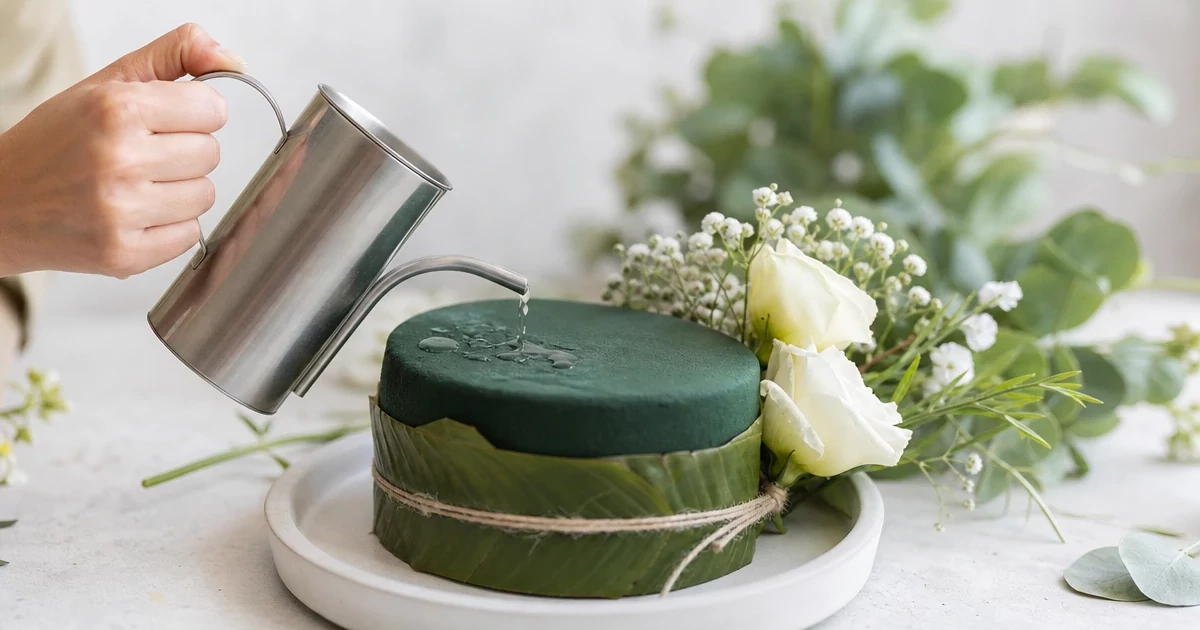
A flower cake is an arrangement of fresh flowers shaped like a cake: round, sometimes tiered, with "iced" sides of ribbon or leaves. It is not a dessert but a gift that lasts a week and replaces both a bouquet and a card. Here is how to make a flower cake yourself: materials, step-by-step instructions and care tips.
Ready-made foam arrangements are available among our flower boxes and flower baskets.
The base is floral foam that holds water, so the flowers stay fresh without a vase. A flower cake makes a great gift for birthdays, anniversaries, weddings or corporate events, or a table centrepiece. Do not confuse it with a real cake decorated with fresh flowers — we covered the safety of those in fresh flowers on cakes.
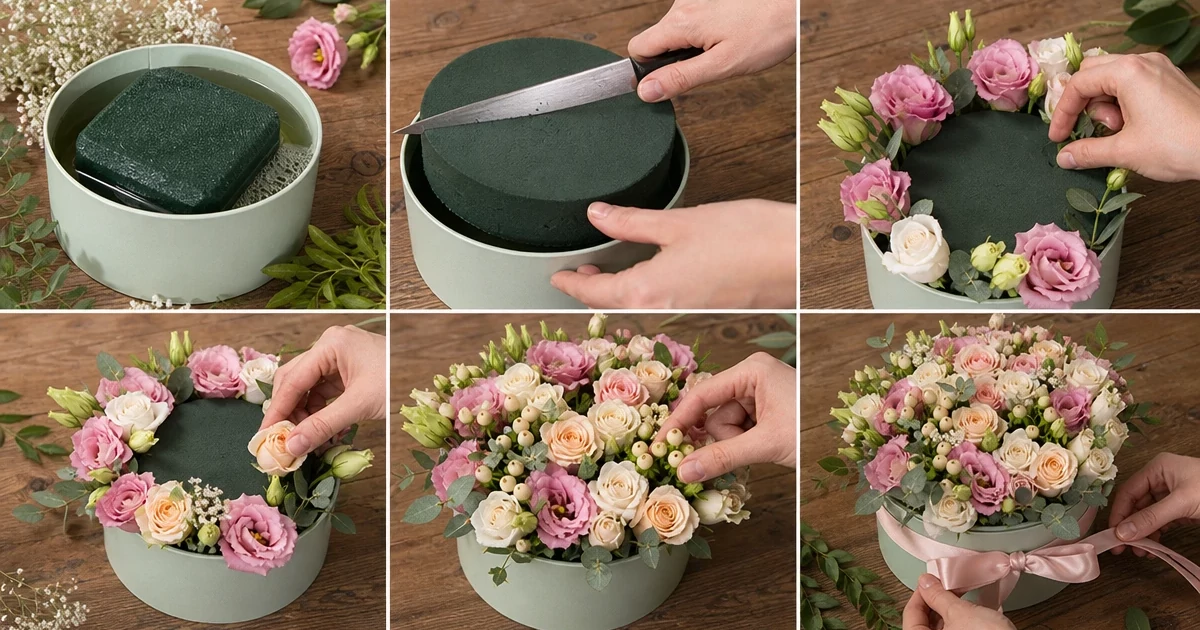
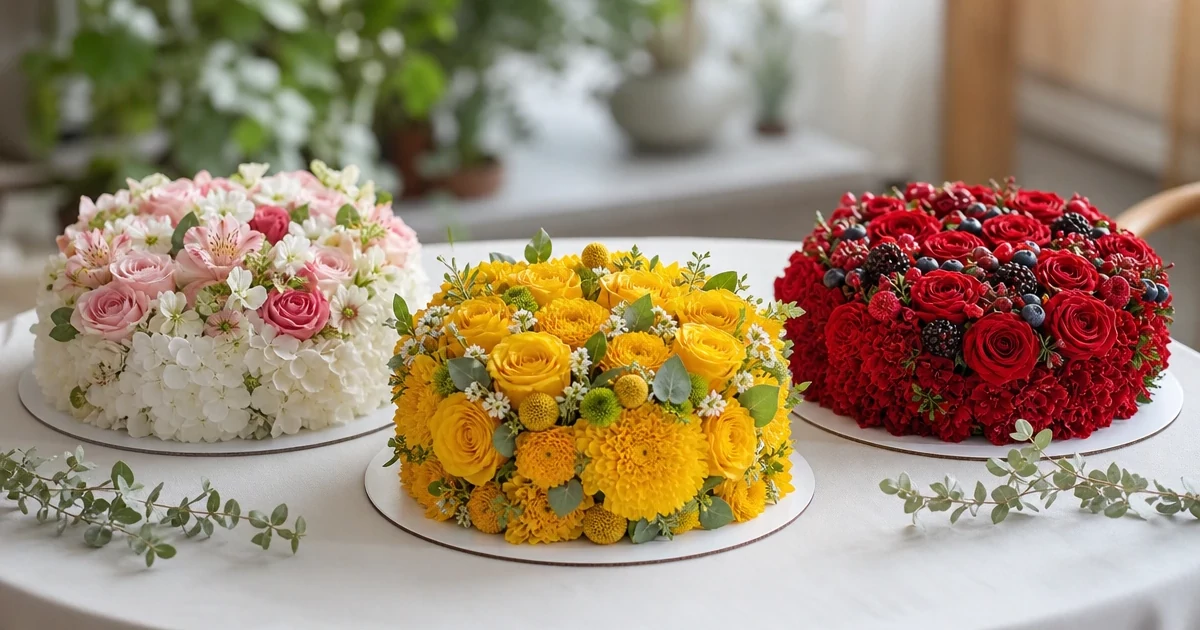
Place the flowers tightly so no foam shows. Start at the edge of the "tier" and work towards the centre. For impact, alternate large and small heads or create a pattern with different shades.
Every 2 days, gently water the foam from above so it does not drip onto the table; keep the arrangement cool and away from radiators and sun. A flower cake lasts 5–7 days, with chrysanthemums and carnations up to two weeks.
No, it is an arrangement of fresh flowers in floral foam, not a dessert.
For a 20 cm cake, roughly 30–50 short heads depending on their size.
In a lidded box on a flat surface; do not overwater the foam before the trip — water it on arrival.

Author: Maria Svitlovir
Graduated from Taras Shevchenko National University of Kyiv, Institute of Biology and Medicine (2001). BSc in Biology, MSc in Horticulture. Writes about plants, works at a garden centre selecting and repotting plants, and contributes to plant reference guides.
© Kyiv 2026 UFL Flower Shop

Trademark UFL №191476 is used under license of the rights holder.
All rights reserved. Any use of materials without a link to the site is prohibited.


 Birthday
 Hydrangeas