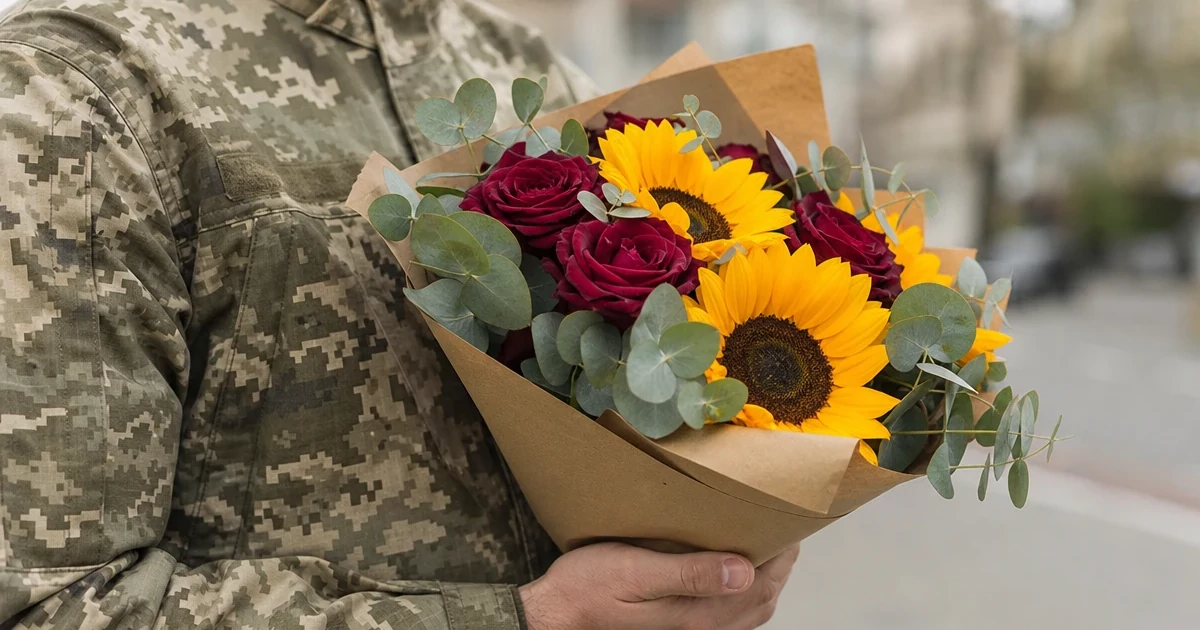
Flowers for a soldier are not a formality but a way to say “thank you” and “we were waiting for you”. A bouquet suits a male or female defender, a veteran, and also honouring the fallen. Here is which flowers to choose for Defenders Day, a homecoming from rotation or an award ceremony, how to put together a restrained “masculine” bouquet, and which flowers to bring to a memorial.
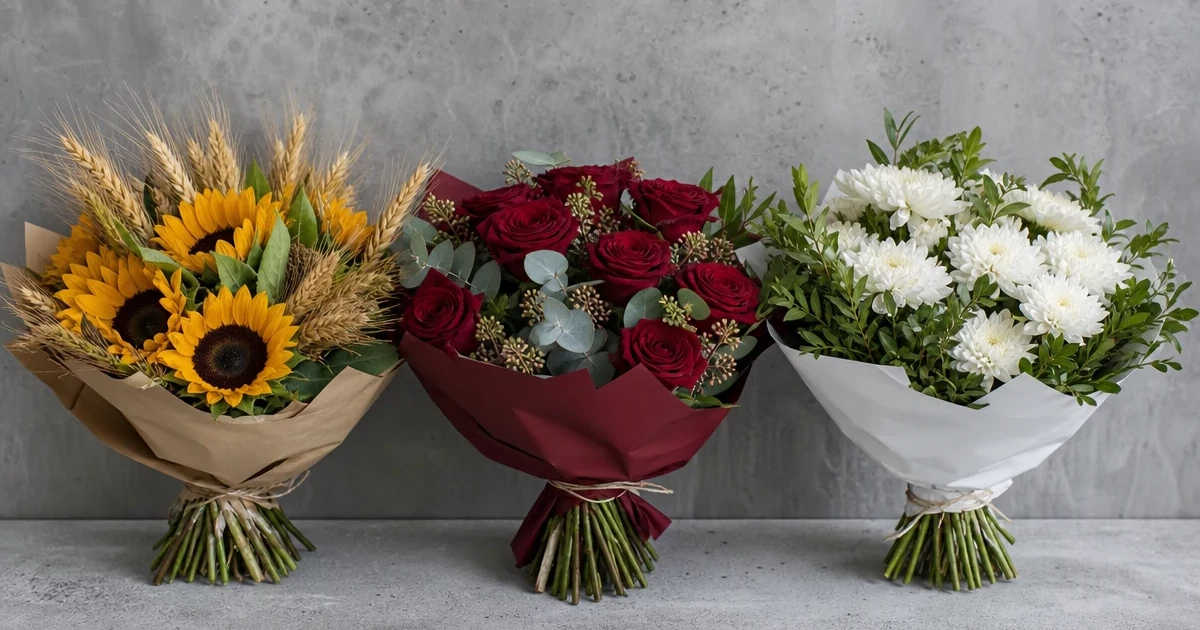
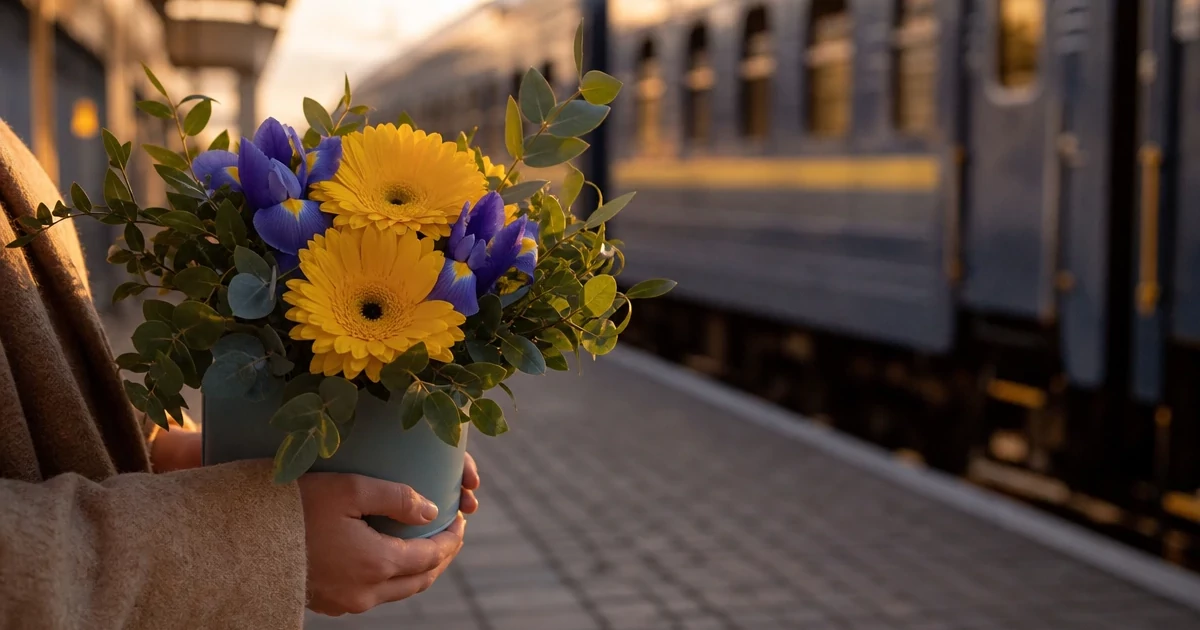
For a male soldier, a restrained bouquet works best: sunflowers, burgundy or white roses, chrysanthemums, gerberas, irises, plenty of greenery and minimal wrapping. Colours should be deep and calm: burgundy, white, green, yellow and blue (ideas in our article on the yellow and blue bouquet). For a female defender, softer roses, lisianthus or tulips are a good fit.
You do not need every symbol in one bouquet: two or three are enough for it to speak without words.
Meeting someone at the station calls for a compact, light bouquet: 7–11 stems in firm wrapping or a box so it can be held in one hand. For an award ceremony, classic roses or chrysanthemums with greenery are appropriate. Flowers pair well with a practical gift — see our ideas on what to give a soldier.
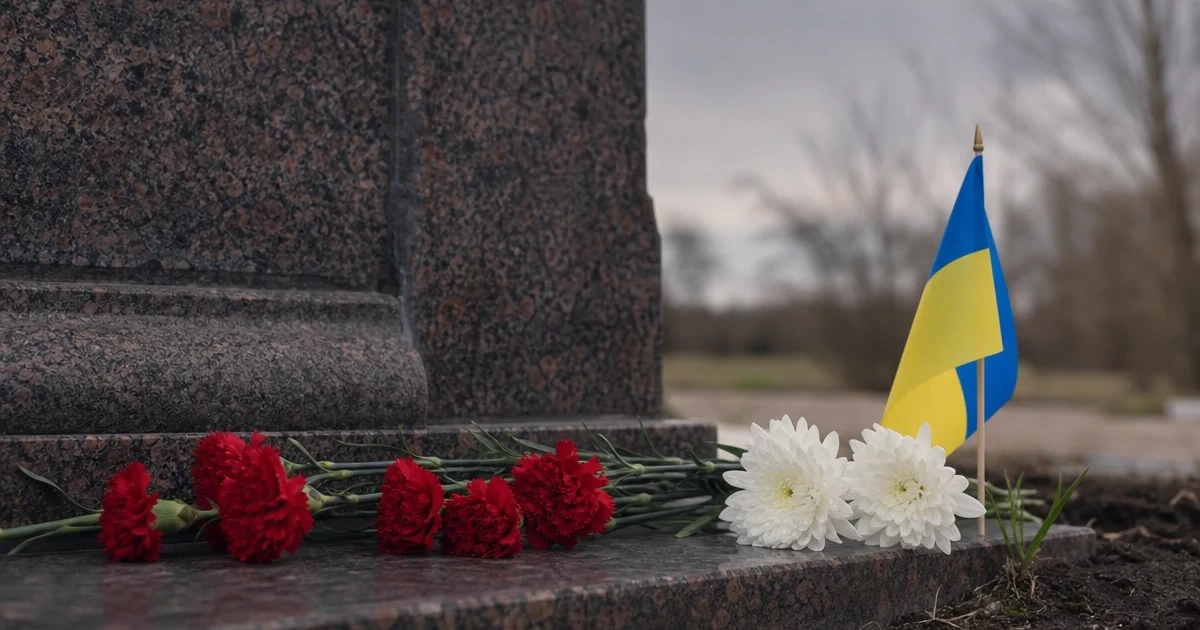
To honour the fallen, people bring an even number of flowers — this is the Ukrainian mourning tradition. Red carnations or roses, white chrysanthemums and viburnum are the usual choice; on remembrance days, red poppies. Flowers are laid without wrapping or with a simple ribbon that can be removed. More on etiquette in our article on funeral flowers, and perennial plants for graves in what to plant on a grave. Words of support for the family: condolences for a fallen soldier.
Yes. Flowers are a sign of gratitude and respect, not only a “feminine” gift. Choose restrained bouquets: sunflowers, burgundy roses, chrysanthemums, minimal wrapping.
An even number — 2, 4, 6 or more. Red carnations or roses, or white chrysanthemums, are the usual choice.
Classic carnations, tulips or roses in a small bouquet; for an elderly veteran, flowers in a vase or box are easier to handle.

Author: Maria Svitlovir
Graduated from Taras Shevchenko National University of Kyiv, Institute of Biology and Medicine (2001). BSc in Biology, MSc in Horticulture. Writes about plants, works at a garden centre selecting and repotting plants, and contributes to plant reference guides.
© Kyiv 2026 UFL Flower Shop

Trademark UFL №191476 is used under license of the rights holder.
All rights reserved. Any use of materials without a link to the site is prohibited.

 Birthday
 Hydrangeas