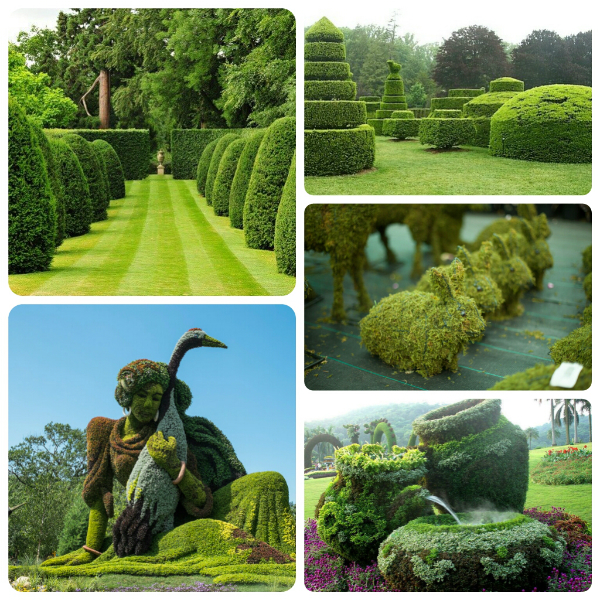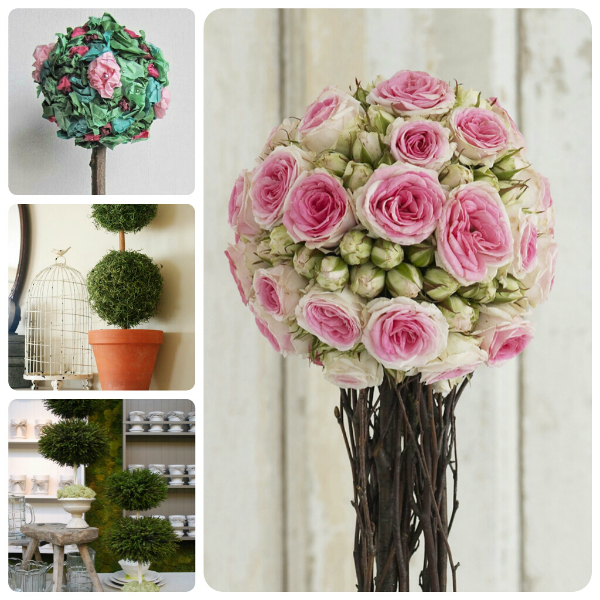
Topiary is the art of clipping trees and shrubs into shapes. Green balls, cones, spirals and even animals turn an ordinary garden into a formal one. You can make your first topiary yourself: the key is choosing the right plant, starting with a simple shape and clipping regularly.
Ornamental plants are in our potted plants section.
Shaped plants were known in ancient Rome, and topiary flourished in the 17th century, the age of formal gardens such as Versailles. At Levens Hall in England, topiary planted in the late 17th century survives to this day.
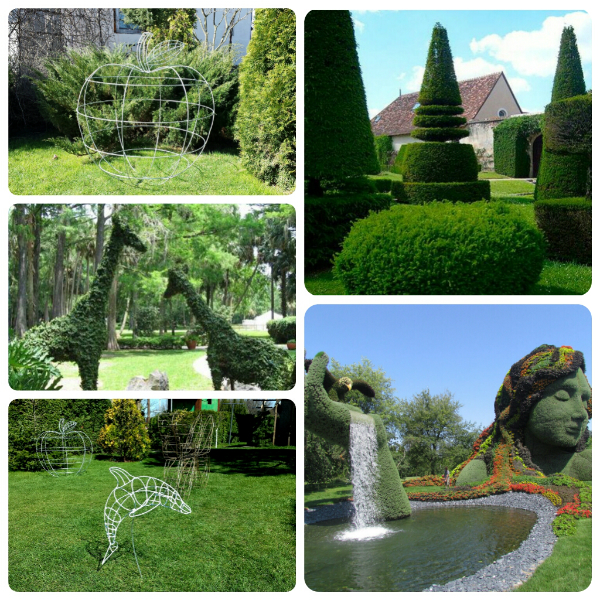
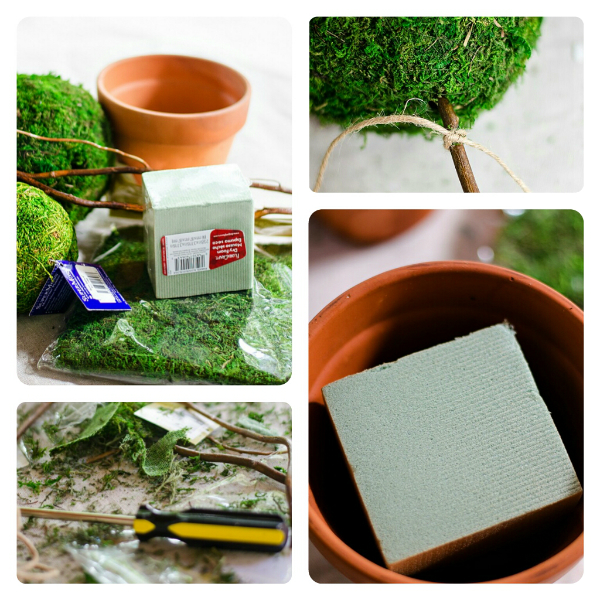
For complex shapes — animals, birds, letters — a wire frame is used. Either place it over a young shrub and gradually clip the plant to the outline, or fill it with moss and compost and plant it with ivy or ground-cover plants. The second option works even on a terrace and gives quicker results.
For low-effort garden ideas see Low-maintenance garden, and for conifers that take clipping see Conifers for the garden.
A simple box ball can be shaped in 2–3 seasons; large and complex figures take several years.
Japanese holly, yew, privet or dwarf thuja cultivars — depending on the size of the shape and the light.

Author: Maria Svitlovir
Graduated from Taras Shevchenko National University of Kyiv, Institute of Biology and Medicine (2001). BSc in Biology, MSc in Horticulture. Writes about plants, works at a garden centre selecting and repotting plants, and contributes to plant reference guides.
© Kyiv 2026 UFL Flower Shop

Trademark UFL №191476 is used under license of the rights holder.
All rights reserved. Any use of materials without a link to the site is prohibited.

 Birthday
 Hydrangeas