
Gardenia is an indoor shrub with glossy dark-green leaves and waxy white flowers whose scent fills the whole room. It is often bought in bud — and just as often the buds drop and the leaves yellow within weeks. Gardenia really is demanding, but its needs are clear: acidic soil, soft water, steady warmth and light. Here is how to provide them so it flowers every year.
The indoor gardenia is Gardenia jasminoides, an evergreen shrub of the coffee family from China and Japan. Indoors it grows to 40–80 cm. Its white single or double flowers, 5–8 cm across, have a strong sweet scent often compared to jasmine. It flowers mainly in spring and summer, and fading blooms turn cream. If you are after true jasmine, read about indoor jasmine.
Gardenia needs plenty of indirect light plus some gentle morning or evening sun — an east or west window is ideal. Midday sun scorches the leaves. Bud formation depends on temperature: 20–24 °C by day and a few degrees cooler, 16–18 °C, at night. In winter keep it at 16–18 °C, not below 15 °C. Cold roots (on a chilly windowsill, for instance) cause yellow leaves.
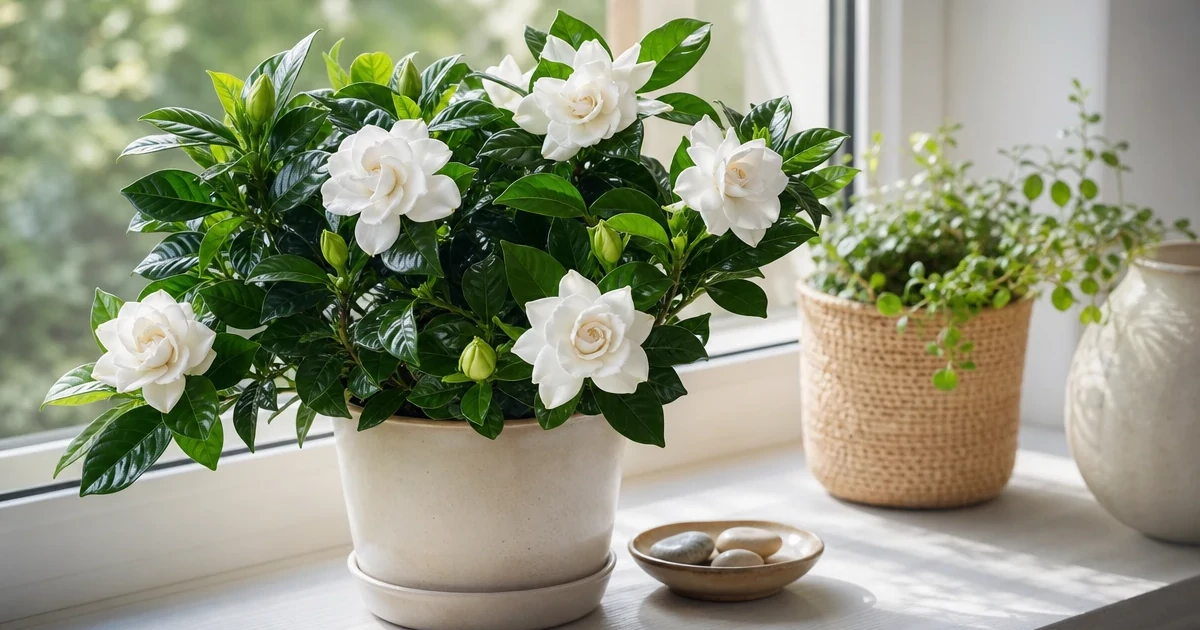
View full-size photoGardenia on an east or west windowsill receives ideal diffused light.
Gardenia is lime-hating: in alkaline soil or with hard water it cannot absorb iron, and the leaves yellow between green veins (chlorosis).
Keep the soil constantly slightly moist: both drying out and waterlogging cause bud drop. In summer water as soon as the top layer dries; less in winter. Gardenia loves humid air: mist the leaves finely but not the flowers or buds, which get brown spots. A pebble tray helps too.
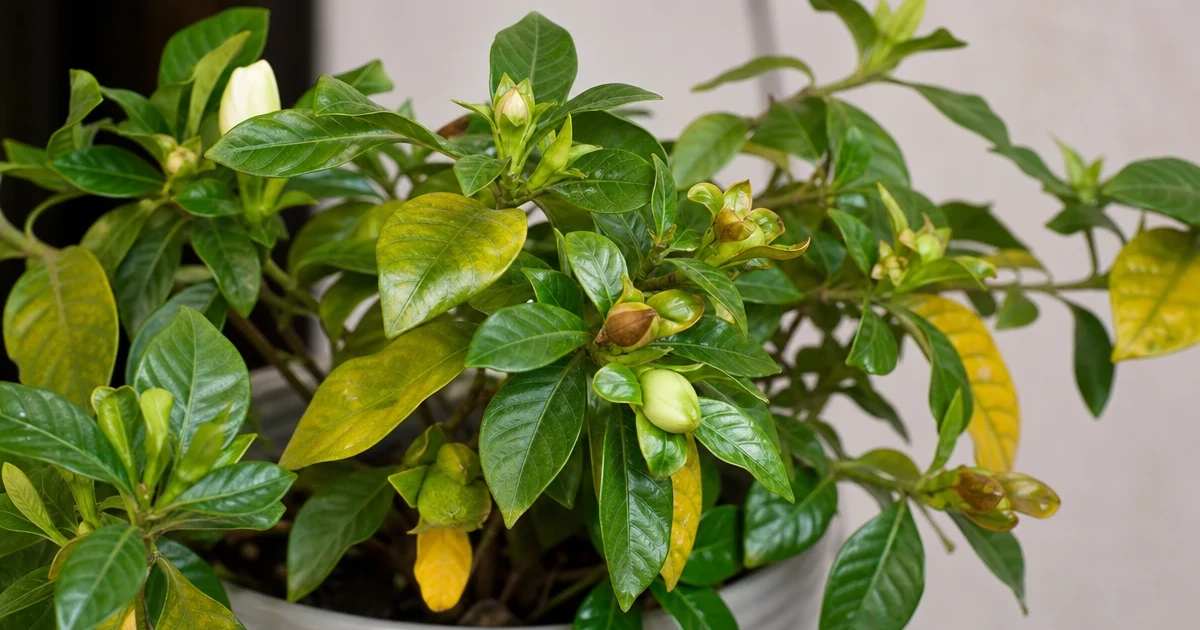
View full-size photoBud drop and yellow leaves are common gardenia problems with improper care.
More in houseplant problems and symptoms.
After flowering, cut shoots back by a third to a half for a compact shrub with more flowering branches. Repot in spring every 2–3 years, gently keeping the root ball intact — see how to repot houseplants.
Propagate from 10 cm semi-ripe tip cuttings in spring or early summer: strip the lower leaves, dip in rooting hormone and root in peat and perlite under cover at 24–26 °C with bottom heat. Roots appear in 4–6 weeks.
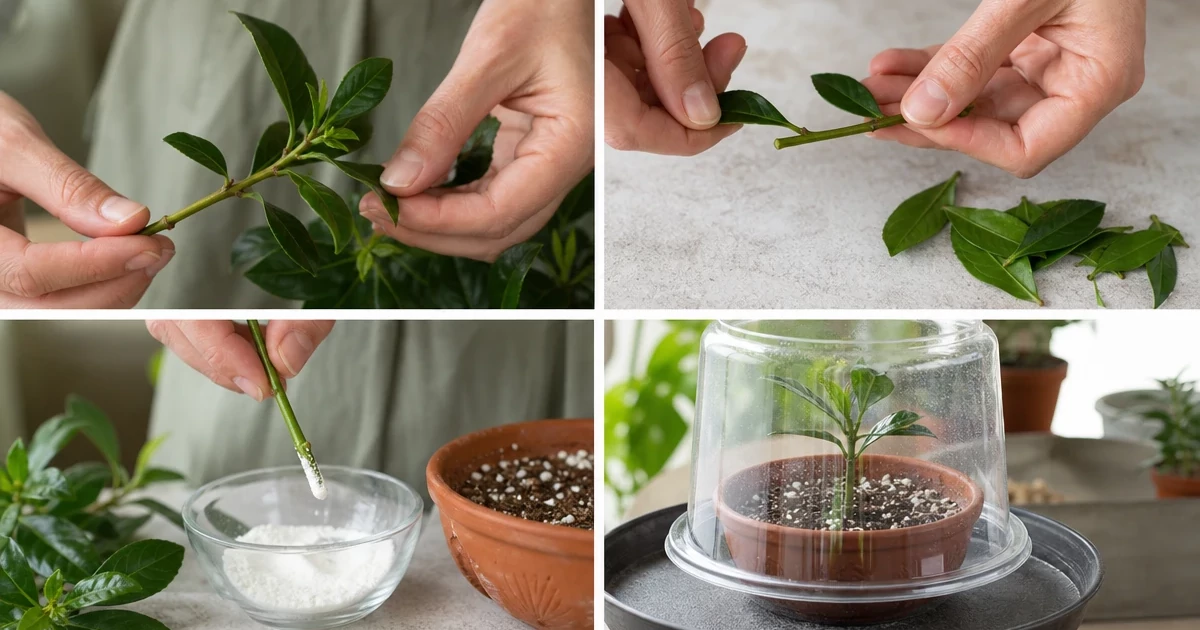
View full-size photoPropagating gardenia in spring or early summer for new plants.
Gardenia is considered mildly toxic to cats and dogs: chewed leaves may cause vomiting or stomach upset. It is not dangerous to people, but the strong scent can bother those sensitive to fragrance, so avoid the bedroom while it flowers. More flowering plants: winter-flowering houseplants and houseplant names and care; browse potted plants.
Soft, slightly warm water: rain, filtered or rested. Every 2–3 weeks you can acidify it a little with citric acid.
Usually too little light, no difference between day and night temperatures, or alkaline soil.
Yes, in part shade and out of the wind once nights stay above 15 °C — but do not move it while in bud.

Author: Maria Svitlovir
Graduated from Taras Shevchenko National University of Kyiv, Institute of Biology and Medicine (2001). BSc in Biology, MSc in Horticulture. Writes about plants, works at a garden centre selecting and repotting plants, and contributes to plant reference guides.
© Kyiv 2026 UFL Flower Shop

Trademark UFL №191476 is used under license of the rights holder.
All rights reserved. Any use of materials without a link to the site is prohibited.

 Birthday
 Hydrangeas