
Dieffenbachia is a fast-growing plant with large variegated leaves that becomes a real indoor tree within a few years. It is undemanding, happy in indirect light and easy to propagate. It is also one of the most poisonous houseplants, so it pays to know the safety rules in advance. Here is how to care for, rejuvenate and propagate it without risk to yourself, children or pets.
Dieffenbachia is an evergreen plant of the arum family from the tropics of Central and South America. It has a thick, succulent stem and large oval leaves splashed with white, cream or yellow. The most common indoors is D. seguine (formerly D. maculata), with varieties such as Camille (almost cream leaves with a green edge), Tropic Snow, Compacta, Reflector and Mars. D. amoena is larger, up to 1.5–2 m, with long leaves and striped markings.
It needs bright indirect light: variegated types turn green in shade and the stem stretches. Midday sun scorches the leaves. Dieffenbachia leans towards the window, so turn the pot weekly for even growth. Keep it at 20–25 °C, not below 16–17 °C in winter, away from draughts and cold sills.
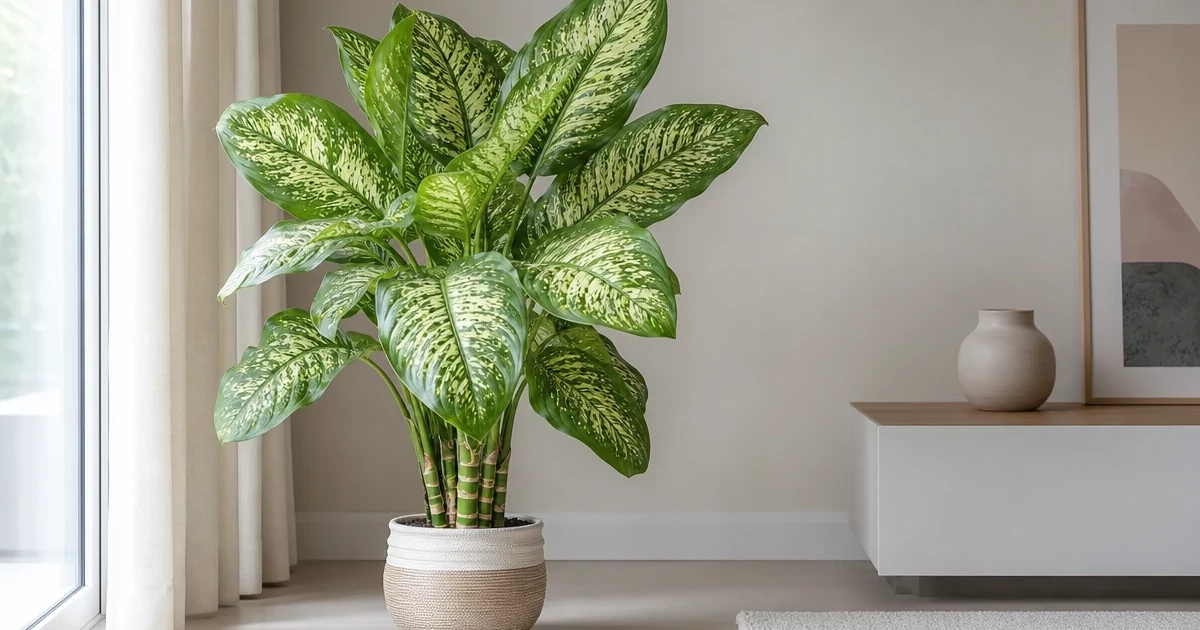
View full-size photoDieffenbachia thrives in bright indirect light.
Water generously in summer as soon as the top 2–3 cm dry; more sparingly in winter. Standing water rots the stem base. It likes humid air: mist regularly and wipe the leaves with a damp sponge (wearing gloves). Feed every 2 weeks from spring to autumn.
As dieffenbachia ages its lower leaves naturally die, leaving a bare “trunk” with a tuft on top; low light, cold or overwatering speed this up. To restore a full plant, in spring cut off the top with 10–15 cm of stem and root it. Keep the 10–15 cm stump: side buds will sprout and make it bushier.
Always wear gloves. For soil and repotting, see how to repot houseplants.
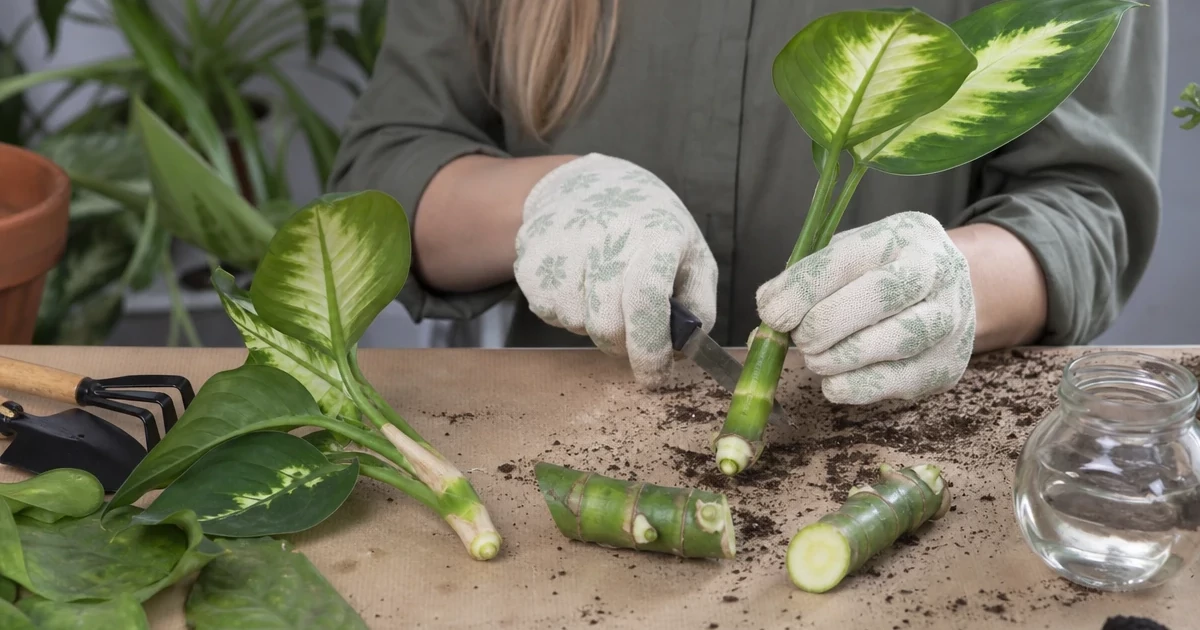
View full-size photoPropagate dieffenbachia wearing gloves for safety.
More in houseplant problems and symptoms.
Yes, and it is the plant’s main drawback. The name “dumb cane” comes from the fact that its sap, if chewed, causes intense burning and swelling of the tongue and throat, making it hard to speak. The cause is needle-like calcium oxalate crystals and irritants in the sap, which also irritate skin and eyes.
Safer alternatives: calathea and the spider plant. More in houseplant names and care; browse potted plants.
Better not, or only well out of reach. The sap causes severe irritation of the mouth and throat.
Cut and root the top, and cut the stem into sections to propagate. The stump left in the pot will sprout new shoots.
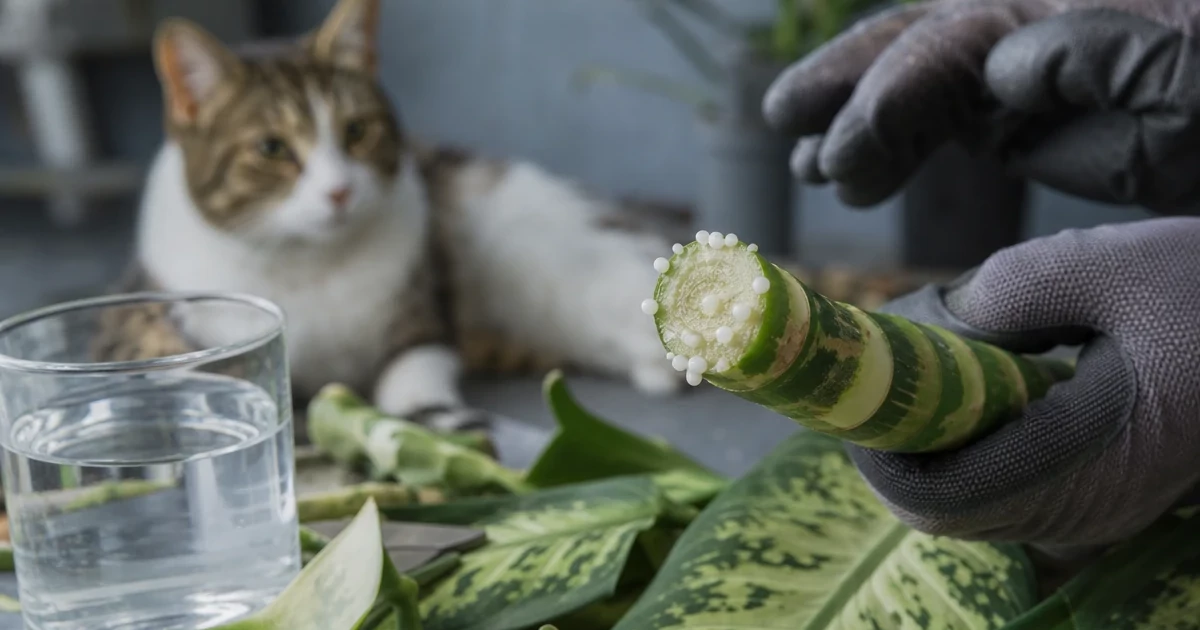
View full-size photoDieffenbachia sap is toxic—keep the plant away from children and pets.
Mature plants sometimes produce a greenish spathe. Flowering weakens the plant, so the stalk is often removed.

Author: Maria Svitlovir
Graduated from Taras Shevchenko National University of Kyiv, Institute of Biology and Medicine (2001). BSc in Biology, MSc in Horticulture. Writes about plants, works at a garden centre selecting and repotting plants, and contributes to plant reference guides.
© Kyiv 2026 UFL Flower Shop

Trademark UFL №191476 is used under license of the rights holder.
All rights reserved. Any use of materials without a link to the site is prohibited.

 Birthday
 Hydrangeas