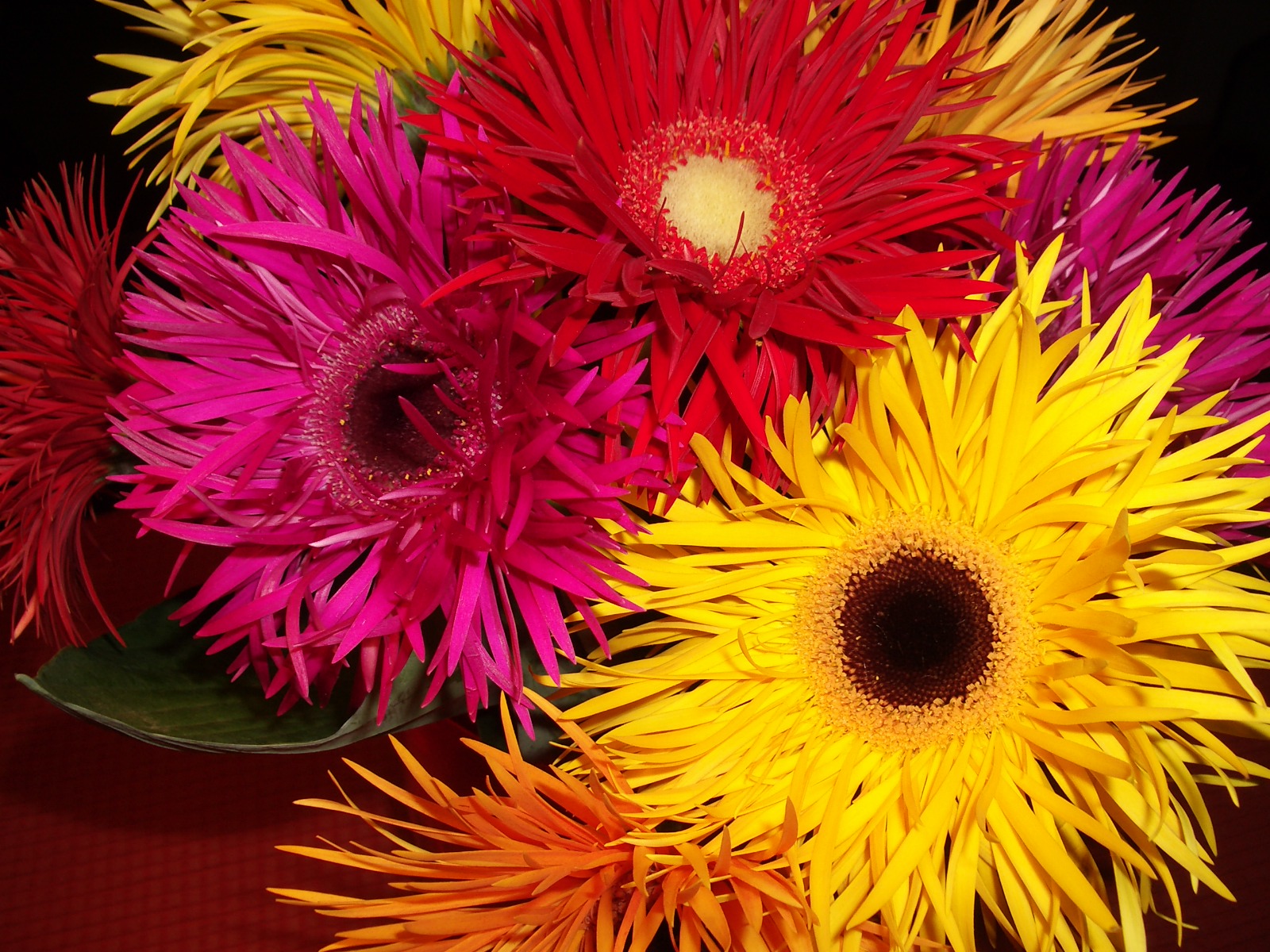
The gerbera is one of the most cheerful flowers: its large, brightly coloured "daisies" lift the mood at first sight. Here is where gerberas come from, what their colours mean, which varieties are used in bouquets, what to pair them with and how to keep them from drooping in the vase. More flowers with photos, names and meanings are in our guide to types of flowers.
You can order bright gerberas in our flowers in a box and flowers for a colleague sections.
The Barberton daisy (Gerbera jamesonii) is native to South Africa and is sometimes called the Transvaal daisy. The genus is named after the German botanist Traugott Gerber. As with a daisy, a gerbera "flower" is actually a flower head made up of hundreds of tiny florets. Cut gerberas are grown in greenhouses, mainly in the Netherlands, so they are available all year round. For growing them at home or in the garden, see "Gerbera: growing guide".
With good care gerberas last 7–14 days.
Gerberas are a versatile gift without too much romance: for colleagues, friends, teachers, children and men. People choose them to celebrate a success or a birthday, to wish someone a quick recovery or simply to cheer them up.
7–14 days in shallow water that is changed daily.
Usually because of bacteria in the water or a stem placed too deep.
Joy, cheerfulness and sincerity; the colour adds nuance.

Author: Maria Svitlovir
Graduated from Taras Shevchenko National University of Kyiv, Institute of Biology and Medicine (2001). BSc in Biology, MSc in Horticulture. Writes about plants, works at a garden centre selecting and repotting plants, and contributes to plant reference guides.
© Kyiv 2026 UFL Flower Shop

Trademark UFL №191476 is used under license of the rights holder.
All rights reserved. Any use of materials without a link to the site is prohibited.

 Birthday
 Hydrangeas