
Saying “sorry” can be harder than making the mistake itself. We fear looking weak, look for excuses or wait for the other person to make the first move. Yet a sincere apology does not humiliate you — it shows that the relationship matters more to you than being right. This guide explains how to apologise so that people believe you: simple steps, short phrases, messages in your own words and separate collections for a partner, your mum, friends and colleagues.
It is best to apologise in person: your emotions are visible and the other person can respond straight away. If you cannot meet, a call or a heartfelt message will do — see our apology text messages.

View full-size photoA sincere apology is best expressed in person.
The last one is a polite form for minor inconveniences; for serious hurt, a heartfelt “I am sorry” works better. Want to say it in other languages? See sorry in different languages.
Ready-made texts are a good prompt, but the strongest words are the ones in which the other person recognises you. Use a simple four-sentence formula:
In full: “Yesterday I forgot about our date. You waited and probably felt unimportant — and that is my fault. I am really sorry. On Saturday I will pick you up at six, and the evening will be just ours.” You can say it aloud, send it as a message or handwrite it on a card with a bouquet.
An apology to a partner, your mum or your boss sounds different. We have prepared separate collections with tips and examples:
Sometimes the words get stuck, and sometimes they have already been said and you need a gesture to prove you mean them. What works:
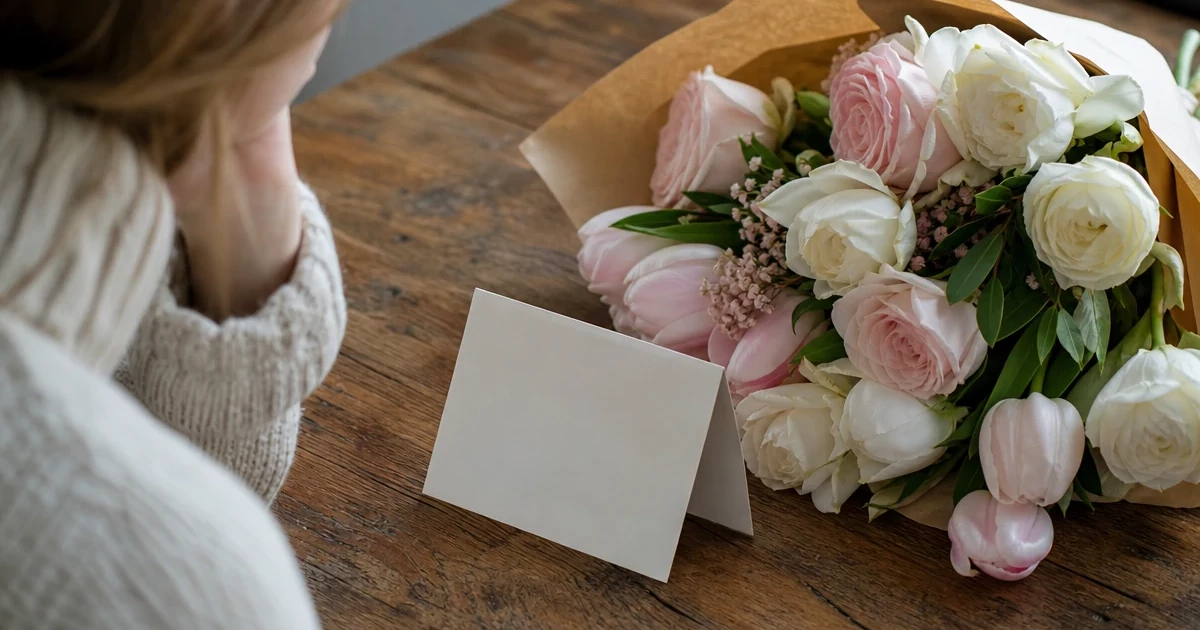
View full-size photoA note with flowers enhances the sincerity of an apology.
Soft, light shades are the traditional choice for an apology: white, cream or blush-pink roses, tulips, lisianthus or hydrangea. White is associated with reconciliation and a fresh start, pink with tenderness and gratitude. Bright red roses fit when you are apologising to a partner and want to remind them of your feelings — see red roses. For mum, choose gentle bouquets for mum, for a friend flowers for a friend, and for a colleague a restrained arrangement from flowers for colleagues.
The note matters most. A few sincere handwritten sentences mean more than the size of the bouquet. Read more in how to apologise with flowers.
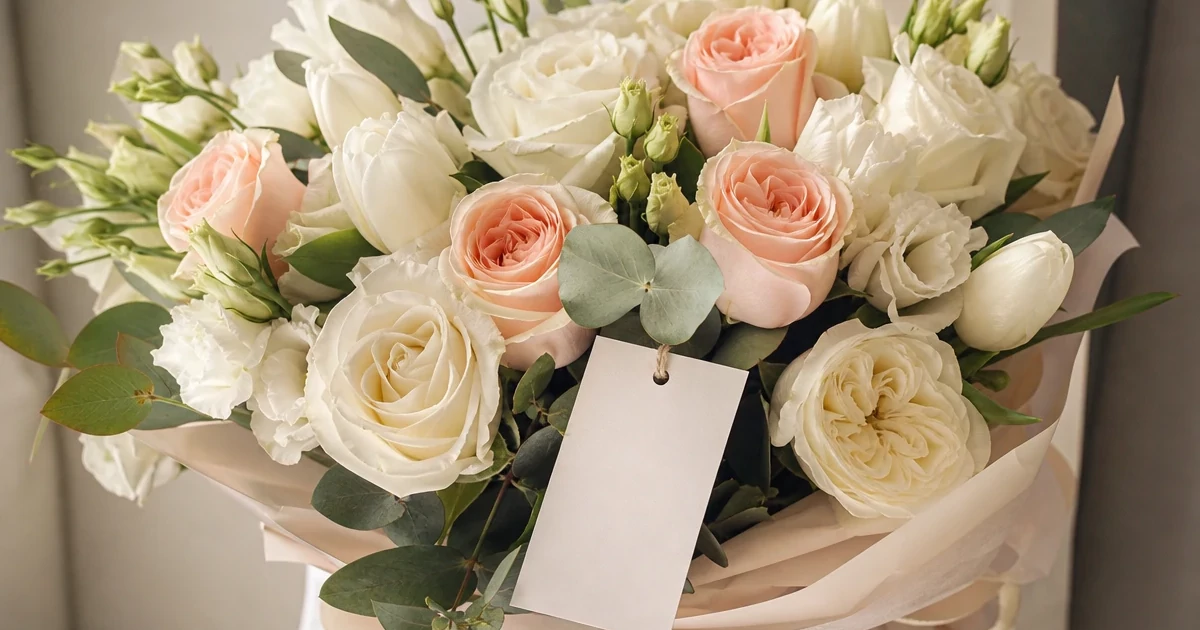
View full-size photoLight-colored flowers are traditionally chosen for apologies.
The other person has the right not to forgive straight away — and that does not mean your words were wasted. Do not pressure them or repeat your apology every hour: say that you respect their feelings and leave the door open. After a few days you can gently get in touch without pressure: “I still regret it and would be glad to talk whenever you want.” If the hurt is serious, time, consistently changed behaviour and sometimes a conversation with a mutual friend or a family therapist help.
In person is best. A message is fine when you cannot meet or the person is not ready to talk yet, but follow it up with a conversation face to face.
There is no universal timeline — anything from a few hours to a few weeks. Do not pressure them, and show the change in your behaviour.
Usually white or blush-pink roses, tulips, lisianthus or hydrangea. Red roses suit a partner. Always add a handwritten note.
Avoid “if”, “but”, long excuses and demands to be forgiven immediately — they make an apology sound insincere.

Author: Maria Svitlovir
Graduated from Taras Shevchenko National University of Kyiv, Institute of Biology and Medicine (2001). BSc in Biology, MSc in Horticulture. Writes about plants, works at a garden centre selecting and repotting plants, and contributes to plant reference guides.
© Kyiv 2026 UFL Flower Shop

Trademark UFL №191476 is used under license of the rights holder.
All rights reserved. Any use of materials without a link to the site is prohibited.

 Birthday
 Hydrangeas