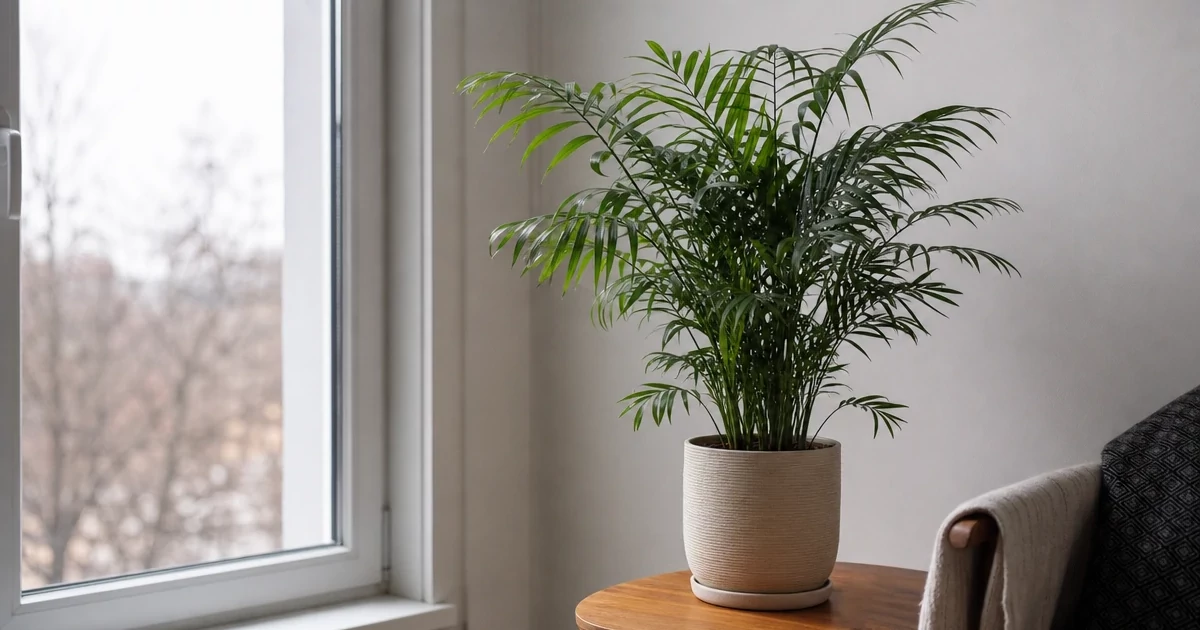
An indoor palm is the easiest way to give a room a tropical feel. But shops call many plants palms, including yucca, dracaena and ponytail palm. Here are the popular true indoor palms by name, which are the easiest, how to stop brown leaf tips and which mistakes to avoid.
More on this topic: houseplants: names and care, dracaena, foliage houseplants.
True palms (the Arecaceae family) have a single growing point at the top and fan-shaped or feather-like leaves. Cut off the top and the palm will not branch; it dies.
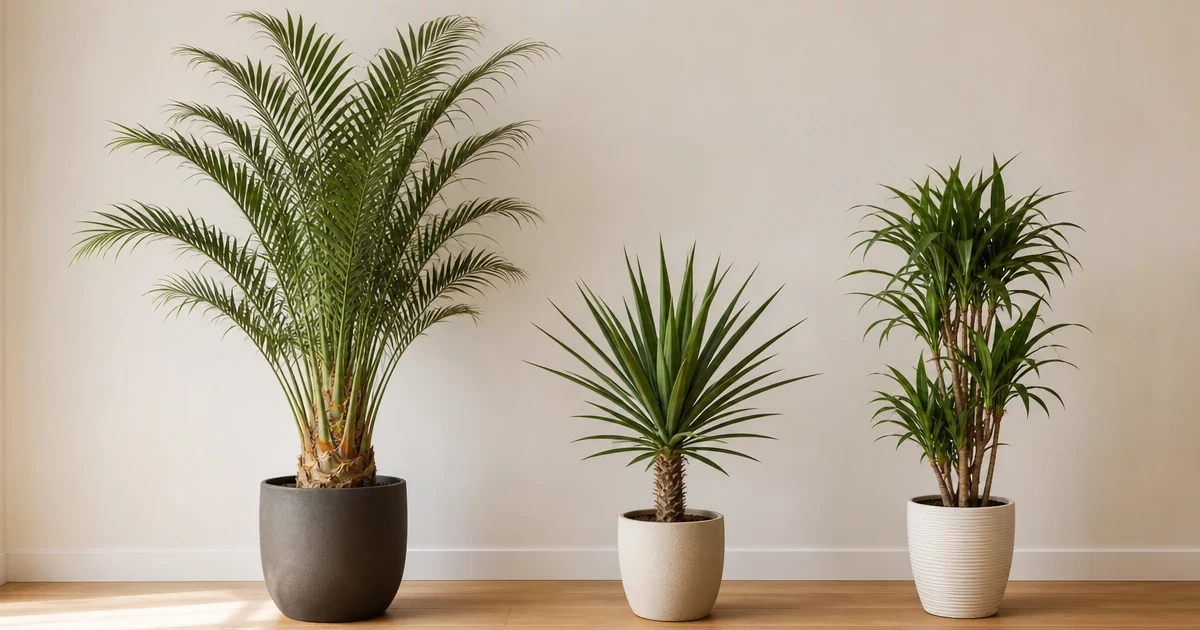
Not palms, though often called so: yucca and dracaena (asparagus family), ponytail palm (Beaucarnea), and sago palm (Cycas), an ancient gymnosperm related to conifers.
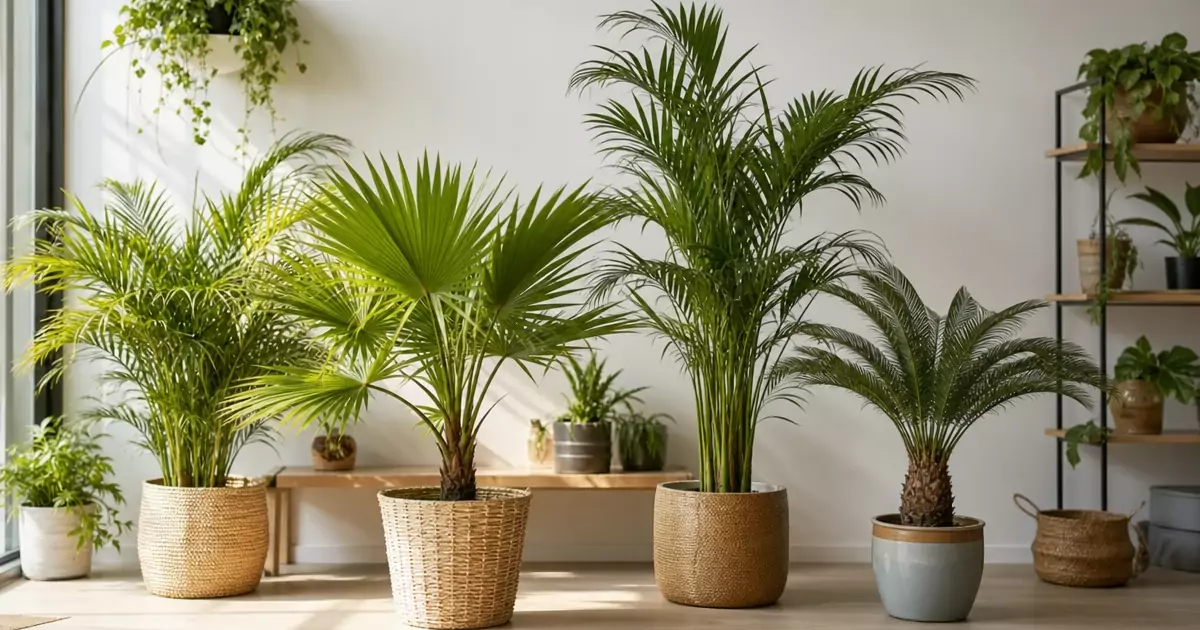
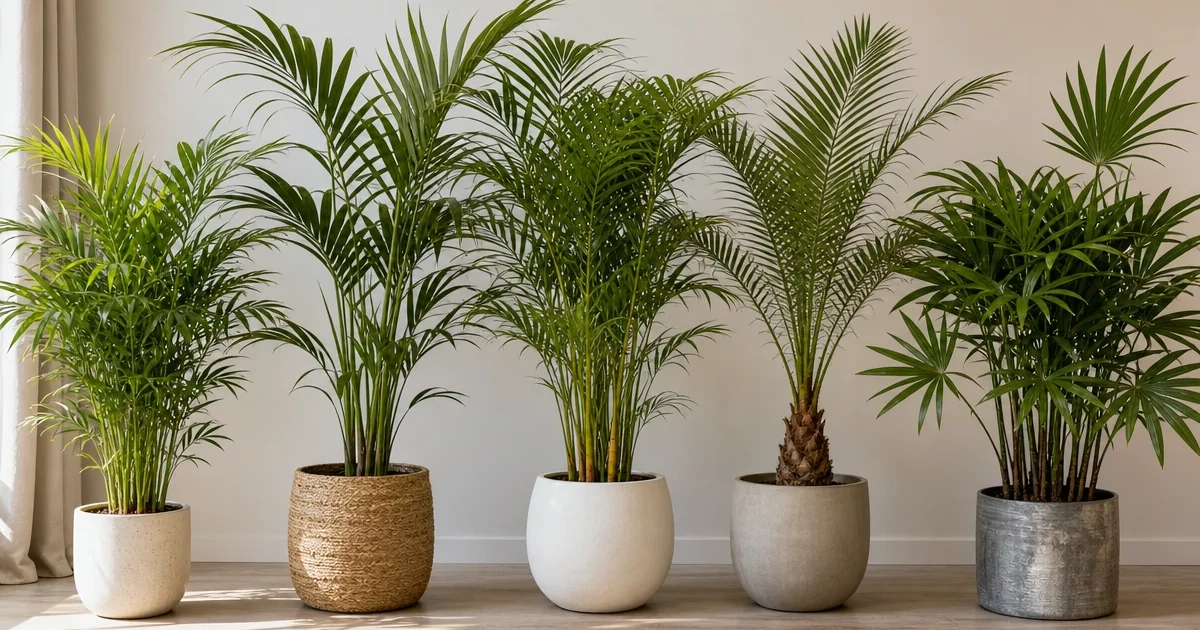
Parlour palm (Chamaedorea elegans): the most compact and shade-tolerant; fine in a north-facing room.
Kentia palm (Howea forsteriana): elegant, slow-growing, very tolerant of dry indoor air; a classic for offices and halls.
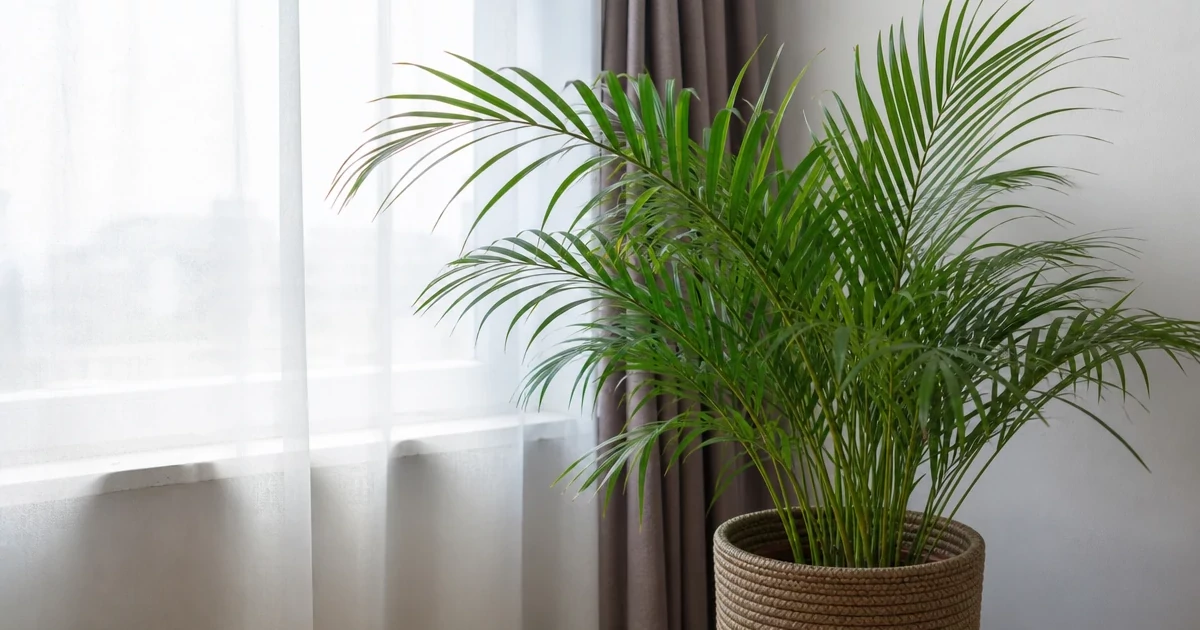
Areca palm (Dypsis lutescens): clumps of several stems with feathery fronds; likes light and humidity.
Pygmy date palm (Phoenix roebelenii): a dwarf date with spines at the leaf base; palms grown from store-bought date stones get much bigger.
Lady palm (Rhapis excelsa): fan leaves on thin, bamboo-like canes; tolerates cool rooms.
Windmill palm (Trachycarpus fortunei) and Livistona are fan palms for bright rooms; the windmill palm is the hardiest and can summer on a balcony.
Light: bright and indirect. Midday sun scorches the leaves; parlour and kentia palms cope with partial shade.
Water thoroughly when the top 2–3 cm is dry and let it drain from the saucer. Water less in winter, but never let the root ball dry out completely.
Humidity matters most: dry radiator air is the number one cause of brown tips. Mist, use a humidifier or a wet pebble tray.
Temperature: 18–25 °C, 15–18 °C in winter for most species. Draughts and cold floors harm the roots.
Repotting: palms hate root disturbance. Pot on young plants every 2–3 years and only top-dress large ones. How to do it: how to repot a houseplant.
Pruning: remove only fully dead fronds at the base. Trim brown tips but leave a thin strip of dry tissue so you don't cut into living leaf.
Dark room or office: parlour palm or kentia.
Bright living room: areca or Livistona.
Cool room or glazed balcony: lady palm or windmill palm.
With cats at home choose parlour, areca or kentia palms, which are considered pet-safe, unlike the highly toxic sago palm. For a large plant that copes with dry air, consider a rubber plant.
Looking for a living gift that lasts for months? A potted orchid is a great choice for home or office.

See houseplants and orchids.

The parlour palm: compact, shade-tolerant and fine with drier air.
Usually dry heated air or irregular watering.
No. A palm has one growing point and dies without it.
Pot on young palms every 2–3 years; just top-dress big ones.

Author: Maria Svitlovir
Graduated from Taras Shevchenko National University of Kyiv, Institute of Biology and Medicine (2001). BSc in Biology, MSc in Horticulture. Writes about plants, works at a garden centre selecting and repotting plants, and contributes to plant reference guides.
© Kyiv 2026 UFL Flower Shop

Trademark UFL №191476 is used under license of the rights holder.
All rights reserved. Any use of materials without a link to the site is prohibited.

 Birthday
 Hydrangeas