
 Birthday
 Hydrangeas
Lilies are among the most striking bouquet flowers: large, fragrant and with a cascade of buds that open one after another for up to two weeks. They have been painted on frescoes and icons for millennia, and today they are chosen for weddings, anniversaries and big celebrations. Here is which lilies exist, what each colour means, how lilies differ from "lily-like" flowers, how to make a bouquet last and why lilies should not be kept in a home with a cat.
Lilies in history and symbolism
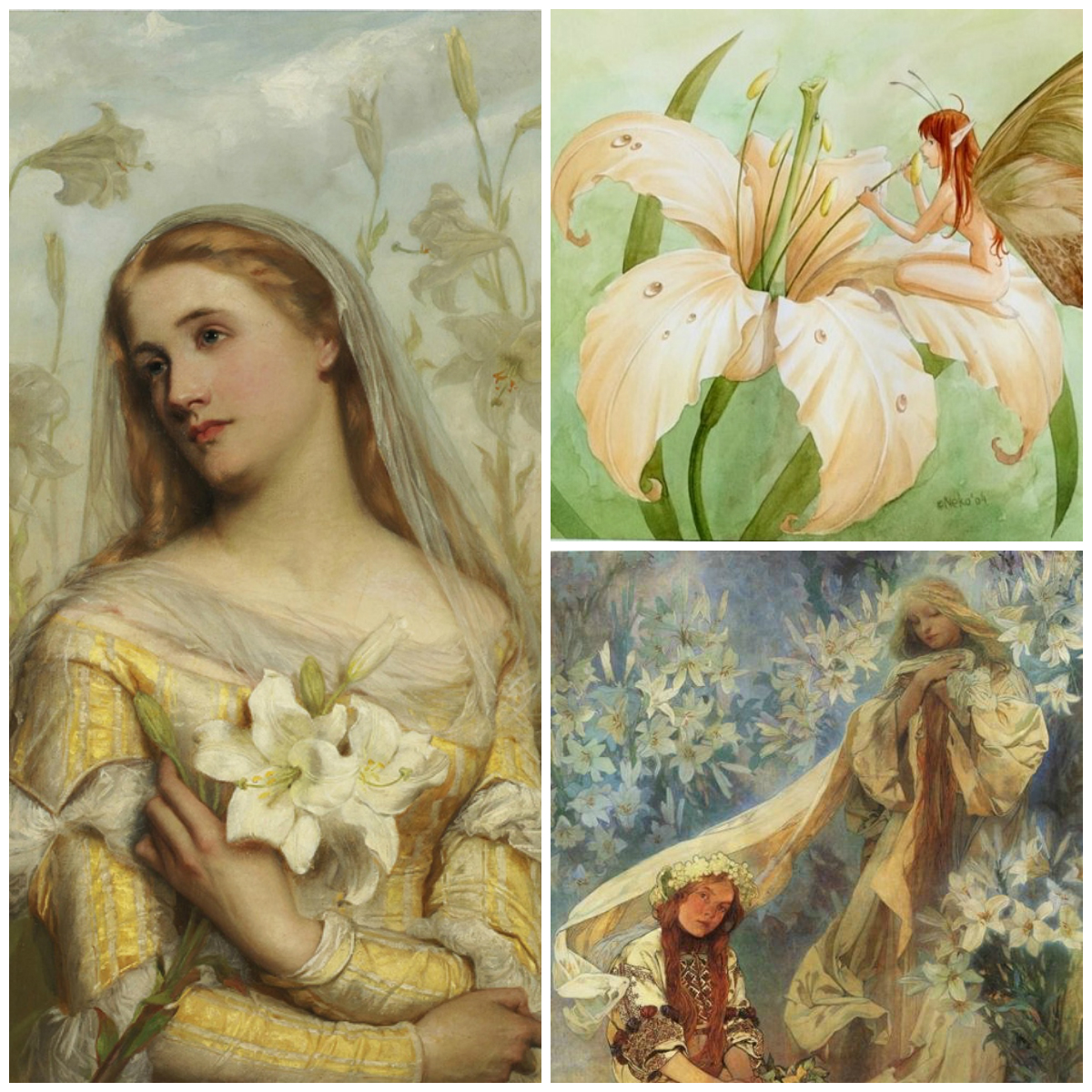
The genus Lilium includes about 100 species native to the temperate Northern Hemisphere. Lilies appear on the Minoan frescoes of the Palace of Knossos in Crete. The ancient Greeks linked the white lily to Hera: in myth, the flowers sprang from drops of her milk. In Christian tradition the white Madonna lily (Lilium candidum) became a symbol of the Virgin Mary's purity and is often held by the Archangel Gabriel in paintings of the Annunciation. The stylised fleur-de-lis was the emblem of the French kings, though historians debate whether it is really an iris; see flowers in heraldry.
Which lilies are used in bouquets
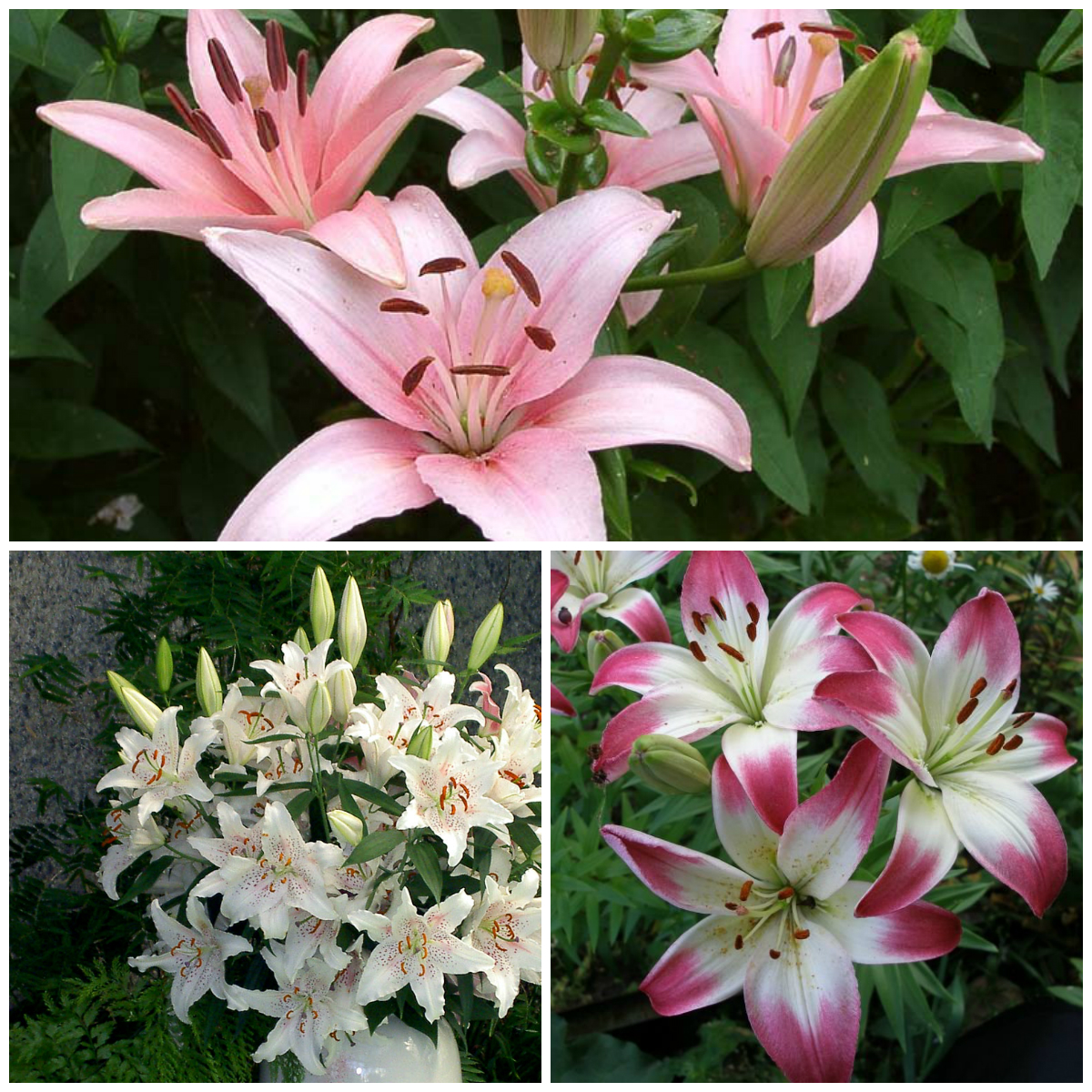
- Asiatic hybrids: bright yellow, orange, red and pink flowers with almost no scent, ideal where strong fragrance is unwelcome.
- Oriental lilies: large white and pink flowers with wavy petals and a strong fragrance. The best-known variety is Stargazer, bred in 1978.
- LA hybrids (longiflorum × Asiatic): firm petals, a delicate scent and a long vase life.
- Trumpet and longiflorum lilies: white trumpet-shaped flowers; longiflorum is known in Western countries as the Easter lily.
What lily colours mean
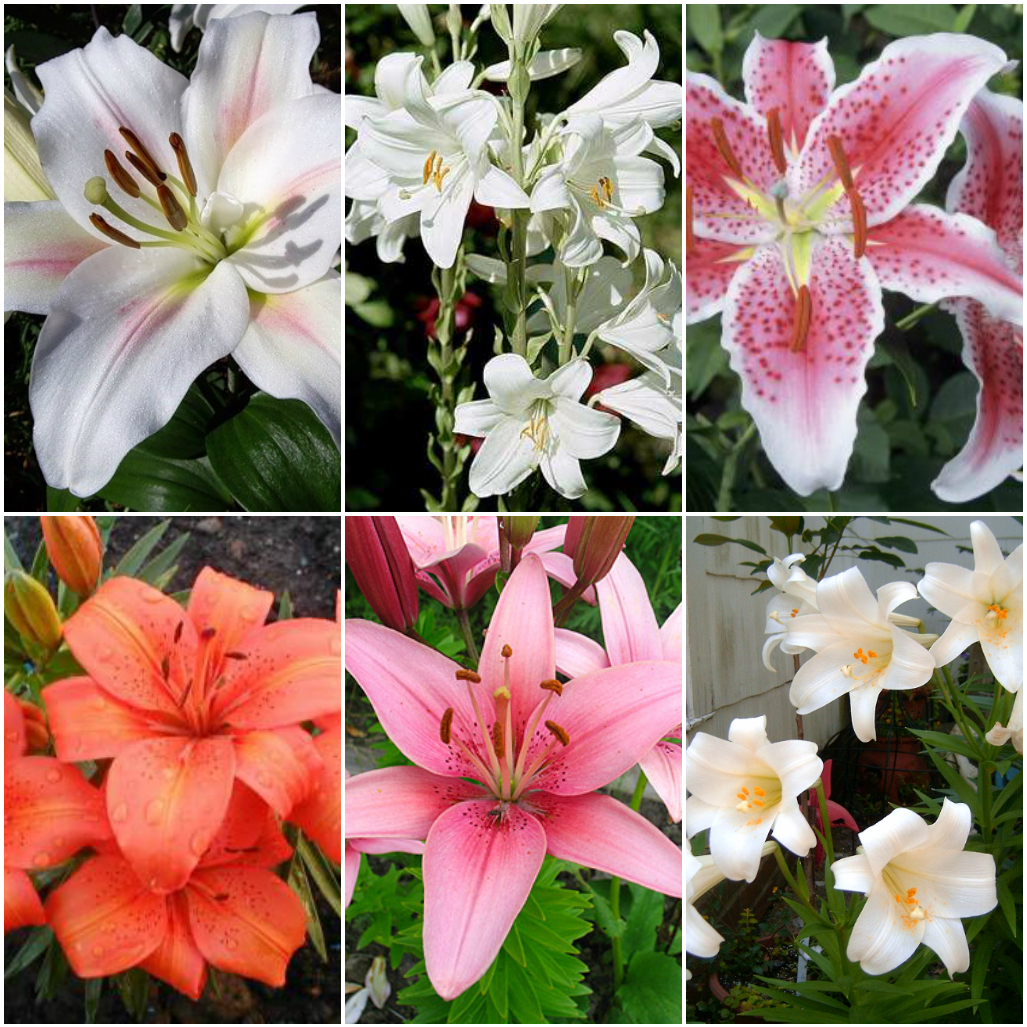
- White: purity, tenderness and new beginnings; a classic for bridal bouquets.
- Pink: admiration and affection.
- Yellow: joy and friendship.
- Orange: energy and confidence.
- Red: passion and strong feelings.
Lilies or roses?
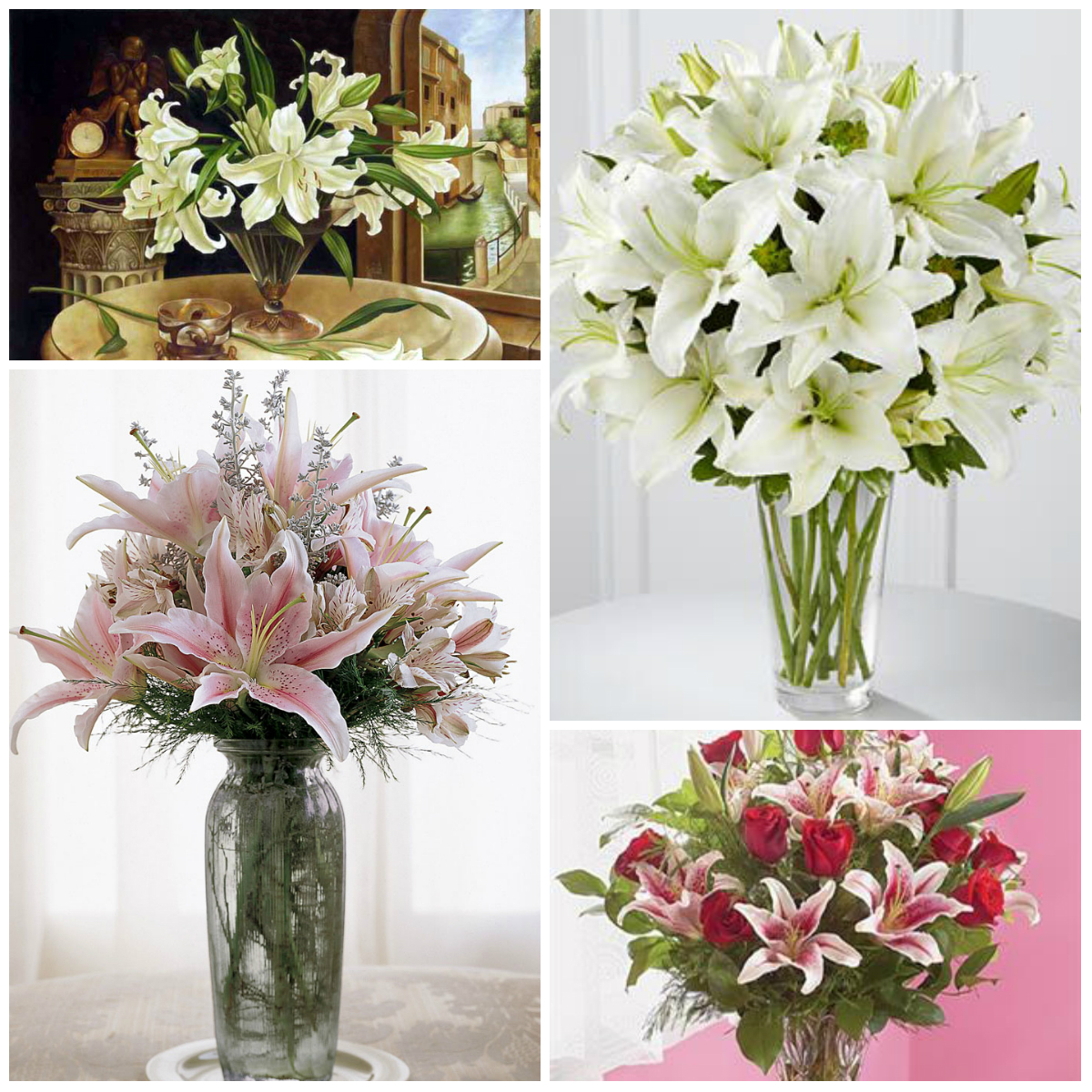
The rose remains the most popular bouquet flower, but lilies win in several cases: when you need a big, striking bouquet from few stems (each carries 3–6 buds), when longevity matters, since a lily bouquet lasts 10–14 days, and when you want fragrance. Lilies pair beautifully with roses, lisianthus, alstroemeria and greenery, and such mixed bouquets combine the best of both.
.jpg)
Lilies and "non-lilies"
Many flowers are wrongly called lilies: the calla lily (Zantedeschia) is a relative of arum, see calla lily meaning; the water lily is a Nymphaea, see white water lily; and the daylily (Hemerocallis) is a separate genus whose flowers last a single day. For more look-alikes see flower look-alikes.
How to care for cut lilies
- Cut the stems at an angle by 2–3 cm and place them in clean, cool water with flower food.
- Remove leaves below the waterline.
- Gently remove the anthers from open flowers with a tissue or tweezers. The pollen leaves stubborn stains on clothes and tablecloths, and the flowers last longer without it.
- Change the water every 2 days and remove spent flowers so the next buds can open.
- Keep the bouquet away from radiators, sun and fruit.
If pollen gets on fabric, do not rub or wet it: lift it off with sticky tape and treat what remains with stain remover.
Lilies and safety
Lilies and daylilies are deadly to cats: even pollen licked from fur or water from the vase can cause acute kidney failure. If you have a cat, choose other flowers. The strong scent of Oriental lilies can cause headaches in a small room, so they are not placed in bedrooms or brought to hospitals. More in plants dangerous to children and pets.
.jpg)
Frequently asked questions
How long do lilies last in a vase?
10–14 days, as the buds on each stem open in turn.
Should I remove lily stamens?
Yes, removing the anthers is best: the pollen stains and is dangerous for cats.
Which lilies have no scent?
Asiatic hybrids have almost none, and LA hybrids only a light scent.
What does a bouquet of white lilies mean?
Purity, tenderness and respect; white lilies are a popular choice for weddings and celebrations.

View full-size photo
Author: Maria Svitlovir
Graduated from Taras Shevchenko National University of Kyiv, Institute of Biology and Medicine (2001). BSc in Biology, MSc in Horticulture. Writes about plants, works at a garden centre selecting and repotting plants, and contributes to plant reference guides.