
 Birthday
 Hydrangeas
The birth of a child is one of the most important days in a family's life, and flowers are a fitting way to thank the new mum. But maternity hospitals have their own rules, and around a newborn hygiene and the absence of strong scents matter. Here is whether you can bring flowers to the ward, which bouquet to choose for going home and how to get the size, colour and scent right.
Soft bouquets for a new mum are available in our flowers for mum section, and vase-free arrangements among our flower boxes.

Can you bring flowers to the ward?
Many maternity hospitals do not allow fresh flowers on the wards: there are newborns, rooms are often shared, and vase water and pollen are unnecessary sources of bacteria and allergens. If flowers are allowed, choose a small unscented bouquet, ideally in a box or basket with floral foam. Check the rules of the specific hospital. For general advice, see our guide to hospital flowers.
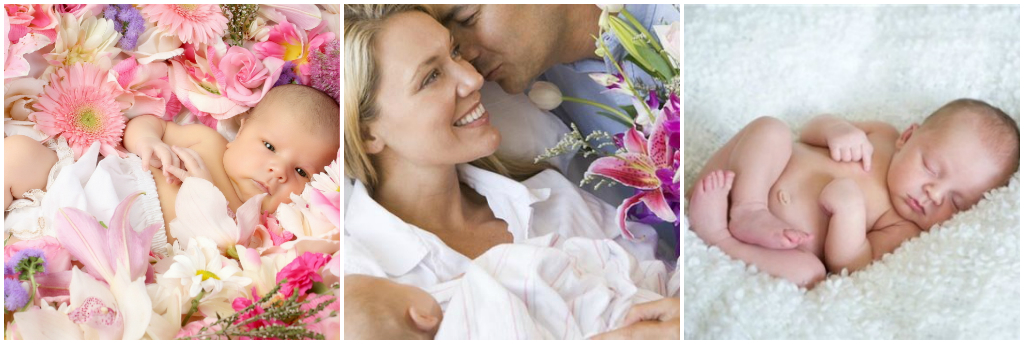
Which bouquet to choose for going home
- Soft, without strong scents. Spray roses, lisianthus, alstroemeria, carnations, hydrangea, gerbera — pretty and safe near a baby.
- Compact. Mum will be holding the baby, so the bouquet is presented, photographed and handed straight to family.
- Colour. Blue for a boy and pink for a girl is a tradition, not a rule; white, cream, peach and pastel bouquets always work.
- Wrapping. Simple, without glitter or shedding decorations.

Flowers to avoid
- Strongly scented: lilies, hyacinths, tuberoses, mimosa — the scent can bother mum and baby.
- Pollen-heavy: lilies with stamens left in, garden sunflowers and wild grasses.
- Huge arrangements — awkward to take home along with the baby and luggage.
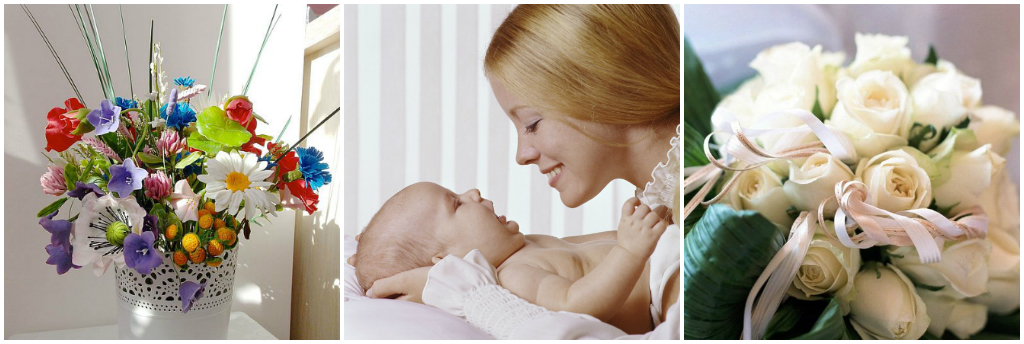
Flowers at home
At home, put the bouquet in the living room or kitchen rather than the nursery, and change the water daily. If you have a cat, avoid lilies: they are toxic to cats. It is also wise to skip potted plants at first — less dust and soil around the baby is better.

Flowers for doctors and midwives
A small bouquet or basket arrangement for the doctor and midwife is a warm way to say thank you. Choose neutral, long-lasting flowers such as chrysanthemums, alstroemeria and spray roses, and add a card from the family.
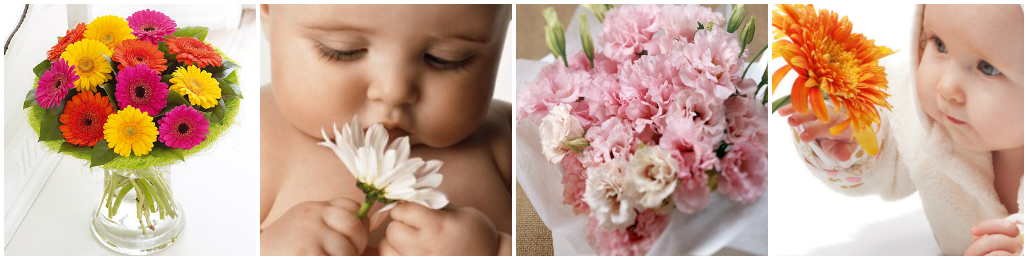
Ideas for the homecoming
- Ribbons and small floral posies on the car (without blocking the view or number plates).
- A card for mum from dad and older siblings.
- A photo shoot with the bouquet at the hospital entrance.
- Flowers waiting for mum at home — they can be delivered in time for her return.


FAQ
What flowers are given when leaving the maternity hospital?
Soft, lightly scented ones: spray roses, lisianthus, alstroemeria, carnations, hydrangea, gerbera.
Does a boy need a blue bouquet?
No. It is a tradition, not a rule; pastel and white bouquets are always appropriate.
Can I bring flowers to the ward?
It depends on the hospital: many do not allow it. Check in advance.

View full-size photo
Author: Maria Svitlovir
Graduated from Taras Shevchenko National University of Kyiv, Institute of Biology and Medicine (2001). BSc in Biology, MSc in Horticulture. Writes about plants, works at a garden centre selecting and repotting plants, and contributes to plant reference guides.