UFL logo

Vertical Gardens: Types, Plants and a DIY Guide

ID:
836
Total views:
871
Category:
Published:
Updated:


A vertical garden is a planting on a wall rather than in a bed or on a windowsill. It saves space, livens up dull surfaces and turns a balcony, porch or office wall into a living picture. Here are the main types of vertical gardens, the plants that suit them and how to make a simple one yourself.

Plants for a vertical garden or office are available in our potted plants section with delivery in Kyiv.

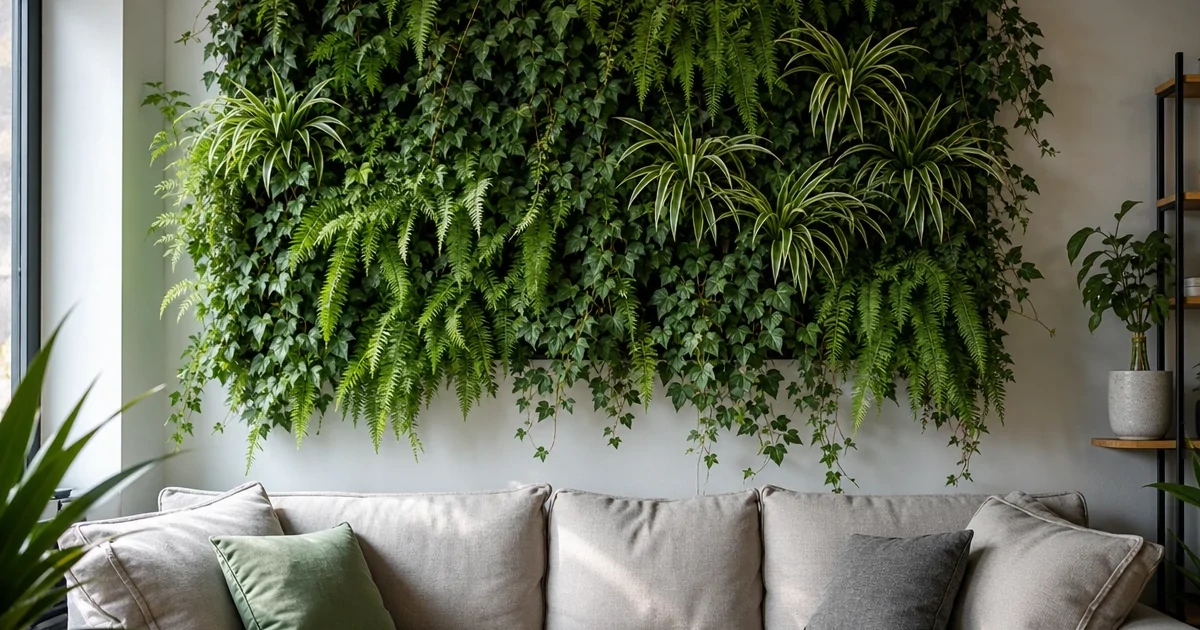
Living plant wall in a living room
View full-size photo

Where the idea came from

Plants on walls are nothing new — think of vines on façades or ivy on old buildings. The modern "living wall" (mur végétal) was developed in the 1980s by the French botanist Patrick Blanc: plants grow on felt without soil and get their nutrients through irrigation. His well-known works include the wall of the Musée du quai Branly in Paris and the CaixaForum façade in Madrid. Another famous example is Milan's Bosco Verticale ("Vertical Forest") towers, with hundreds of trees on their balconies.

Types of vertical gardens

Types of vertical gardensPocketFelt pockets on the wallCheap and simpleHand or drip wateringModularPlastic cassettes with soilPlants easy to swapBuilt-in drip irrigationHydroponicPlants on felt, no soilPatrick Blanc's methodNeeds pump and controlsPreserved mossNo watering or lightA decorative panelNot alive, but no care
The four main types of vertical planting

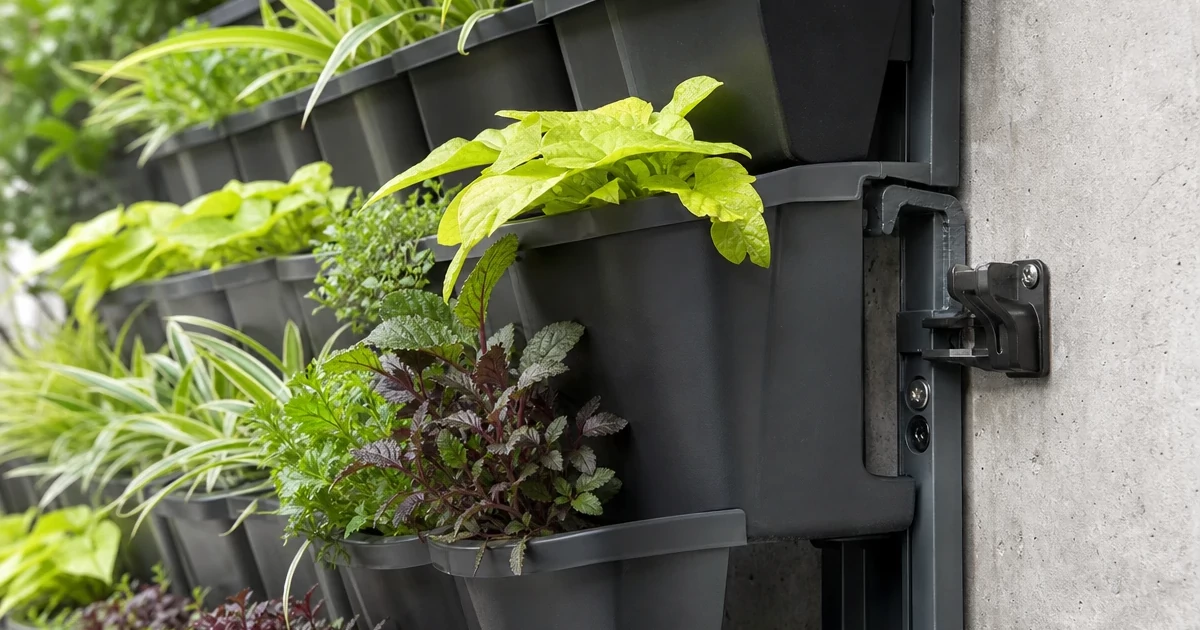
Modular vertical garden system
View full-size photo

Plants for a vertical garden

  • Indoors and in offices: pothos, philodendrons, spider plant, Boston fern, fittonia, peperomia, ivy, tradescantia. Most like bright indirect light and cope well with hanging positions. For choosing plants for work, see our office plants guide.
  • Balconies and outdoors: trailing petunias, bacopa, nasturtium, strawberries, herbs, sedums and houseleeks, ivy.
  • For shade: ferns, ivy, hostas (in large pockets), begonias.

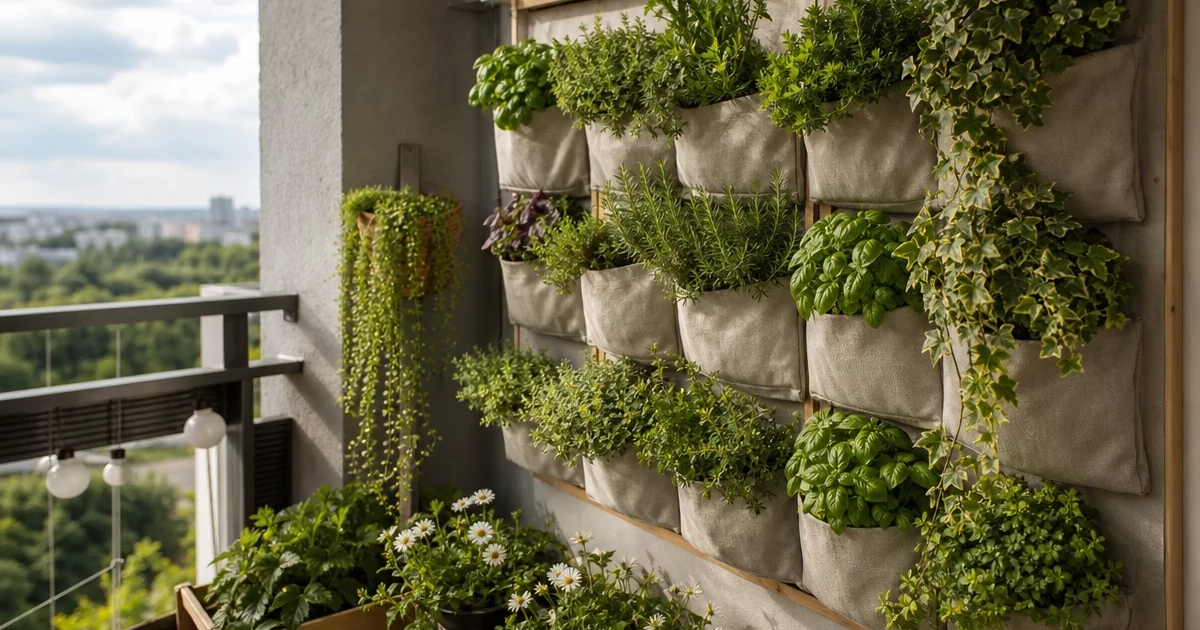
Fabric planter pockets on a balcony
View full-size photo

A simple DIY vertical garden

  • Choose a wall with enough light (or a grow light), water nearby and strength to hold wet soil.
  • Protect the wall with a waterproof panel or membrane to prevent damp.
  • Base: felt pockets, a wooden pallet, shelves with pots or modular cassettes.
  • Soil: light, with perlite or coir.
  • Planting: large plants first, then ground-cover and trailing plants.
  • Watering: top to bottom; for large walls a drip system with a timer is best.

Care

  • Check soil moisture: the top rows dry out faster than the bottom ones.
  • Feed with foliage-plant fertiliser during the growing season.
  • Trim overgrown shoots and replace any plants that fail.
  • An indoor wall without a window needs a grow light for at least 10–12 hours a day.

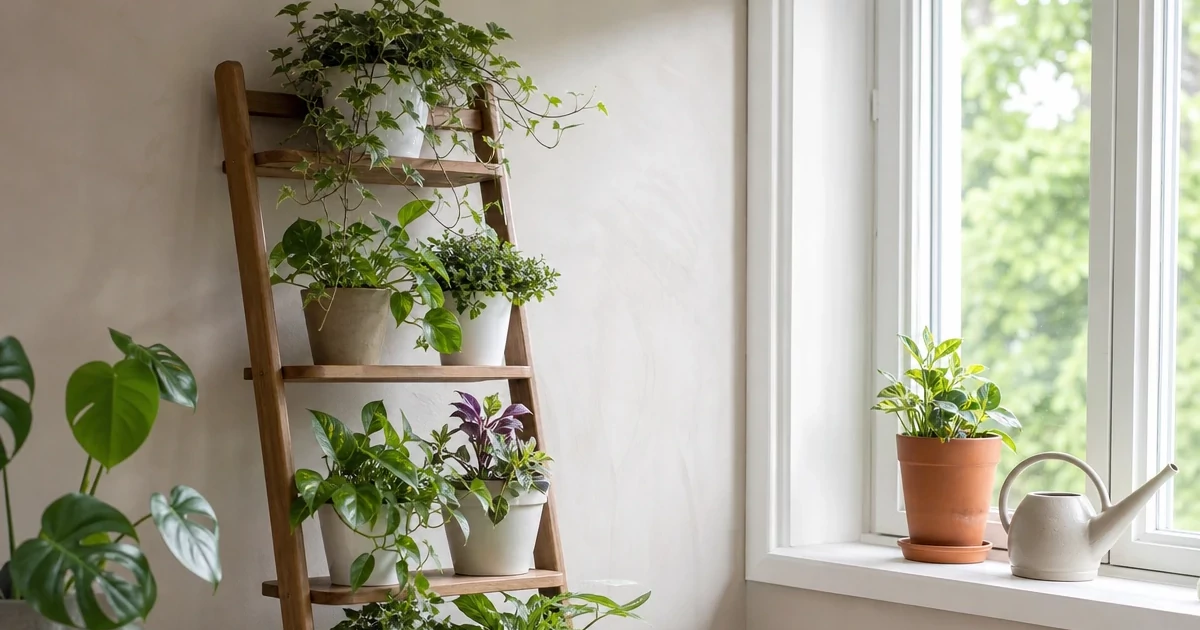
Vertical garden of pots on a ladder shelf
View full-size photo

When to choose moss instead

If you cannot provide watering and light, choose a preserved moss panel: it looks like living greenery, needs no care and copes with dry air. But it is decor rather than plants — it does not grow and dislikes high humidity.

Preserved moss panel on an office wall
View full-size photo

FAQ

Will the wall get damp?

Not if there is a waterproof panel and an air gap between the garden and the wall, and excess water drains into a tray.

Which plants are easiest for a vertical garden?

Pothos, spider plant, philodendron and ivy tolerate hanging positions and irregular watering.

How heavy is a vertical garden?

With wet soil, tens of kilograms per square metre, so fixings must be rated for that weight.

Author: Maria Svitlovir

Graduated from Taras Shevchenko National University of Kyiv, Institute of Biology and Medicine (2001). BSc in Biology, MSc in Horticulture. Writes about plants, works at a garden centre selecting and repotting plants, and contributes to plant reference guides.