Monstera is the star of modern interiors: huge split leaves full of holes turn any room tropical. Here are the main monstera types (deliciosa, albo, monkey, Thai Constellation), home care, why it grows aerial roots, how to propagate it from cuttings and whether it’s safe to keep at home, with the popular myths debunked. More plants with names and tips in our houseplant catalogue.
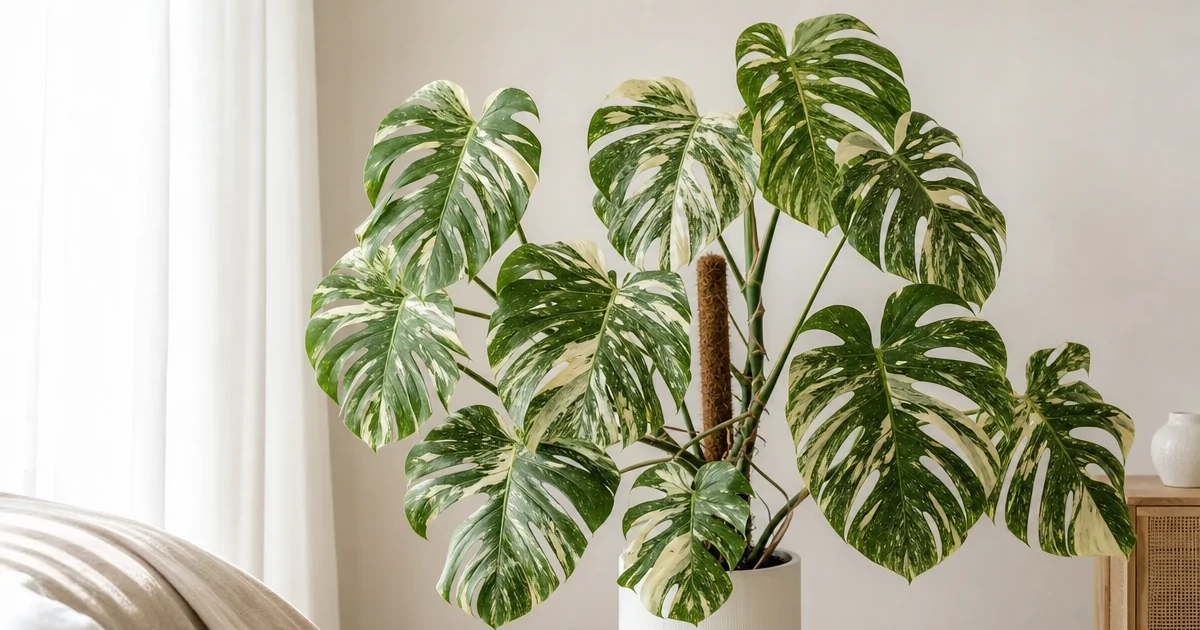
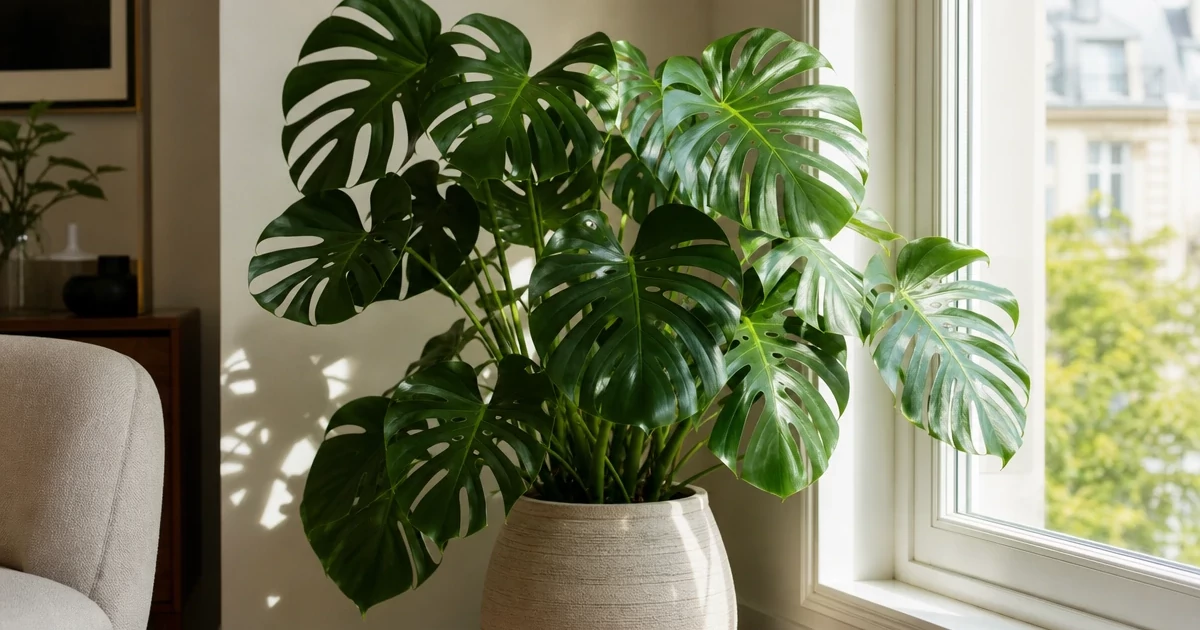
Monstera deliciosa is the classic, with large glossy leaves that become split and holed with age; in the wild it bears edible fruit tasting of pineapple and banana.
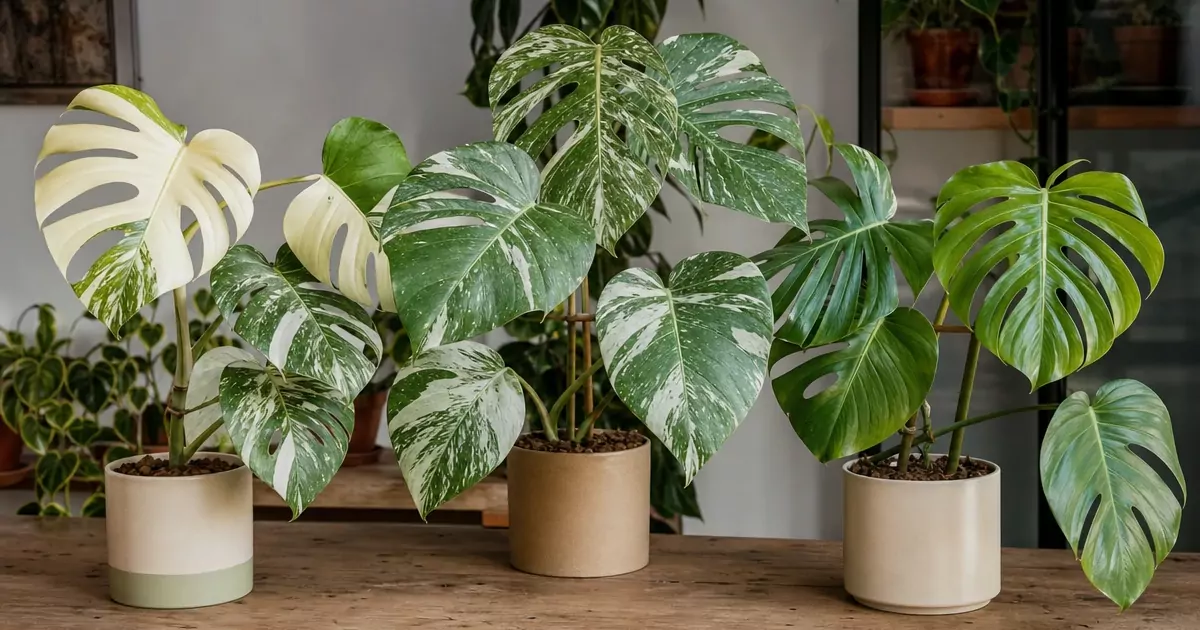
Monstera albo has white patches and sectors; it grows more slowly, needs more light and its white areas can brown.
Thai Constellation has cream speckles across the leaf and is more stable than the albo.
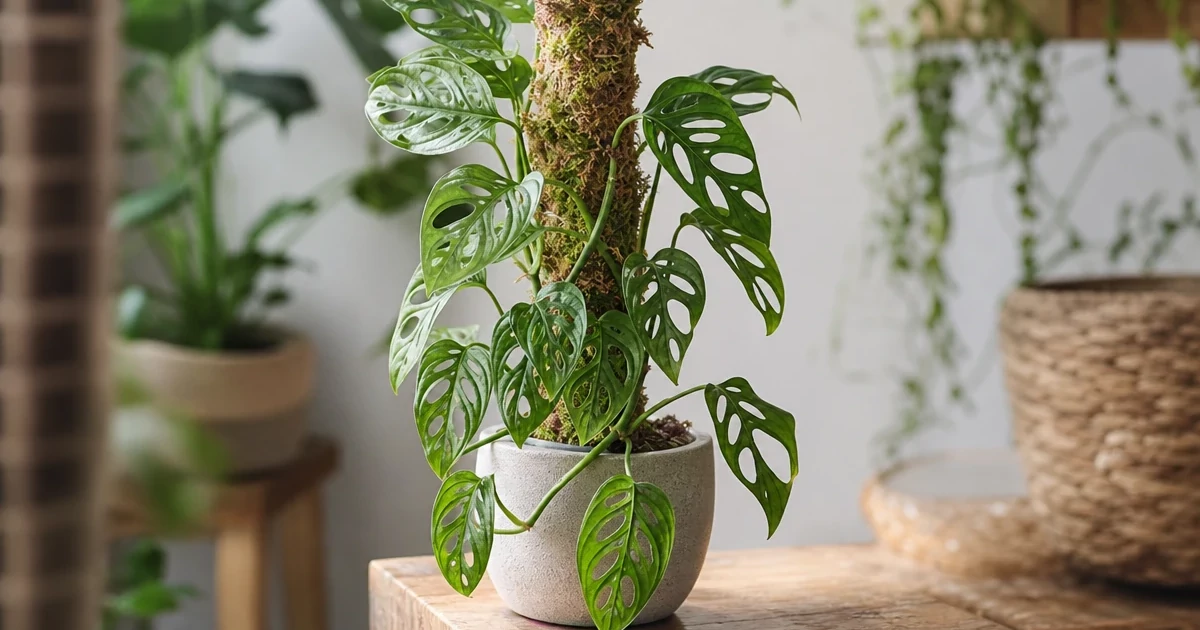
Monkey monstera (adansonii) has small leaves full of oval holes; it climbs or trails nicely from a hanging pot.
Borsigiana is a more compact form of deliciosa with smaller leaves and longer internodes.
Monstera care at home
Light: bright and indirect; in shade new leaves come in small and without splits.
Water when the top 3–5 cm is dry: about weekly in summer, fortnightly in winter.
Keep it at +20…+28 °C and 50–60 % humidity, and wipe dust from the leaves.
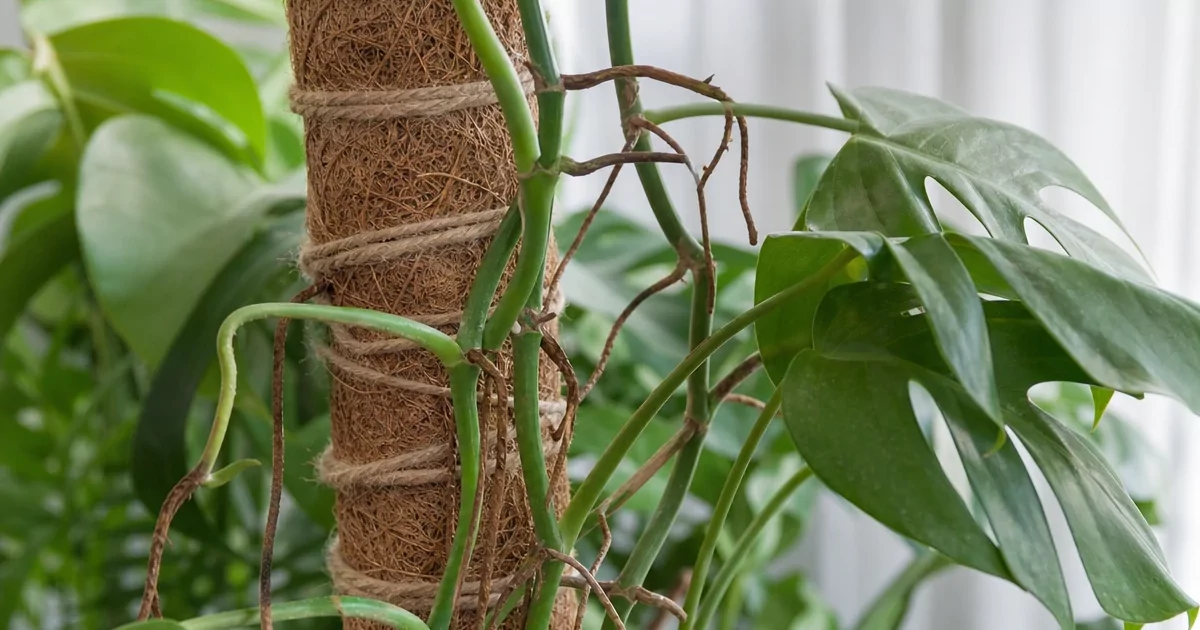
Support: a moss or coir pole helps it climb and produce bigger leaves.
Feed every 2 weeks from April to September with a foliage fertiliser.
Monstera minima, Peru and other "mini monsteras"
"Monstera minima" is actually Rhaphidophora tetrasperma, a monstera relative with small split leaves up to 15–20 cm. It grows quickly on a support and needs the same care.
Monstera Peru (Monstera karstenianum) has thick, puckered glossy leaves without holes; a compact climber for a shelf or hanging pot.
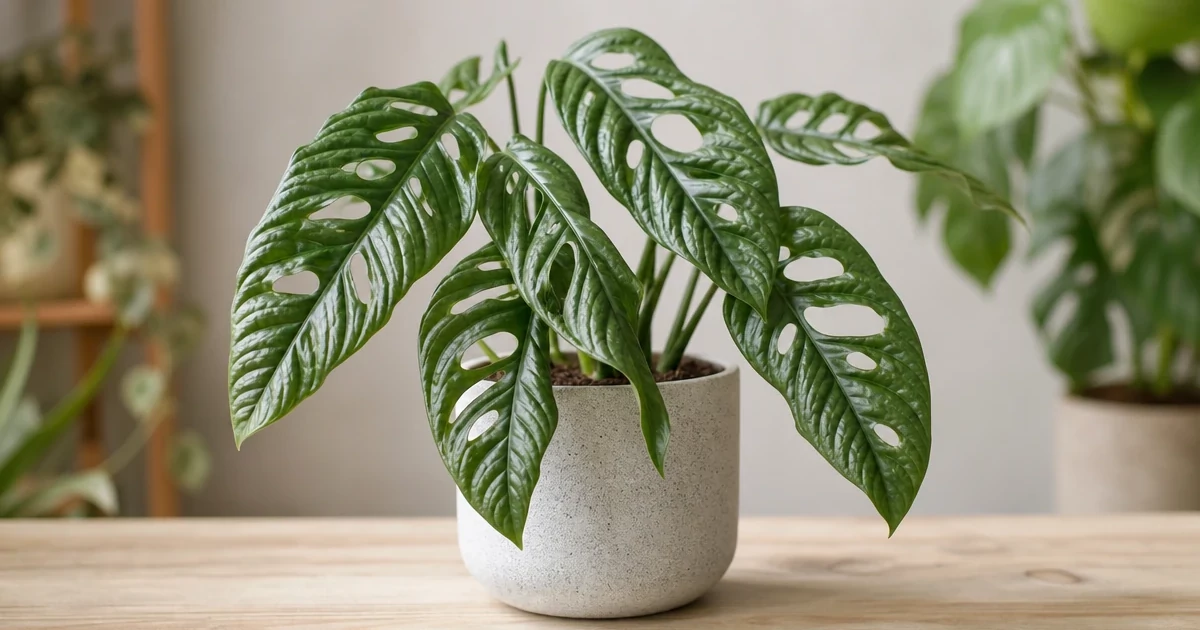
Monstera obliqua is a collector's rarity whose leaves are more hole than blade; plants sold under this name are often actually adansonii.
The best spot is 1–2 m from an east- or west-facing window, or by a south-facing one behind a sheer curtain; a monstera takes up a lot of room, so leave space around it. Use a heavy, stable pot 3–5 cm wider than the last, with drainage holes. Repot young plants every spring and mature ones every 2–3 years, or just refresh the topsoil. The mix should be airy, with bark, perlite and peat so the roots can breathe.
In nature, aerial roots cling to trees and gather moisture; don’t cut them, guide them into the soil or onto the support.
Droplets on leaf edges are guttation, the plant shedding excess water; it’s more common with heavy watering and high humidity, which explains the “monstera cries before rain” belief.
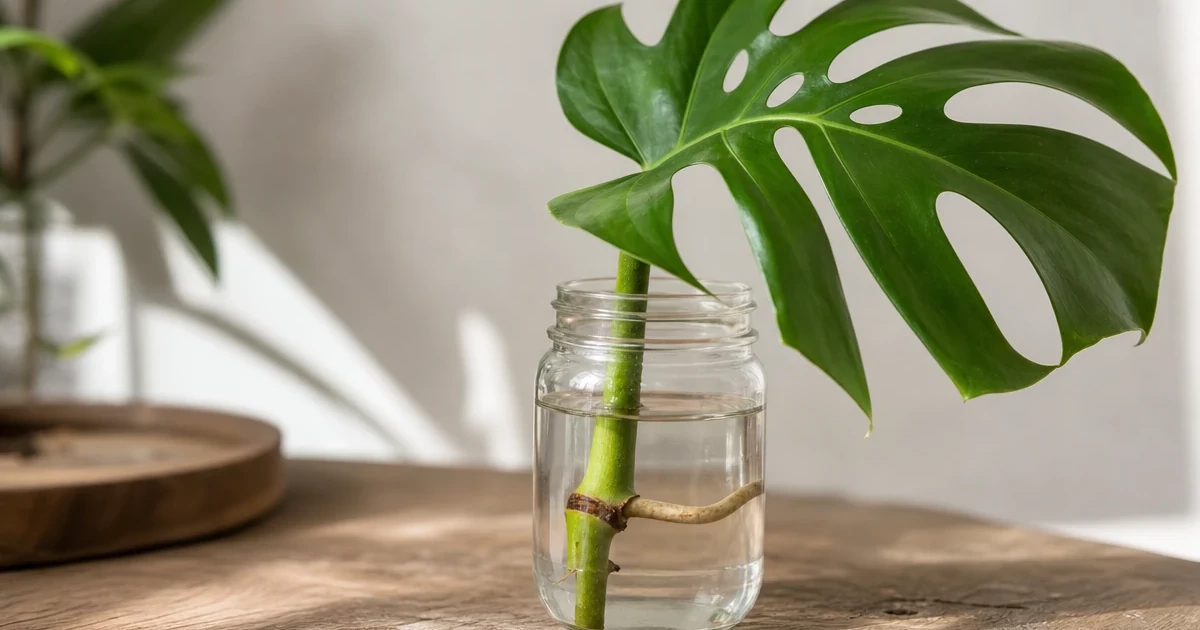
A cutting needs at least one node, where a leaf joins the stem, ideally with an aerial root; without a node it won’t grow.
Root it in water, sphagnum or a light mix at +22…+25 °C; roots appear in 2–4 weeks.
You can also air-layer: wrap a node in damp moss and film, then cut once roots form.
Repot young plants yearly and mature ones every 2–3 years; see how to repot a houseplant. Pothos propagates just as easily from cuttings in water.
Does a monstera flower indoors?
A monstera flower is a cream spadix inside a white spathe, much like a peace lily's, and it ripens into an edible fruit over about a year. Indoors, though, it flowers very rarely: it needs maturity (several years), space, bright light and high, greenhouse-like humidity. Do not expect blooms in a flat.
Is it safe to keep monstera at home?
The myth that monstera “drains energy” or “suffocates you at night” has no scientific basis; the CO₂ a plant releases in the dark is negligible next to human breathing.
The only real risk is calcium oxalate in the leaves and stems, so keep it away from cats, dogs and small children.
It’s young or lacks light; splits appear on mature leaves in bright indirect light.
How often should I water monstera?
When the top 3–5 cm is dry: about weekly in summer, fortnightly in winter.
Can I cut aerial roots?
Better not; guide them into the soil or onto a support.
Can I keep a monstera in the bedroom?
Yes, the “night suffocation” myth is unfounded, but keep it away from pets.
Author: Maria Svitlovir
Graduated from Taras Shevchenko National University of Kyiv, Institute of Biology and Medicine (2001). BSc in Biology, MSc in Horticulture. Writes about plants, works at a garden centre selecting and repotting plants, and contributes to plant reference guides.






 Birthday
 Hydrangeas