
 Birthday
 Hydrangeas
Ornamental cabbage looks its best just when the rest of the garden is fading. Its lush rosettes in white, pink, magenta and purple brighten beds until late autumn, and long-stemmed varieties are turning up in bouquets more and more often. Here is what the plant is, why it only colours up in the cold, how to grow it and how to use it in floristry.
What ornamental cabbage is
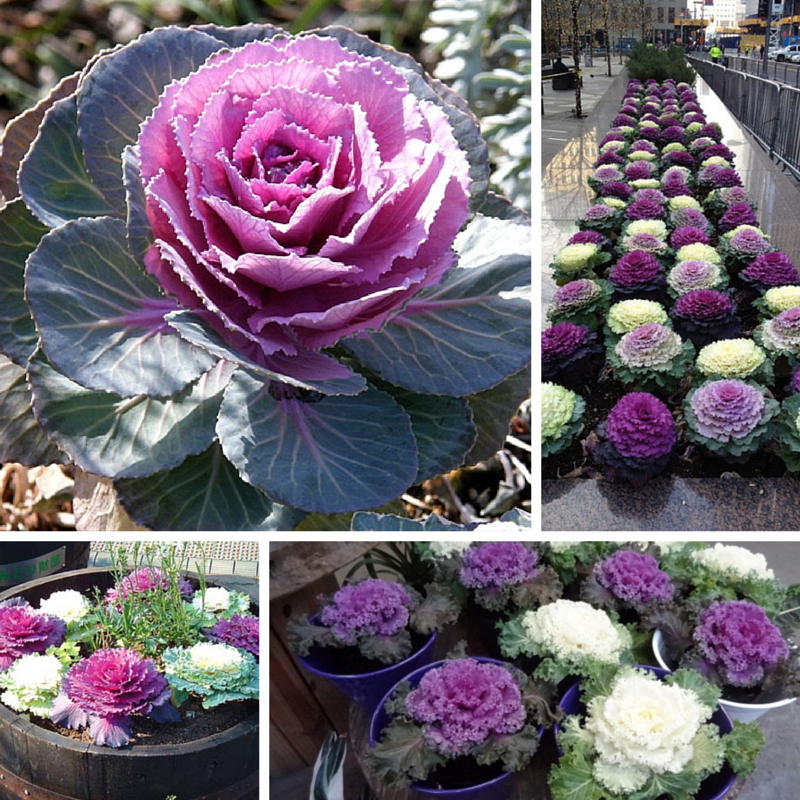
Ornamental cabbage is not a distant relative of the vegetable but the very same species: Brassica oleracea, from the cabbage family. Breeders, above all in Japan, developed forms whose main feature is a bright rosette of leaves. In Japan it is called habotan and is traditionally used in New Year decorations.
Note that what looks like a giant flower is actually leaves. The real flowers are small, yellow and borne in clusters, and they appear only in the second year if the plant survives the winter. As a rule, ornamental cabbage is grown for one season.
Types and varieties
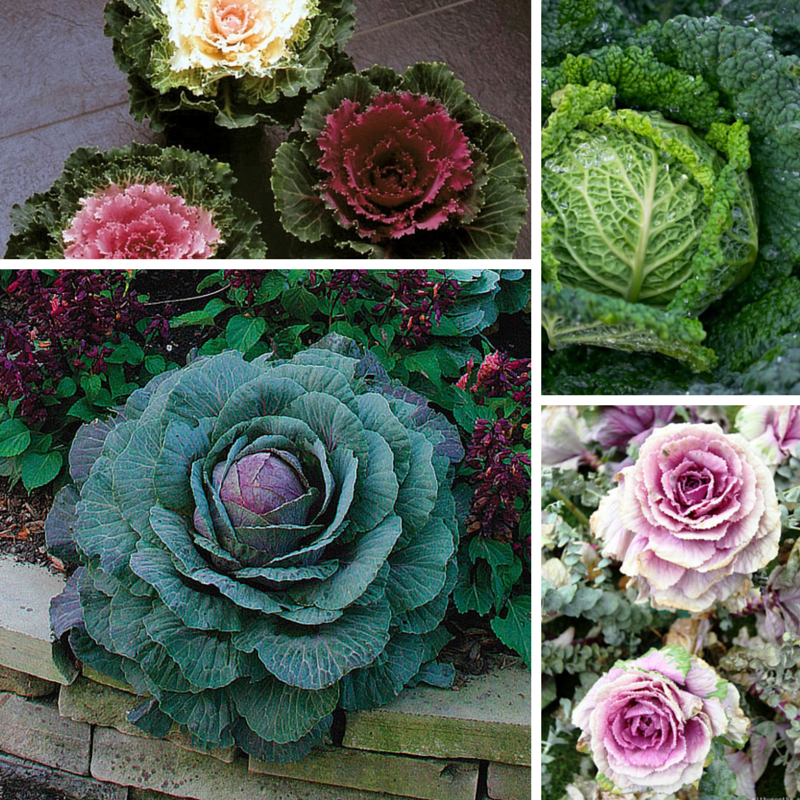
- Smooth-edged leaves — a dense rosette resembling a cabbage head or a rose; often called ornamental cabbage in the narrow sense.
- Ruffled and fringed leaves — lush, lacy rosettes, known in English-speaking countries as ornamental kale.
- Cut-flower varieties — stems 50–70 cm long with a compact rosette on top, grown specifically for bouquets.
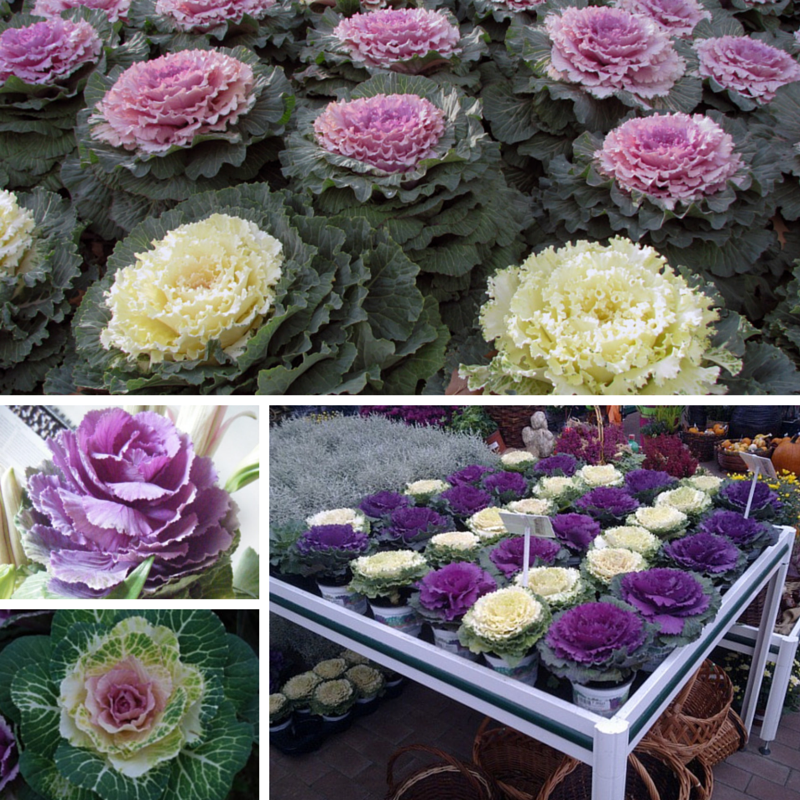
- By colour — white, cream, pink, magenta or purple centres with green or blue-grey outer leaves.
Why it only colours up in autumn
In summer the centre of most varieties stays pale or greenish. The bright colour develops once night temperatures have dropped below 10 °C several times: in the cold the plant produces less chlorophyll, revealing other pigments — anthocyanins — and pale chlorophyll-free areas. That is why it peaks in September–November, and light frosts only deepen the colour.
How to grow ornamental cabbage
- Sowing. In March–April for seedlings. After germination the seedlings need cool conditions (12–16 °C) and plenty of light, or they will become leggy.
- Planting out. In May, in a sunny spot with fertile soil, 30–50 cm apart.
- Care. Regular watering and balanced feeding in summer. Stop nitrogen fertiliser towards the end of summer: too much nitrogen hinders the colour.
- Protection. Cabbage white caterpillars and flea beetles love it: check the leaves and remove pests.
- Moving. The plant transplants well even in autumn: dig it up with its root ball and move it to a container by the door or on a balcony.
How much frost it can take
Ornamental cabbage is one of the most cold-tolerant seasonal plants for the garden. Mature plants usually survive frosts down to −8…−10 °C and straighten their leaves again after a thaw. In mild winters in southern Ukraine a bed stays decorative until December. Other plants that cope with cold are covered in our article on frost-hardy plants.
It pairs well with late chrysanthemums, asters, ornamental grasses and heather, creating an autumn bed that lasts until the snow. Read about chrysanthemums in how to grow chrysanthemums.
Ornamental cabbage in bouquets
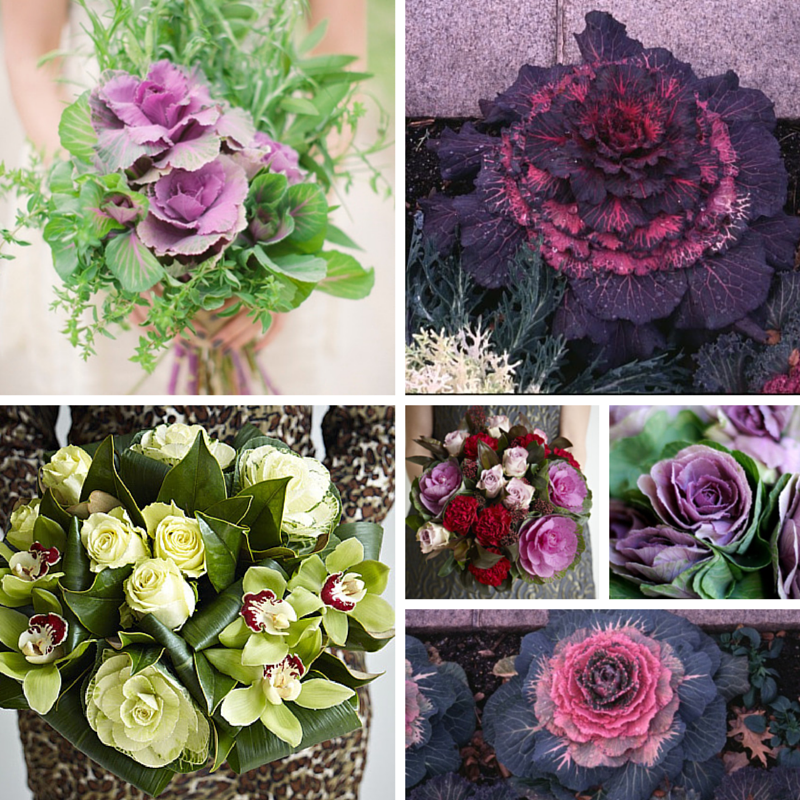
Cut ornamental cabbage is an unusual accent for autumn and winter bouquets. Its rosette looks like a large rose or peony and combines beautifully with roses, chrysanthemums, eucalyptus, cotton, hypericum berries and conifer greenery. Such bouquets are especially fitting in November–December, when seasonal flowers become scarce.
- Vase life. Cabbage lasts 10–14 days or more — longer than most flowers.
- Water. Change it every 1–2 days: cabbage leaves in the water quickly spoil it and give off an unpleasant cabbage smell. Strip the lower leaves from the stem.
- Pairings. White-and-pink cabbage suits delicate wedding bouquets; purple suits contrasting autumn arrangements in plum and burgundy tones.
Cabbage is also used in Christmas arrangements and wreaths with cones and evergreens. For dried arrangement ideas, see dried flower arrangements.
Can you eat it
Ornamental cabbage is edible — it is the same species as vegetable cabbage — but its leaves are tough and bitter. Plants from garden centres and florist suppliers are also often treated with pesticides, so do not eat cabbage from a flower bed or a bouquet. Grow culinary kale separately for the kitchen.
Frequently asked questions
Why hasn't my ornamental cabbage coloured up?
It needs cool nights. The colour intensifies when night temperatures fall below 10 °C, usually in September–October.
Is ornamental cabbage a flower?
No, the colourful rosette is made of leaves. The real flowers are small and yellow and appear only in the second year.
How long does it last in a bouquet?
10–14 days with regular water changes.
How much frost can it survive in a bed?
Usually down to −8…−10 °C; it stays decorative after light frosts.

View full-size photo
Author: Maria Svitlovir
Graduated from Taras Shevchenko National University of Kyiv, Institute of Biology and Medicine (2001). BSc in Biology, MSc in Horticulture. Writes about plants, works at a garden centre selecting and repotting plants, and contributes to plant reference guides.


