The parlour palm is the most popular indoor palm: compact, shade-tolerant and safe for cats. It grows slowly, brightens even a north-facing room and can live for decades in good conditions. Here are the main types, how to care for it at home, how it flowers, how to repot and propagate it, and why the leaf tips turn brown.
Related reading: indoor palms: types and care, hard-to-kill houseplants, houseplants with names and care.
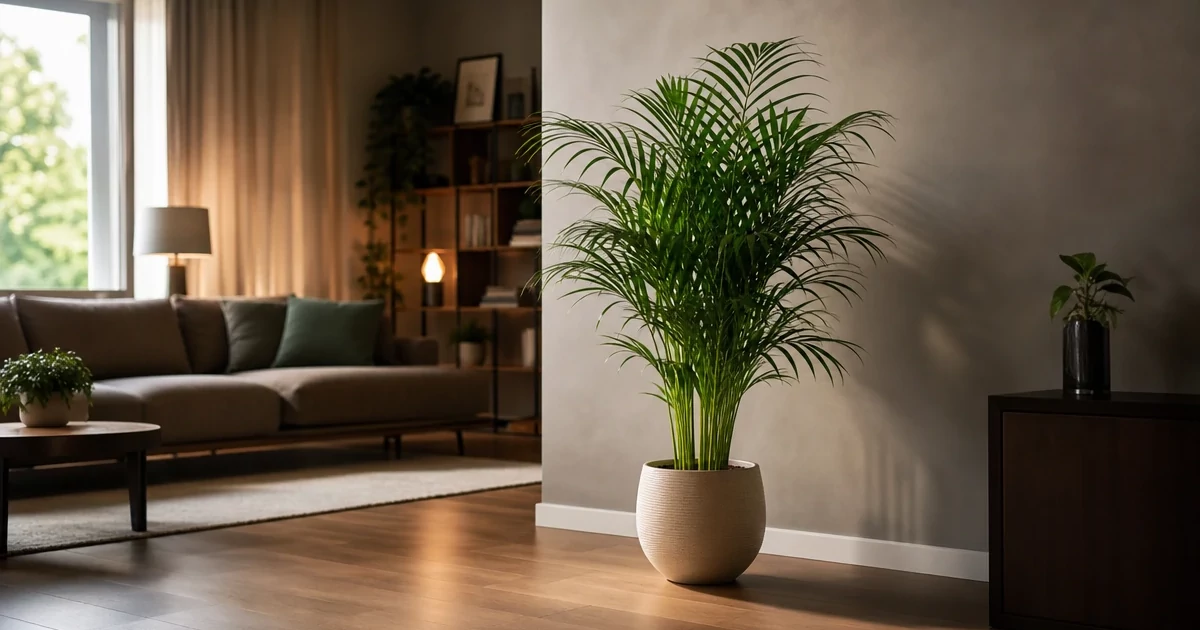
Chamaedorea is a genus of small palms from the humid mountain forests of Mexico and Central America, where they grow in the understorey beneath taller trees. That is why the parlour palm copes so well with partial shade and indoor conditions. The one most often sold is Chamaedorea elegans, with slender green stems and feathery fronds.
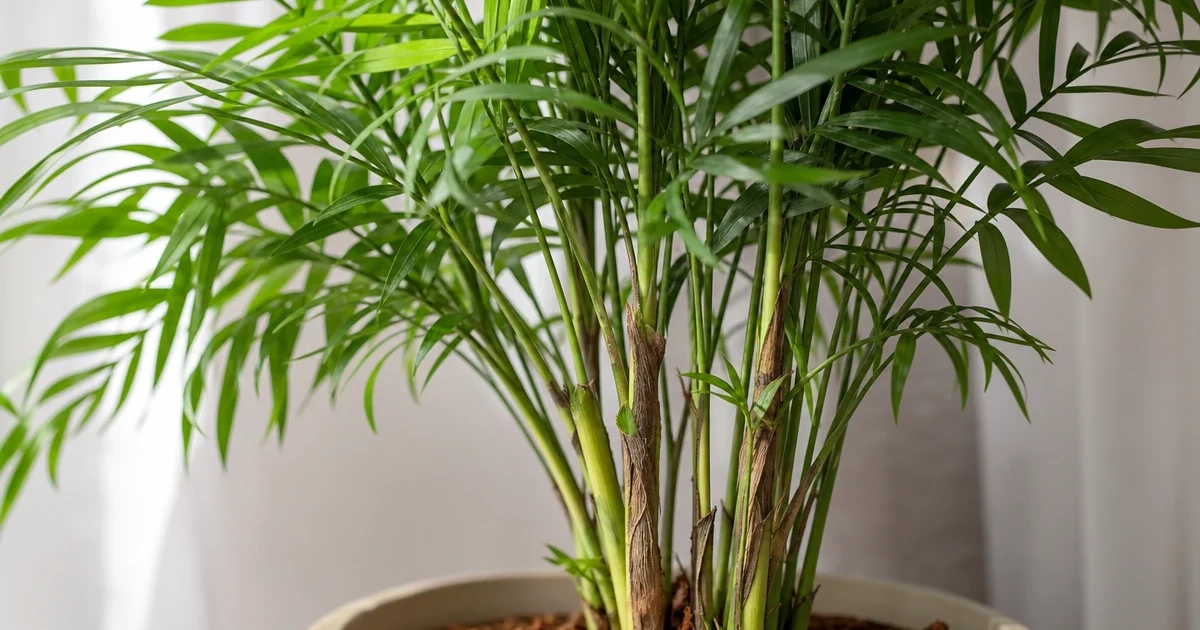
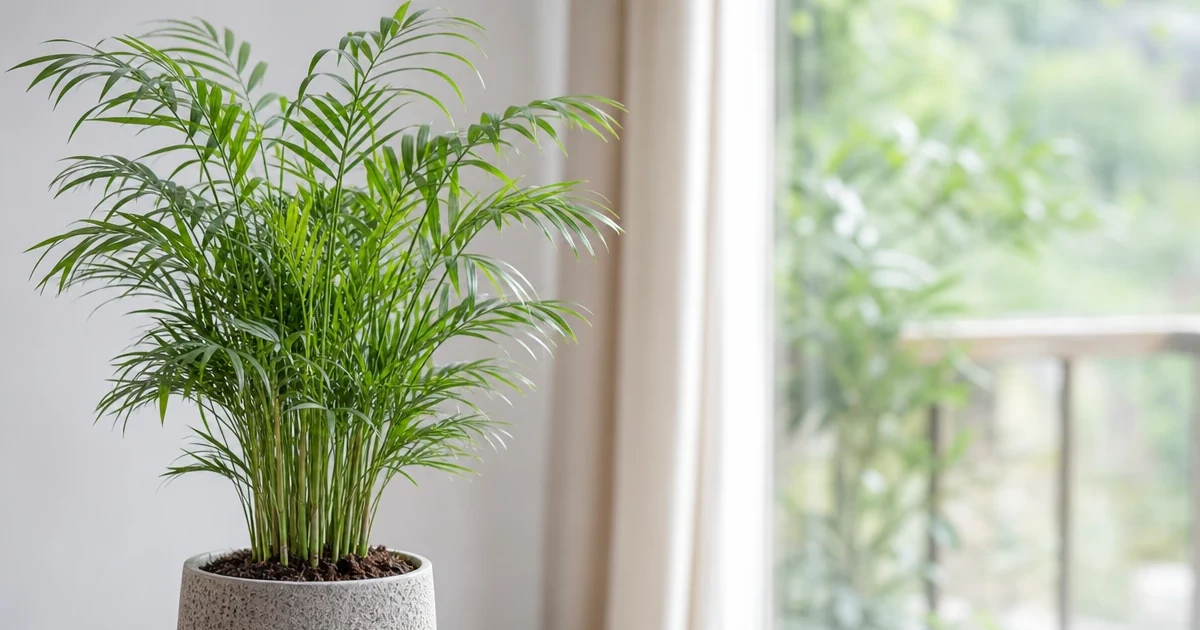
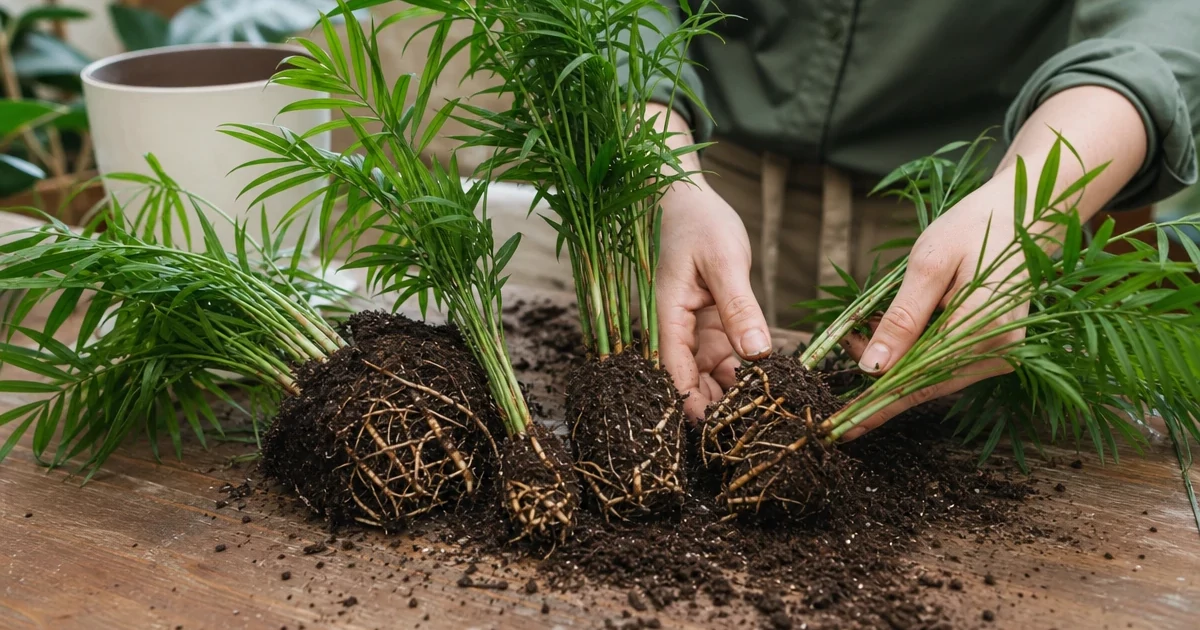
Indoors it reaches 1–1.5 m, occasionally more, and grows slowly, producing a few new fronds a year. It looks bushy because a pot usually holds 10–20 seedlings. Each stem never branches: new fronds come only from the tip, so it must never be cut back.
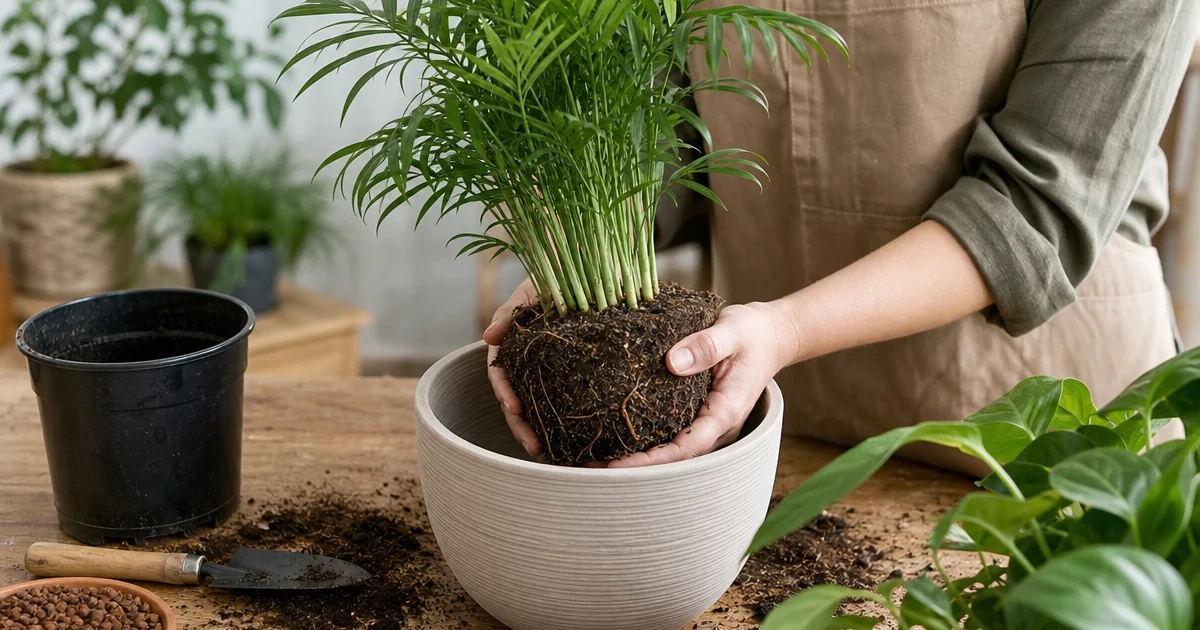
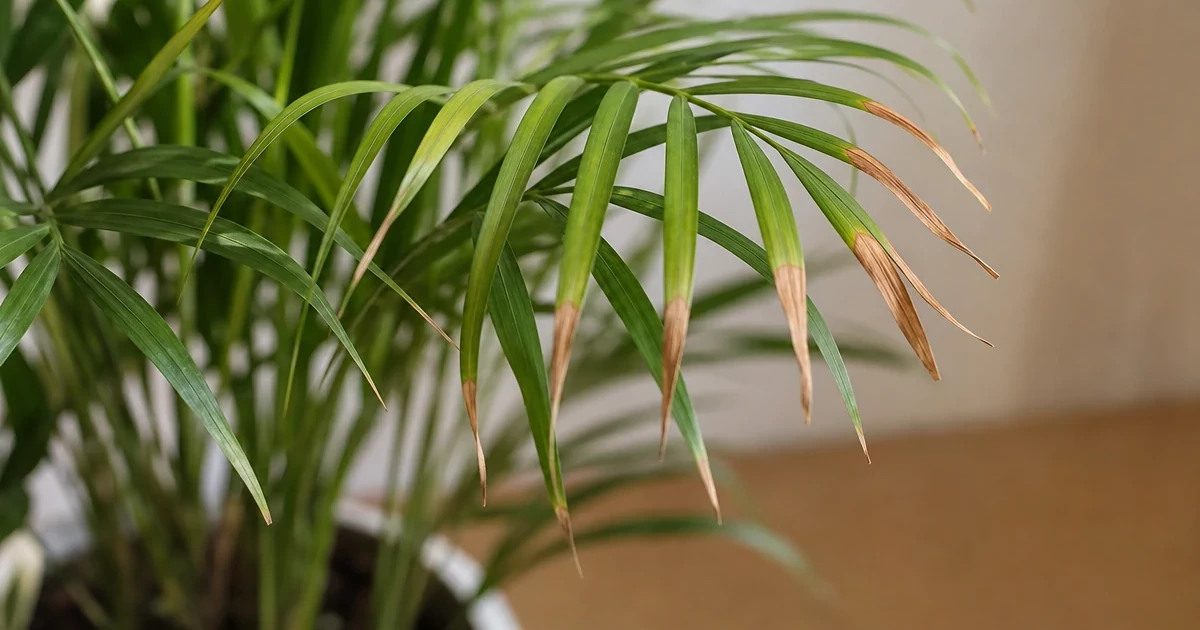
Shops usually sell parlour palms as 10–20 seedlings crowded into peat. For the first 2–3 weeks do not repot: keep it in indirect light, water moderately once the top layer dries and check the leaves for webbing. Slightly dry leaf tips are a reaction to drier air, not disease. Once settled, in spring, move it intact into a pot 2–3 cm larger without splitting the clump — parlour palm roots dislike being damaged.
A parlour palm likes bright indirect light but tolerates partial shade better than most palms. The ideal spot is 1–2 m from an east- or west-facing window; it also grows by a north-facing one, just more slowly. Harsh midday sun leaves yellow and pale scorch marks. Turn the pot every 2–3 weeks so it grows evenly. In summer it can go out onto a shaded balcony.
It is comfortable at +18…+25 °C and no lower than +15 °C in winter. Draughts and a cold windowsill harm the roots, while hot air from radiators dries the leaf tips.
In spring and summer water generously once the top 2–3 cm of compost are dry, usually every 5–7 days. In winter cut back to every 10–14 days without letting the root ball dry out completely. Empty the saucer after 15–20 minutes: standing water is the main cause of root rot. Use soft, settled water at room temperature.
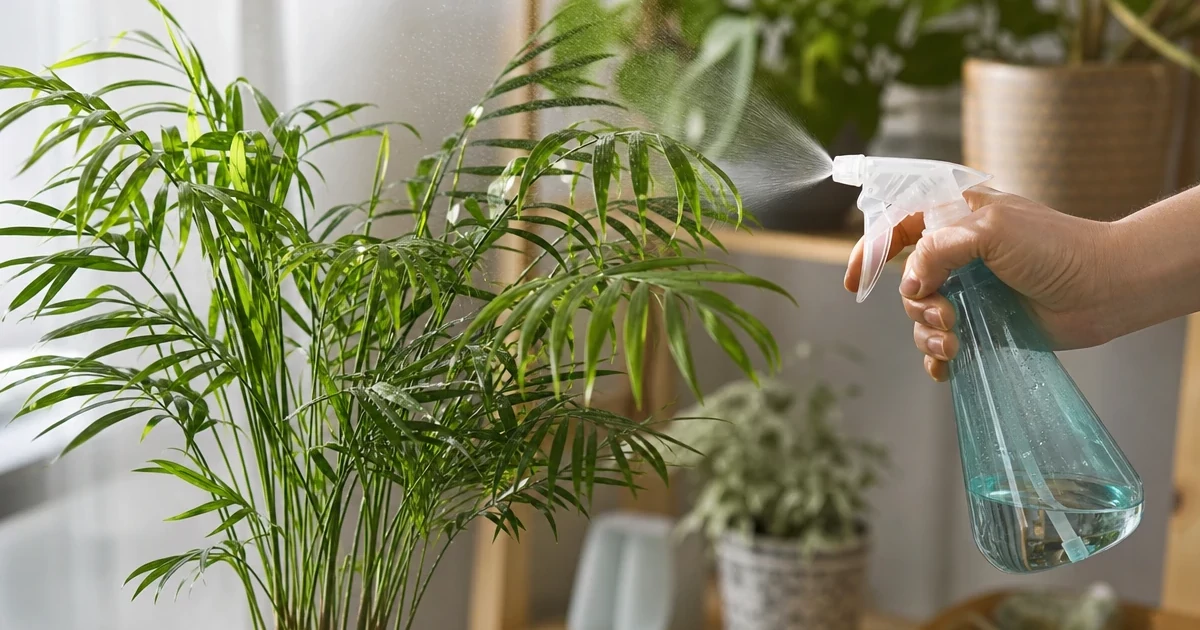
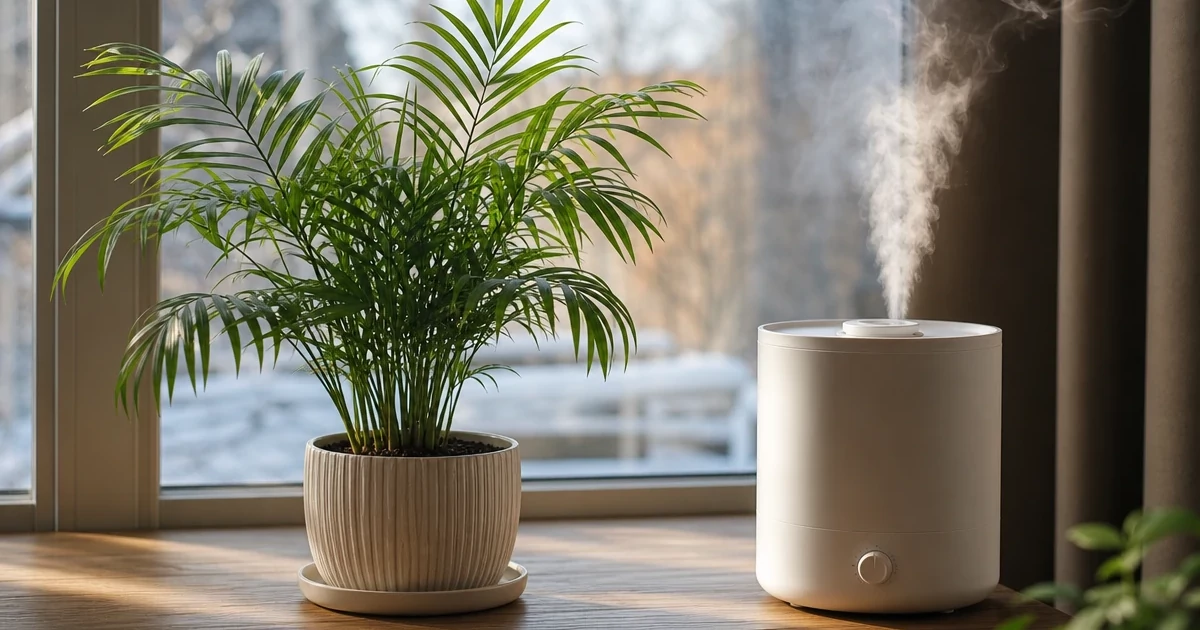
Aim for 50–60% humidity. In the heating season mist the fronds a few times a week, stand the pot on a tray of wet pebbles or near a humidifier. A lukewarm shower once a month, with the soil covered, washes off dust along with any spider mites.
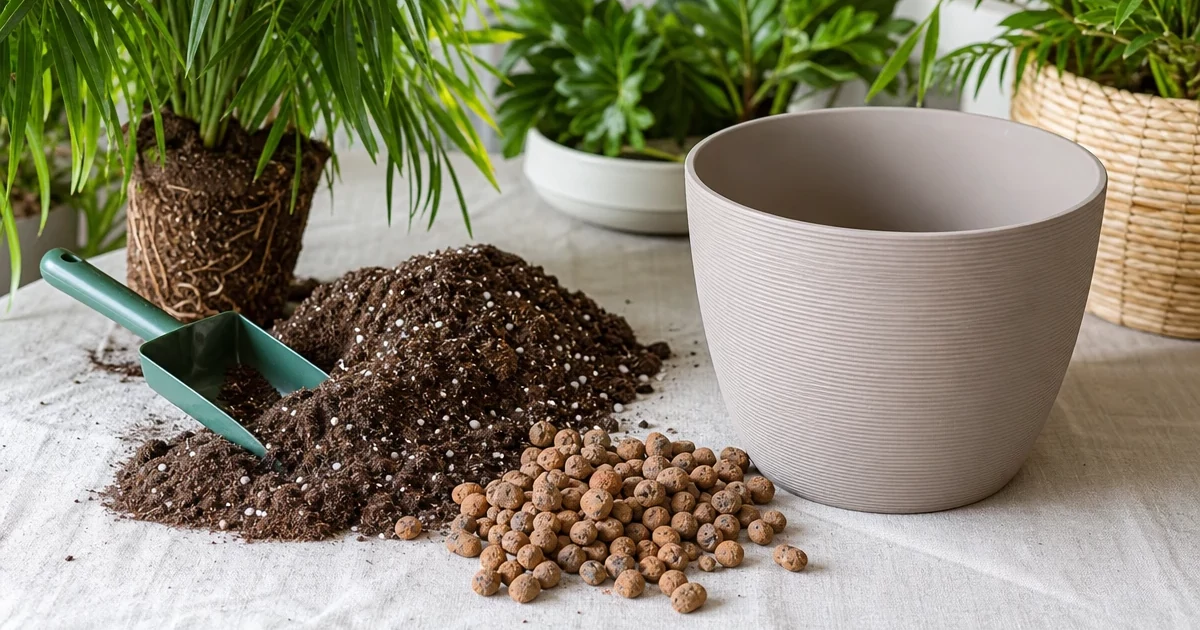
Use loose compost that holds moisture yet lets air through: ready-made palm mix or all-purpose compost with a third perlite or fine bark. Always add 2–3 cm of clay pebbles at the bottom.
Choose a pot 2–3 cm wider than the root ball, with drainage holes. A deep, narrow pot suits palms better than a wide, shallow one because their roots grow downwards. An oversized pot is risky, as the compost stays wet for too long. For a tall plant use a heavy ceramic pot so it does not tip over.
From April to September feed every 2–3 weeks with a liquid palm or foliage-plant fertiliser at half strength, only onto moist compost. Stop feeding in winter. Too much fertiliser causes brown tips and a white salt crust on the soil; flush it out with heavy watering. More on home-made feeds in natural fertilisers for houseplants.
Palms dislike root disturbance, so repot only when needed: young plants every 1–2 years, mature ones every 3–4 years, and large plants just get the top 3–5 cm of compost replaced. Roots poking out of the drainage holes or lifting the plant are the signal.
Give a newly bought palm 2–3 weeks to settle, then repot if needed, since nursery peat dries out quickly. General tips are in how to repot a houseplant.
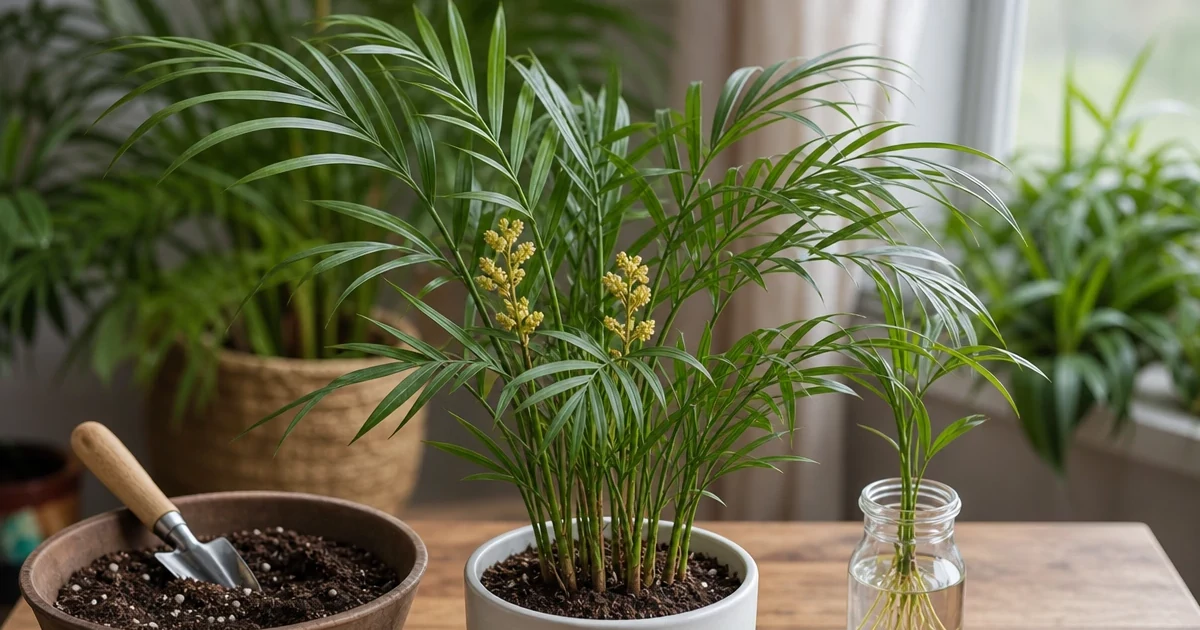
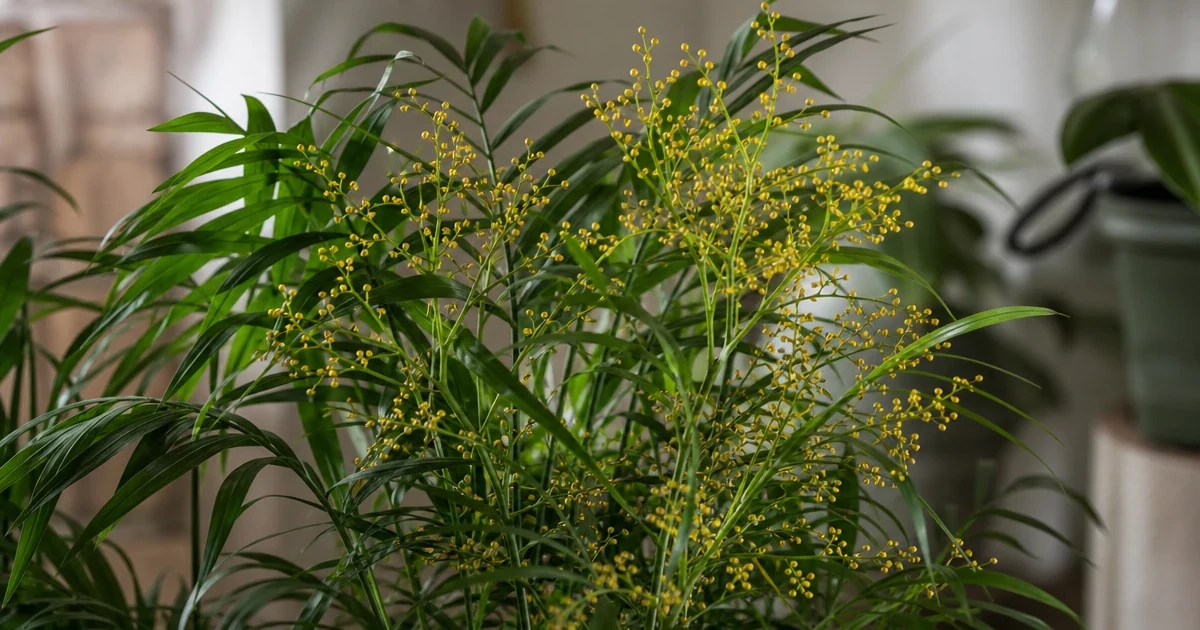
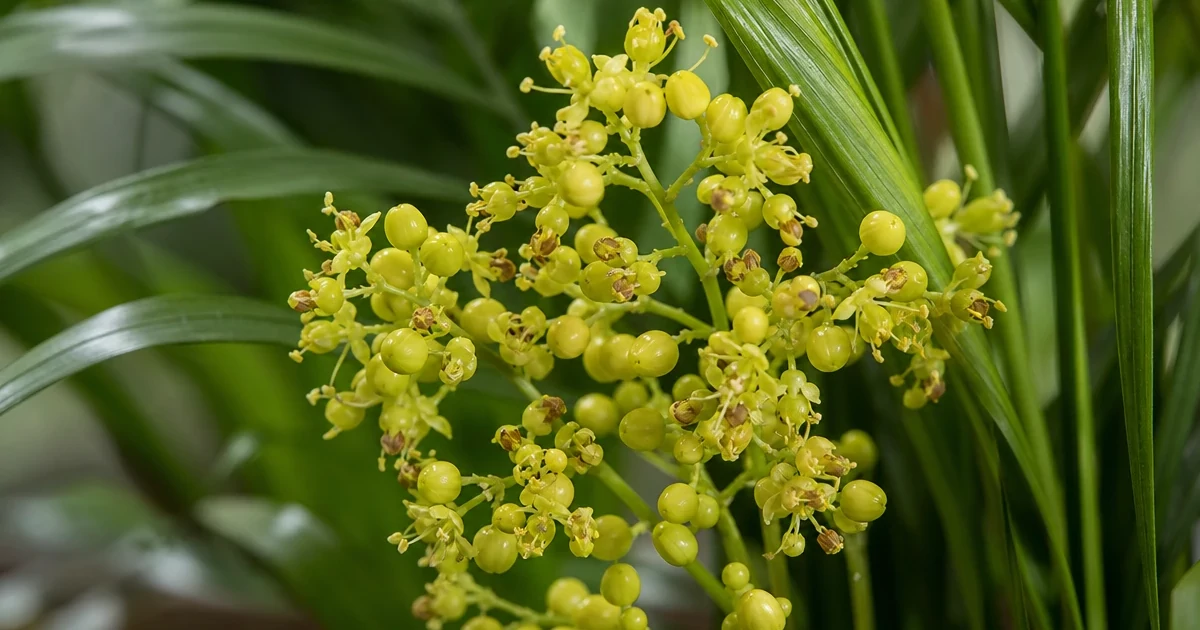
The parlour palm is one of the few palms that flower indoors, even as a young plant of 3–4 years. Branched sprays of tiny yellow, mimosa-like balls appear from the leaf axils. It is dioecious, with male and female flowers on separate plants, so seed rarely sets without hand pollination.
Flowering takes energy. If the plant is young, weak or keeps dropping fronds, cut the spikes off as soon as they appear. Flowers do no harm to a healthy mature palm, but remove dry sprays to keep it tidy.
Parlour palms cannot be grown from cuttings or tops: each stem has a single growing point.
In winter the palm grows slowly: water less, every 10–14 days, do not feed and keep it at 16–20 °C. The main risk is dry air from radiators, which browns leaf tips and invites spider mites. A humidifier, a tray of wet pebbles and a monthly warm shower help.
More on diagnosis in houseplant problems and symptoms.
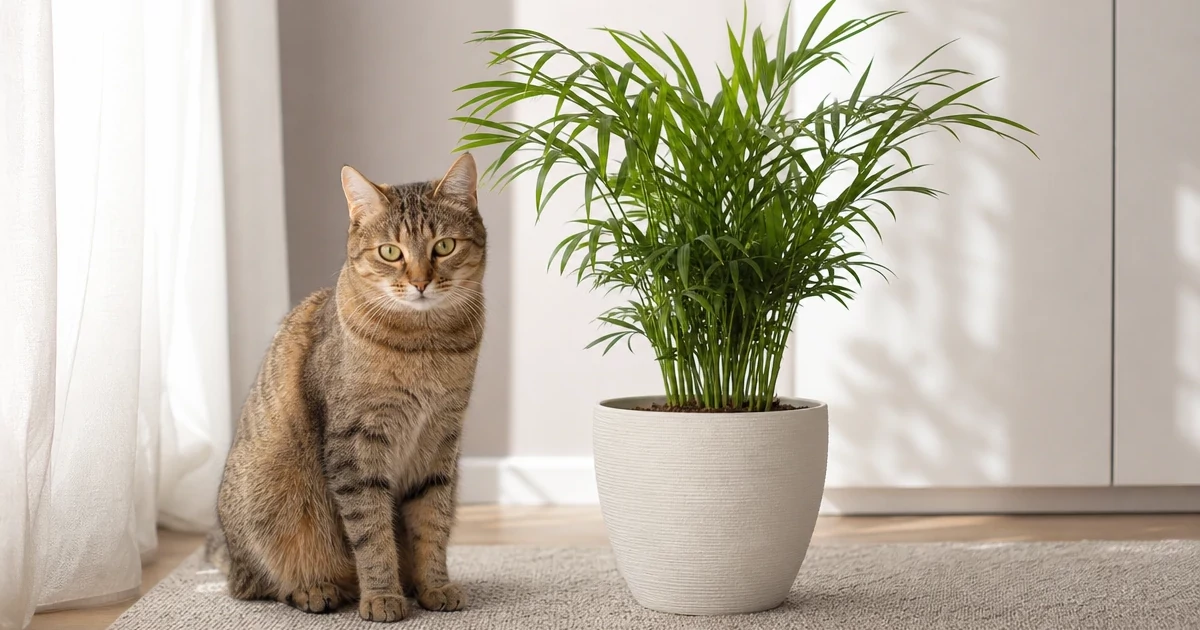
Yes. The parlour palm is non-toxic to people, cats and dogs, so it suits nurseries, bedrooms and homes with pets. It has no strong scent and its flowers produce little pollen. Superstitions about palms "draining energy" have no basis. The only catch is that cats love chewing its long fronds, which damages the plant, so place it a little higher up.
| Period | What to do |
|---|---|
| March — April | Repot or divide if needed; start feeding |
| May — August | Water generously, feed every 2–3 weeks, can go out to a shaded balcony |
| September — October | Stop feeding, gradually water less |
| November — February | Water every 10–14 days, mist and humidify, keep away from radiators |
A parlour palm makes a great living gift for a housewarming, an office or a beginner: it is easy-going, pet-safe and lives for years. Browse palms and other potted plants in our houseplants section.
Slowly: a few new fronds a year, adding 5–15 cm. It is best to buy a plant of the size you want.
Not the top: each stem has one growing point and will die if cut. Only remove dead fronds and flower spikes.
Yes, each plant naturally has one stem. The bushy look comes from planting several seedlings in one pot.
Usually too little light, cold or an oversized pot. Growth resumes in spring and summer once conditions improve.
Yes: it is non-toxic, scent-free and needs no direct sun.

Author: Maria Svitlovir
Graduated from Taras Shevchenko National University of Kyiv, Institute of Biology and Medicine (2001). BSc in Biology, MSc in Horticulture. Writes about plants, works at a garden centre selecting and repotting plants, and contributes to plant reference guides.
© Kyiv 2026 UFL Flower Shop

Trademark UFL №191476 is used under license of the rights holder.
All rights reserved. Any use of materials without a link to the site is prohibited.

 Birthday
 Hydrangeas