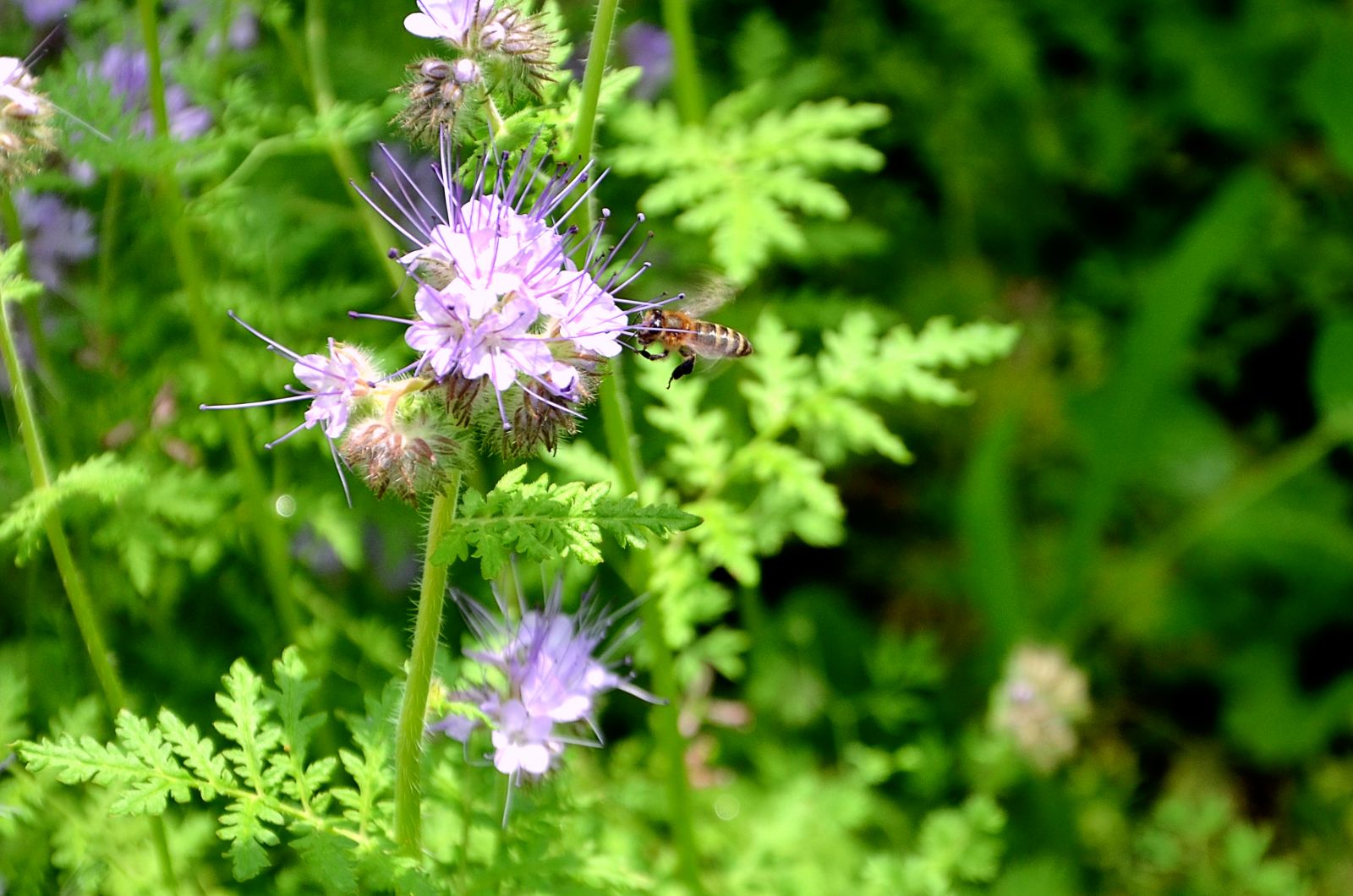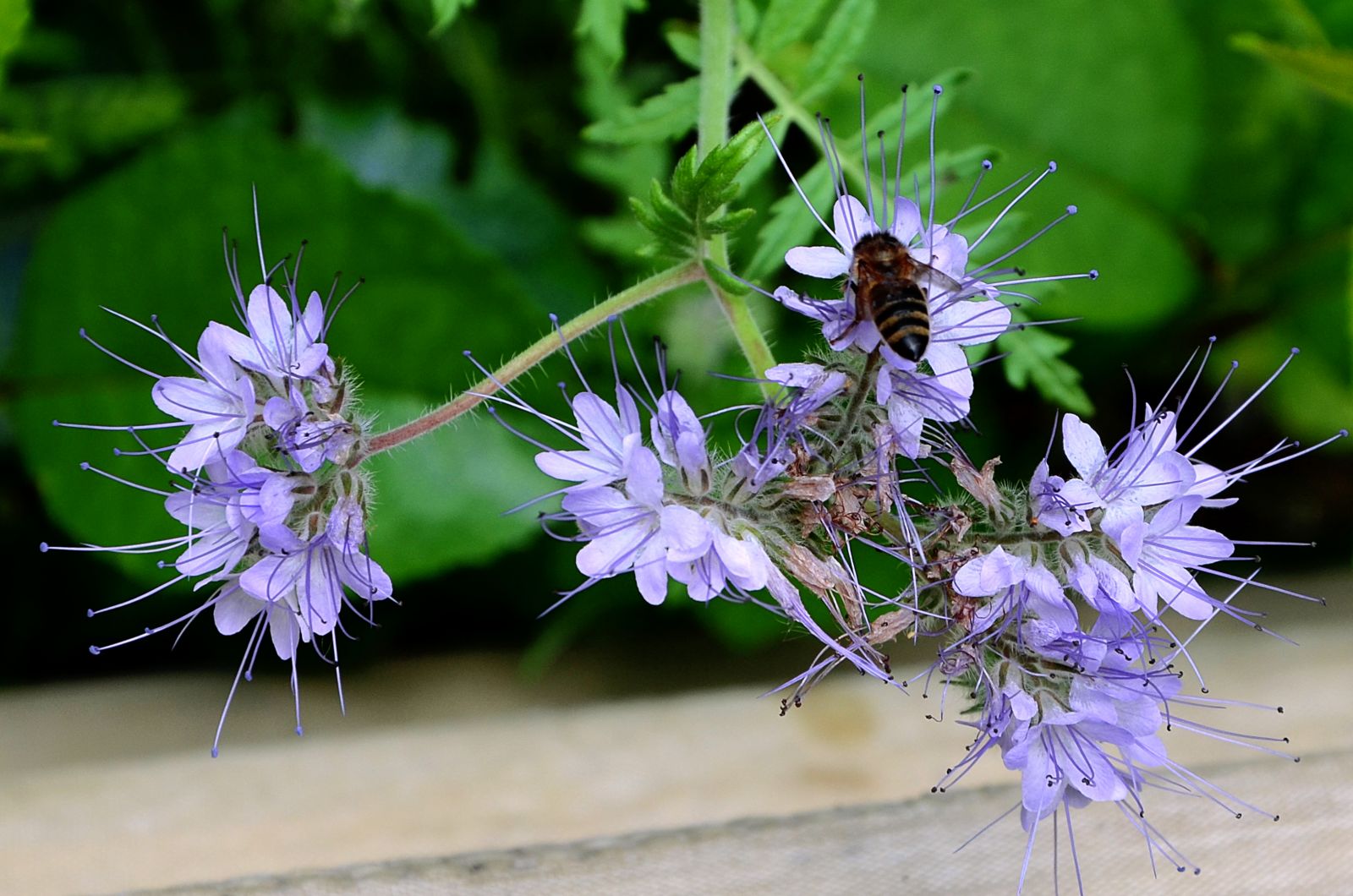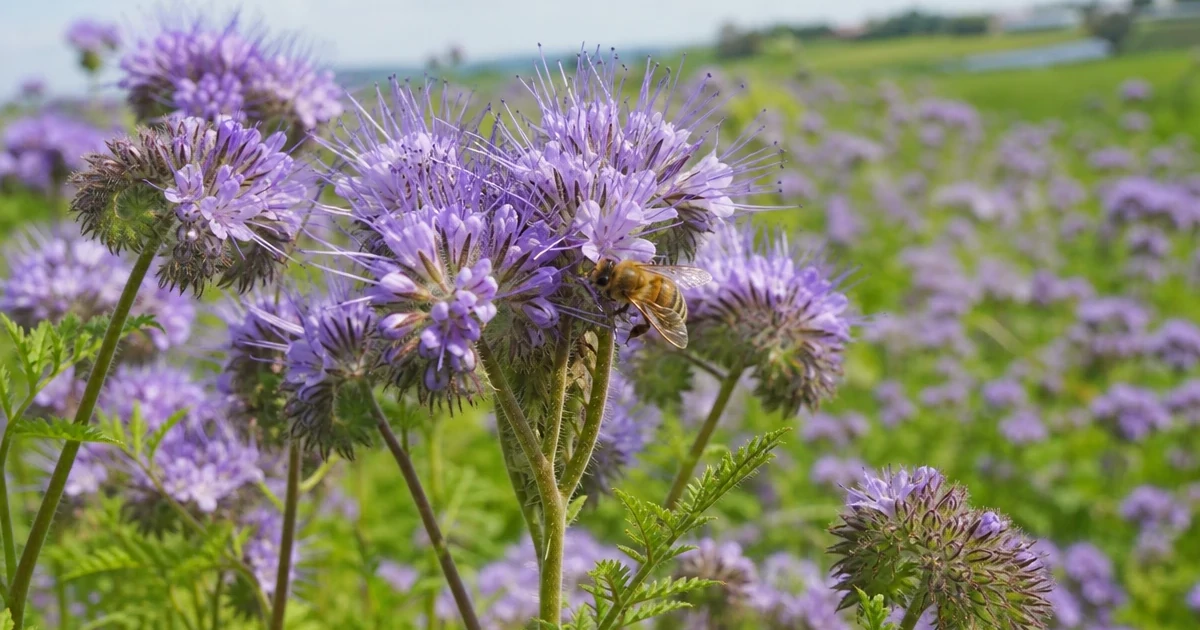
Phacelia is a common sight in fields and gardens in spring and summer: low plants with lacy leaves and curling lilac-blue flower heads humming with bees. It is one of the most popular plants for improving soil. Here is why phacelia is so useful and how to grow it.
Flowers from your garden or from us: flower baskets and potted plants.
Lacy phacelia (Phacelia tanacetifolia) comes from the south-western United States and Mexico. It is an annual 50–80 cm tall with finely divided leaves and coiled flower heads that open gradually. It is undemanding, grows fast and tolerates light frost, so it can be sown from early spring to late summer.
Green manures are plants grown to improve the soil. In 6–8 weeks phacelia produces plenty of leafy growth, and its dense fine roots loosen and structure the soil. Cut plants are left on the surface or lightly dug in, where they decompose into organic matter. Unlike lupins and other legumes, phacelia does not fix nitrogen, but it fits in before almost any crop because it is unrelated to most vegetables.
Phacelia is one of the best bee plants: its flowers are rich in nectar and bloom for several weeks. Its honey is pale and mild. As well as bees, it attracts hoverflies and other beneficial insects whose larvae eat aphids.
Discover another soil-improving plant in lupins, natural feeding in natural fertilisers, and how to start a flower bed in a flower garden for beginners.
Yes, usually 1–2 weeks after cutting and digging in the green growth.
No, though the bristly hairs on the stems can irritate sensitive skin, so wear gloves. Like any honey, phacelia honey should not be given to babies under one year.
Benefits are looser soil, fewer weeds and more bees and beneficial insects. Downsides are minor: in flower it draws lots of bees near paths and play areas, the bristly hairs can irritate skin, and if it sets seed it will pop up where you did not plant it.
In spring, as soon as the soil has thawed and dried a little, usually April; you can keep sowing until August. For a pre-winter sowing, wait until late autumn when the soil is cold so the seed only germinates in spring.
For green manure, 1.5–2 g per m² in a garden; on farmland about 10–15 kg/ha. The seed is small, so mixing it with sand helps spread it evenly.

Author: Maria Svitlovir
Graduated from Taras Shevchenko National University of Kyiv, Institute of Biology and Medicine (2001). BSc in Biology, MSc in Horticulture. Writes about plants, works at a garden centre selecting and repotting plants, and contributes to plant reference guides.
© Kyiv 2026 UFL Flower Shop

Trademark UFL №191476 is used under license of the rights holder.
All rights reserved. Any use of materials without a link to the site is prohibited.

 Birthday
 Hydrangeas