Epipremnum, or pothos, is one of the easiest indoor vines: it grows in partial shade, forgives a missed watering and roots from cuttings in a glass of water. Here are the most popular varieties, how to tell pothos from scindapsus and philodendron, how to care for it at home and what to do when the leaves turn yellow.
More on this topic: houseplants: names and care, foliage houseplants, monstera.
Epipremnum aureum is an evergreen vine of the arum family, native to tropical forests of Pacific islands. In the wild it climbs tree trunks for dozens of metres and its leaves grow up to half a metre and split like a monstera's.
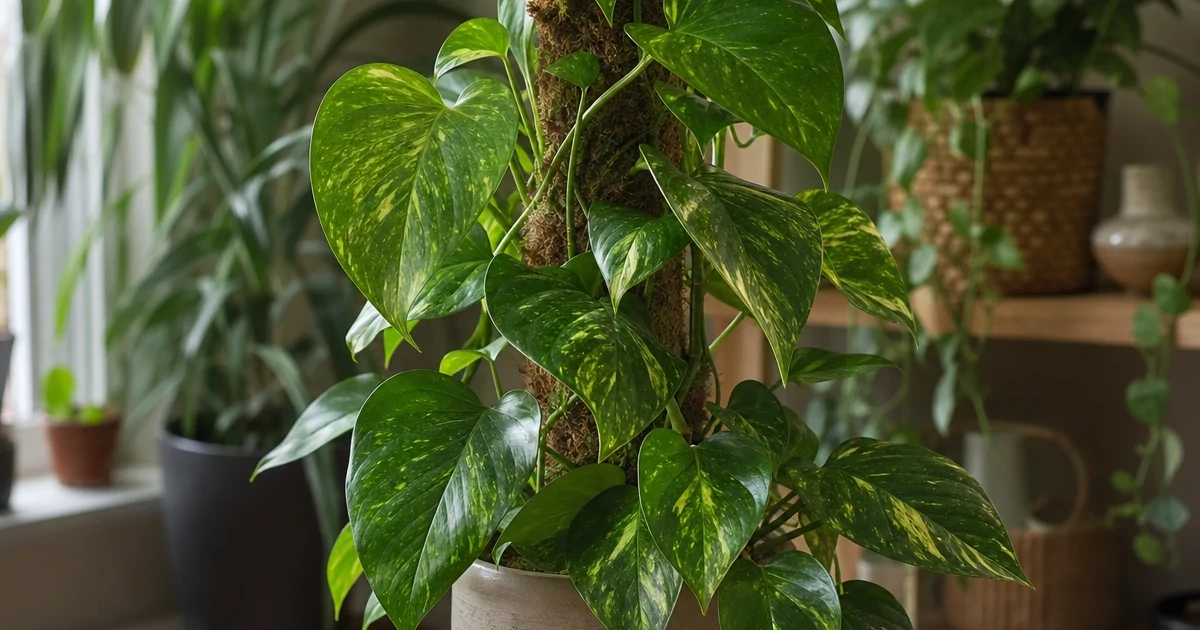
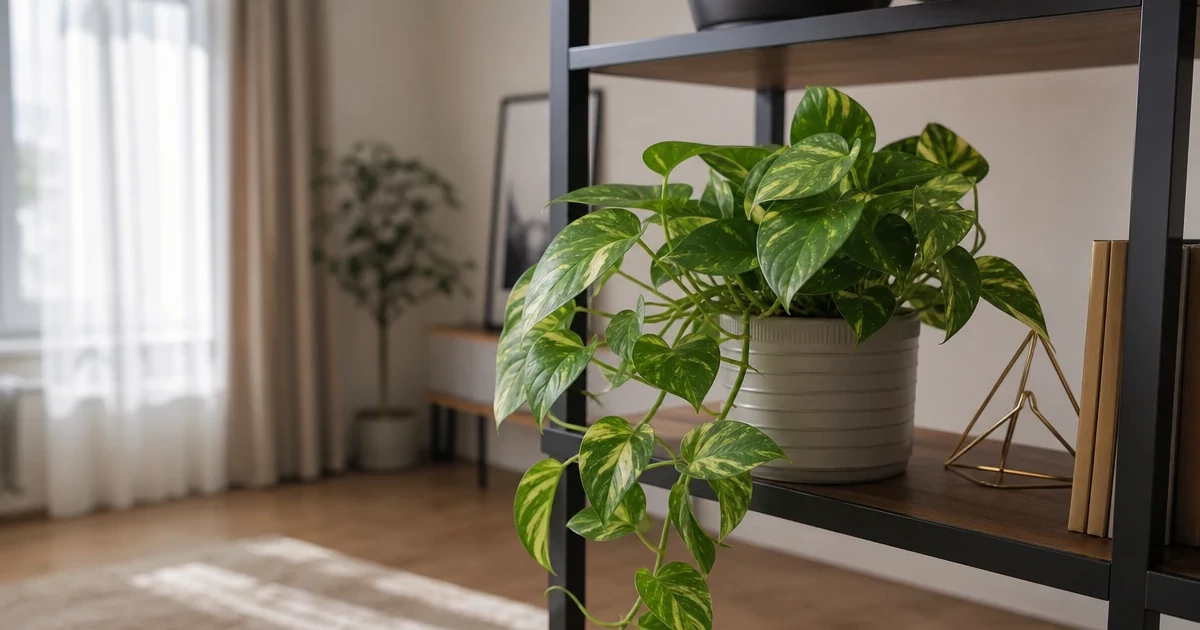
Indoors it is a trailing or climbing plant with heart-shaped leaves of 5–15 cm. Stems can grow 1–2 m a year, so pothos is grown in hanging baskets, on shelves or up a moss pole.
It is often sold as scindapsus, an old name left over from when the plant was placed in another genus. More plants for hanging baskets: trailing houseplants.
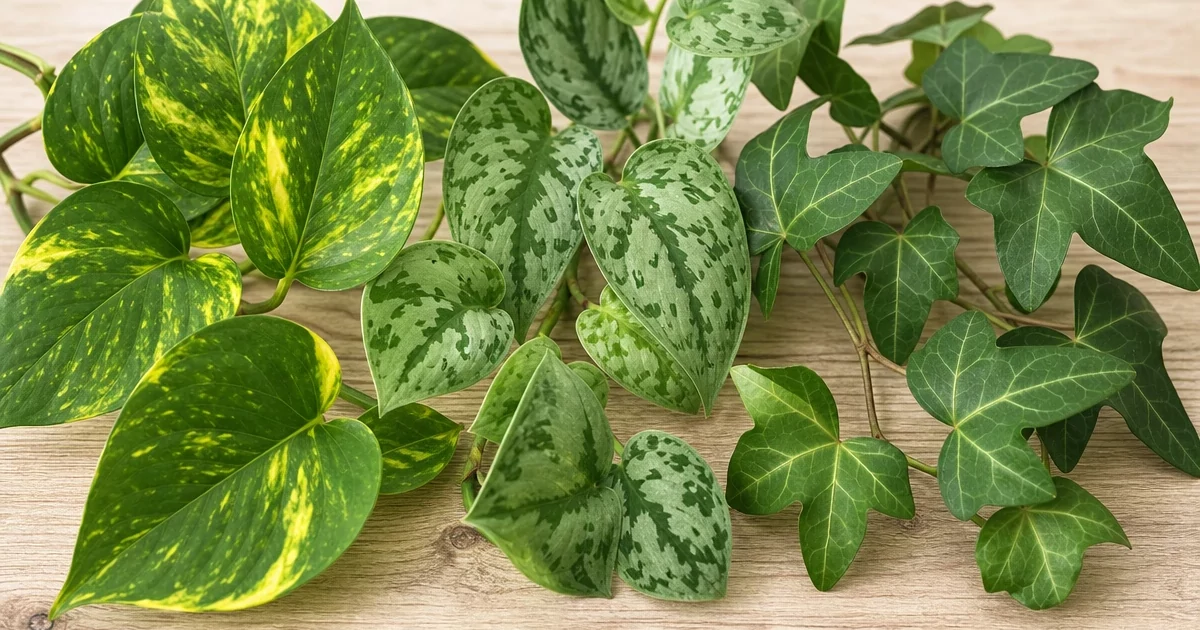
Pothos: glossy, firm leaves, a groove along the leaf stalk, yellow or white streaks.
Satin pothos (Scindapsus pictus): matte, thick leaves with silver spots, as if dusted with frost.
Heartleaf philodendron: thinner, softer leaves with a drawn-out tip; new leaves emerge from a brownish sheath.
Care for all three is almost identical, so a mix-up in names will not hurt the plant.
Light: bright and indirect, 1–2 m from a window. It tolerates partial shade, but variegated types turn greener and smaller.
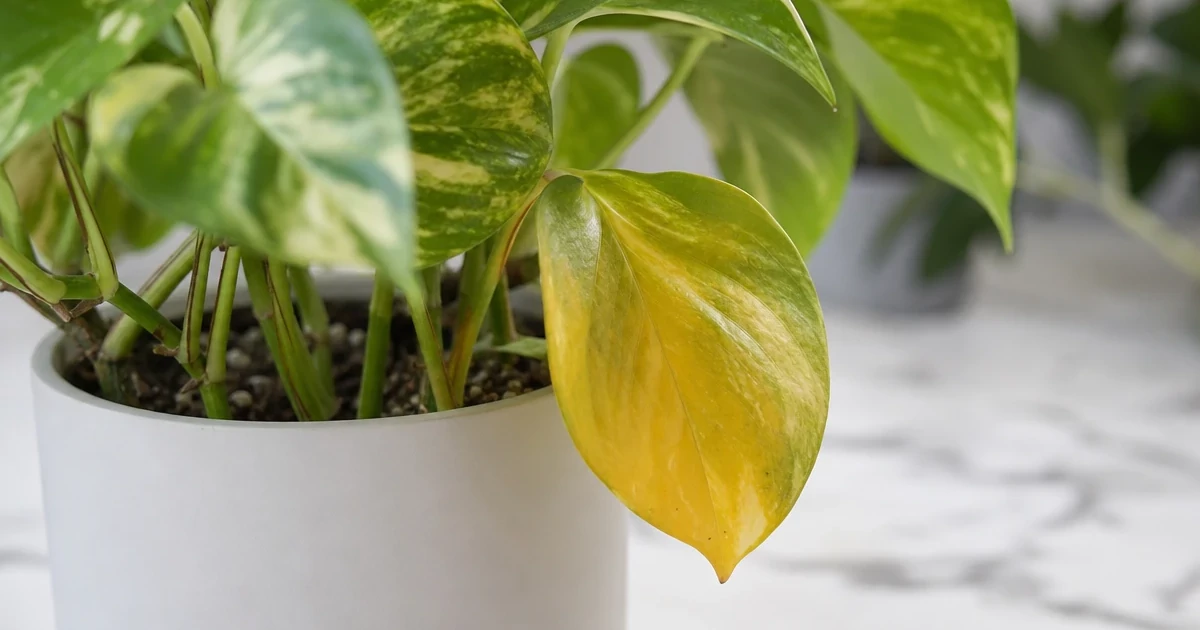
Water when the top 2–3 cm of soil is dry: about once a week in summer and every 10–14 days in winter. Overwatering is riskier than drying out.
Temperature: 18–27 °C, not below 15 °C. Keep it away from draughts and cold windowsills in winter.
Humidity: normal room air is fine; in the heating season mist the leaves or use a pebble tray.
Feeding: March to September, every 2–4 weeks with liquid fertiliser for foliage plants.
Repotting: young plants every spring, mature ones every 2–3 years, into a pot 2–3 cm wider. Step by step: how to repot a houseplant. Indoor palms need similar conditions but more humidity.
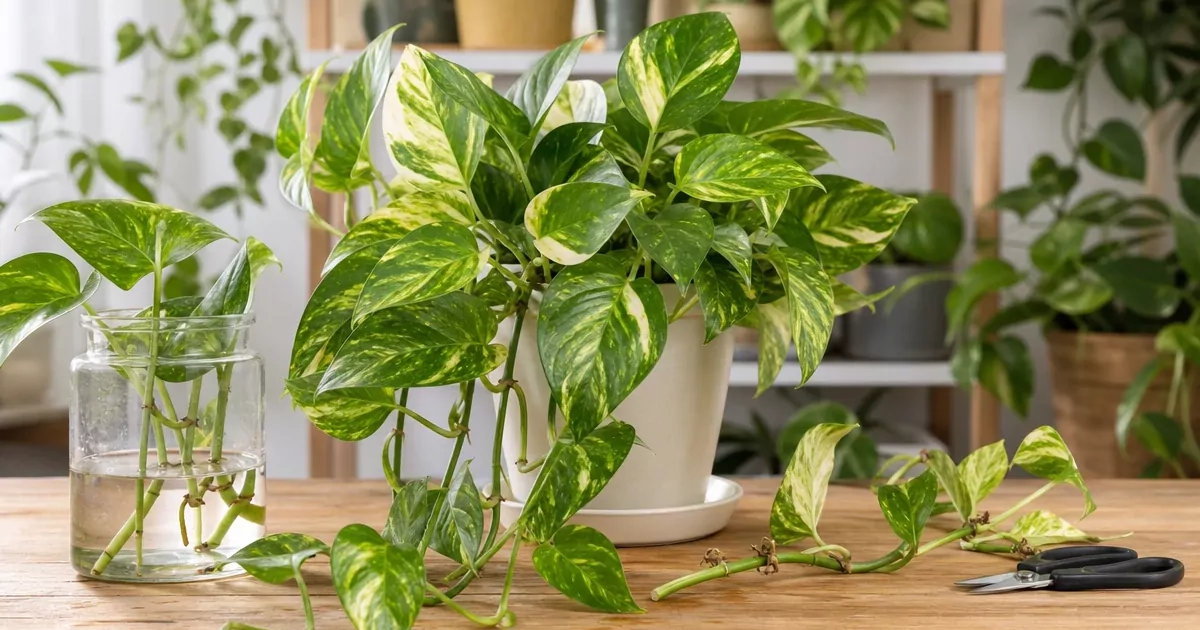
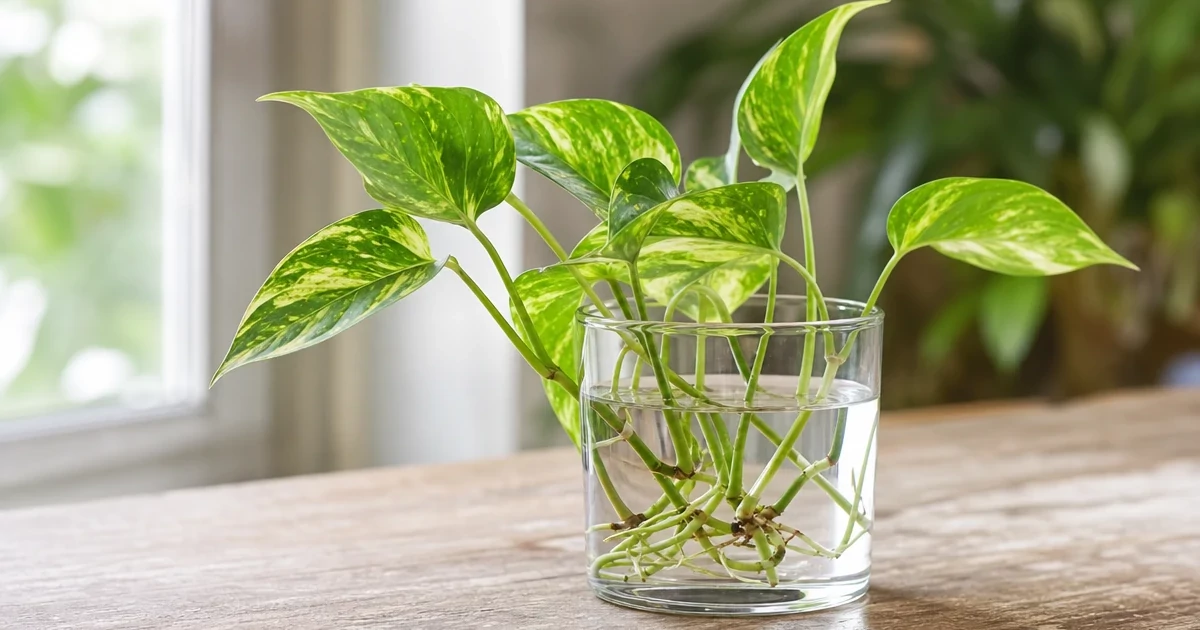
Cut a stem piece with 2–3 leaves that includes a node, the bump where an aerial root starts.
Stand the cutting in water with the node submerged and the leaves above. Change the water every 3–4 days.
Roots appear in 2–4 weeks. When they reach 3–5 cm, plant 3–5 cuttings in one pot for a fuller plant.
Trimming stems in spring encourages branching, and the cut tips make new cuttings.
The sap contains calcium oxalate crystals: if a cat or dog chews the leaves it causes mouth irritation, drooling and vomiting. Keep the plant up high or in a hanging basket.
Pothos featured in the well-known 1989 NASA study of plants absorbing pollutants, but in a real room the effect is tiny; see do houseplants purify the air.
Folk superstition calls pothos a plant that drives men away, but there is nothing behind it.
Looking for a living gift that lasts for months? A potted orchid is a great choice for home or office.

See houseplants and orchids.

Almost never; indoor flowering is extremely rare and the plant is grown for its leaves.
When the top 2–3 cm of soil is dry: about weekly in summer, every 10–14 days in winter.
Yes, as long as pets and small children cannot reach it, because the sap irritates.
Cut back long stems in spring and plant the rooted cuttings back into the same pot.

Author: Maria Svitlovir
Graduated from Taras Shevchenko National University of Kyiv, Institute of Biology and Medicine (2001). BSc in Biology, MSc in Horticulture. Writes about plants, works at a garden centre selecting and repotting plants, and contributes to plant reference guides.
© Suriname 2026 UFL Flower Shop

Trademark UFL №191476 is used under license of the rights holder.
All rights reserved. Any use of materials without a link to the site is prohibited.

 Birthday
 Hydrangeas