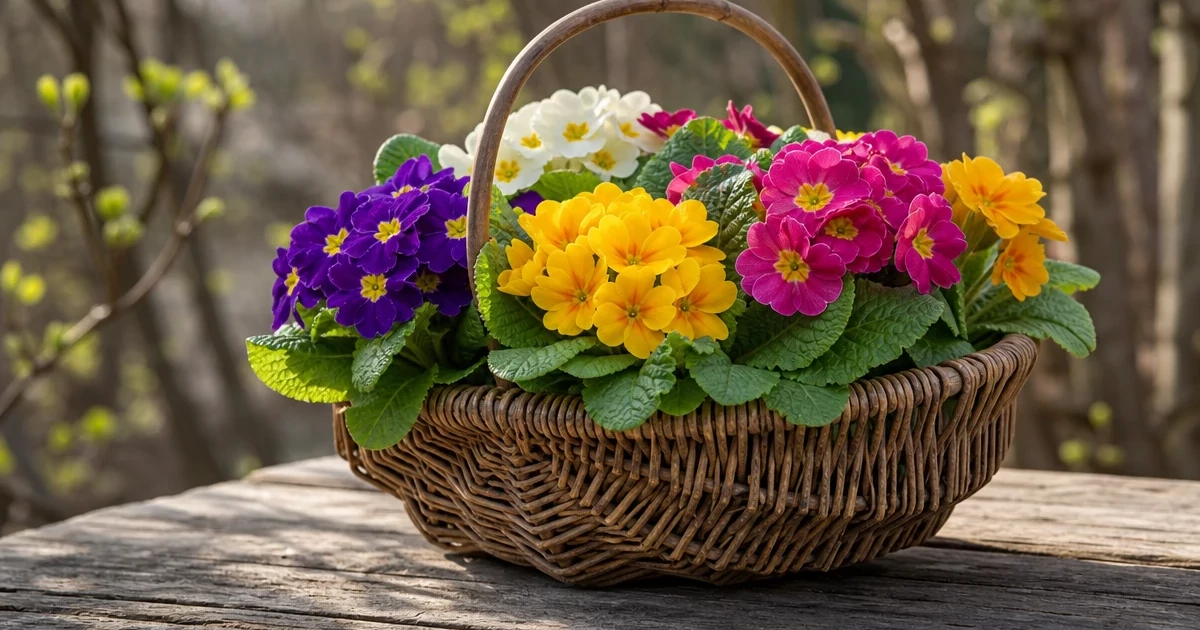
The primula, or primrose, is one of the first to open the flowering season, in pots at the end of winter and in beds in early spring. There are hundreds of species and thousands of varieties in every colour. Indoor and garden primroses are cared for in similar ways, and their main need is coolness. This is a birth month flower; see February flowers.
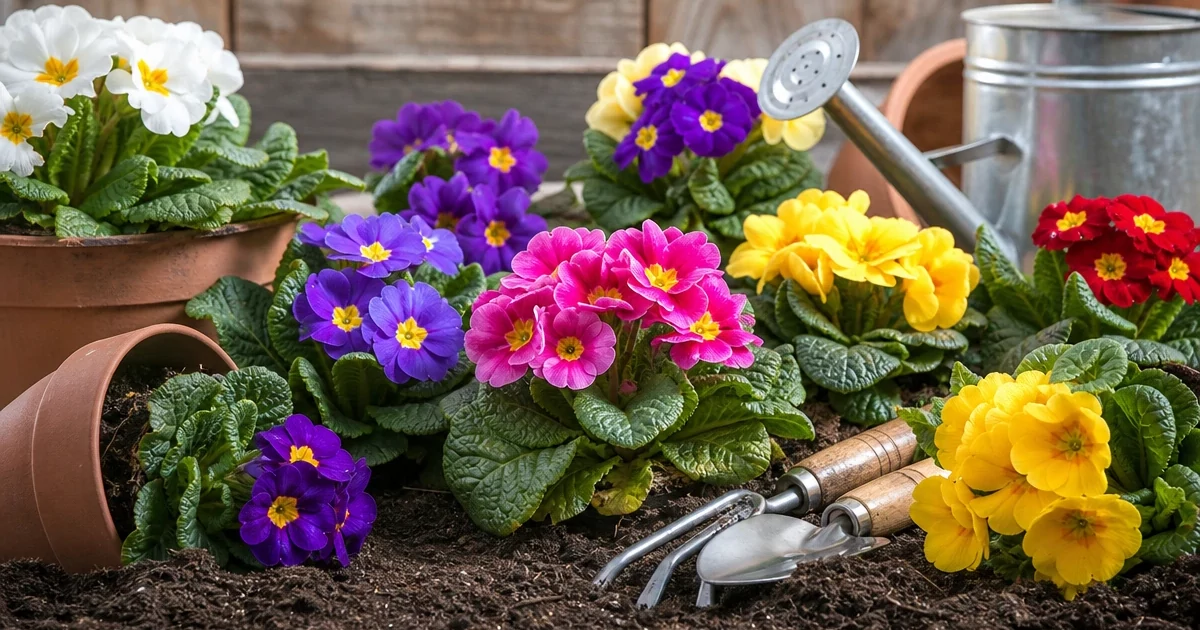
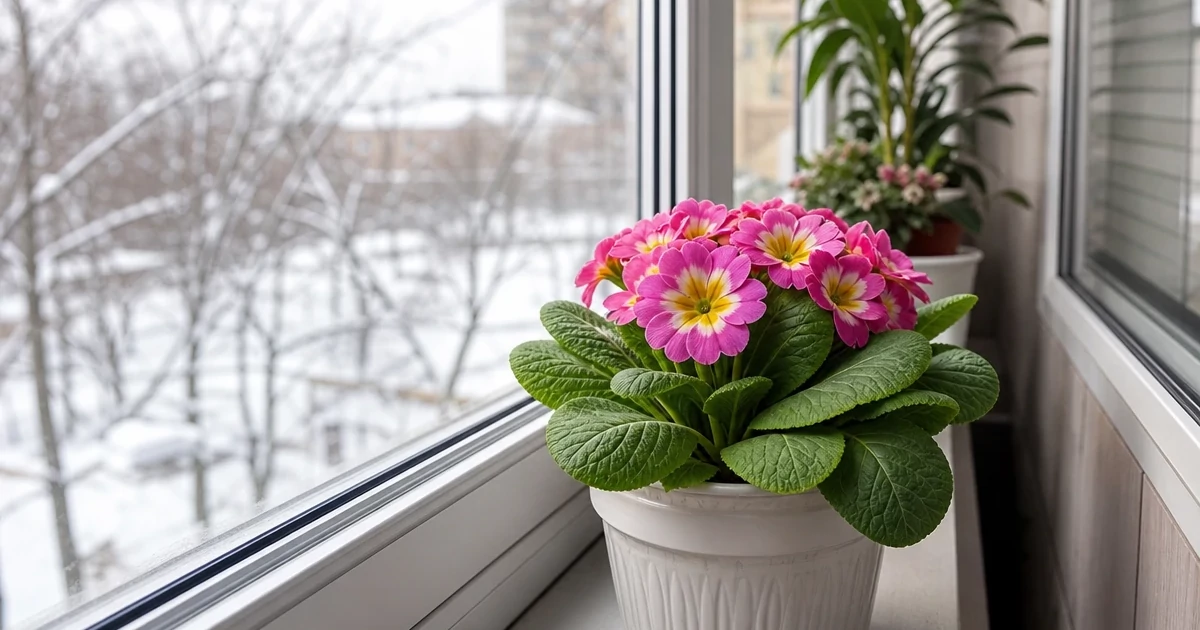
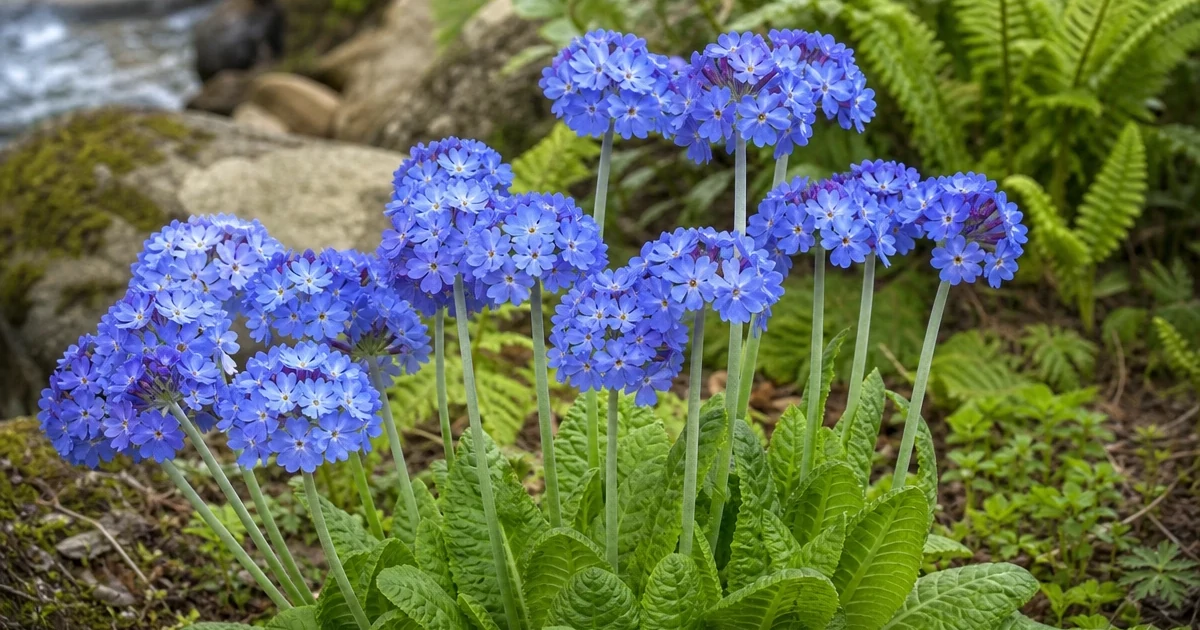
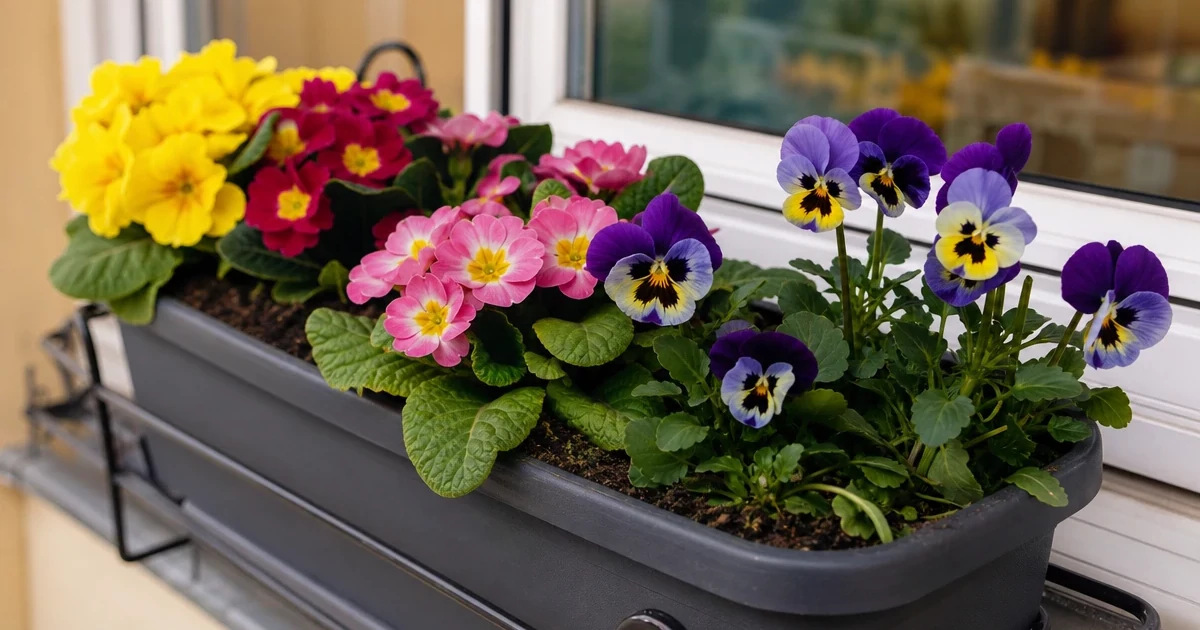
Illustration 1. An indoor primrose flowers from February to April if it is kept cool.
Primula is a genus of about 500 species of perennial herbs in the primrose family, mostly from temperate Europe, Asia and mountain regions. The name comes from Latin primus, “first”: most species flower in early spring, right after the snow melts. Plants form a basal rosette of crinkled or smooth leaves topped by single flowers or by umbels, balls or tiers of blooms, in shades from white and yellow to blue, purple and red, often with a contrasting eye.
Gardeners divide them into indoor primroses (forced to flower in pots in winter) and garden primroses — hardy perennials for beds, rockeries and pond edges.
| Factor | Indoors | Garden |
|---|---|---|
| Light | Bright, indirect | Partial shade |
| Temperature | 12–16 °C in flower | Hardy, dislikes heat |
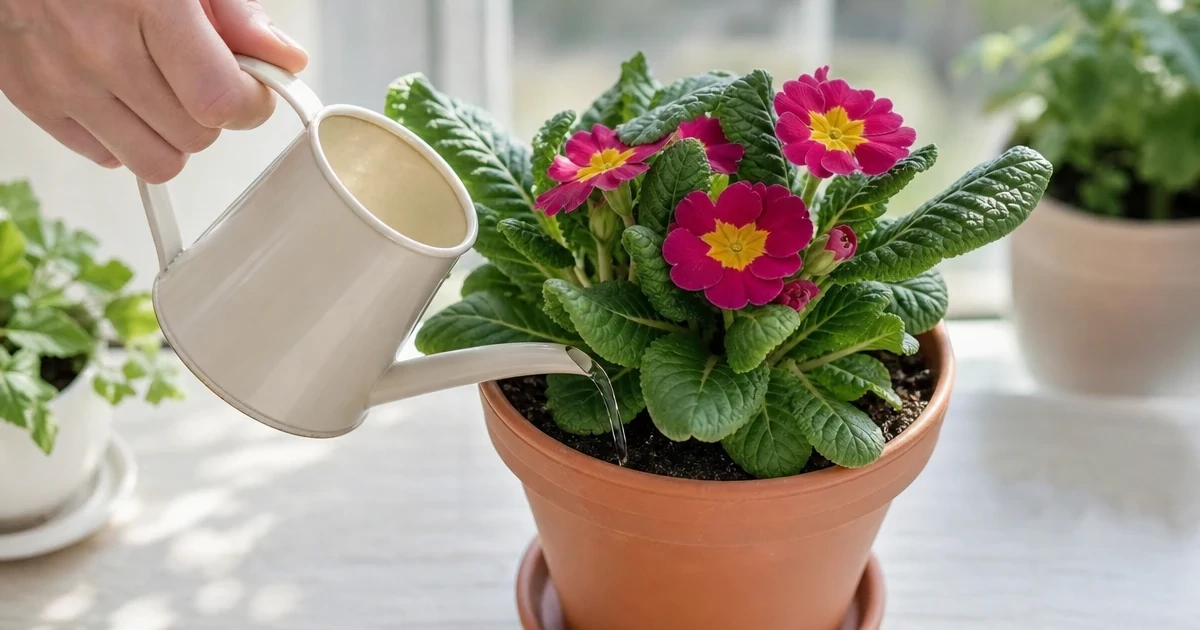
| Watering | Evenly moist, not on the crown | Regular, especially in hot spells |
| Soil | Light, rich, slightly acidic | Loose, humus-rich, moist |
| Feeding | Every 2 weeks in flower | Spring and after flowering |
| Propagation | Seed, division | Division, seed |
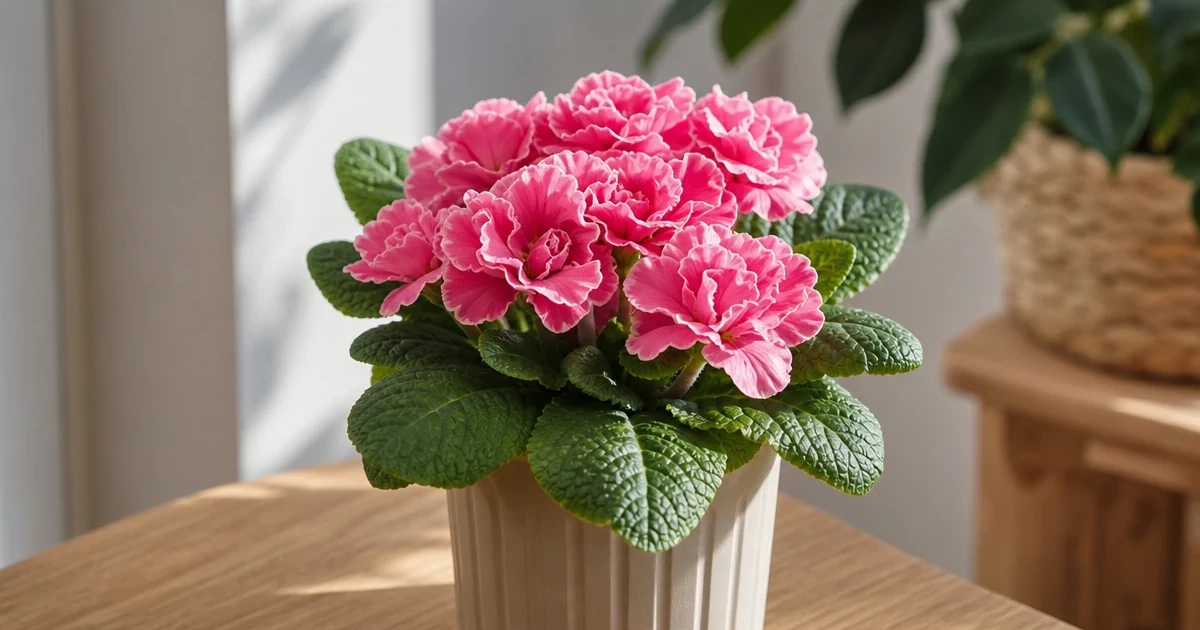
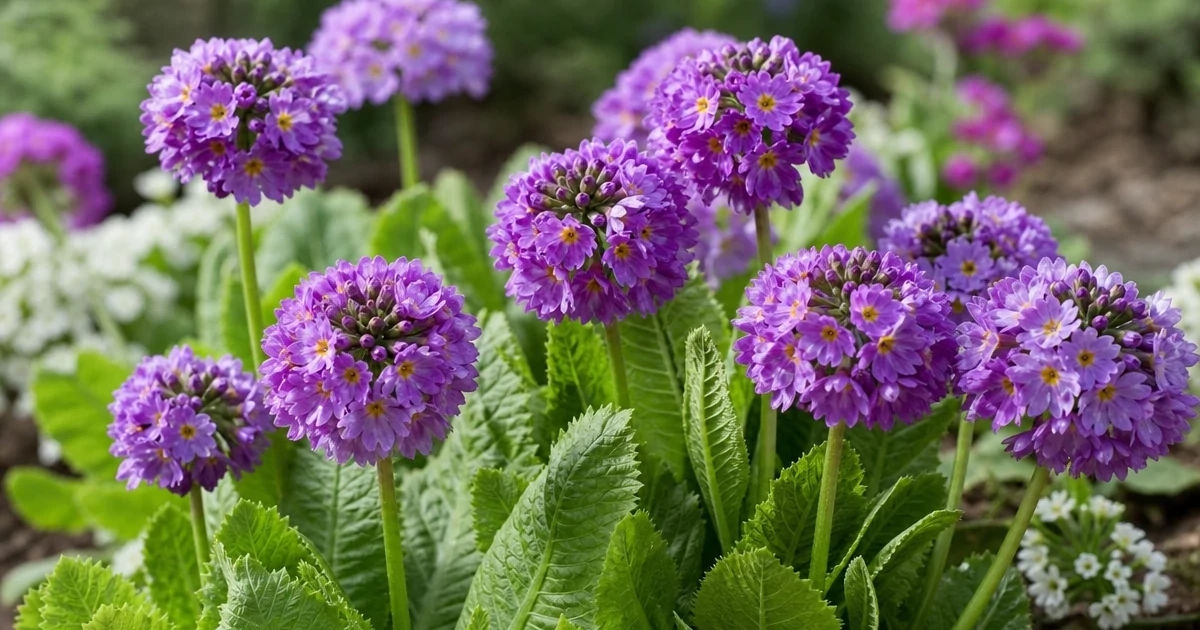
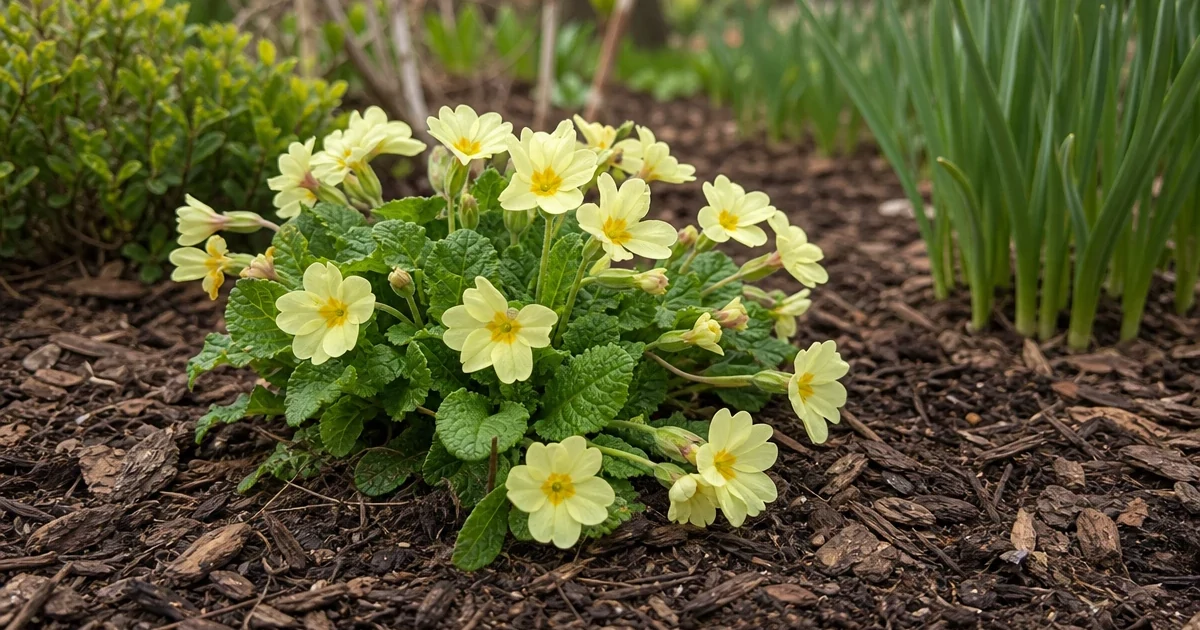
Illustration 3. Primrose flowers have a bright “eye” in the centre.
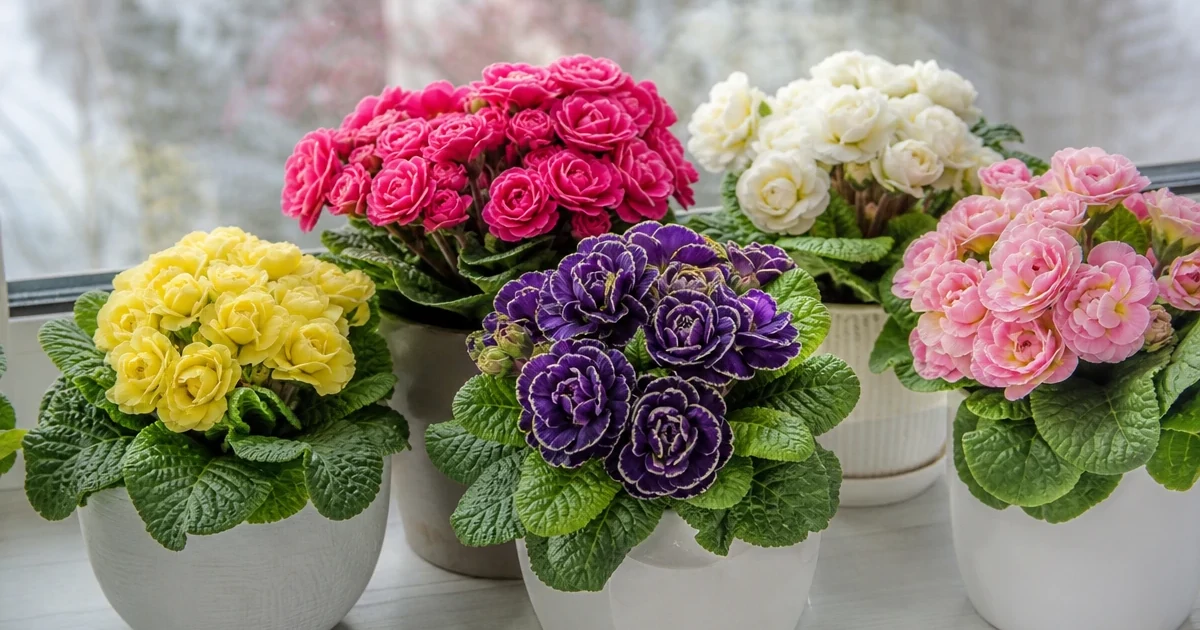
Double primroses are cultivars of the common primrose with lush flowers that look like miniature roses. The best known is the Belarina series (often sold in Ukraine as “ballerina”): dense double blooms in soft pink, cream, lilac and cherry red, with a pleasant scent and long flowering. They do well in pots on a cool windowsill and can be planted out in spring, being hardy across most of Ukraine with a mulch. Other popular doubles include the Rosanna and Primlet series and old English cultivars.
Care is the same as for ordinary primroses, but double flowers last longer in cool rooms and fade faster in warmth.
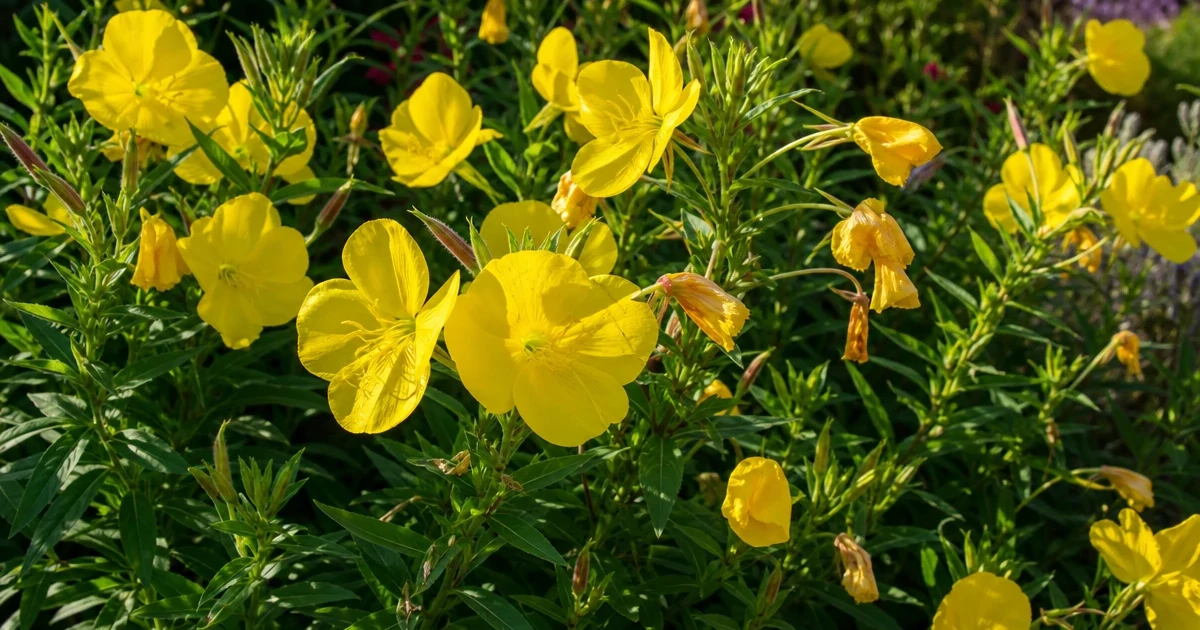
“Evening primrose” is actually Oenothera, a plant from a completely different family (willowherbs). It has large yellow, white or pink cup-shaped flowers that in many species open in the evening and are scented at night, and it blooms in summer rather than spring. It is an easy garden perennial or biennial for sunny beds and dry soil, and the well-known oil comes from the seeds of the common evening primrose. Its care differs from true primroses: Oenothera wants sun and hates wet feet, whereas Primula prefers partial shade and moist soil.
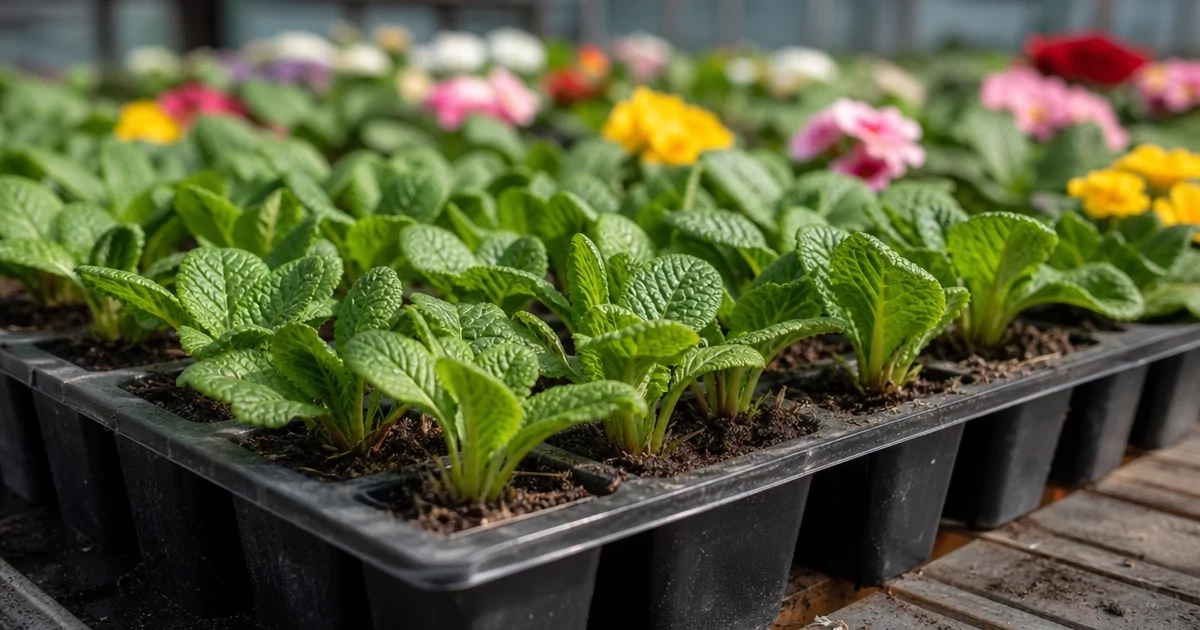
Pick a compact plant with a dense rosette of dark green leaves, free of yellowing, spots or grey fuzz at the base. Buy one with only a few flowers open and the rest still in bud so it flowers longer. The soil should be slightly moist, neither wet nor bone dry. Check under the leaves for aphids and webbing. At home put it straight into the coolest bright spot — after a warm shop a primrose left by a radiator will drop its flowers.
Illustration 5. A cool, bright windowsill is the ideal spot for a primrose.
After flowering, a common primrose can be planted outdoors once the risk of frost has passed. In the garden it becomes a perennial and flowers every spring.
In nature primroses flower in the cool, damp days of early spring, so in a warm flat their cycle speeds up: flowers open fast and fade just as fast, buds dry and leaves yellow. Aim for 12–16 °C by day and a little cooler at night — a glazed balcony, a windowsill with a slightly open window (no draught on the leaves) or a cool bedroom. Then flowering lasts 6–8 weeks instead of 2–3. Keep the pot away from radiators, TVs and sunny south windows.
Common and polyanthus primroses bought in pots in winter are garden plants forced into early bloom. After flowering, deadhead, water a little less and keep the pot cool and bright. Once the risk of frost has passed (usually April–May), plant it in partial shade in the garden — it will flower in the bed the following spring. Forcing it again indoors is difficult.
P. obconica and P. malacoides are indoor perennials. After flowering, cut the stems, reduce watering and keep the pot somewhere cool and shaded over summer (a shady balcony works). In autumn repot into fresh mix and resume watering and feeding; it will bloom again in winter. Plants weaken over time, so renew them every 2–3 years by division or from seed.
The fairy primrose is an annual or biennial indoor species from China with slender 20–40 cm stems carrying tiers of small, fragrant white, pink or lilac flowers from December to April. It needs coolness and light even more than other primroses: in warmth it stretches and fades quickly. It is usually not kept after flowering but grown again from seed sown in spring or summer.
Primula obconica is the longest-flowering indoor primrose: with good care it blooms from autumn to spring with large heads of white, pink, lilac or blue flowers. Its leaves and stems carry glandular hairs containing primin, which causes contact dermatitis in sensitive people — redness, itching and a rash on the hands. Wear gloves when repotting or trimming it. Modern “primin-free” cultivars (such as the Touch Me series) are virtually safe for skin.
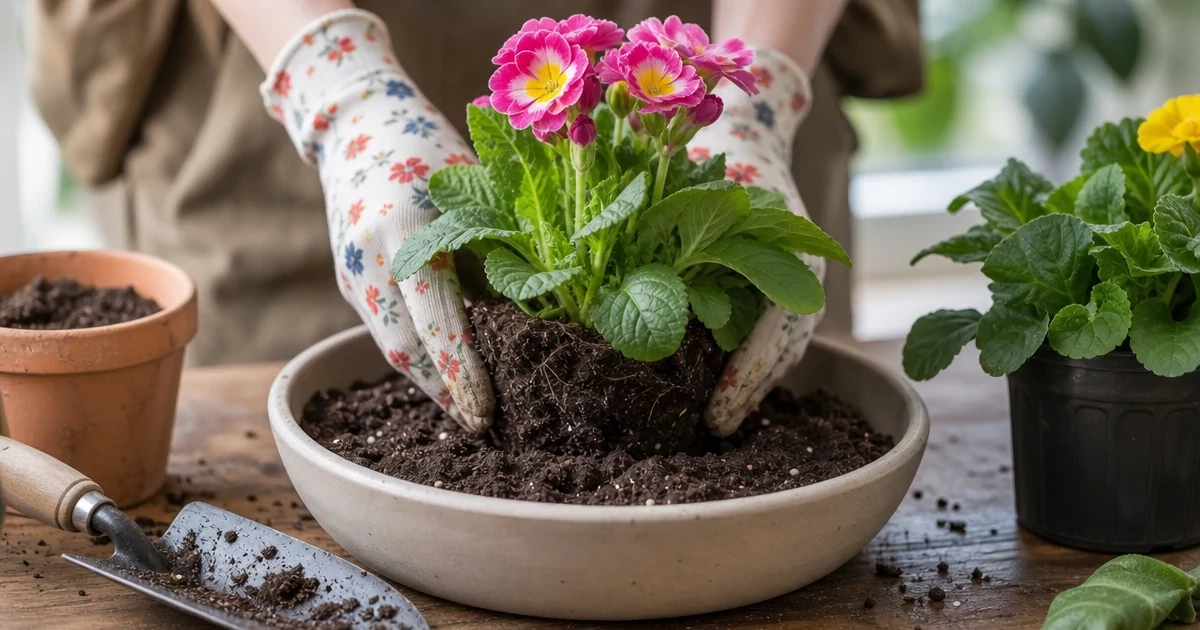
Primroses need a light, rich, moisture-retentive, slightly acidic mix: flowering-plant compost with perlite (4:1), or equal parts leaf mould, peat and sand. The fibrous roots are shallow, so choose a wide, low pot with holes and 1–2 cm of drainage. Perennial indoor species (P. obconica, P. malacoides) are repotted every autumn after their summer rest, into a pot 1–2 cm larger. Never bury the rosette — the growing point must stay at soil level or it will rot. More: how to repot a houseplant.
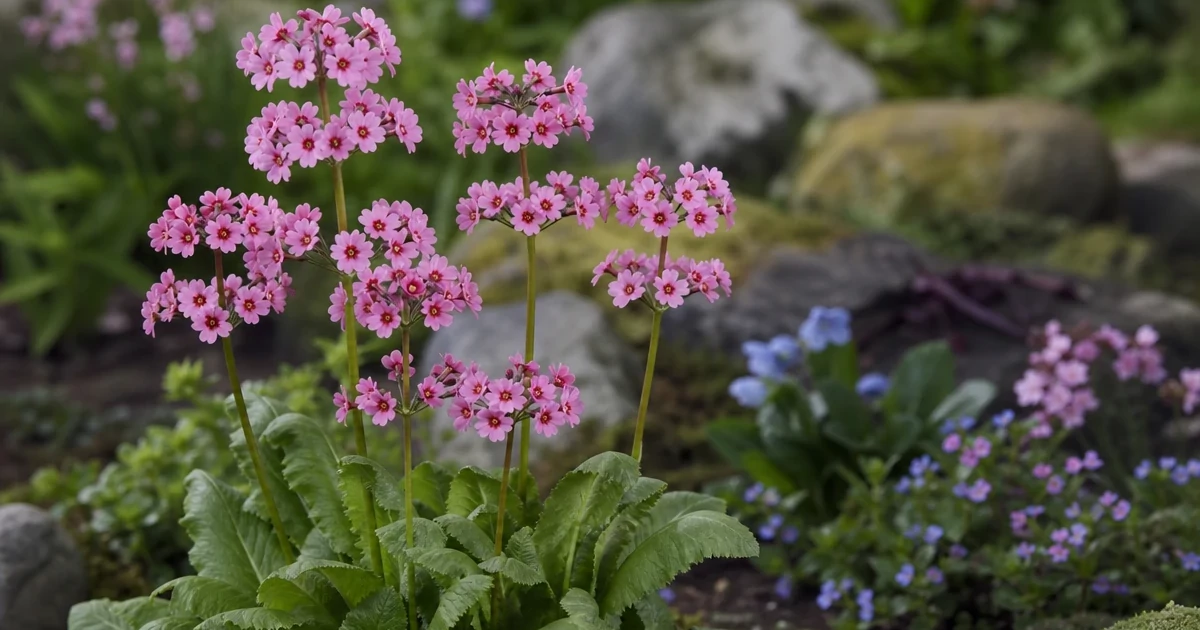
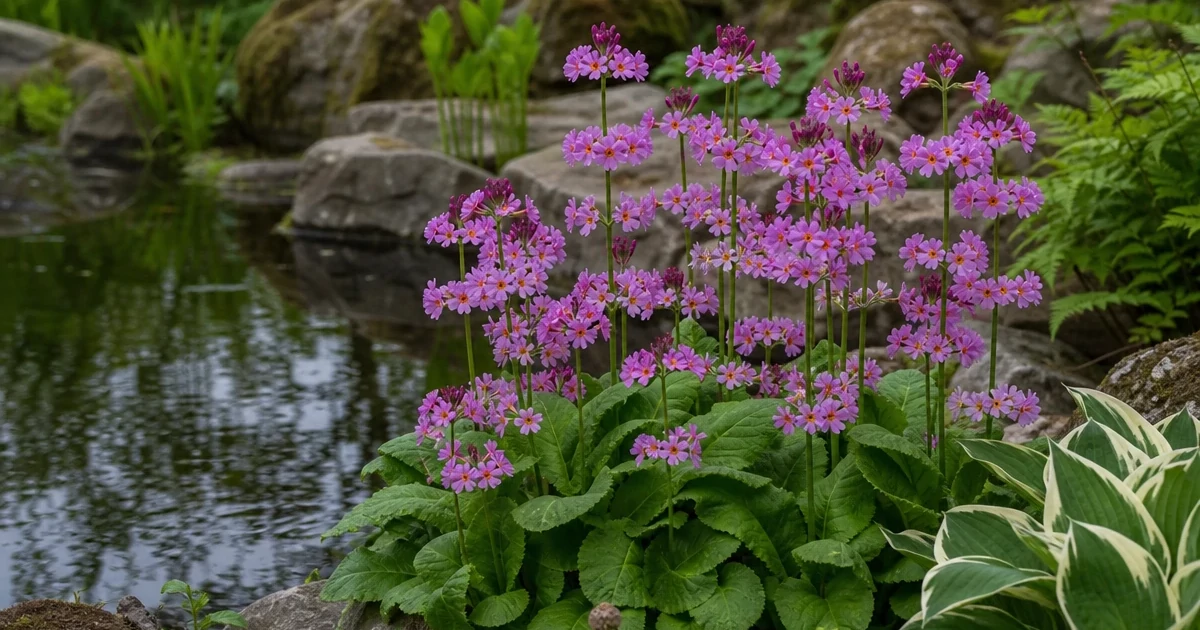
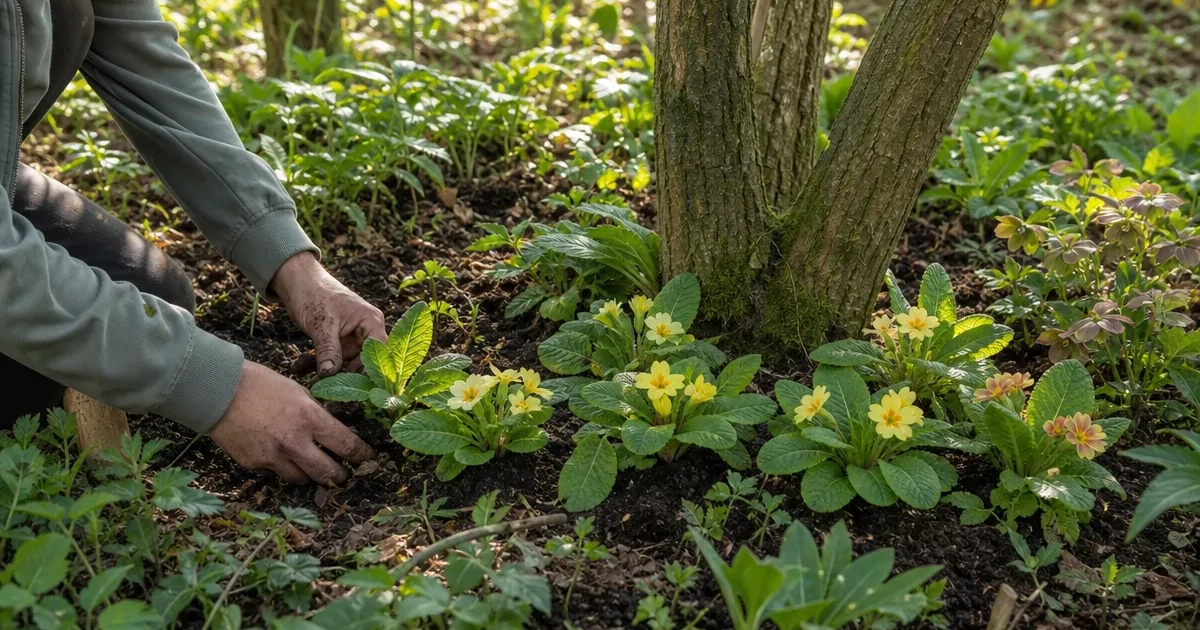
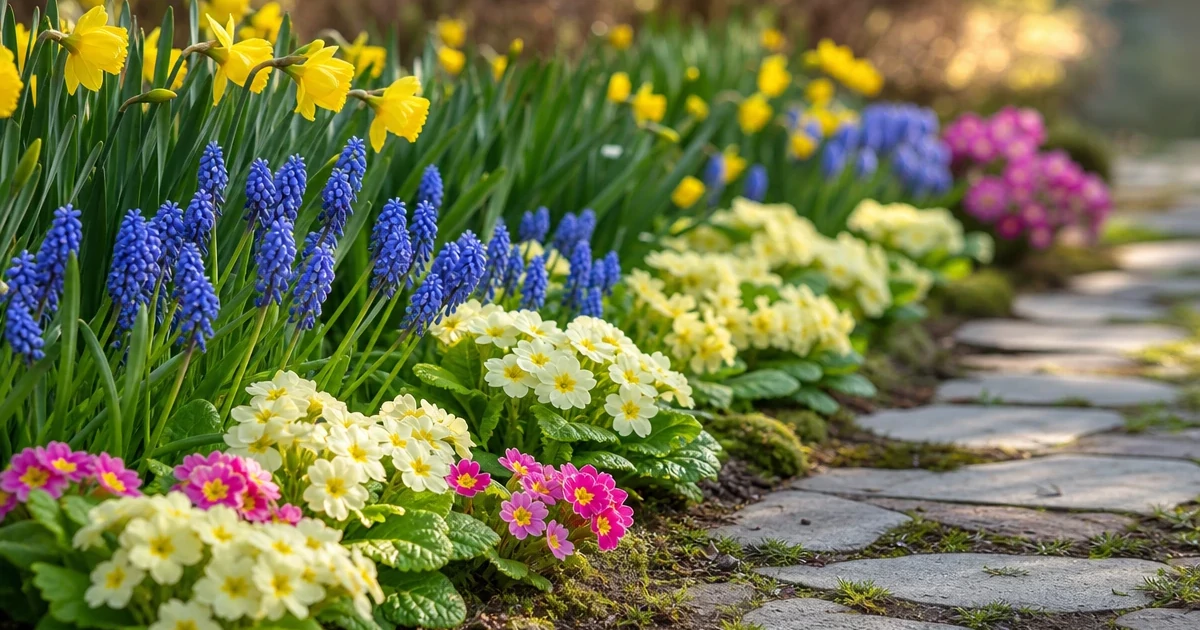
Illustration 2. Garden primroses form bright spring carpets.
Combining species gives continuous flowering from March to June.
Primroses are among the few flowering plants you can put on an open balcony or porch as early as March: they tolerate light frosts down to −2 to −3 °C and flower longest in the cold. Plant several in a window box or low containers with pansies, daisies, muscari and hyacinths. Place the box on an east- or north-facing side; on hard frosty nights cover with fleece or bring it indoors. Water more often than indoors, as wind dries small containers fast. After flowering move the primroses into the garden.
Plant out indoor primroses after flowering, and seedlings, once hard frosts are over — in most of Ukraine from mid-April to late May. You can also plant in August or early September so they root before winter. Choose partial shade under trees or shrubs or by a north wall, away from midday sun, in loose, rich, humus-laden soil that stays moist but never waterlogged. Space small species 10–15 cm apart and larger ones 20–30 cm. Water well and mulch with bark or leaf mould. Cover young plants with leaves or conifer branches for their first winter.
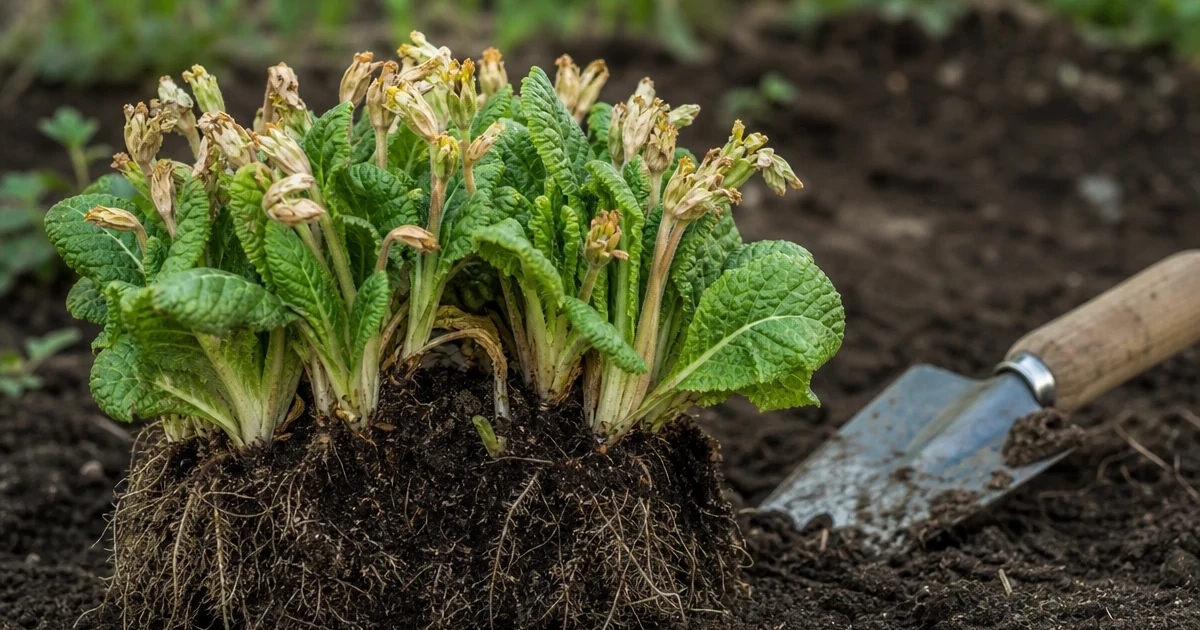
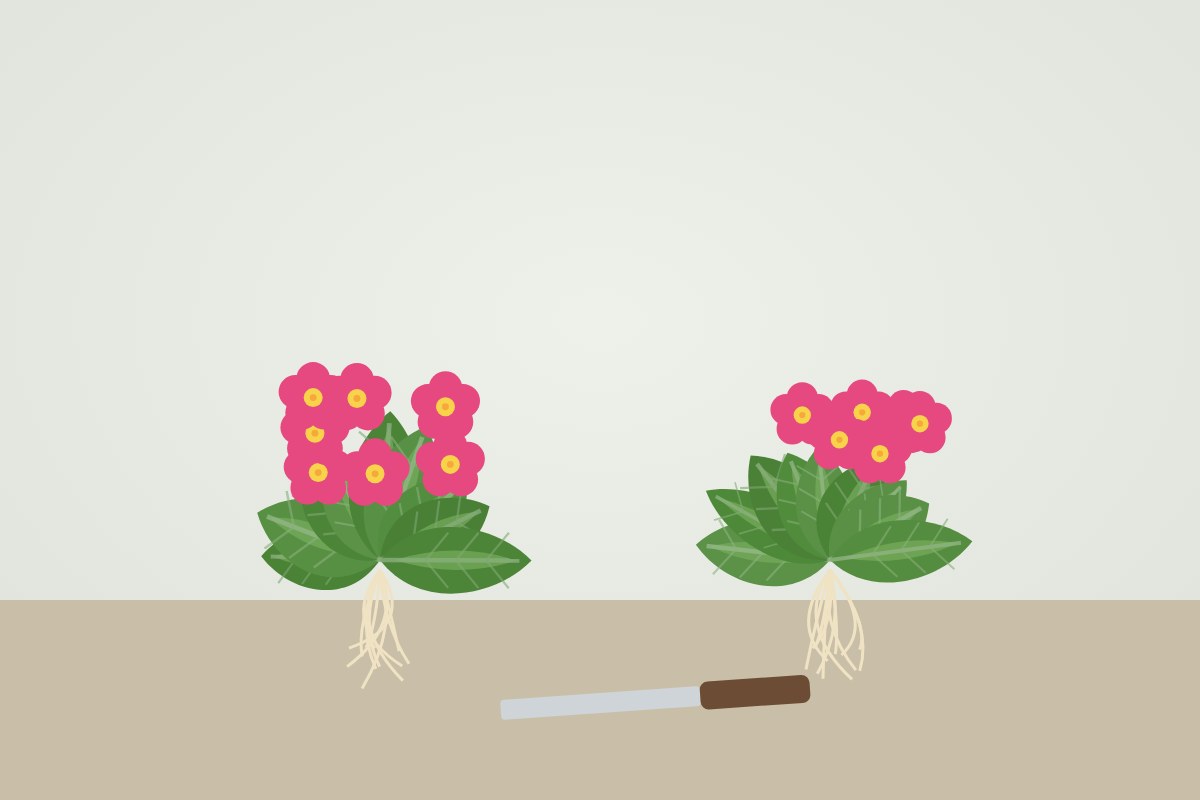
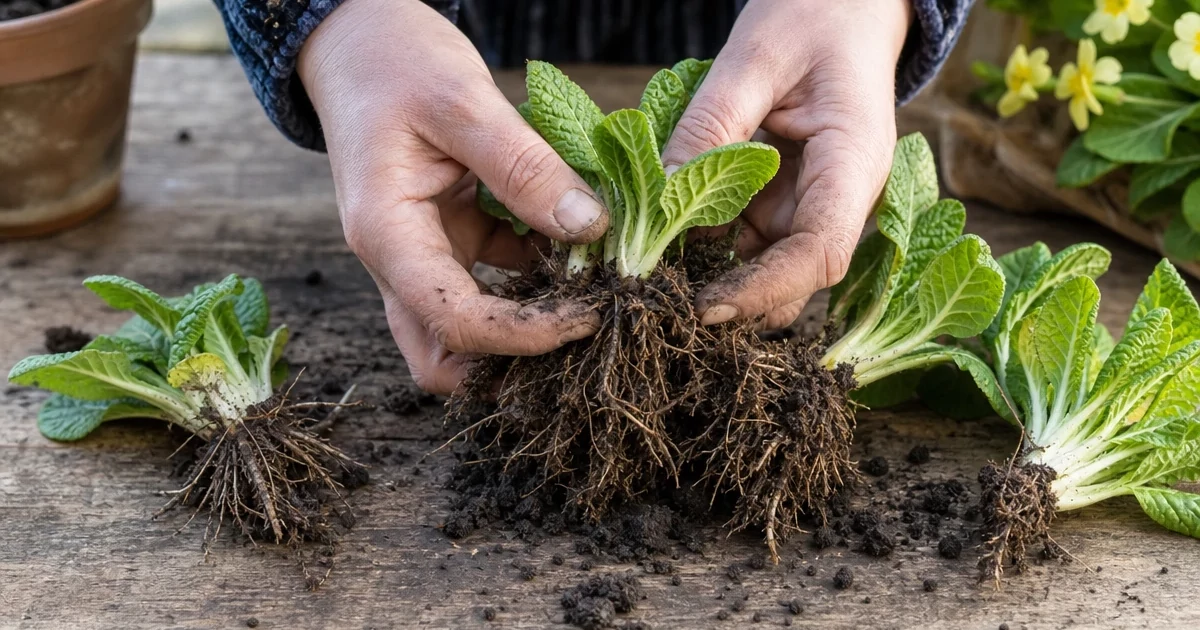
Illustration 4. Division propagates and rejuvenates a primrose at the same time.
Most species survive −25 to −30 °C under snow but suffer in snowless cold and in thaws that leave them waterlogged. After the first steady frosts cover plantings with 5–10 cm of dry leaves, straw or conifer branches; always protect doubles, auriculas and young plants. On heavy soils that lie wet in winter, plant primroses on raised spots. Remove the cover gradually in spring so the sun does not scorch the rosettes.
Division rejuvenates the plant: crowded old clumps flower poorly, while divided ones flower freely again.
| Problem | Signs | What to do |
|---|---|---|
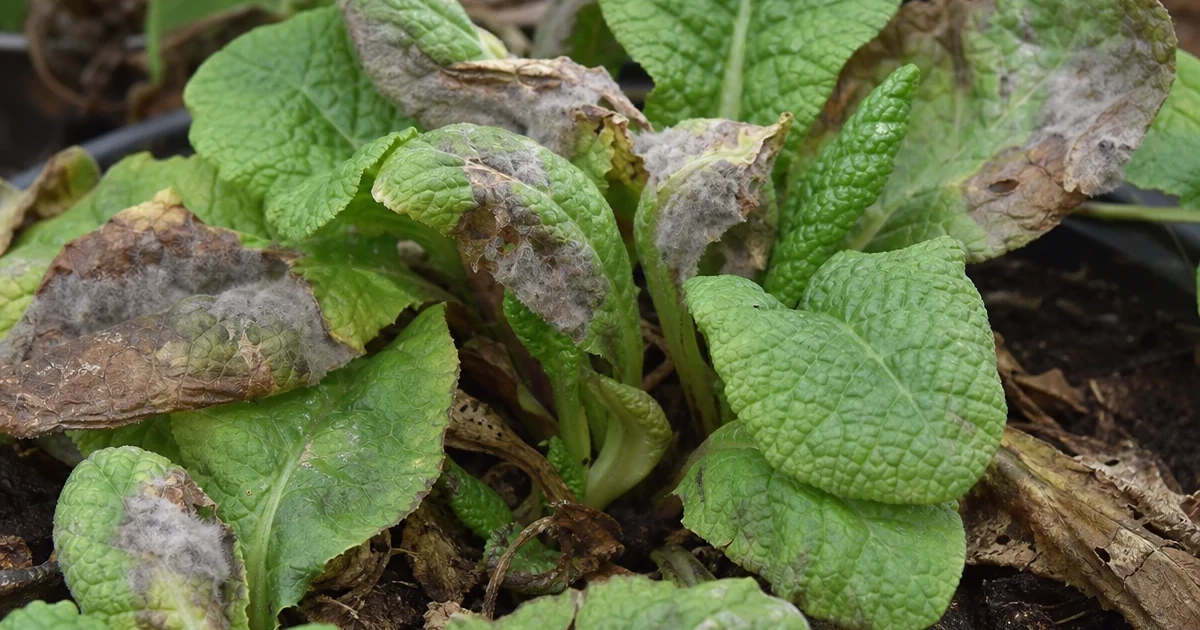
| Grey mould | Grey fuzz on flowers and leaves | Remove affected parts, keep the crown drier, ventilate |
| Root rot | Rosette wilts in wet soil, base darkens | Repot into fresh mix, water less |
| Leaf spot | Yellow-brown spots with a margin | Remove leaves, fungicide as directed |
| Aphids, thrips | Curled leaves, sticky residue, pale streaks | Shower, soapy water, insecticide |
| Spider mites | Tiny specks, webbing in warm rooms | Keep cool and humid, miticide |
| Slugs (outdoors) | Chewed leaves and flowers | Bark mulch, traps, hand-picking |
More on mites: spider mites on houseplants.
| Months | Indoor primrose | Garden primrose |
|---|---|---|
| January–March | Flowering, cool 12–16 °C, feeding | Sowing, cold stratification |
| April–May | Plant faded potted plants outdoors | Flowering, feeding, mulching |
| June–August | P. obconica rests somewhere cool | Water in heatwaves, divide after flowering |
| September–December | Repot, resume watering, buds form | Plant seedlings by mid-September, cover with leaves |
Primroses look best in groups of 5–15; single plants get lost. Plant them along paths, in shady edges, under trees, in rockeries and by ponds. Good companions are early bulbs (scilla, muscari, daffodils, tulips) plus hostas, ferns, astilbes and heucheras that hide the rosettes after flowering. For a long display combine early species (common primrose, cowslip) with later drumstick and Japanese primroses.
A flowering primrose in a pot is an inexpensive, cheerful gift at the end of winter or for spring holidays. Several plants in different colours in a moss-lined basket make an instant spring arrangement, and double cultivars look festive even in a plain ceramic pot. Tell the recipient to keep it cool and plant it in the garden after flowering. See more flowering houseplants.
In short. Coolness, indirect light and soil that is always moist but never wet are all a primrose needs. An indoor one will cheer you in winter, and one planted in the garden every spring.
Most garden primroses flower once, in spring, for 3–6 weeks. Indoor P. obconica can bloom from autumn to spring and sometimes again in summer.
Plant a potted common primrose in partial shade outdoors in spring. Keep P. obconica indoors: cut the stems, keep it cool in summer and repot in autumn.
From mid-April to late May once hard frosts are over, or in August to early September.
Usually warmth and dry air, or soil that is too dry or too wet. Move it somewhere at 12–16 °C and even out watering.
P. obconica can irritate skin because of primin; most other species are low in toxicity, but pets should not eat the leaves.
P. obconica and P. malacoides, yes. Common and polyanthus primroses weaken indoors and are happier in the garden.
Every 3–4 years after flowering, when clumps get crowded and flower less.
They are different plants: evening primrose (Oenothera) flowers in summer and likes sun and dry soil; true primroses are spring-flowering, shade-tolerant and like moisture.
Not the flowers or the crown — they spot and rot. Raise humidity with a tray of wet pebbles instead.
Common primroses rarely rebloom indoors — they need a cold winter outdoors. P. obconica fails to flower after a hot summer without rest or in poor light.
Garden perennials live for years if divided every 3–4 years. Indoor P. obconica stays attractive for 2–3 years.
Some are delicately fragrant — cowslips, double Belarina and the fairy primrose. Most polyanthus hybrids have little scent.
Yes, stems of oxlips, cowslips and drumstick primroses last 5–7 days in a vase. Use cool water and change it daily.

Author: Maria Svitlovir
Graduated from Taras Shevchenko National University of Kyiv, Institute of Biology and Medicine (2001). BSc in Biology, MSc in Horticulture. Writes about plants, works at a garden centre selecting and repotting plants, and contributes to plant reference guides.
© Kyiv 2026 UFL Flower Shop

Trademark UFL №191476 is used under license of the rights holder.
All rights reserved. Any use of materials without a link to the site is prohibited.


 Birthday
 Hydrangeas