
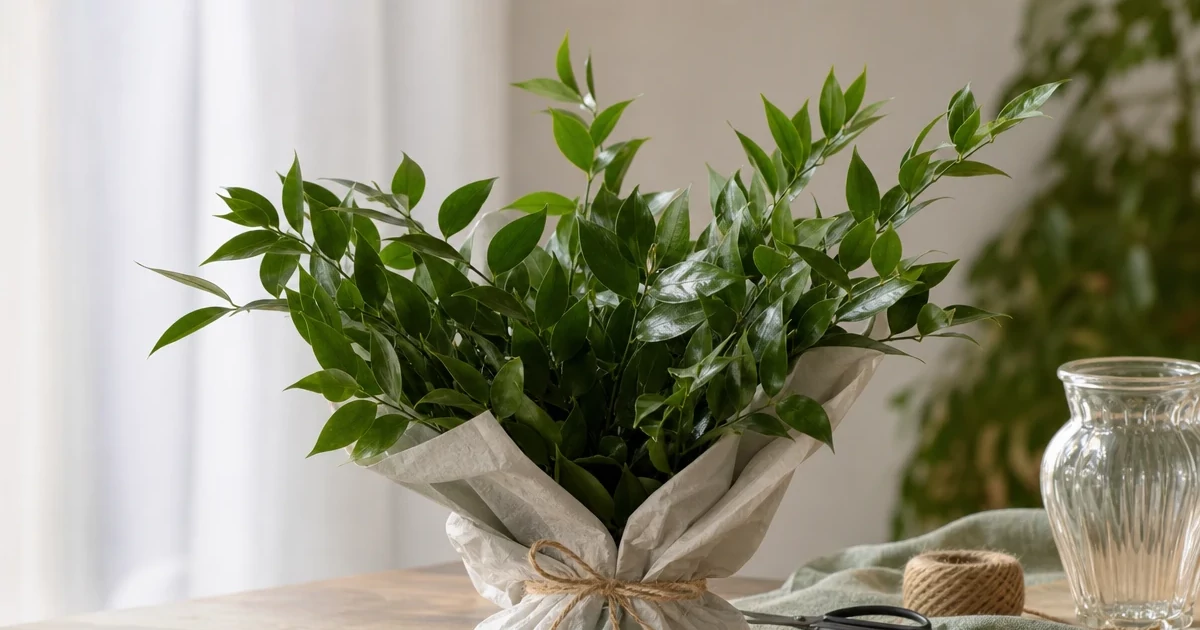
Ruscus is the long stems of glossy, pointed “leaves” that florists add to bouquets, garlands and wedding decor. It is prized for its longevity: the flowers in a bouquet will have faded while the ruscus is still green. Here is what the plant is, which types exist, what it pairs best with and how to make it last.
Ruscus, or butcher’s broom (Ruscus), is an evergreen subshrub of the asparagus family. Its most curious feature is that the flat “leaves” are cladodes — modified shoots. The true leaves are tiny and barely visible, while small flowers and later red berries appear right in the middle of the cladode. This structure makes the stems stiff, dense and very slow to lose moisture.
Wild ruscus species are rare and protected in Ukraine, so ruscus for floristry is grown on plantations.
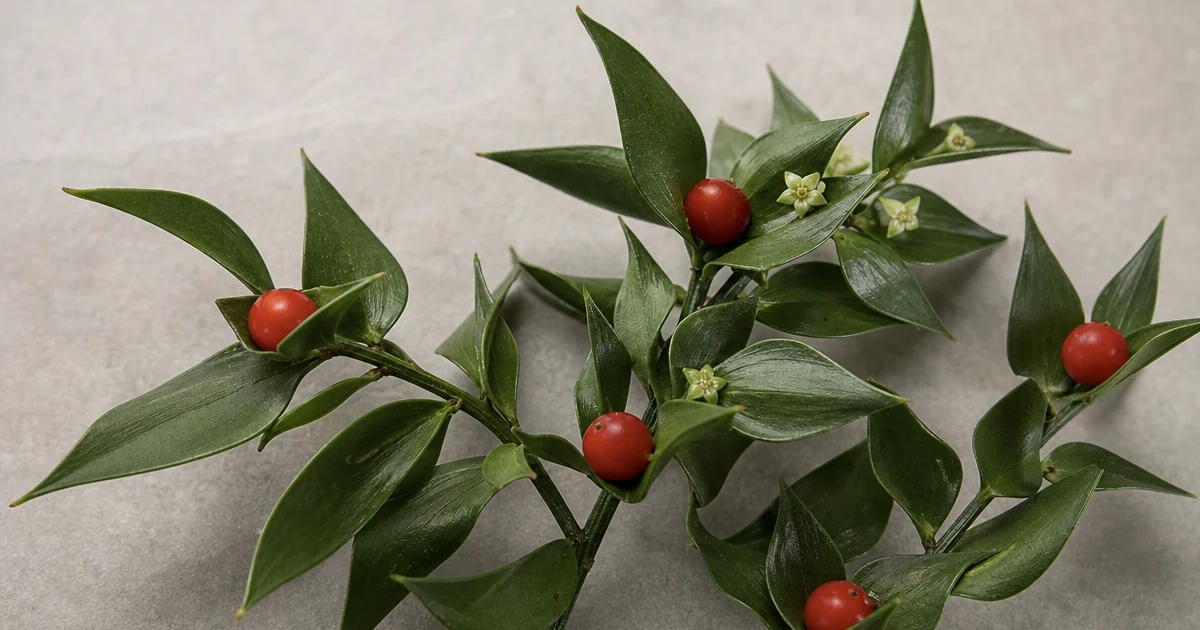
View full-size photoThe photo shows typical ruscus cladodes and red berries.
Ruscus is a versatile base that holds the shape of a bouquet and sets off the flowers:
Italian ruscus drapes beautifully, so it is often used in cascading bridal bouquets.
Ruscus is one of the longest-lasting cut plants: it stays fresh for 2–3 weeks or more, outliving several bouquets. Just recut the stems and change the water every few days. It copes with transport and short spells out of water, which is why it is used in event decor where flowers sit without water for hours.
Ruscus dries well and keeps its shape. The easiest way is to stand the stems in an empty vase in a dry, shaded place: within 1–2 weeks they dry to an olive green. Dried ruscus can be spray-painted gold, silver or white for Christmas and autumn decor.
See other greenery in bouquet greenery and in our florist’s glossary.
Yes, butcher’s broom is the common name for Ruscus. “Italian ruscus” is a related plant, Danae racemosa.
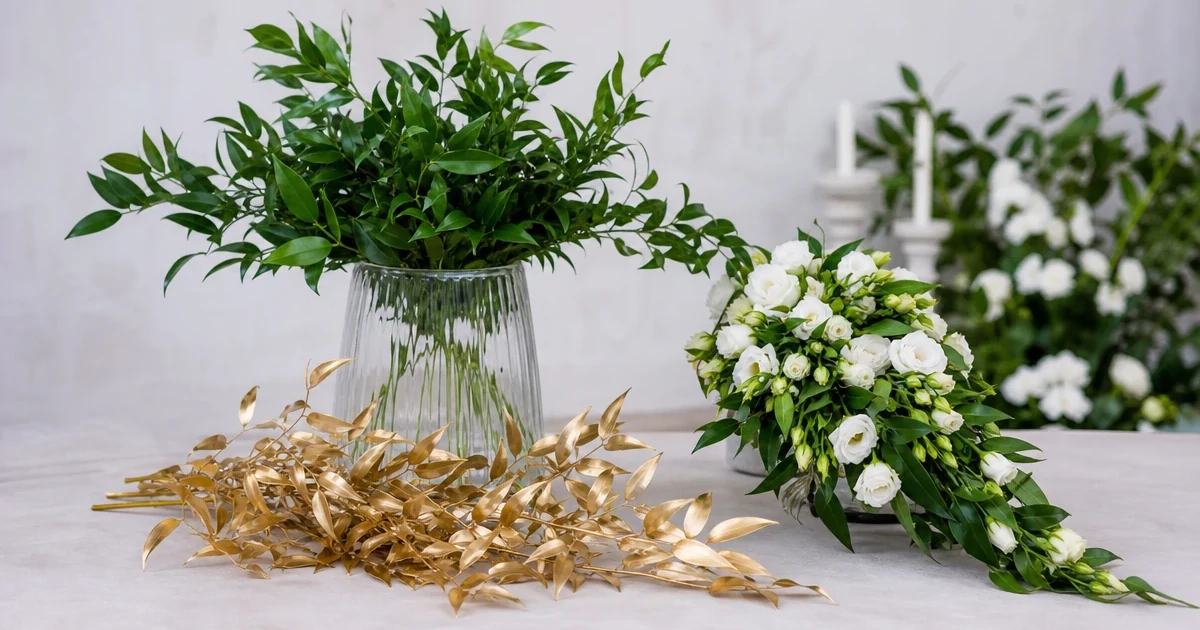
View full-size photoRuscus is used in fresh, dried, and wedding arrangements.
Usually 2–3 weeks or more — it outlasts most flowers in a bouquet.
Yes, but it grows very slowly and prefers a cool winter. For bouquets, buying cut stems is easier.

Author: Maria Svitlovir
Graduated from Taras Shevchenko National University of Kyiv, Institute of Biology and Medicine (2001). BSc in Biology, MSc in Horticulture. Writes about plants, works at a garden centre selecting and repotting plants, and contributes to plant reference guides.
© Kyiv 2026 UFL Flower Shop

Trademark UFL №191476 is used under license of the rights holder.
All rights reserved. Any use of materials without a link to the site is prohibited.

 Birthday
 Hydrangeas