
 Birthday
 Hydrangeas
The scent of sandalwood — warm, creamy and woody — is familiar from perfumes, incense and cosmetics. Behind it stands an unusual tree: it feeds off its neighbours, grows for decades before yielding valuable wood and is now under threat. Here is what the sandalwood tree is, where sandalwood oil comes from, why it's so expensive and how true sandalwood differs from "red sandalwood".
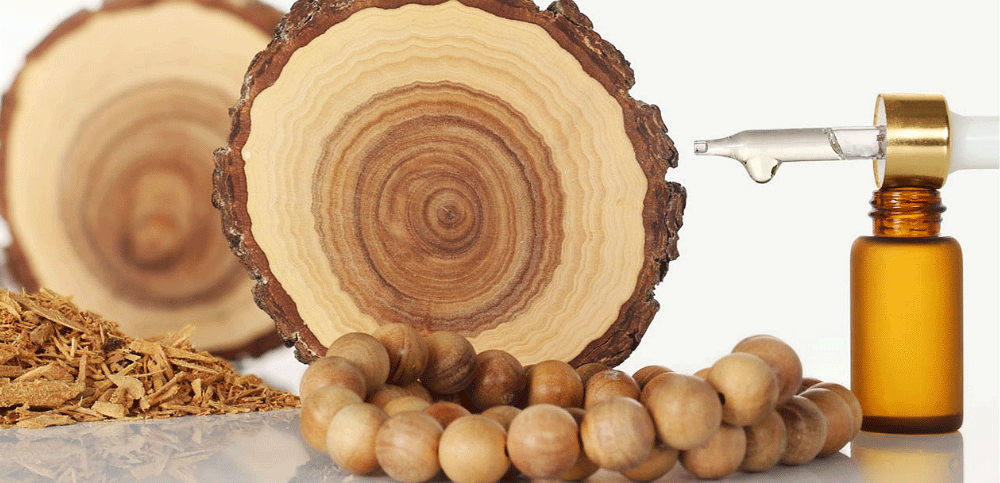
What is the sandalwood tree
True sandalwoods belong to the genus Santalum in the sandalwood family (Santalaceae), with about 15 species. They grow in India, Indonesia, Australia and the Pacific islands. The best-known and most valuable is Indian sandalwood (Santalum album), a small evergreen tree usually 4–10 metres tall with tiny flowers that open cream and turn red.
A hemiparasitic tree
Sandalwood is a hemiparasite: it has green leaves and photosynthesises, but special outgrowths on its roots latch onto the roots of nearby plants to take water and minerals. Young trees need host plants, so plantations grow sandalwood alongside other crops. It usually doesn't kill its hosts — it's more a case of living at someone else's expense.

"Red sandalwood" is a different plant
The name is also used for red sanders, Pterocarpus santalinus, a member of the legume family. Its wood is vivid red but almost scentless and is used for furniture, carving and dye. Only true sandalwoods of the genus Santalum produce the fragrant oil.
Where sandalwood oil comes from

The aromatic compounds — mainly santalols — build up in the heartwood and roots. Heartwood forms slowly, so oil is taken from trees at least 15–30 years old, and older trees contain more. The whole tree is dug up, roots and all, and the chipped wood is steam-distilled. The oil makes up only a few per cent of the wood's weight.
Hence the high price: slow growth, low yield and limited supply. Indian sandalwood is especially prized because its scent deepens rather than fades over time, which is why perfumers use it as a fixative and base note.
Sandalwood in history and culture

Sandalwood appears in ancient Indian texts, and its trade goes back thousands of years. In Hinduism and Buddhism sandalwood paste is applied to the forehead during rituals and sandalwood incense is burned in temples. The wood is carved into figurines, boxes, prayer beads and fans that keep their fragrance for years.
India's sandalwood heartland is Karnataka in the south: Mysore sandalwood oil and soap are famous worldwide. For a long time sandalwood trees there were treated as state property, and felling and trade were tightly controlled. Today Australia is also a major producer, growing Indian sandalwood on plantations and harvesting its native Santalum spicatum.
Why sandalwood is under threat

High demand and illegal felling have sharply reduced wild populations of Indian sandalwood. The IUCN lists Santalum album as Vulnerable. Many perfumers therefore use synthetic sandalwood molecules, and natural oil comes mostly from plantations. If you see cheap "sandalwood oil", it's most likely a blend or synthetic.
How sandalwood is used today
- Perfumery. A base note and fixative in thousands of fragrances, from classic orientals to modern woody scents.
- Incense. Sticks, cones and powder.
- Cosmetics and soap. Mostly for the fragrance.
- Carving and souvenirs. Boxes, figurines, beads.

Sandalwood oil is a fragrance ingredient, not a medicine. Essential oils should never be applied neat: dilute them in a carrier oil and patch-test first. Do not take them internally. See a doctor for any health concerns.
How sandalwood smells
Perfumers describe sandalwood as a soft, creamy, warm and slightly sweet woody scent with milky, balsamic nuances. It pairs well with rose, jasmine, iris, vanilla and spices. If you love warm scents, look at strongly fragrant flowers too — see the most fragrant flowers and lavender gift ideas. For the role of flowers and scents in Indian culture, read Indian flower traditions.

FAQ
Is sandalwood really a parasite?
Yes, a hemiparasite: it photosynthesises but takes water and minerals from the roots of neighbouring plants.
Why is sandalwood oil so expensive?
The trees take decades to mature, oil yields are low and wild stocks have shrunk dramatically.
How does red sandalwood differ from white?
Red sandalwood is a legume tree with little scent. Only true sandalwoods of the genus Santalum produce fragrant oil.
Can sandalwood oil be used as a remedy?
No, it's a fragrance material for perfumery and cosmetics. Treatment should come from a doctor.

View full-size photo
Author: Maria Svitlovir
Graduated from Taras Shevchenko National University of Kyiv, Institute of Biology and Medicine (2001). BSc in Biology, MSc in Horticulture. Writes about plants, works at a garden centre selecting and repotting plants, and contributes to plant reference guides.


