
 Birthday
 Hydrangeas
The weeping fig (Ficus benjamina) is an elegant indoor tree with small glossy leaves and drooping branches. It lives for decades and can grow 2–3 m tall. Its defining trait is sensitivity to change: a new spot, a draught or overwatering, and the fig “responds” by dropping leaves.

Illustration 1. The trunks of young figs are often braided.
Choosing a spot
A weeping fig needs bright indirect light: 1–2 m from a south-facing window or right by an east-facing one. Variegated varieties (‘Starlight’, ‘Kinky’) need more light than green ones (‘Exotica’, ‘Danielle’).
- Choose a permanent place and don’t move the plant unless necessary.
- Keep it away from draughts, air conditioning and hot radiators.
- Temperature: 18–25 °C, no lower than 15 °C in winter.

Illustration 3. A steady, bright spot is the key to a dense crown.
Watering and humidity
Water when the soil has dried 2–3 cm deep. Pour away excess water from the saucer after 15 minutes. Use soft water at room temperature. Both drying out and overwatering lead to leaf drop.
The fig likes humid air: mist the crown several times a week in the heating season and give it a warm shower now and then.
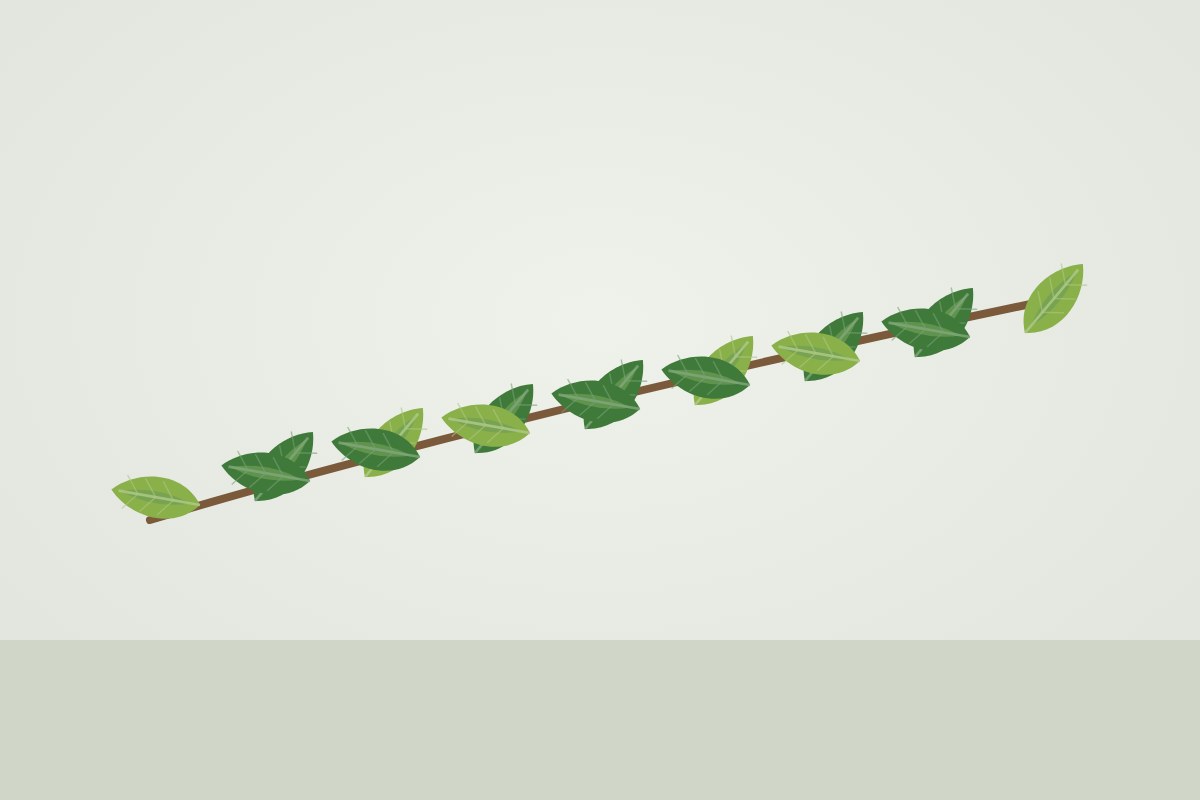
Illustration 2. Healthy fig leaves are firm, glossy and spotless.
Why a fig drops its leaves
- Stress from moving — normal after purchase or relocation; the plant adapts in 2–4 weeks.
- Lack of light — especially in autumn and winter; a grow light will help.
- Overwatering or drying out — check the soil moisture with your finger.
- Cold and draughts — even brief airing in winter.
- Pests — scale insects, spider mites, thrips; check the undersides of the leaves.
Shaping and feeding
The weeping fig tolerates pruning well. In spring, shorten overlong branches by a third above a leaf bud so the crown thickens. The cuts ooze milky sap, so wear gloves. From March to September, feed every two weeks with fertiliser for ficus or foliage plants.
Repotting
Repot young plants every spring and mature ones every 2–3 years, when roots poke out of the drainage holes. The new pot should be 3–4 cm larger. The safest method is to move it with the root ball intact. For large plants, replacing the top 3–5 cm of soil each year is enough.

Illustration 5. Moving the root ball intact causes the least root damage.
Propagation by cuttings
- In spring, cut a semi-ripe cutting 10–15 cm long.
- Rinse off the milky sap and let the cut dry for 1–2 hours.
- Place it in water or a moist peat and perlite mix and cover with a plastic bag.
- Roots appear in 2–4 weeks at 22–25 °C.
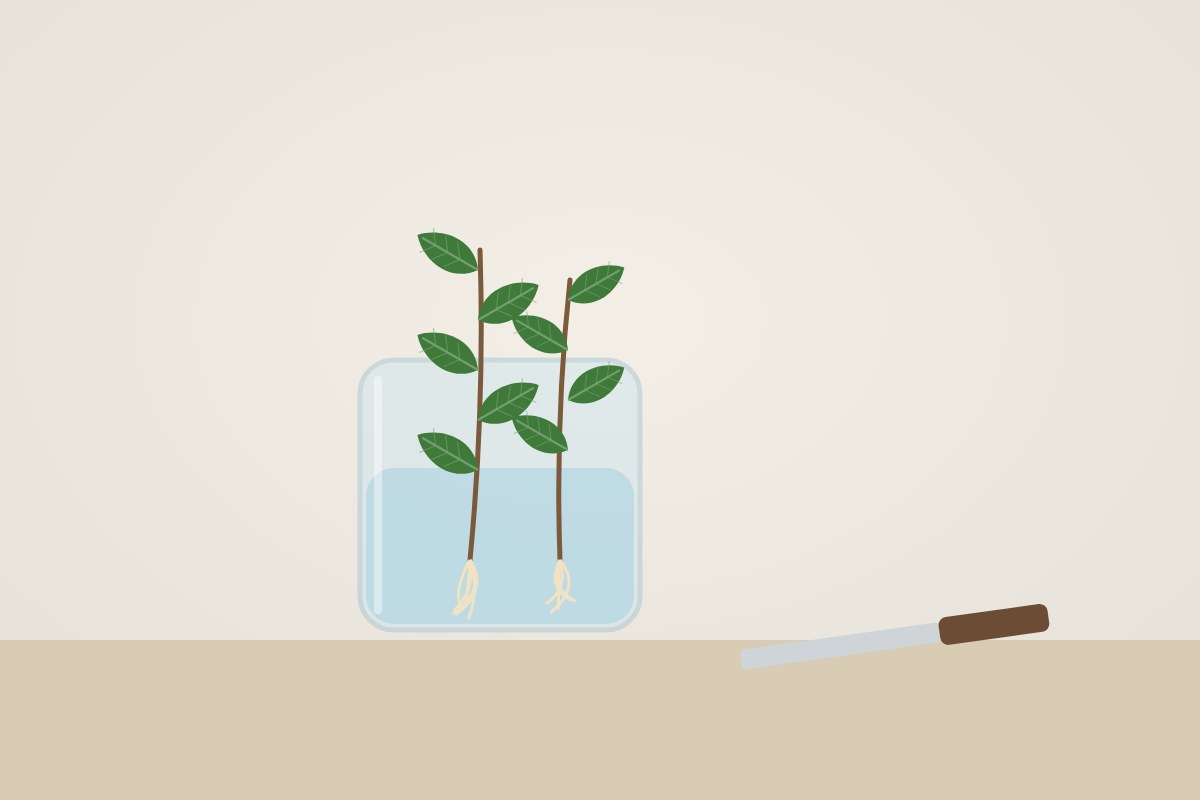
Illustration 4. Fig cuttings root easily in spring and early summer.
In short. A permanent bright spot, watering once the soil dries, humid air and no draughts, and your weeping fig will delight you with a dense crown for decades.


