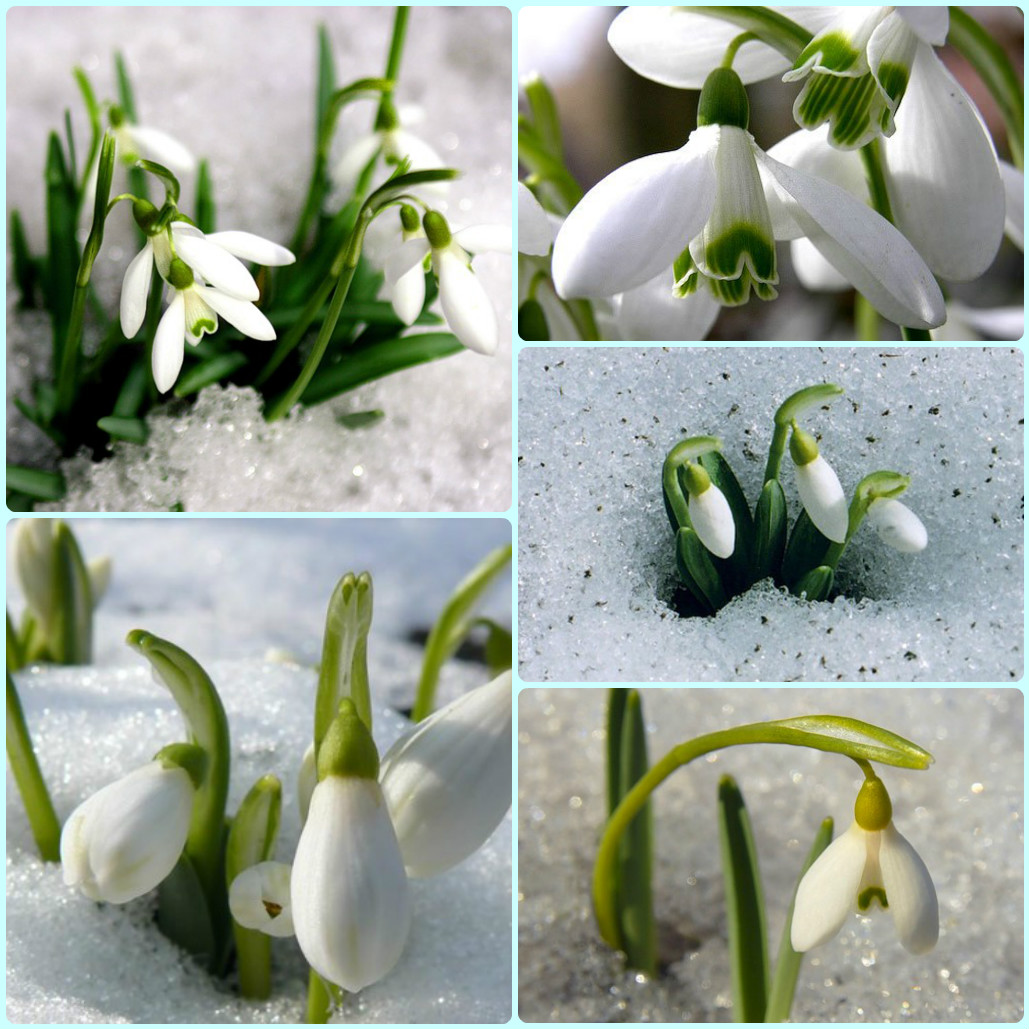
The snowdrop is one of the first flowers of the year: its white nodding buds appear in late February and March, sometimes pushing straight through melting snow. Yet in everyday Ukrainian and Russian speech the word for "snowdrop" is used for almost any early flower — blue squills, violet pasque flowers, white wood anemones. Here is which flower is the real snowdrop, how to tell it from other spring flowers, why picking and selling it is banned in Ukraine, which legends surround it and how to grow snowdrops legally in your own garden. This is a birth month flower; see January flowers.
Fresh flowers for your home or as a gift: potted plants and flower baskets.
The true snowdrop is Galanthus, a small bulbous plant in the amaryllis family. The genus name combines the Greek words gala, "milk", and anthos, "flower" — a "milk flower". About twenty Galanthus species are known; in the wild they grow from Western Europe to the Caucasus, Turkey and Iran.
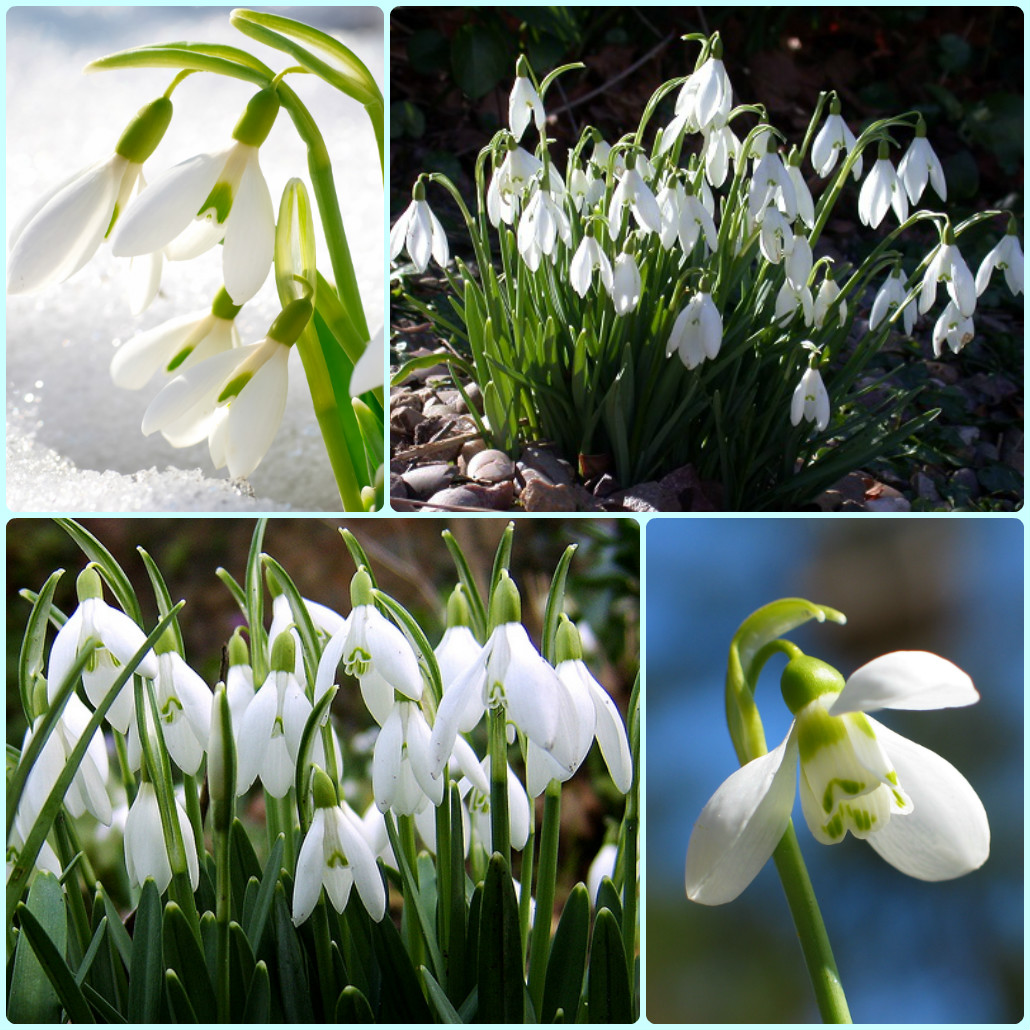
The best-known species is the common snowdrop (Galanthus nivalis). It has two narrow grey-green leaves and one nodding flower on a stem 10–20 cm tall. The flower is easy to recognise: three long white outer petals (strictly speaking, tepals) and three short inner ones with a green horseshoe- or heart-shaped mark.
Snowdrops flower early to make use of the short window when a deciduous wood still has plenty of light and moisture. By early summer their leaves die back, and the bulb "sleeps" underground until the next spring.
Many of these early flowers, like the snowdrop itself, are rare plants. Read more about spring flowers in the garden.
All wild snowdrop species found in Ukraine are listed in the Red Data Book of Ukraine. Populations have shrunk mainly because of mass picking for bouquets and digging up bulbs for sale, as well as logging and construction.
Picking, digging up, buying and selling wild snowdrops is prohibited and subject to administrative penalties. In addition, all Galanthus species are listed in CITES Appendix II, so international trade in bulbs is allowed only with documents proving cultivated origin. Learn more about rare plants in our article on the Red Data Book of Ukraine.
If you see snowdrops sold in an underpass or at a street market in spring, they are almost certainly illegally collected. The best way to enjoy them is a walk in a forest, park or botanical garden.
One of the best-known legends involves Adam and Eve. When they were expelled from Paradise, snow was falling and Eve wept from cold and despair. An angel caught a few snowflakes, breathed on them, and they turned into snowdrops — a sign that spring always follows winter.
In England snowdrops are called Candlemas bells: they often open around 2 February, and the flowers used to be brought to churches for the feast. Many people also know the fairy tale "The Twelve Months", in which a stepdaughter is sent into the winter forest to find snowdrops and the twelve month-brothers help her.
In Ukrainian folk tradition the first spring flowers were linked with the awakening of nature. There was a custom of rejoicing at the first flower you saw and leaving it unpicked — a careful attitude that matches today's conservation rules.
You can — and should — grow snowdrops in your garden, but only from bulbs bought at a garden centre or nursery where they are propagated in cultivation.
Snowdrops go well with crocuses, squills and hellebores. Once they finish, perennials and summer flowers take their place.
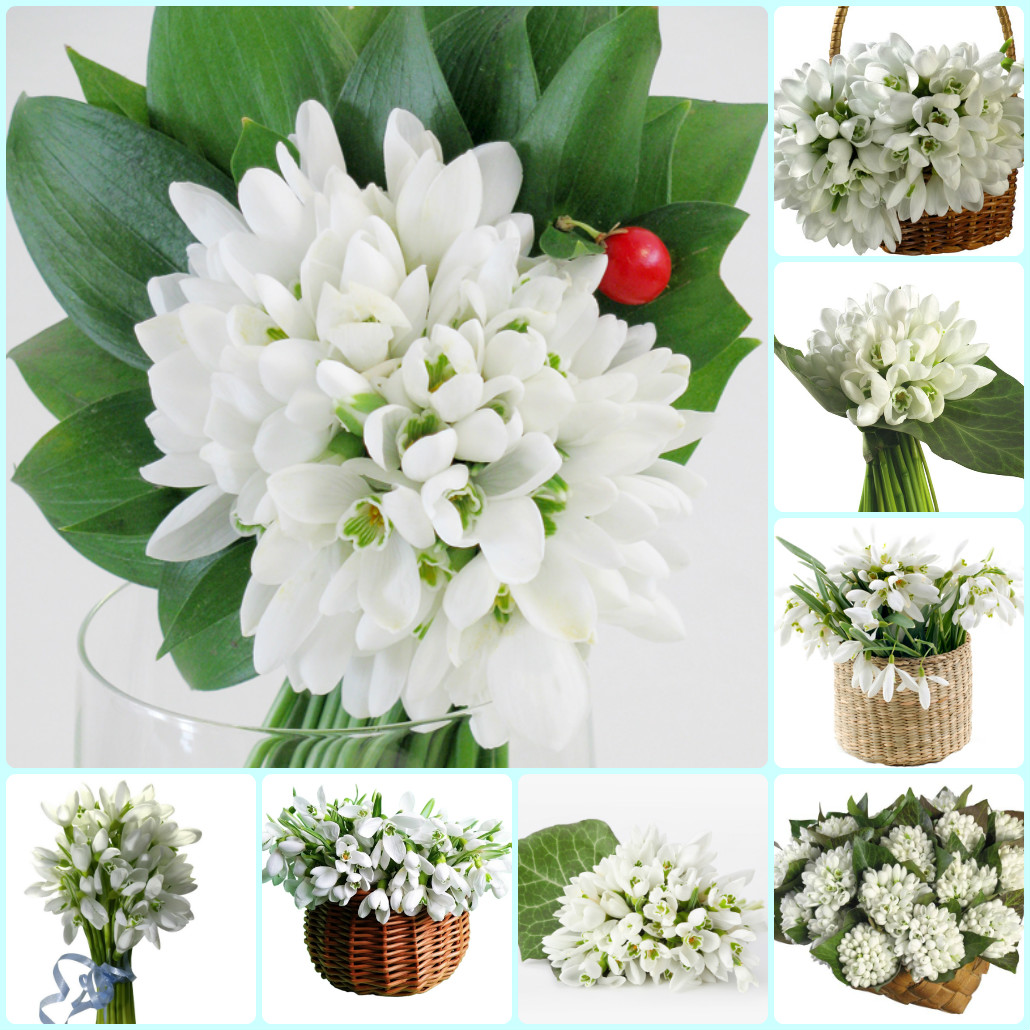
A bouquet of wild snowdrops is a poor gift: picking them is banned, and they wilt quickly in a vase. A good alternative is a pot of nursery-grown snowdrops that can later be planted in the garden, or a spring bouquet of tulips, hyacinths and grape hyacinths. You can also make snowdrops yourself — see our tutorial on a paper snowdrop bouquet.
Depending on the weather, from late February to early April. In mild winters in the south the first flowers appear as early as January.
Not wild ones: in Ukraine they are listed in the Red Data Book. You may cut garden snowdrops from your own plot, but they do not last long in a vase.
Yes, all parts of the plant, especially the bulbs, contain alkaloids. Keep bulbs away from children and pets.
A snowdrop has three long and three short petals; a snowflake has six equal petals with green dots on the tips.

Author: Maria Svitlovir
Graduated from Taras Shevchenko National University of Kyiv, Institute of Biology and Medicine (2001). BSc in Biology, MSc in Horticulture. Writes about plants, works at a garden centre selecting and repotting plants, and contributes to plant reference guides.
© Kyiv 2026 UFL Flower Shop

Trademark UFL №191476 is used under license of the rights holder.
All rights reserved. Any use of materials without a link to the site is prohibited.

 Birthday
 Hydrangeas