
 Birthday
 Hydrangeas
The spiral technique is the basis of most round bouquets made by florists. Stems are laid in a circle at the same angle, so every flower has its own space, the bouquet looks full, and the stems don’t snap and drink water better. Made properly, a spiral bouquet can even stand on a table without a vase. Here is how to master the technique at home.
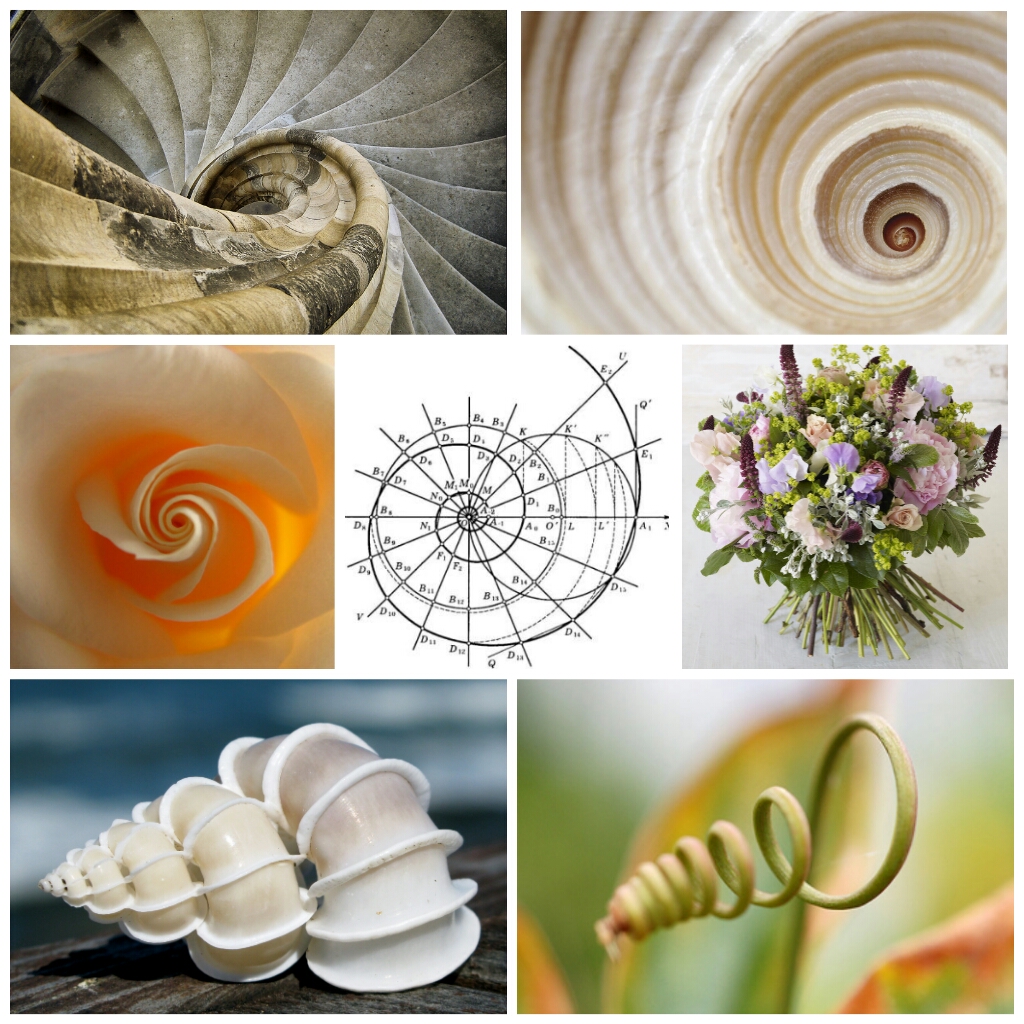
How the technique works
All stems cross at a single point — the binding point — and fan out in the same direction like the blades of a fan. On top the flowers form a dome; below, the stems twist into a neat spiral. Volume comes from how the flowers are placed rather than how many there are: the heads don’t crush or compete with each other.
Preparation
- Flowers. For the centre choose a flower with a sturdy stem — a rose, chrysanthemum or carnation. For filling use spray roses, alstroemeria, lisianthus, gypsophila and foliage (eucalyptus, pittosporum, ruscus).
- Tools. A sharp knife or secateurs, twine, raffia or floral tape, and a bucket of water.
- Cleaning. Strip leaves and thorns from the lower two-thirds of each stem: nothing should get in the way at the binding point, and leaves rot quickly in water.
- Lay out the flowers by type so each one is within easy reach.
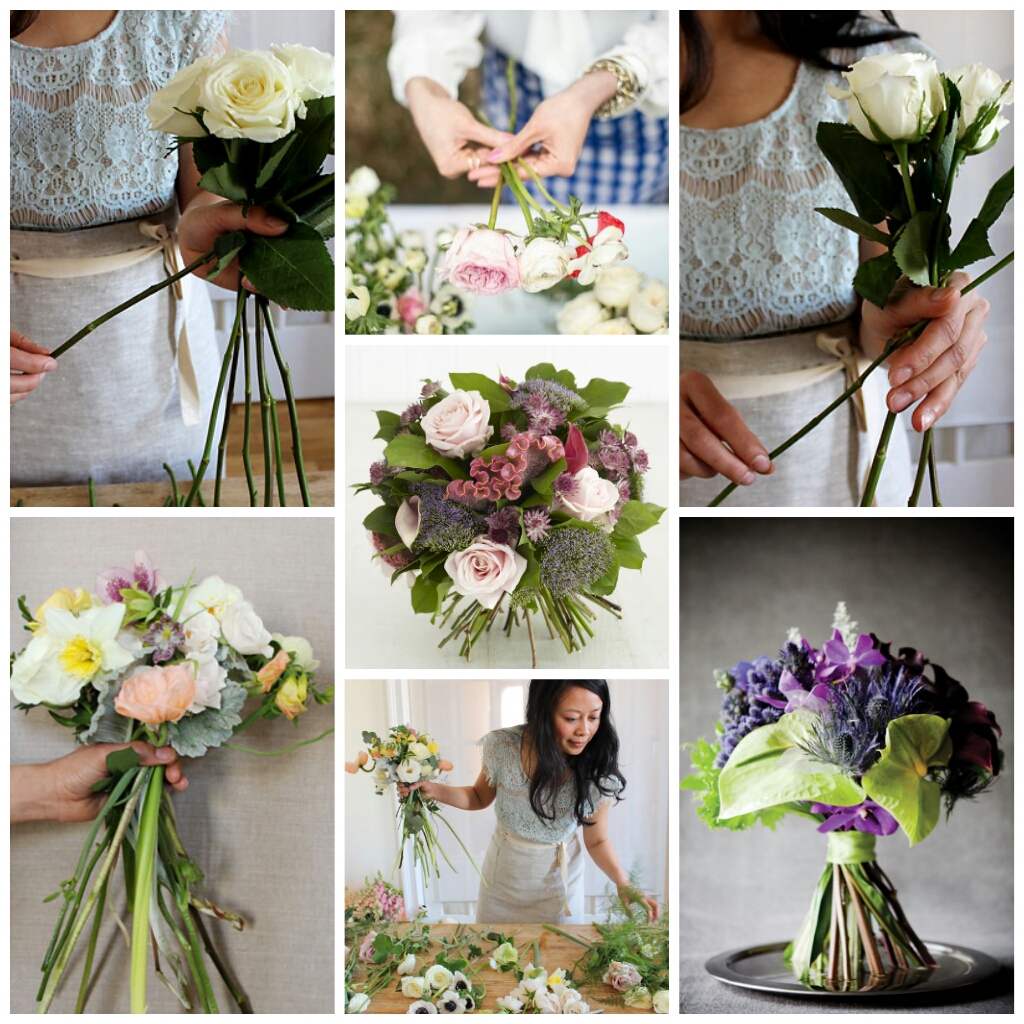
Making the bouquet step by step
- Hold the central flower in your left hand (if you are right-handed) about a third of the way down from the head — this is the binding point.
- With your right hand add a second stem at an angle: head to the left, stem end to the right. Place every following stem at the same angle and in the same direction.
- After every 2–3 stems, turn the bouquet a quarter turn in your hand so the flowers spread evenly.
- Alternate flowers and foliage and keep the dome even. Hold the stems only at the binding point, without squeezing too hard.
- When the bouquet is finished, tie it firmly with twine or raffia at the binding point.
- Cut the stems at an angle to the same length — about 1.5 times the height of the flower head. If the spiral is right, the bouquet will stand on its own.
Common mistakes
- Stems laid in different directions — the spiral breaks and the bouquet falls apart.
- The binding point drifts — the bouquet becomes loose and lopsided. The higher the binding point, the more compact the bouquet; the lower, the wider it spreads.
- Leaves left below the binding point — the bouquet is hard to tie and the water spoils quickly.
- Tying too tightly crushes the stems and stops them drinking.
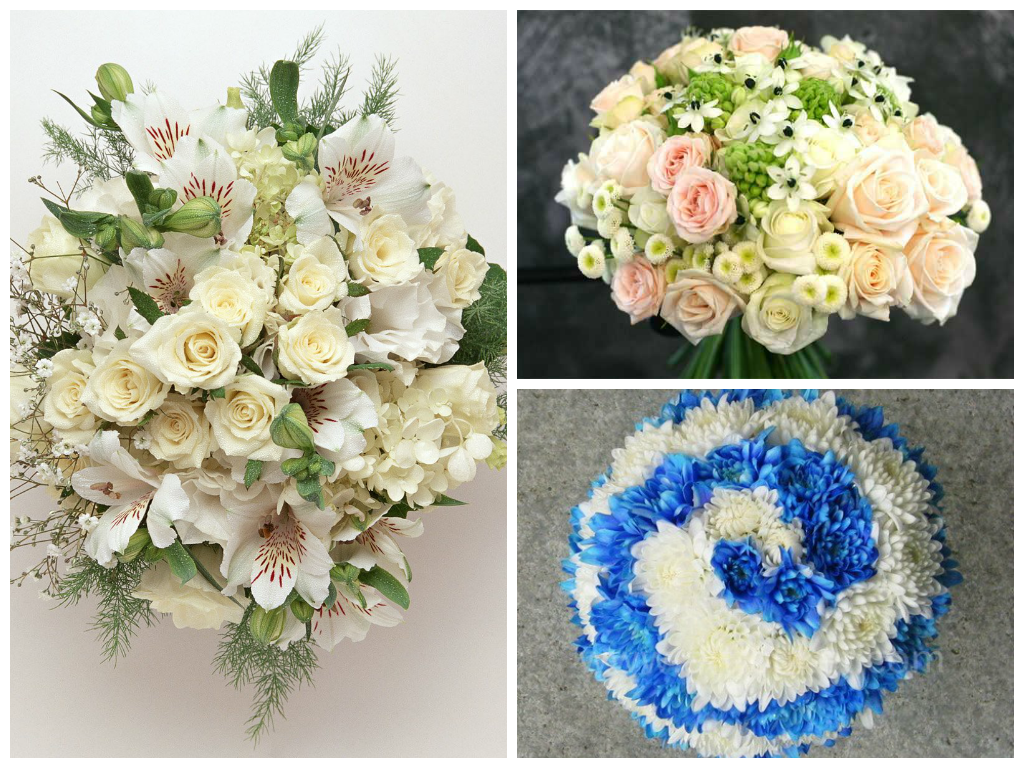
Bouquet ideas
A classic is roses with spray roses and gypsophila. For a soft look use lisianthus, dianthus and eucalyptus; for a bright one, gerberas, alstroemeria and pittosporum. Once you have mastered the round shape, try an asymmetric bouquet with an off-centre focus. Large arrangements are made the same way — see how to make a 101-rose bouquet, and finish your work with how to wrap a bouquet.
FAQ
Which hand should hold the bouquet?
Right-handers hold the bouquet in the left hand and add flowers with the right; left-handers do the opposite.
How many flowers do I need?
You can learn the technique with 7–9 stems; a lush bouquet usually takes 15–25 flowers plus foliage.
Why won’t my bouquet stand up?
Most likely the stems are at different angles or cut unevenly. Trim them to one length and try again.
No time to make one yourself? Bouquets by UFL florists are available with delivery in Kyiv.

View full-size photo
Author: Maria Svitlovir
Graduated from Taras Shevchenko National University of Kyiv, Institute of Biology and Medicine (2001). BSc in Biology, MSc in Horticulture. Writes about plants, works at a garden centre selecting and repotting plants, and contributes to plant reference guides.


