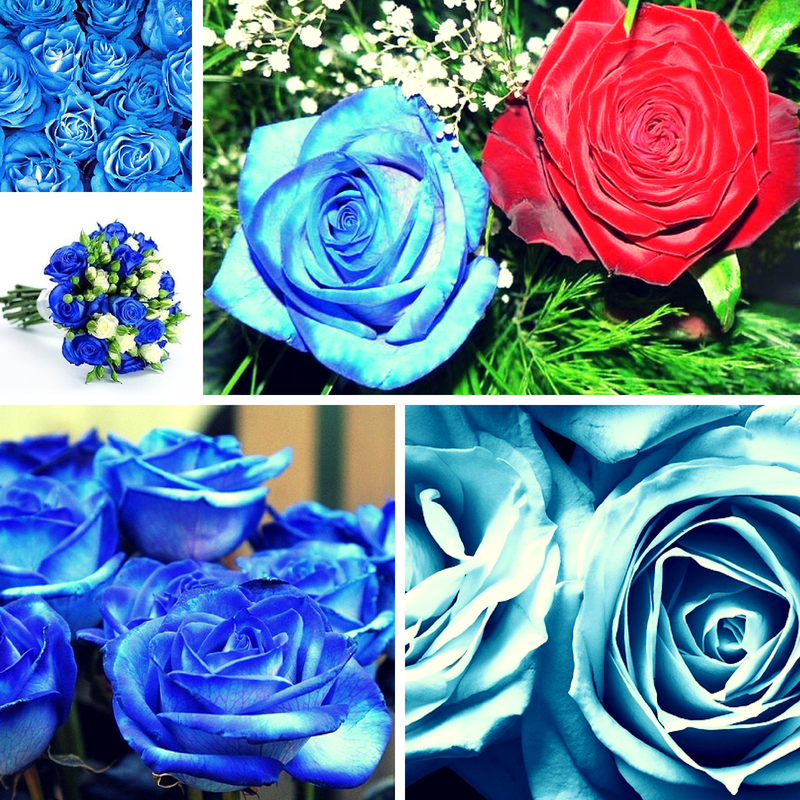
The blue rose is one of the most mysterious flowers: it is called a symbol of dreams and the unattainable, given to surprise, and searched for in catalogues as a "natural blue rose". But do blue roses actually exist? Here is why there are no blue roses in nature, how Japanese scientists created a "blue" rose through genetics, where the vivid blue bouquets in shops come from, what a blue rose means as a gift and how to dye roses yourself. Everything else about types, colours and care is in our complete guide to roses.
No. In most plants blue colour comes from the pigment delphinidin, and roses lack the gene for the enzyme (flavonoid 3′,5′-hydroxylase) needed to make it. So for centuries breeders produced roses in every colour from white to almost black, but never blue. Varieties sold as "blue" or "lilac" are actually mauve-pink.
In 2004 the Japanese company Suntory and Australia's Florigene, after 14 years of research, produced a rose carrying a pansy gene that allowed it to accumulate delphinidin. The variety, named Applause, went on sale in Japan in 2009. Its colour, however, is lilac-blue rather than deep blue, because rose petals are too acidic and the pigment looks mauve. Its Japanese slogan is "dreams come true". Research continues: in 2019, for example, Chinese scientists produced blue patches on petals using bacterial enzymes, but no stable variety exists yet.
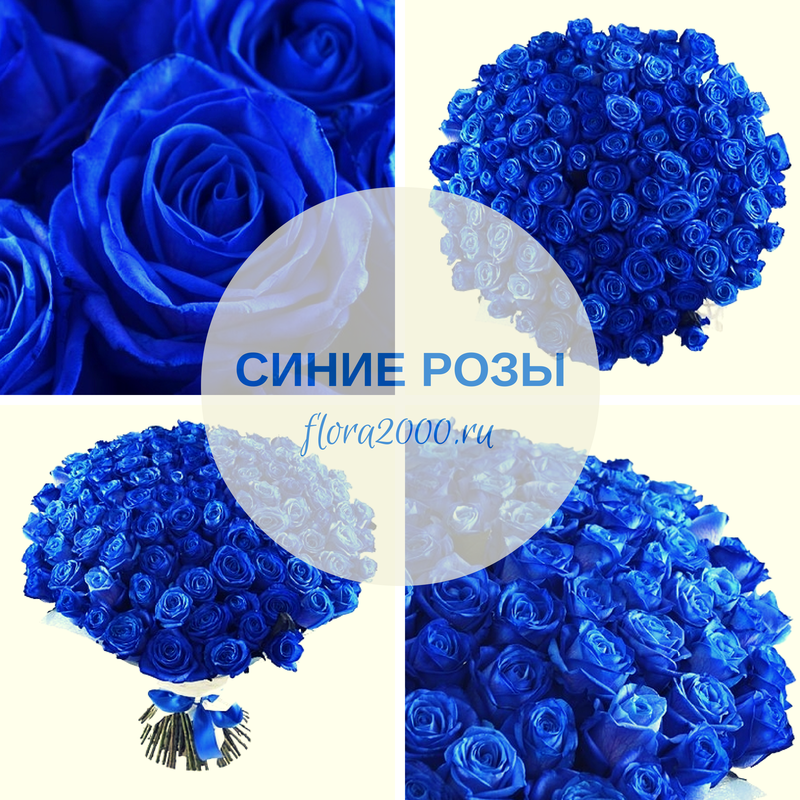
The vivid blue, light blue and even rainbow roses in flower shops are dyed white roses. There are two methods:
Dyed roses last as long as regular ones, but the vase water may tint and the colour can sometimes rub off on fingers. If blue matters, a florist can suggest naturally blue flowers instead: delphinium, hydrangea, irises, cornflowers or grape hyacinths. For real rose colours see the most beautiful roses.
Split the stem into several sections and stand each in a different dye to create a "rainbow" rose.
Blue roses are ideal when you want to surprise someone: for a birthday, to celebrate an achievement or for a person with unusual taste. On Independence Day and other patriotic holidays they are paired with yellow roses or sunflowers. If in doubt, choose white roses with blue accents such as delphinium or lisianthus, which looks elegant and natural. Browse our roses with delivery in Kyiv, and read about another legendary rose in Halfeti black roses.
No. The genetically modified Applause variety is lilac-blue, and the vivid blue roses on sale are dyed.
Mystery, dreams, the unattainable and admiration for someone's uniqueness.
As long as ordinary roses: 7–10 days with proper care.
Food-grade or floral dyes are used; still, keep such roses away from food and do not use the petals in cooking.

Author: Maria Svitlovir
Graduated from Taras Shevchenko National University of Kyiv, Institute of Biology and Medicine (2001). BSc in Biology, MSc in Horticulture. Writes about plants, works at a garden centre selecting and repotting plants, and contributes to plant reference guides.
© Kyiv 2026 UFL Flower Shop

Trademark UFL №191476 is used under license of the rights holder.
All rights reserved. Any use of materials without a link to the site is prohibited.

 Birthday
 Hydrangeas