
 Birthday
 Hydrangeas
This article was prepared with the support of UFL flower delivery. More than 800 species of carnivorous (insectivorous) plants from about a dozen families are known today. They live in bogs, sand, on rocks and in water, where the soil has very little nitrogen and phosphorus. Insects are not their main food but a supplement: like all green plants, they get their energy from photosynthesis.
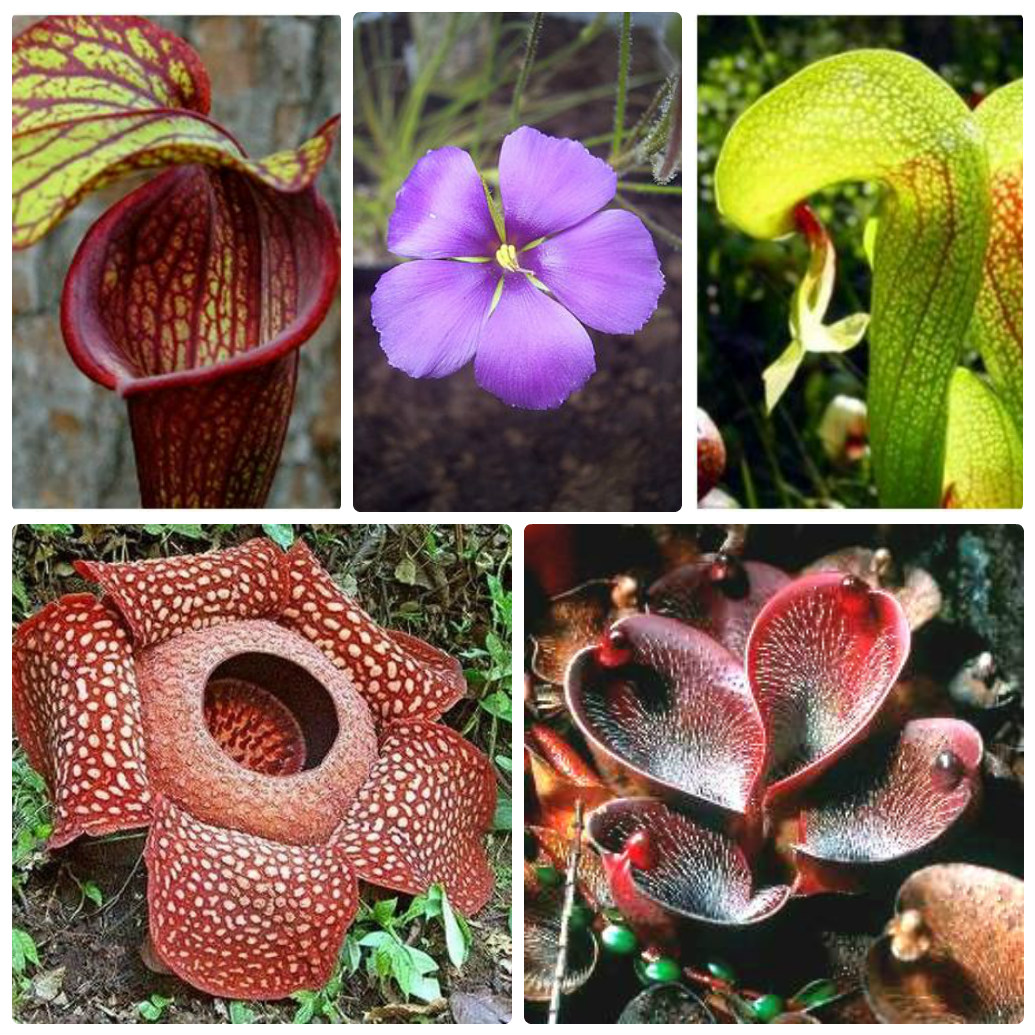
A little history
The English naturalist John Ellis was the first to suggest that a plant could feed on insects, in a 1769 letter to Carl Linnaeus describing the Venus flytrap. Linnaeus did not believe him. Charles Darwin studied carnivorous plants systematically, and his book Insectivorous Plants (1875), with its experiments on sundews, is still a classic.
How carnivorous plants catch prey
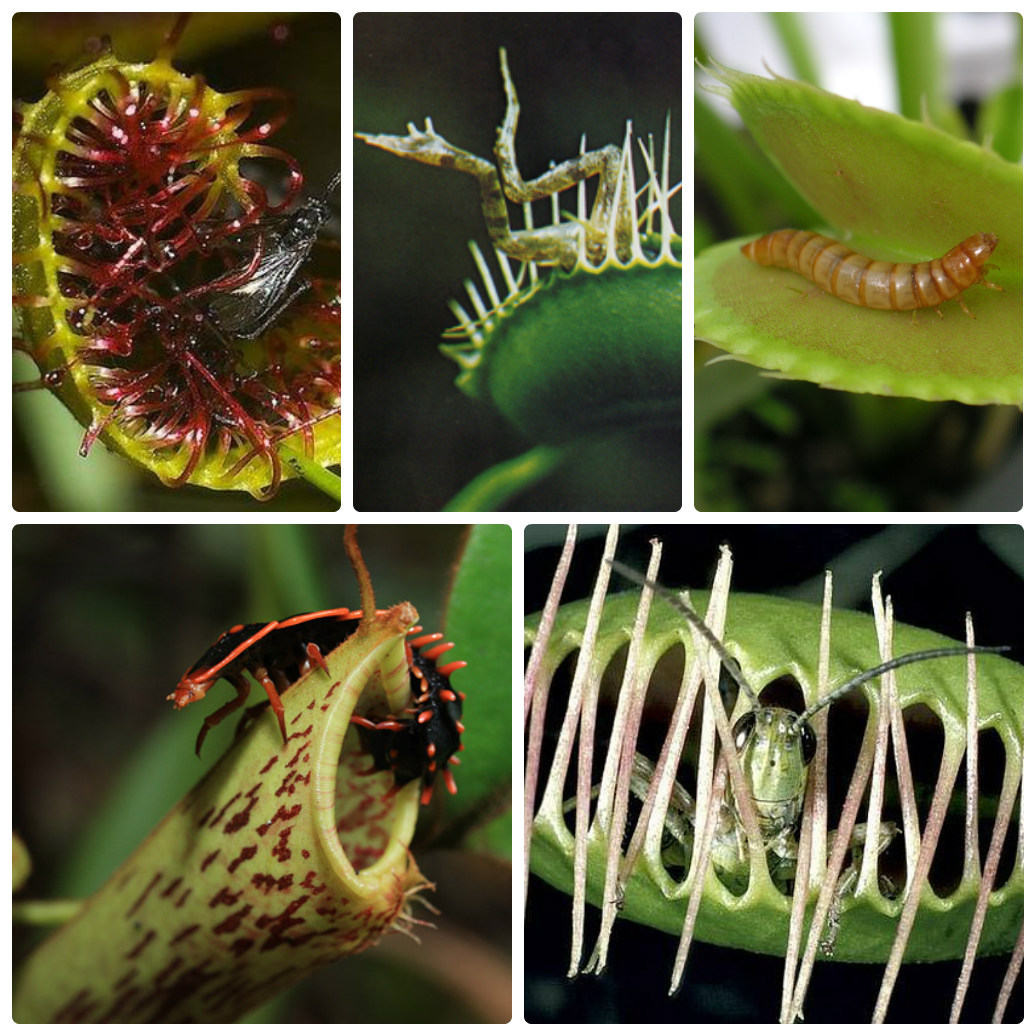
Prey is lured by bright colours, nectar and scent. Once it is caught, glands on the leaf release enzymes that dissolve the insect's soft tissues over a few days, leaving only the chitin shell.
The best-known carnivorous plants
Venus flytrap (Dionaea)
The only species in its genus, it grows wild only in a small area of North and South Carolina. The trap snaps shut when its trigger hairs are touched twice within about 20 seconds, which is how the plant tells prey from a raindrop. More in our article on Venus flytrap facts and care.
Nepenthes (tropical pitcher plants)
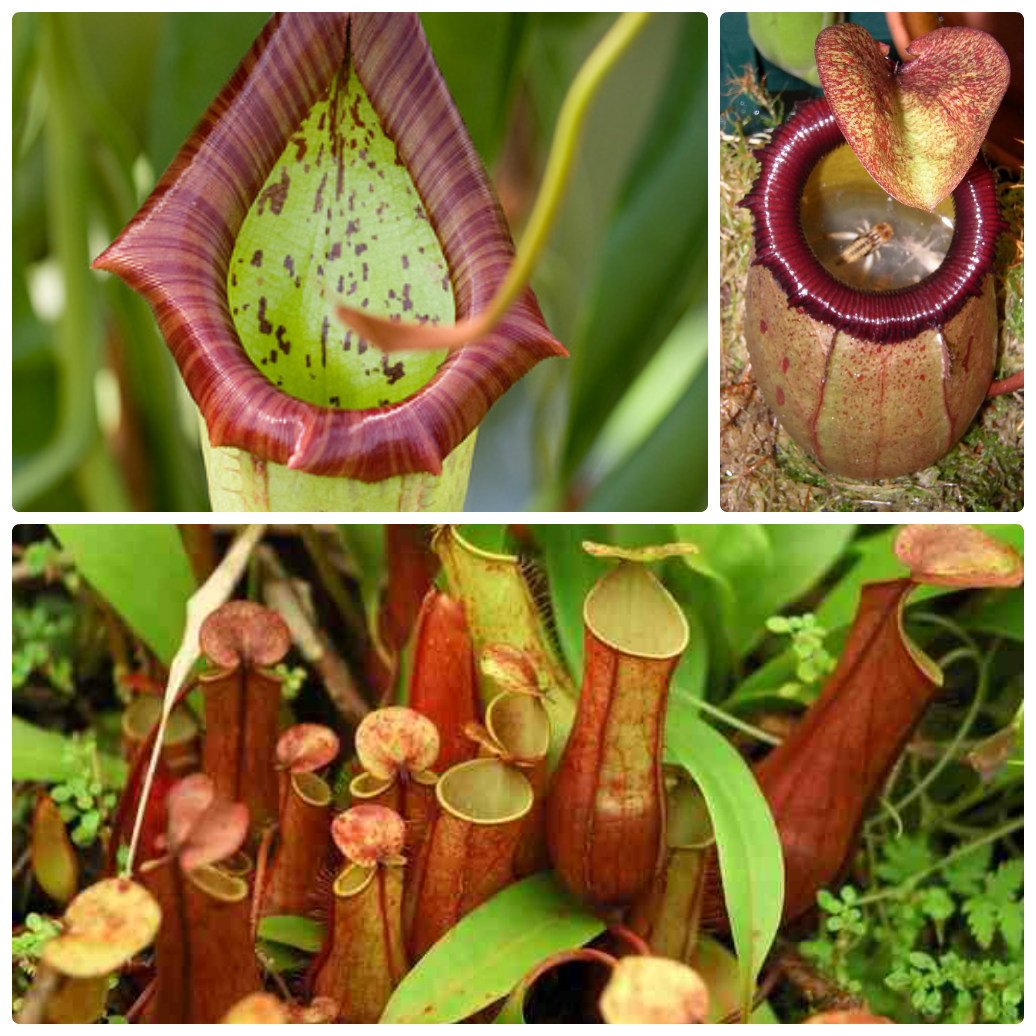
Tropical climbers from Southeast Asia with pitcher-shaped leaves. The pitchers of the largest species hold up to 3.5 litres of fluid; small frogs and rodents are occasionally found inside, but most prey are ants and flies. Some species even partner with animals, serving as a toilet for tree shrews or a roost for bats.
Genlisea (corkscrew plants)
Small herbs from Africa and South America. Besides normal leaves they have underground spiral tube leaves: microorganisms get in, and inward-pointing hairs stop them getting out.
Bladderworts (Utricularia)
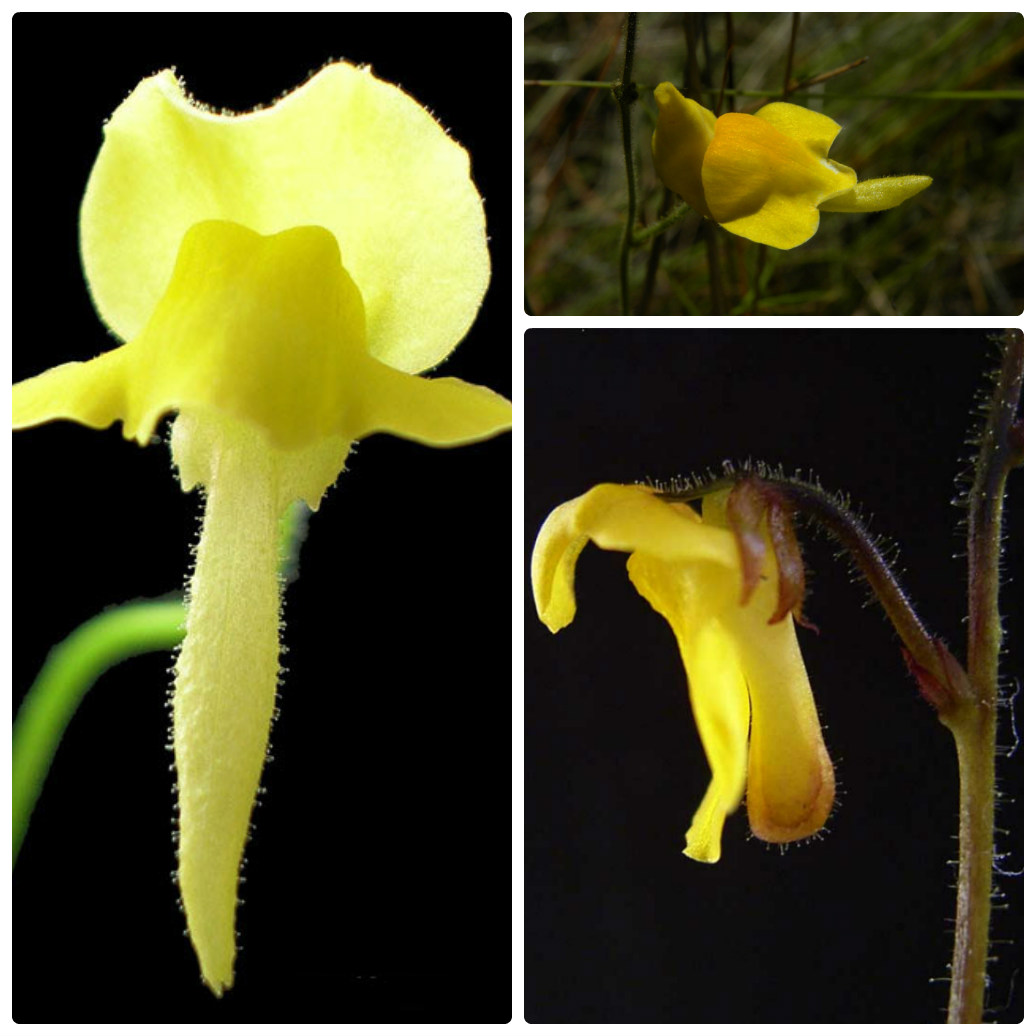
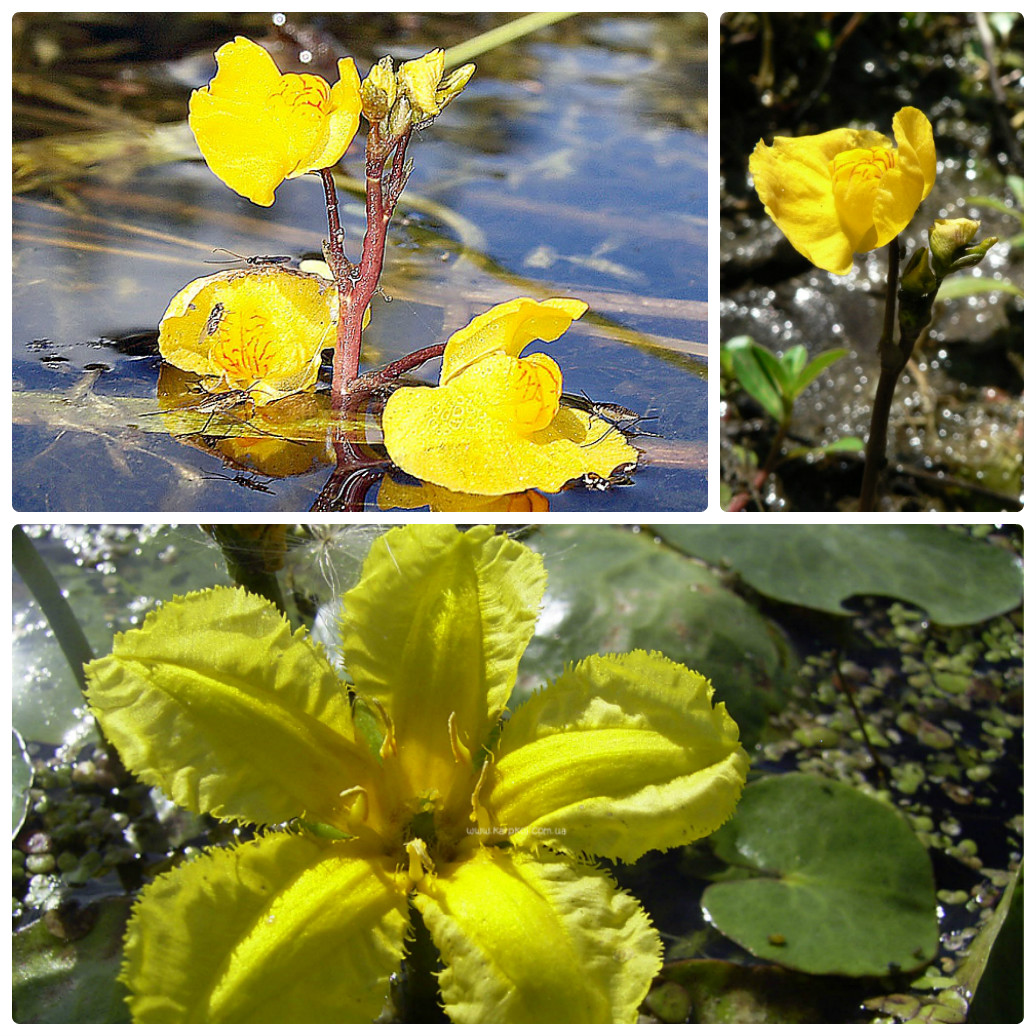
About 250 species on every continent except Antarctica, including in Ukrainian ponds. Their bladder traps create a vacuum and suck in water fleas and larvae in a fraction of a millisecond, one of the fastest movements in the plant world.
Butterworts (Pinguicula)
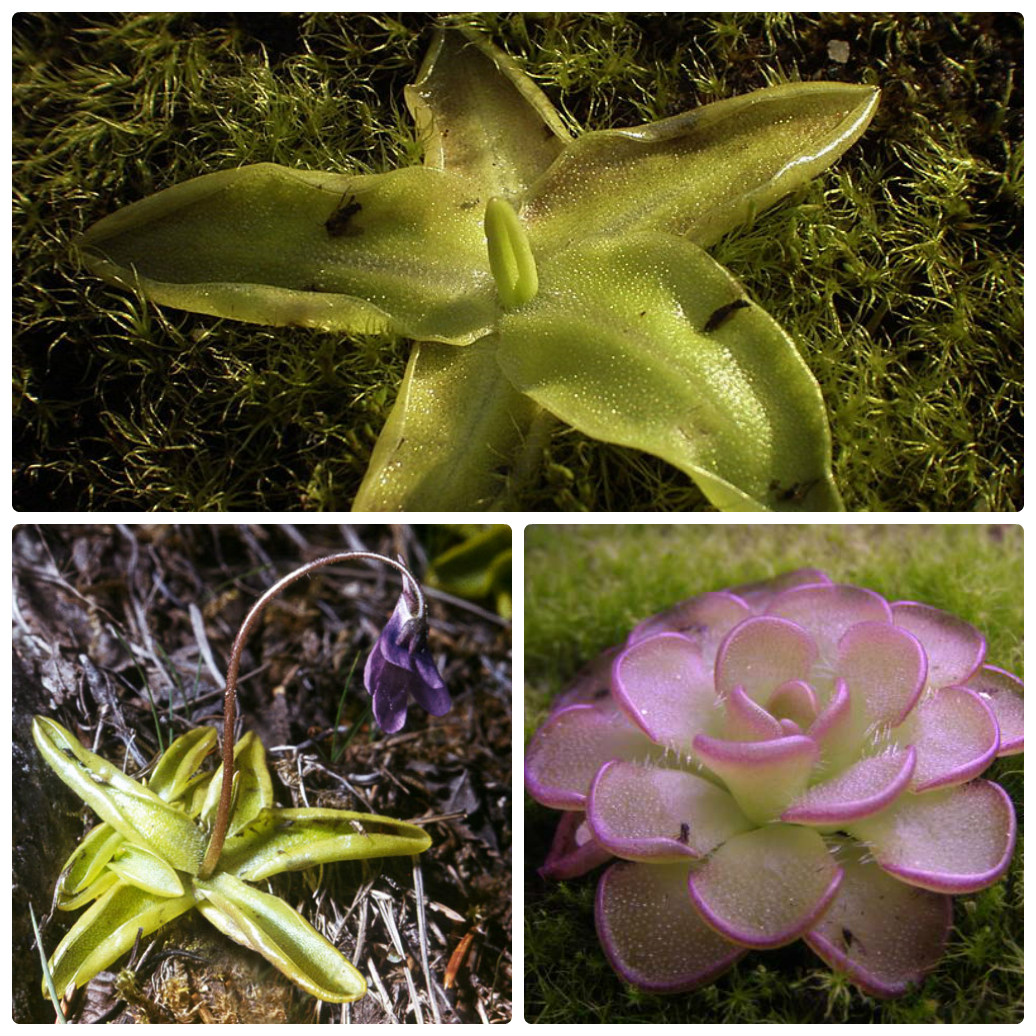
A rosette of fleshy leaves covered in sticky mucilage, like natural flypaper. The leaf edges curl slightly around the prey. Common butterwort also grows in Ukraine, in the Carpathians.
Sundews (Drosera)
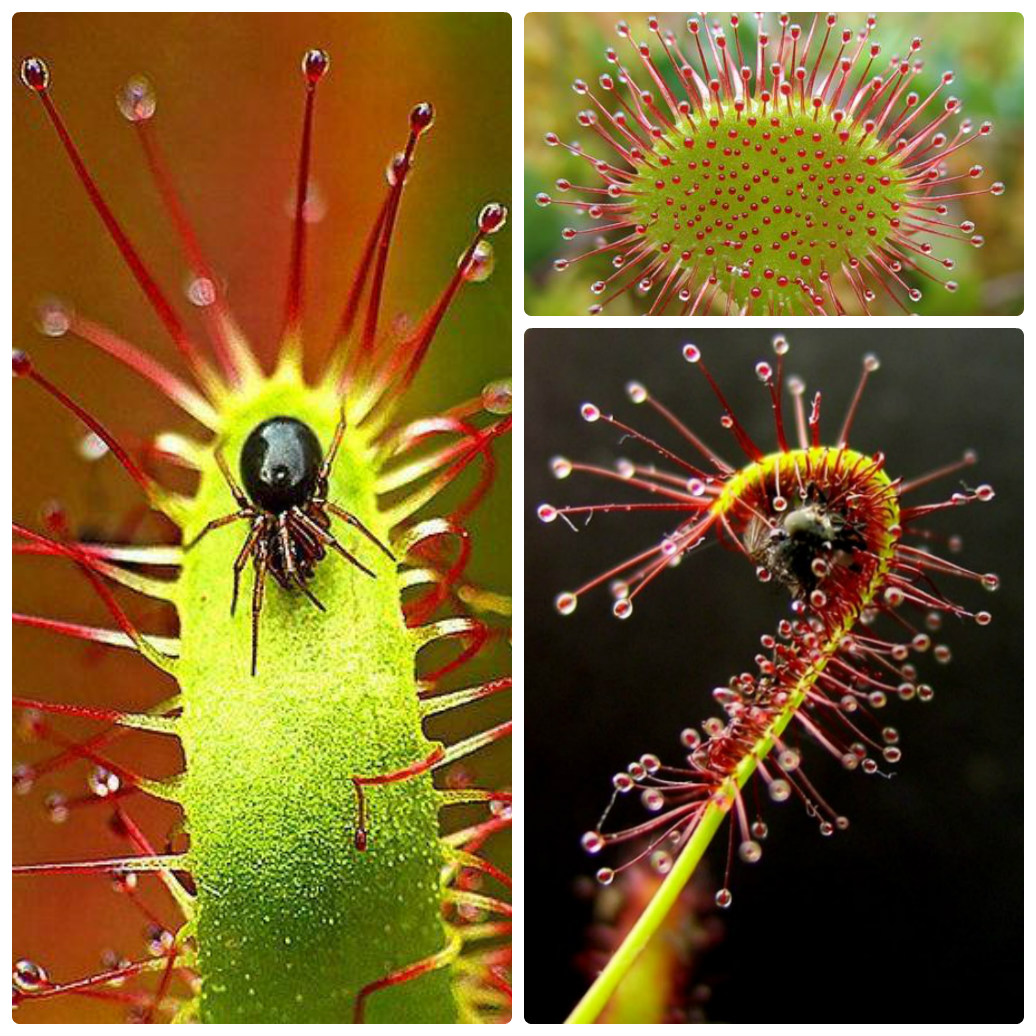
One of the largest genera, with about 250 species. The leaves are covered with hairs tipped with glistening drops of mucilage; when an insect sticks, neighbouring hairs and the leaf itself slowly bend towards it. Round-leaved sundew grows in the bogs of Polissia.
Sarracenia (North American pitcher plants)
Bog plants from North America with tall trumpet-shaped leaves. They tolerate cold winters and suit a bog garden.
How to grow a carnivorous plant at home
- Water. Only distilled, rain or reverse-osmosis water. Minerals in tap water kill the roots.
- Soil. Acidic sphagnum peat with perlite or quartz sand, no fertiliser.
- Watering. Most species sit in a tray with 1–2 cm of water so the soil is always moist.
- Light. As bright as possible: a south-facing window or a grow light. In shade the traps lose colour and stop working.
- Winter. Venus flytraps and Sarracenia need 3–4 months of dormancy at 2–10 °C. Nepenthes and tropical sundews grow year-round in warmth.
- Feeding. Not needed if the plant catches insects itself. Never give meat or cheese, which rot the trap. Do not close traps with a finger for fun: each one can only fire a limited number of times.
Beginners should start with Cape sundew, Sarracenia or Nepenthes, which are easier than the flytrap. Carnivorous plants are not poisonous and are safe for people and pets.
FAQ
Can a carnivorous plant harm a person?
No. Even large Nepenthes digest only small animals, and a flytrap cannot pinch.
How many carnivorous species grow in Ukraine?
About a dozen: sundews, butterworts, bladderworts and the waterwheel plant. Many of them are rare and protected.
Why are my flytrap's traps turning black?
It is either natural ageing of the trap or the result of prey that is too large, hard water or too little light.
Prefer to start with more familiar plants? Choose houseplants with delivery from UFL.

View full-size photo
Author: Maria Svitlovir
Graduated from Taras Shevchenko National University of Kyiv, Institute of Biology and Medicine (2001). BSc in Biology, MSc in Horticulture. Writes about plants, works at a garden centre selecting and repotting plants, and contributes to plant reference guides.


