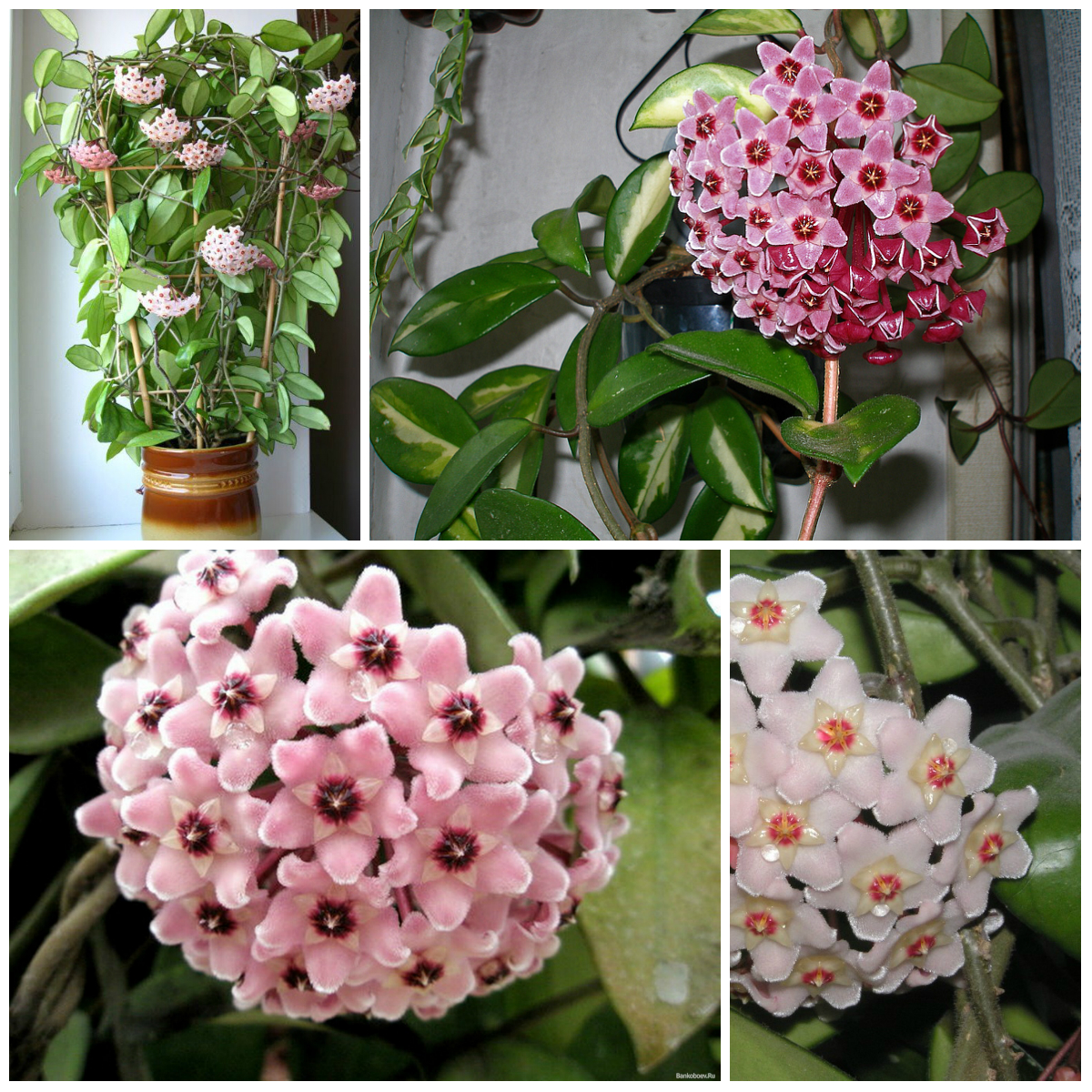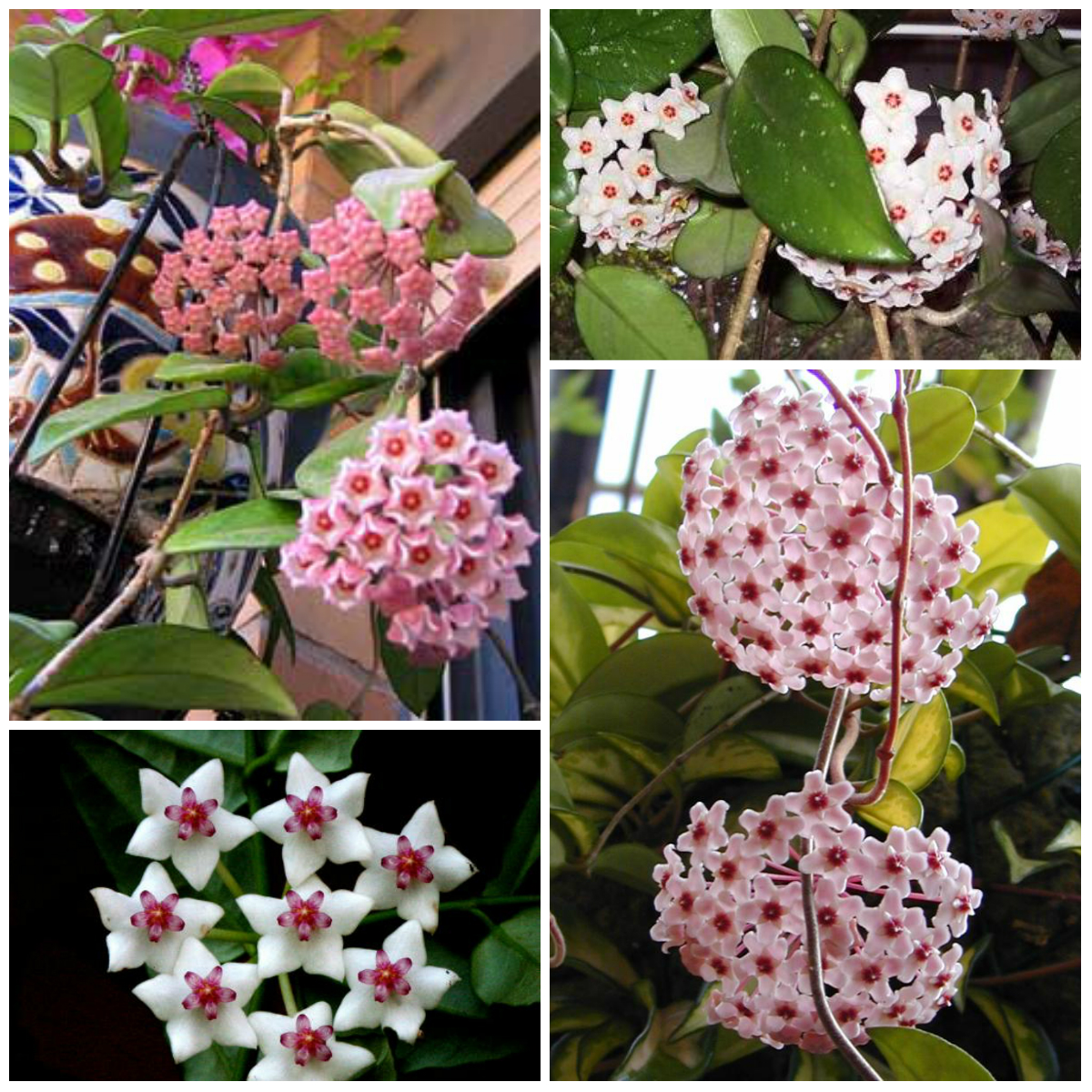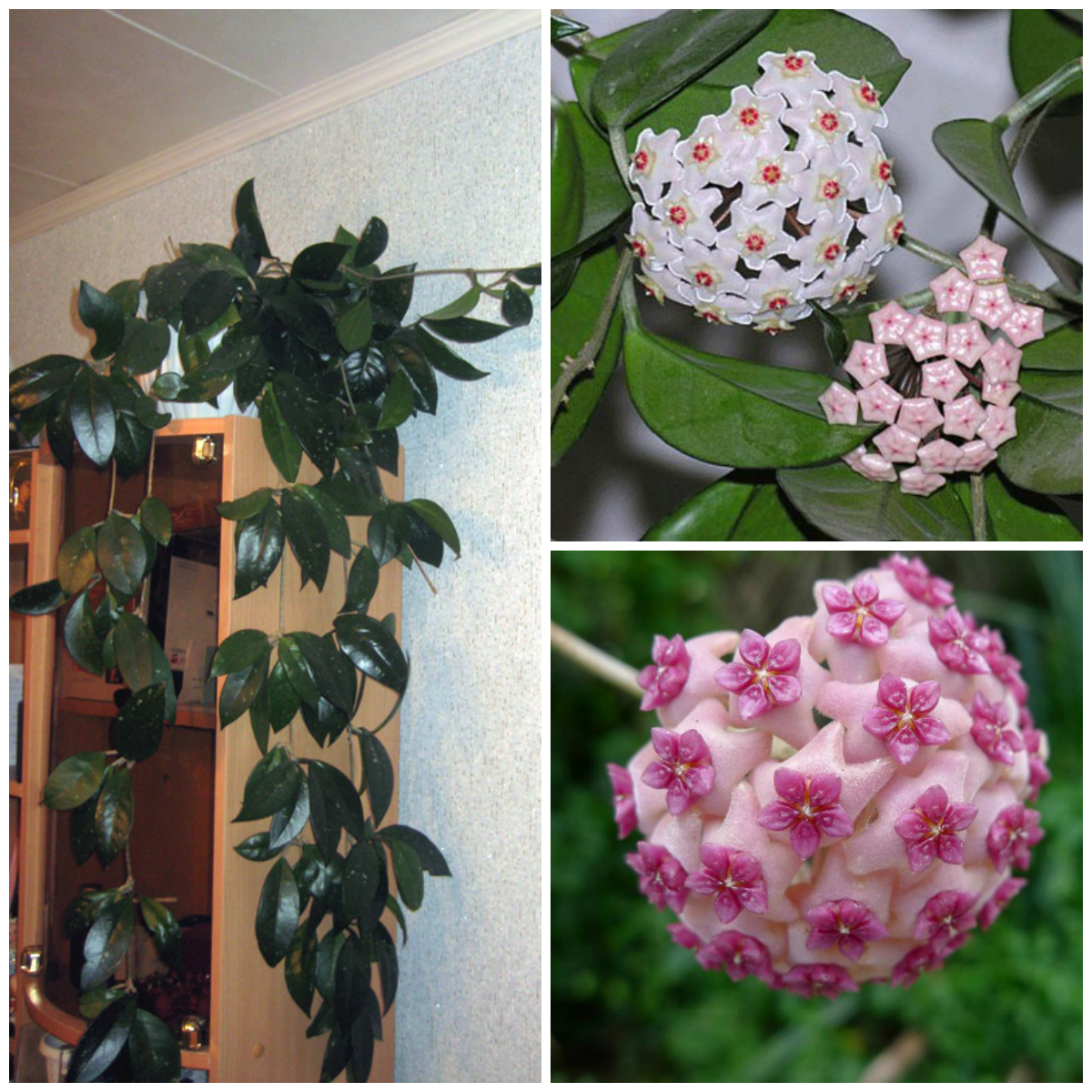
This article was prepared with the support of UFL flower delivery. The hoya, or wax plant, is one of the best-known climbing houseplants. It's undemanding, lives for decades and once decorated nearly every post office, school and library in Ukraine. Today it's enjoying a revival, with collectors growing dozens of species with unusual leaves and flowers.
Hoya is a vine in the dogbane family (Apocynaceae) native to South-East Asia, India and Australia. It's named after the English gardener Thomas Hoy. The thick, glossy leaves look as if they're coated in wax — hence "wax plant" — though it isn't related to true ivy. In the wild its stems reach 5–10 m; indoors, 2–5 m.
The five-pointed star flowers with a porcelain-like crown are held in round clusters. They're sweetly scented, especially in the evening, and drip nectar. Each cluster lasts 1–3 weeks, and the plant blooms from spring to autumn.
| Factor | What it needs |
|---|---|
| Light | Bright, indirect — an east or west window. Morning sun is fine, but shade it at midday or the leaves yellow and scorch. In shade it grows but won't flower. |
| Temperature | 20–25 °C in summer, 12–16 °C in winter — a cool rest encourages flowering. It can go on a shady balcony in summer. |
| Watering | Hoya stores water in its leaves, so water once the top two-thirds of the compost is dry. Waterlogging kills the roots. Water sparingly in winter. |
| Humidity | Likes humid air: mist the leaves (not the flowers) or use a tray of wet pebbles. |
| Compost | Very airy: orchid or cactus mix with added perlite and coir. |
| Feeding | Every 3–4 weeks from spring to autumn with a flowering-plant fertiliser. |
| Repotting | Every 2–3 years, when roots fill the pot. It flowers better when snug. |
Contrary to popular belief, hoya isn't considered poisonous: the ASPCA lists it as non-toxic to cats and dogs. Its milky sap can irritate skin, though, and eating the leaves may cause mild stomach upset — so keep it away from toddlers and pets that chew everything, and wear gloves when pruning. The strong scent of the flowers can give sensitive people a headache in a bedroom.
Yes, but when it flowers the night-time scent can be very strong — move it if you're sensitive.
Overwatering, direct sun or cold. Check your watering and light.
No — leave the spurs, as new buds grow from them.
For more greenery ideas, see UFL's houseplants section.

Author: Maria Svitlovir
Graduated from Taras Shevchenko National University of Kyiv, Institute of Biology and Medicine (2001). BSc in Biology, MSc in Horticulture. Writes about plants, works at a garden centre selecting and repotting plants, and contributes to plant reference guides.
© Kyiv 2026 UFL Flower Shop

Trademark UFL №191476 is used under license of the rights holder.
All rights reserved. Any use of materials without a link to the site is prohibited.


 Birthday
 Hydrangeas