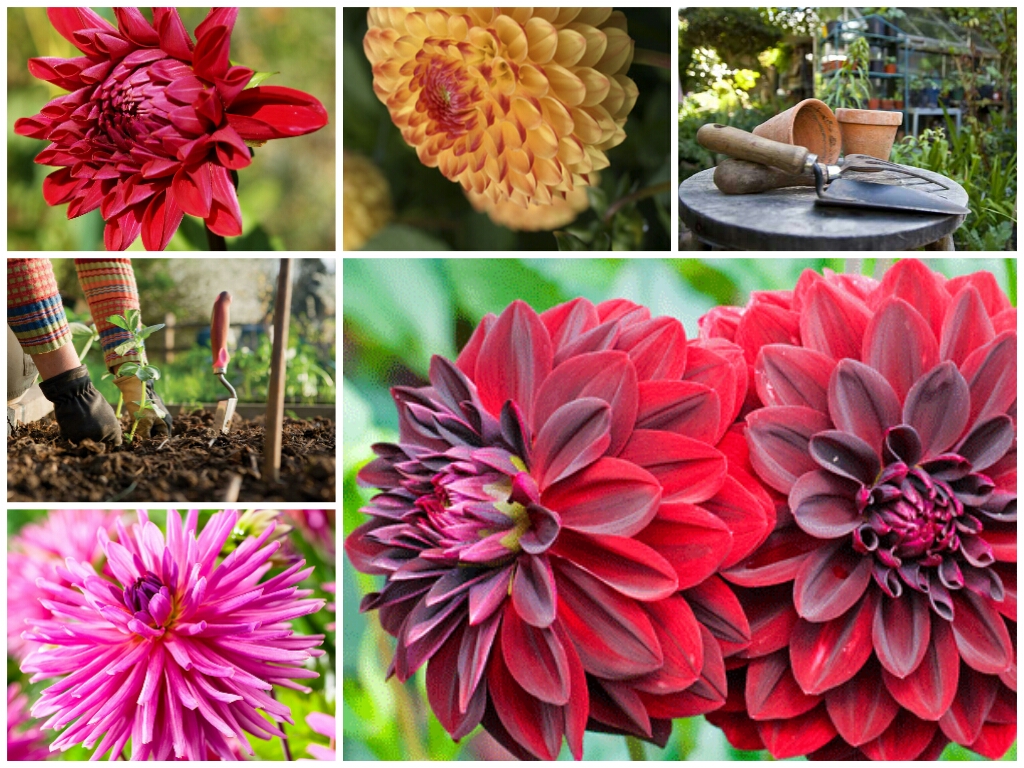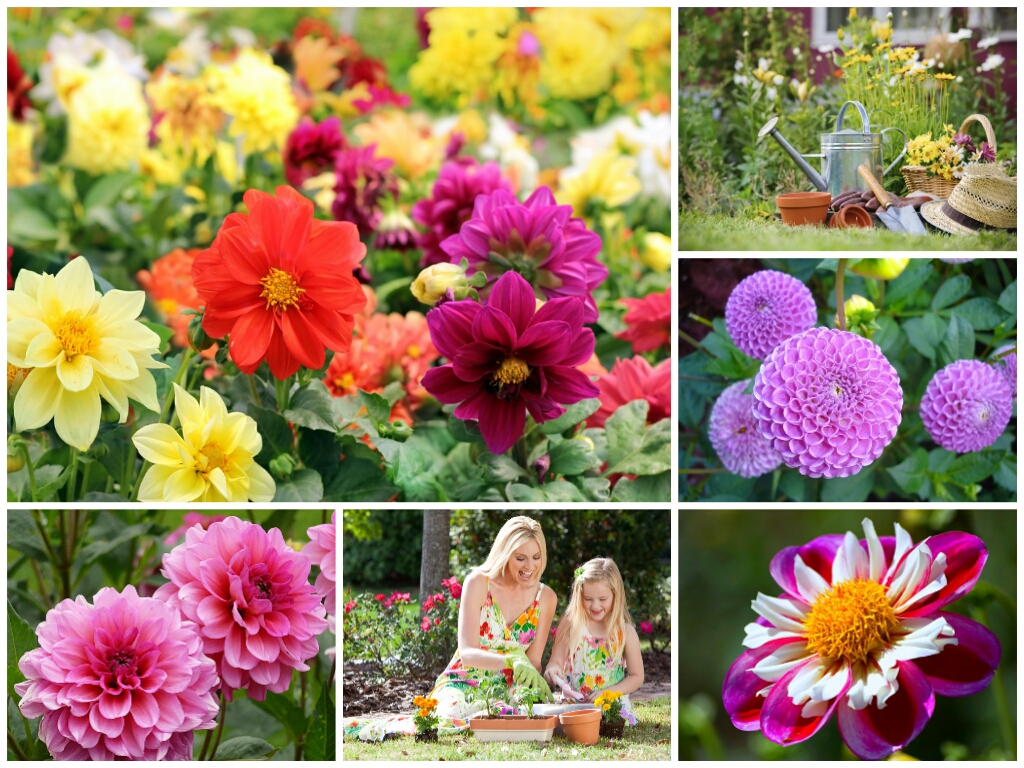
Dahlias are the stars of late summer and autumn: from tiny pompons to "dinner plate" blooms over 20 cm across, in every shade except true blue. Here are the main types of dahlias, how to cut them so a bouquet lasts longer, and how to grow them and store the tubers until next season. More flowers with photos, names and meanings are in our types of flowers guide.
Autumn bouquets with seasonal flowers can be found among our chrysanthemums and spray roses.
Dahlias are native to the mountains of Mexico and Central America; since 1963 the dahlia has been Mexico's national flower. The genus name Dahlia honours the Swedish botanist Anders Dahl, while the name used in Ukrainian and Russian (zhorzhyna, georgin) honours the botanist Johann Gottlieb Georgi. Tens of thousands of cultivars are known today.
Garden classifications group dahlias by flower form. The most popular groups:
Dahlias pair well with roses, asters, chrysanthemums, hydrangeas, amaranthus, grasses and eucalyptus. They often star in autumn bouquets and late-summer weddings.
No. Dahlias lack blue pigment; "blue" dahlias in photos are dyed or retouched.
They are cut too open or the hollow stems are not treated. Hot water and daily water changes extend vase life.
After the first light frost blackens the foliage — usually in October.

Author: Maria Svitlovir
Graduated from Taras Shevchenko National University of Kyiv, Institute of Biology and Medicine (2001). BSc in Biology, MSc in Horticulture. Writes about plants, works at a garden centre selecting and repotting plants, and contributes to plant reference guides.
© Kyiv 2026 UFL Flower Shop

Trademark UFL №191476 is used under license of the rights holder.
All rights reserved. Any use of materials without a link to the site is prohibited.

 Birthday
 Hydrangeas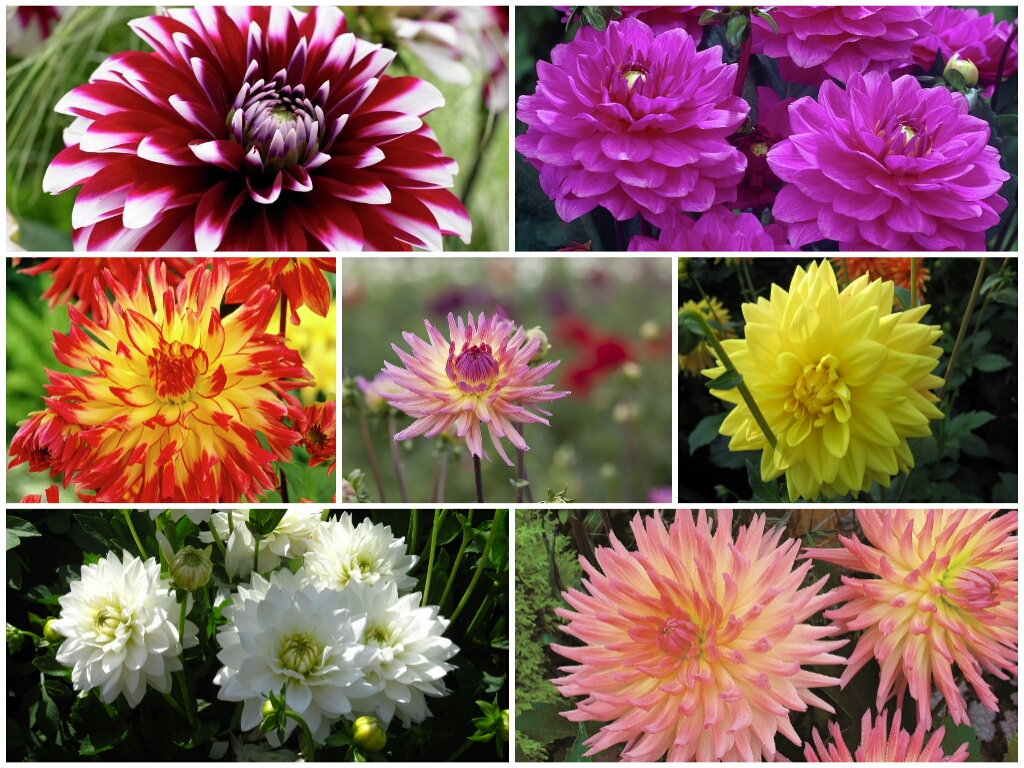


.jpg)

.jpg)
.jpg)