January is a month of frost, holidays and the first days of a new year. Flowers feel especially precious now, a reminder of spring in the middle of winter. In the birth month flower tradition, January belongs to the carnation and the snowdrop. Here's what these flowers mean, what blooms in January outdoors, indoors and at the florist's, and which bouquet to give someone born in January. Next month: February flowers.
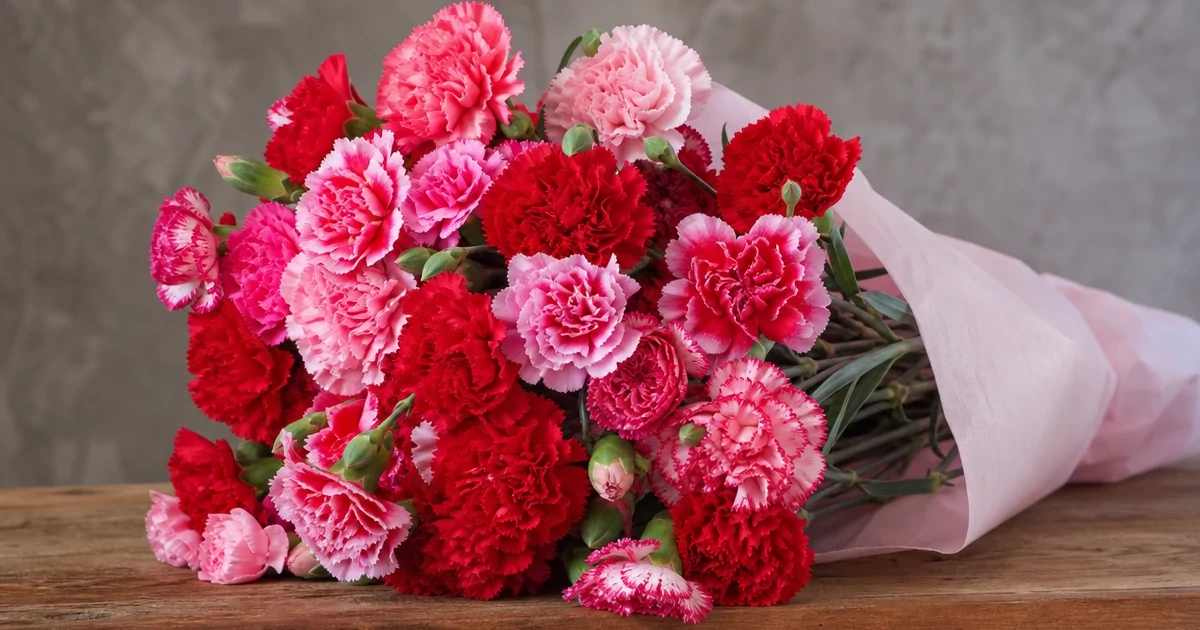
The carnation is January's main flower. It stands for love, admiration and gratitude, and each colour adds its own nuance: red for passion, white for sincerity, pink for a mother's love. Carnations last a long time in a vase, which makes them a great winter choice. More on their symbolism in carnations meaning.
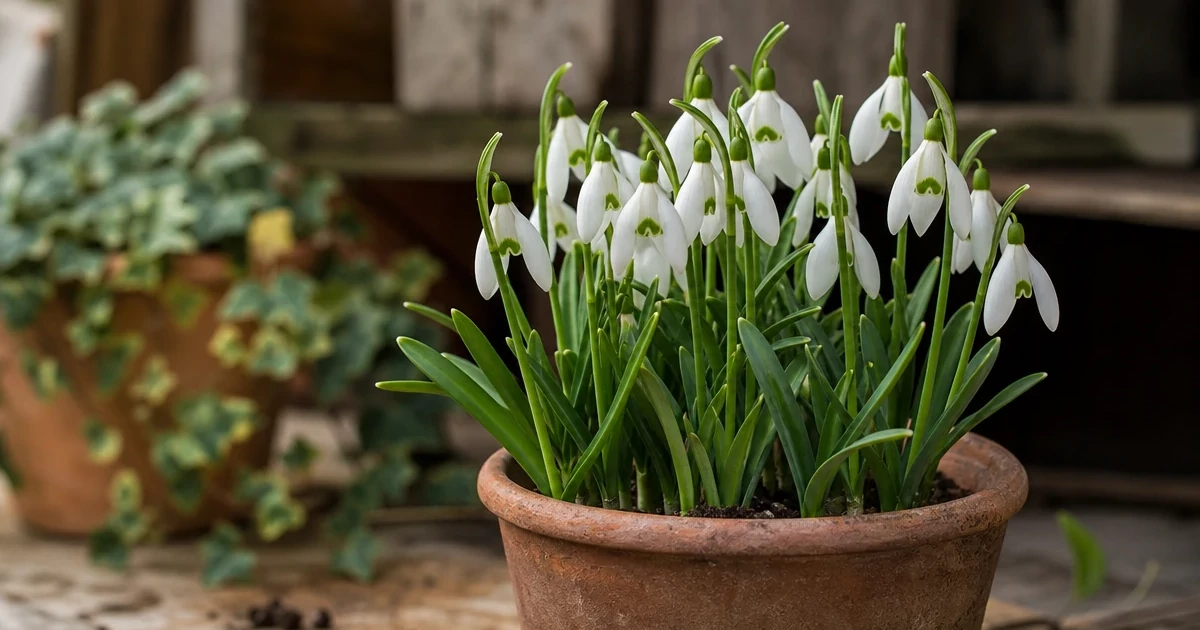
The second flower of the month is the snowdrop, a symbol of hope and renewal. It's the first to push through the snow, so it's seen as a sign that the hardest days are passing. Snowdrops are protected in Ukraine's Red Book and must not be picked in the wild; see snowdrop. The full list for every month is in birth month flowers.
Carnation colour meanings and the snowdrop
Red carnations — admiration and deep respect.
Pink — gratitude and a mother’s love.
White — purity and sincere good wishes.
Yellow and orange — joy and friendly support.
Carnations are among the longest-lasting cut flowers, staying fresh for up to 2–3 weeks. Read more in our article on carnations.
The snowdrop symbolises hope and life overcoming the cold. Note that wild snowdrops are listed in Ukraine’s Red Data Book, so they must not be picked in the woods or bought from street sellers. Choose potted garden varieties or nursery bulbs instead.
In the garden, during a January thaw, hellebores, witch hazel and winter jasmine may bloom, a rare treat in a winter yard. Indoors it's the season for flowering houseplants: cyclamen, amaryllis, poinsettia, orchids and azaleas. See our list of houseplants that bloom in winter.
At the florist's, January is the season of roses, chrysanthemums, carnations, eucalyptus and evergreen branches. Late in the month the first imported tulips and hyacinths arrive. A bouquet of cold-hardy varieties is the best choice for winter delivery.
A bouquet for January birthdays
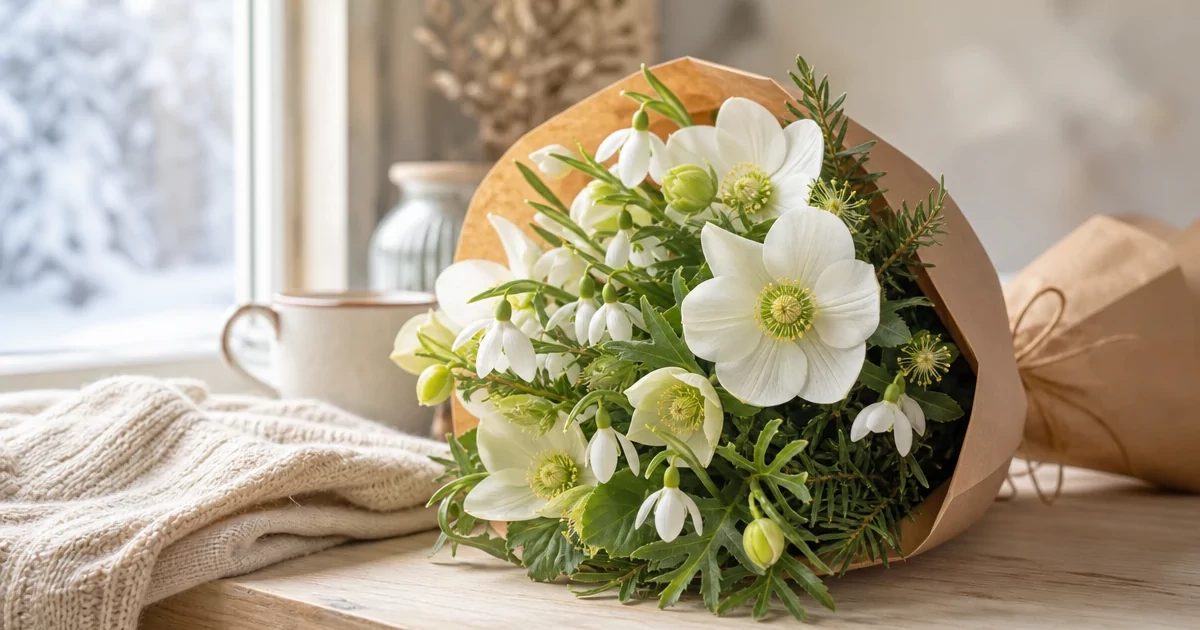
The easiest approach is to build a bouquet around the month's flower: carnations with roses or eucalyptus. For a classic taste, white roses echo the snowy mood of the month. January birthdays fall under Capricorn and Aquarius; see flowers by zodiac sign. And for the month's holidays, read January holidays in Ukraine.
January zodiac signs
January is shared by Capricorn (up to 19 January) and Aquarius (from 20 January). Capricorn, associated with restraint and ambition, suits elegant bouquets without fuss — white roses, carnations and greenery. Aquarius suits unusual combinations and exotics: orchids, succulents and coloured carnations.
Keeping a bouquet fresh in winter
In winter, temperature swings and dry radiator air harm flowers. After delivery, let the bouquet adjust to room temperature for 15–20 minutes, then trim the stems and place it in a vase with flower food; we include it with UFL bouquets. Keep flowers away from heating. More tips in winter flowers.
January birthday bouquets
White roses, orchids and winter bouquets delivered fresh across Kyiv, even in frost.
Love, admiration and gratitude; the meaning varies by colour.
What blooms in January?
Outdoors, hellebores and witch hazel; indoors, cyclamen, amaryllis and orchids.
What bouquet suits a January birthday?
Carnations with roses, white roses or a flowering orchid.
Can I buy snowdrops?
Not wild ones: they are protected in Ukraine’s Red Data Book and may not be picked or sold. Buy potted garden varieties or nursery bulbs.
What do red carnations mean?
Admiration and deep respect. Pink means gratitude, white sincere good wishes and yellow joy and friendship.
Author: Maria Svitlovir
Graduated from Taras Shevchenko National University of Kyiv, Institute of Biology and Medicine (2001). BSc in Biology, MSc in Horticulture. Writes about plants, works at a garden centre selecting and repotting plants, and contributes to plant reference guides.






 Birthday
 Hydrangeas