
Streptocarpus, or Cape primrose, is a relative of the African violet and gloxinia that can flower almost non-stop from spring to autumn. Dozens of bells — white, pink, blue, purple, veined, edged or double — rise above a rosette of long crinkled leaves. Collectors love it for the endless varieties and easy propagation. Here is how to care for streptocarpus so it blooms long and generously.
Streptocarpus is a genus of the gesneriad family from southern Africa and Madagascar. The name means “twisted fruit”: after flowering it forms narrow, spirally twisted seed pods. Indoor varieties are hybrids with a rosette of long leaves and flower stems carrying 2–10 blooms each. There are unusual species too, such as S. saxorum, with small fuzzy leaves on branching stems, grown as a trailer.
Its care is similar to that of African violets — see types of African violets.
For abundant flowers streptocarpus needs 12–14 hours of bright indirect light daily: an east or west window, plus a grow light in winter. Direct sun scorches the leaves, while in shade it grows leaves but no flowers. Keep it at 18–25 °C; above 28 °C flowers shrink and fade quickly. In winter it can rest at a cooler 15–18 °C.
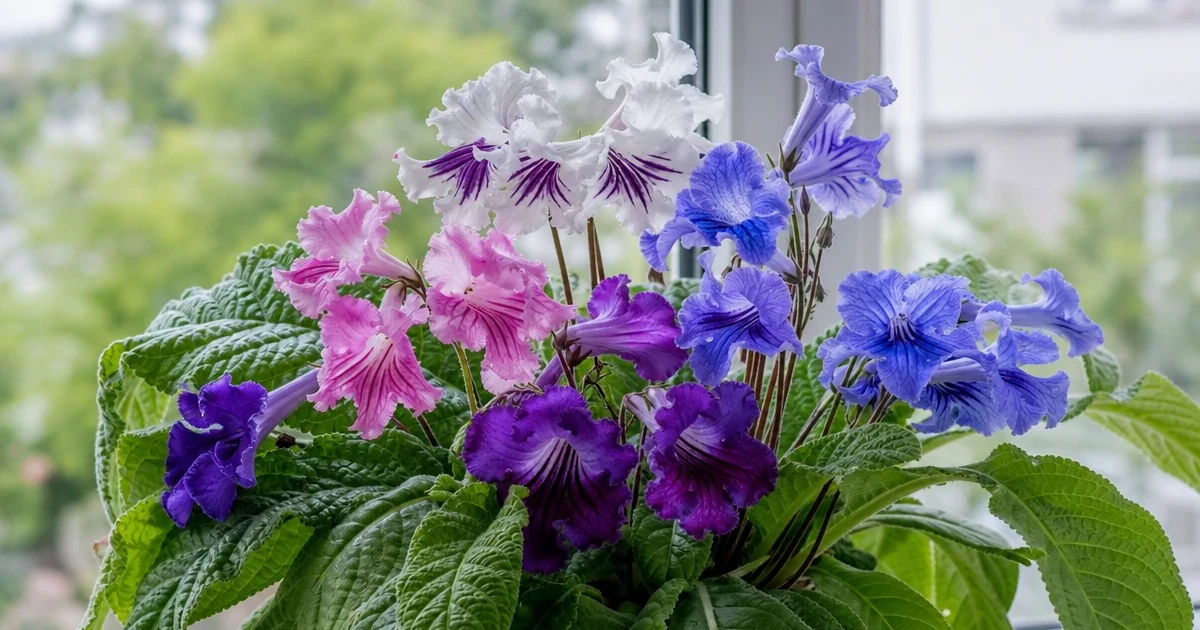
View full-size photoStreptocarpus blooms from spring to autumn, forming a rosette of long leaves and many flower stems.
Streptocarpus tolerates slight underwatering better than overwatering. Water when the top layer is dry, around the pot edge or into the saucer, and tip out the excess after 15–20 minutes. Its roots are fine and shallow, so use a wide, shallow pot and a light mix: African violet compost with perlite and vermiculite. Feed every 2 weeks while flowering.
Keep cuttings in a propagator at 22–25 °C in bright indirect light; pot up plantlets at 2–3 cm.
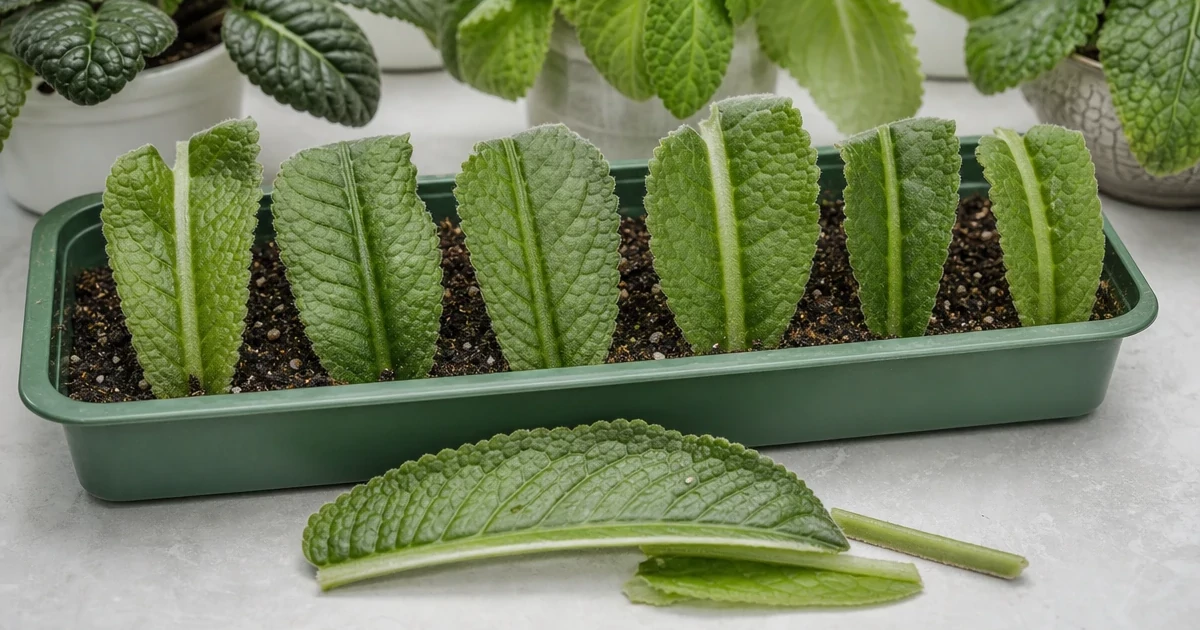
View full-size photoLengthwise leaf sections of streptocarpus for propagation ('toasters') in moist substrate.
Every 1–2 years refresh streptocarpus: repot in fresh mix, remove old leaves and divide overgrown clumps. Older plants flower less, so collectors restart favourite varieties from leaf cuttings. See how to repot houseplants.
Streptocarpus is considered non-toxic to people, cats and dogs, so it suits any room, including children’s rooms. It shares a windowsill happily with African violets and gloxinia, which need similar conditions. More flowering plants: houseplant names and care; browse potted plants.
With enough light, almost continuously from spring to autumn, and in winter under a grow light.
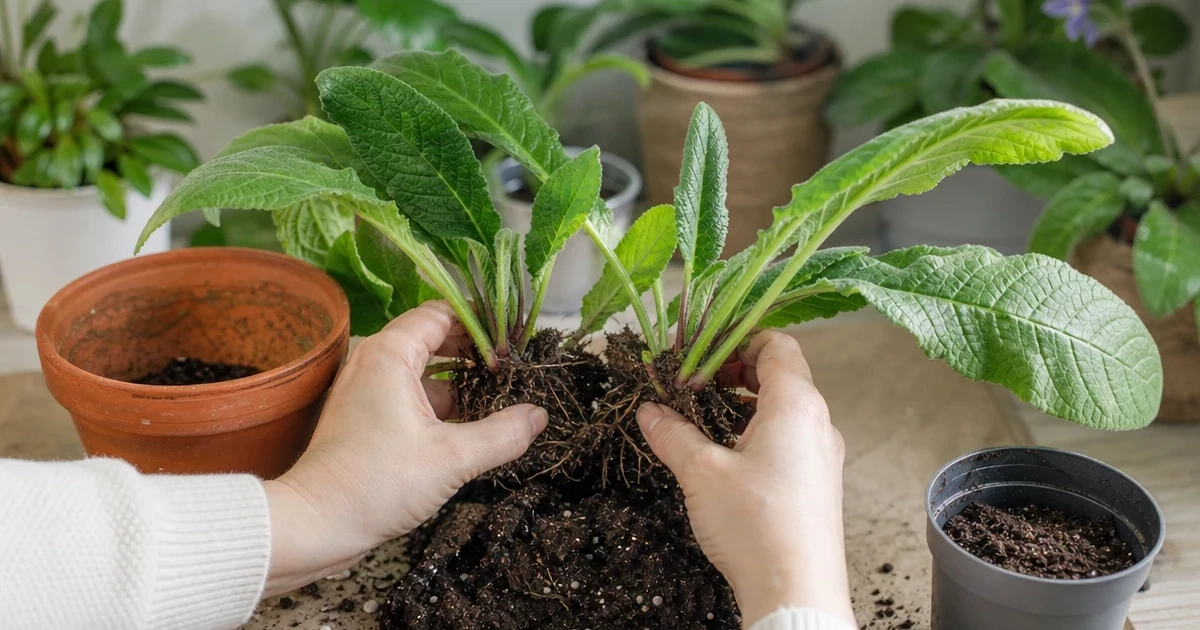
View full-size photoA mature streptocarpus is divided during repotting to rejuvenate the plant.
Usually too little light, too large a pot or too much nitrogen.
Better not: water on leaves and flowers can cause spots. Raise humidity with a pebble tray.

Author: Maria Svitlovir
Graduated from Taras Shevchenko National University of Kyiv, Institute of Biology and Medicine (2001). BSc in Biology, MSc in Horticulture. Writes about plants, works at a garden centre selecting and repotting plants, and contributes to plant reference guides.
© Kyiv 2026 UFL Flower Shop

Trademark UFL №191476 is used under license of the rights holder.
All rights reserved. Any use of materials without a link to the site is prohibited.

 Birthday
 Hydrangeas