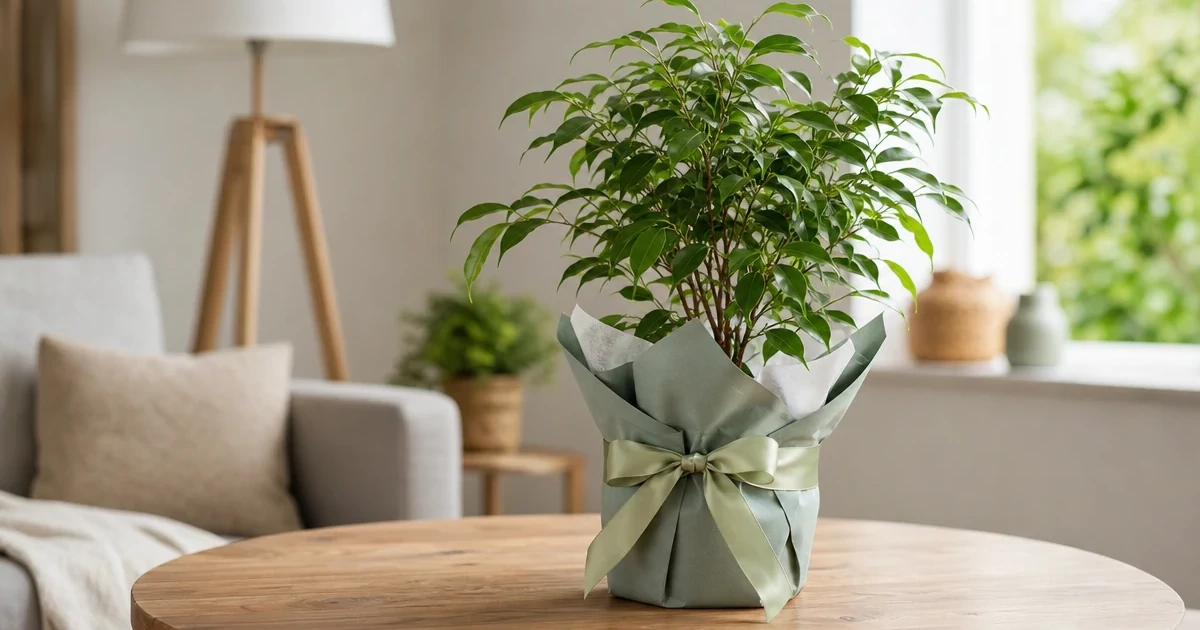
The weeping fig (Ficus benjamina) is an elegant indoor tree with small glossy leaves and drooping branches. It lives for decades and can grow 2–3 m tall. Its defining trait is sensitivity to change: a new spot, a draught or overwatering, and the fig “responds” by dropping leaves.
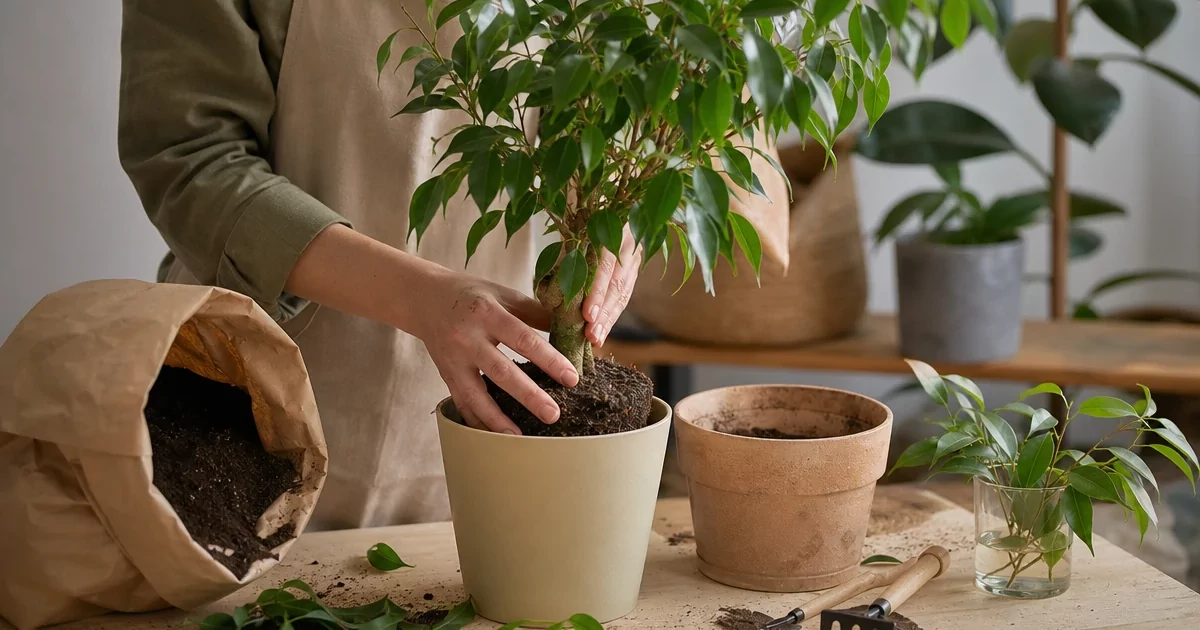
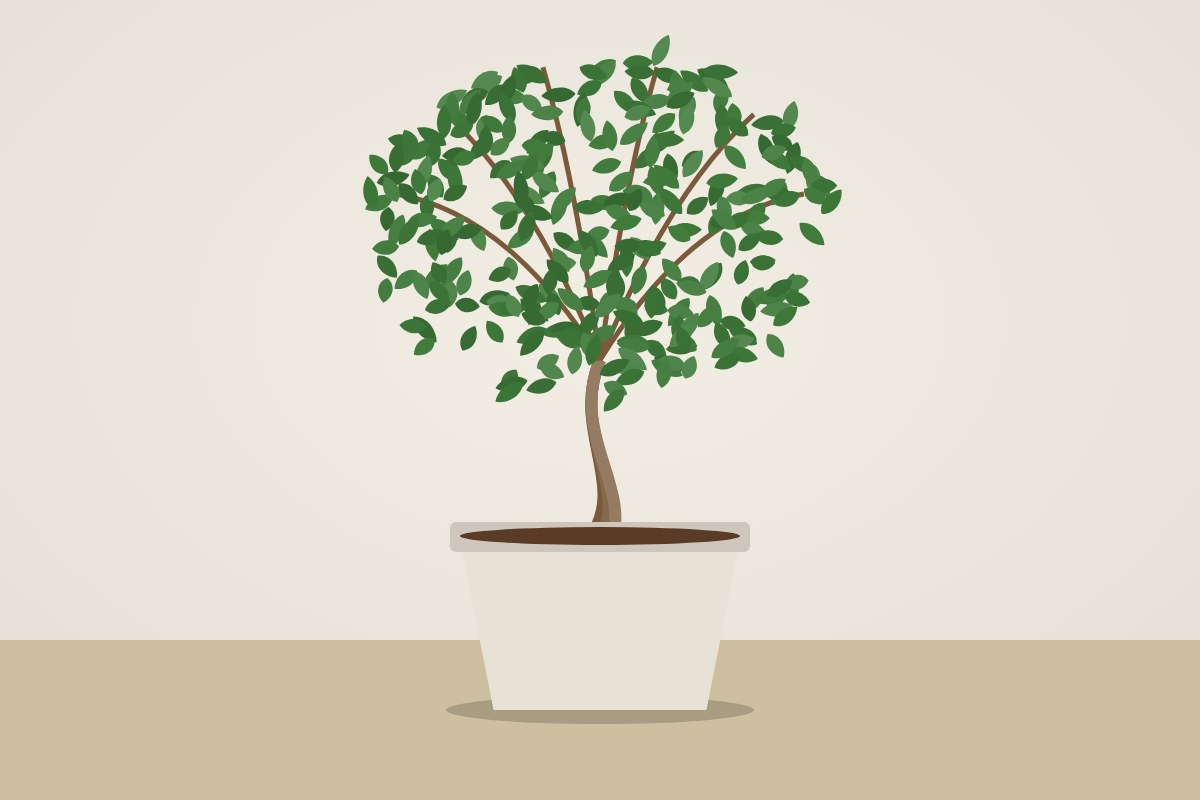
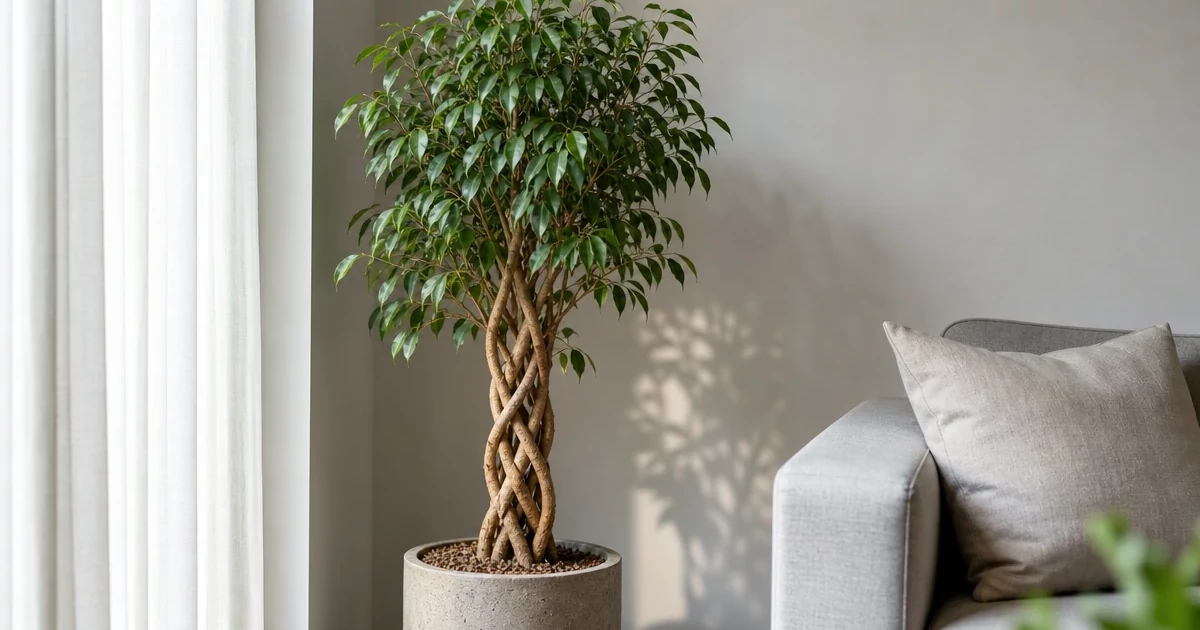
Illustration 1. The trunks of young figs are often braided.
The weeping fig (Ficus benjamina) is an evergreen tree from South-East Asia and northern Australia with slender drooping branches and small glossy leaves 5–12 cm long. Indoors it grows to 1.5–3 m, is easy to shape and lives for decades. It is related to the rubber plant and the fiddle leaf fig; see our overview of ficus types and care.
| Factor | Ideal |
|---|---|
| Light | Bright indirect, 1 m from a window; no midday sun |
| Temperature | 18–25 °C, not below 16 °C in winter |
| Watering | When the top 2–3 cm is dry, with settled water |
| Humidity | 50–60 % |
| Soil | Loose, slightly acidic, well drained |
| Feeding | March–September, every 2 weeks |
| Pruning | Late February–April |
| Repotting | Spring, every 1–3 years |
The golden rule is stability: a permanent spot, even watering and no draughts.
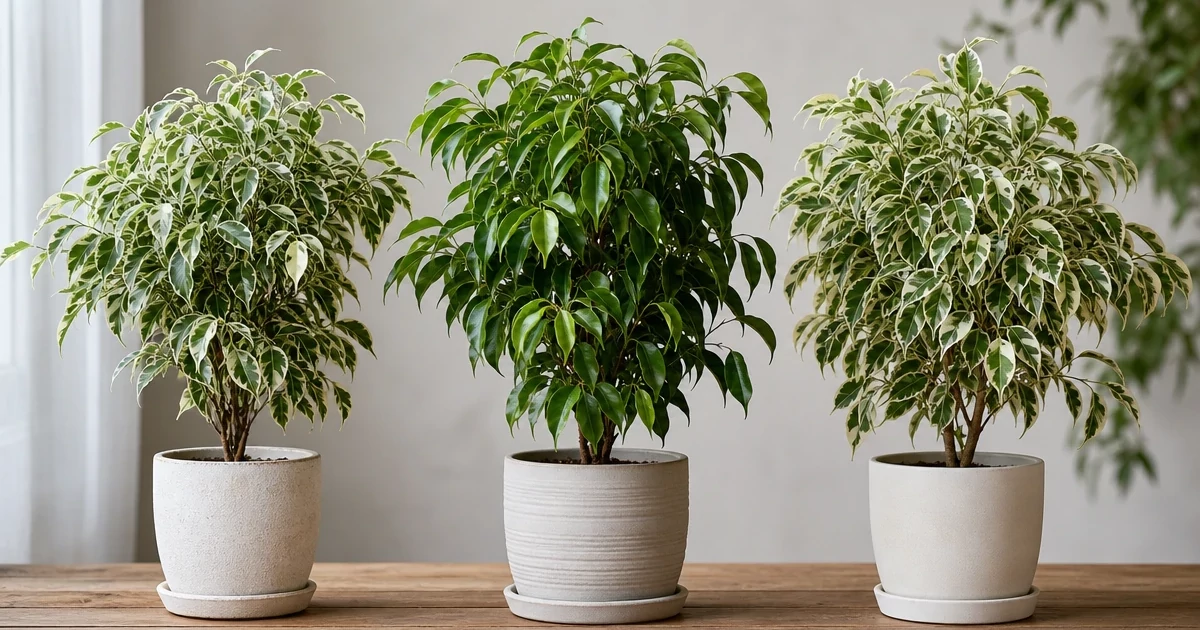
A weeping fig needs bright indirect light: 1–2 m from a south-facing window or right by an east-facing one. Variegated varieties (‘Starlight’, ‘Kinky’) need more light than green ones (‘Exotica’, ‘Danielle’).
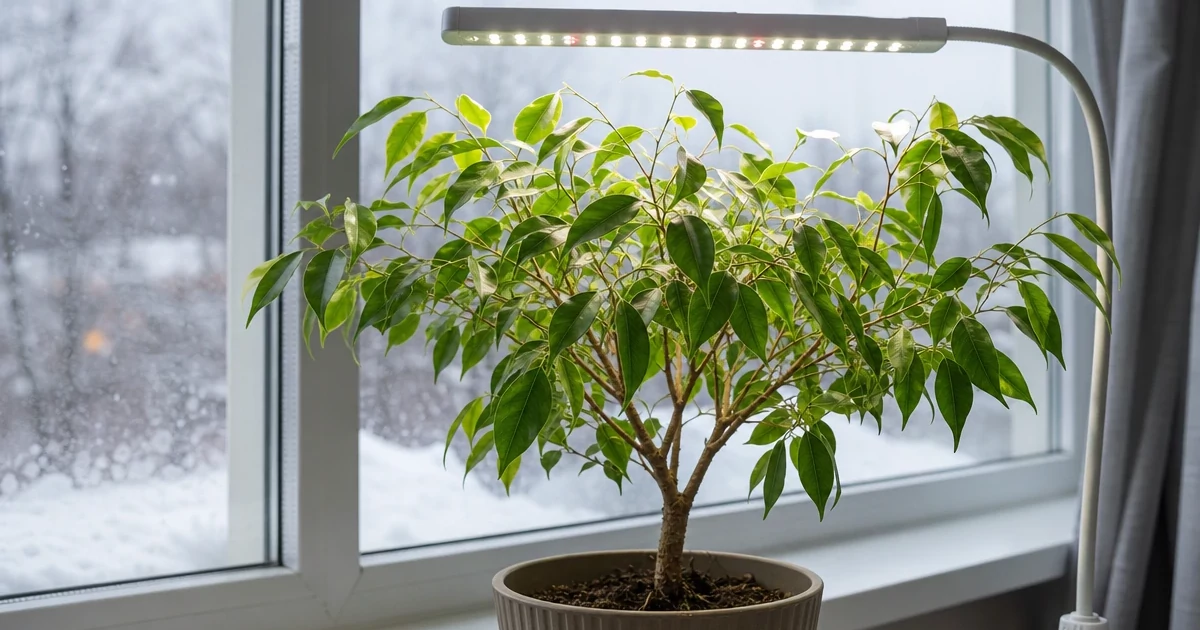
Illustration 3. A steady, bright spot is the key to a dense crown.
Water when the soil has dried 2–3 cm deep. Pour away excess water from the saucer after 15 minutes. Use soft water at room temperature. Both drying out and overwatering lead to leaf drop.
The fig likes humid air: mist the crown several times a week in the heating season and give it a warm shower now and then.
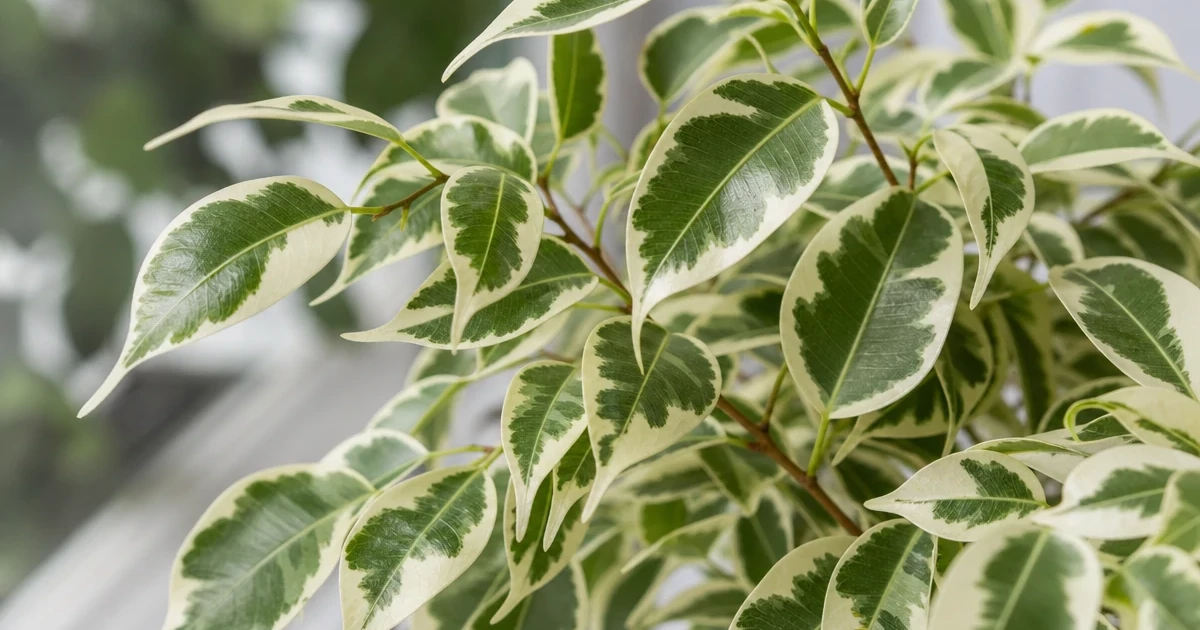
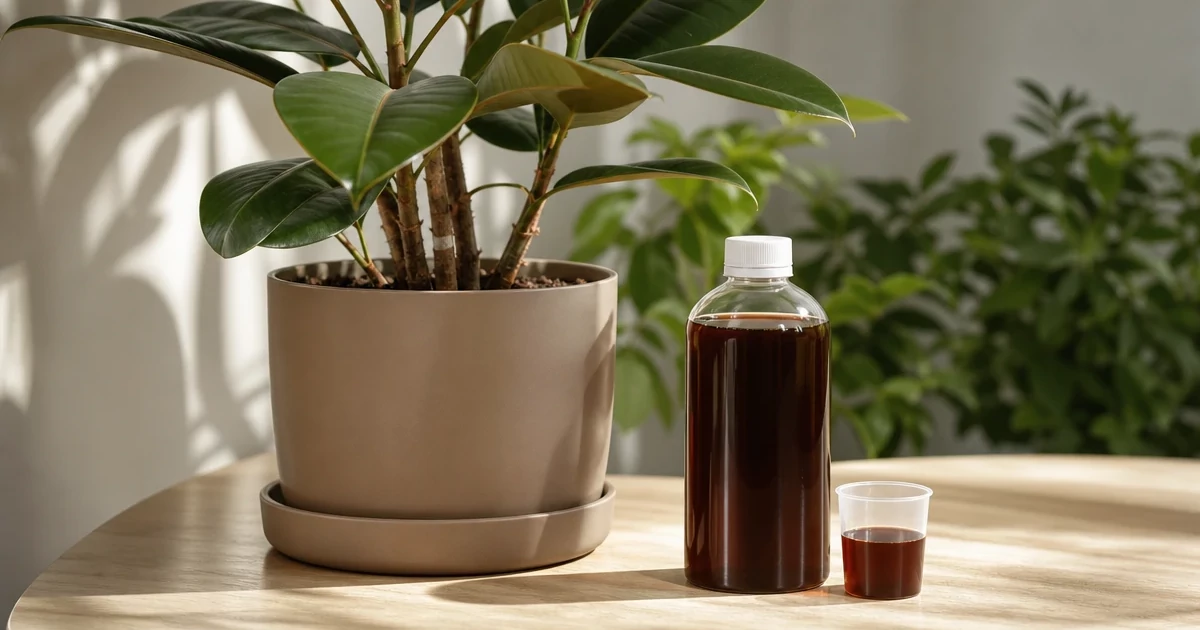
Illustration 2. Healthy fig leaves are firm, glossy and spotless.
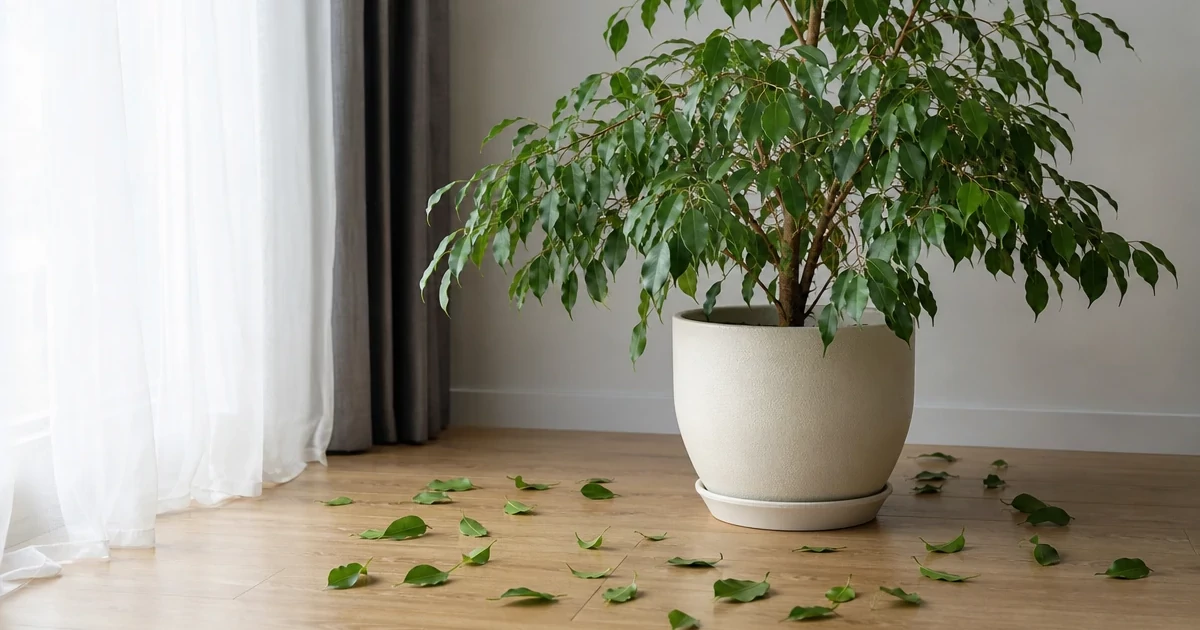
Sudden leaf drop is the most common complaint about weeping figs, and in most cases the plant can be saved.
A few old lower leaves yellowing in autumn is natural renewal, not disease.
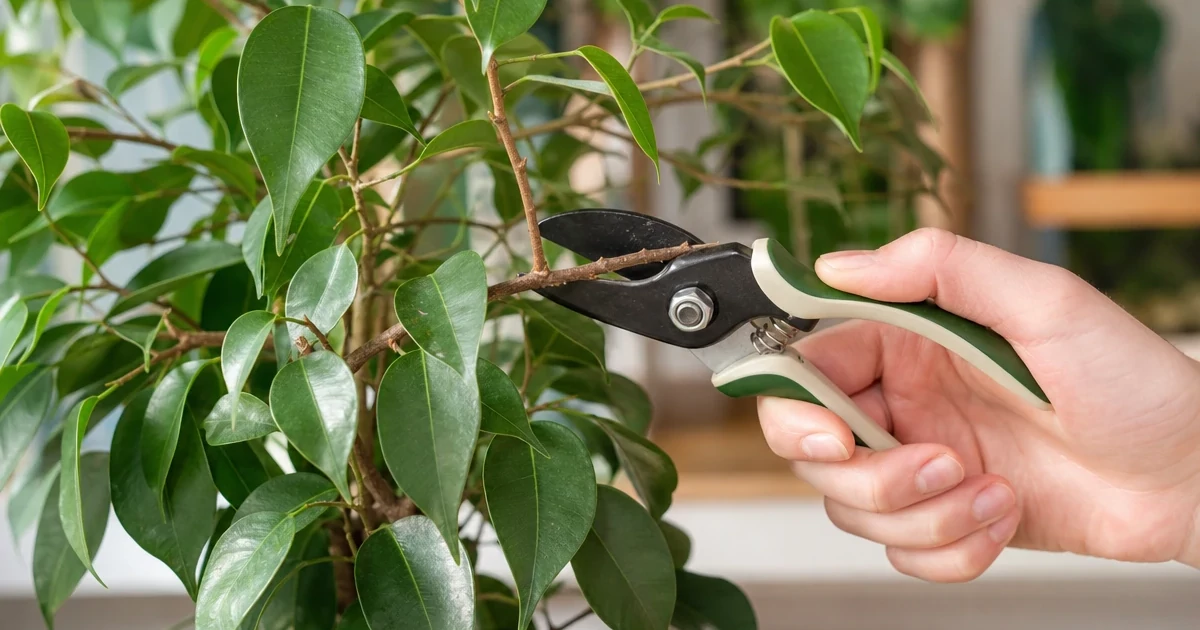
The weeping fig tolerates pruning well. In spring, shorten overlong branches by a third above a leaf bud so the crown thickens. The cuts ooze milky sap, so wear gloves. From March to September, feed every two weeks with fertiliser for ficus or foliage plants.
The best time is late February to April, before active growth. Cut with clean, sharp secateurs just above a leaf or an outward-facing bud.
Never remove more than a third of the crown at once. Blot the milky sap and wear gloves.
Use a ready-made ficus mix or blend peat-based compost with perlite and fine bark (about 3:1:1), pH 6–6.5, with drainage at the bottom. The pot needs holes and should be only slightly larger than the root ball.
From March to September feed every 2 weeks with a liquid ficus or foliage-plant fertiliser higher in nitrogen; use half strength for variegated cultivars so the leaves do not revert to green. No feeding in autumn and winter. Organic options: natural fertilisers for houseplants.
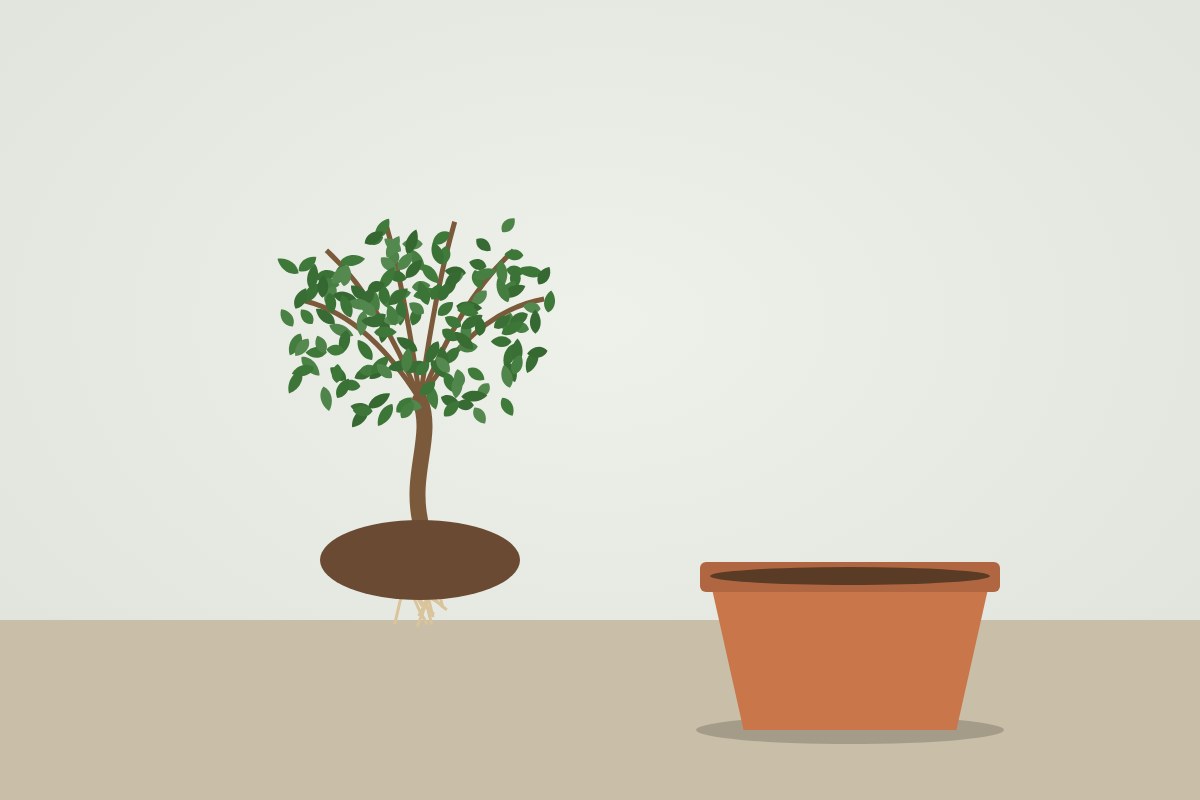
Repot young plants every spring and mature ones every 2–3 years, when roots poke out of the drainage holes. The new pot should be 3–4 cm larger. The safest method is to move it with the root ball intact. For large plants, replacing the top 3–5 cm of soil each year is enough.
Illustration 5. Moving the root ball intact causes the least root damage.
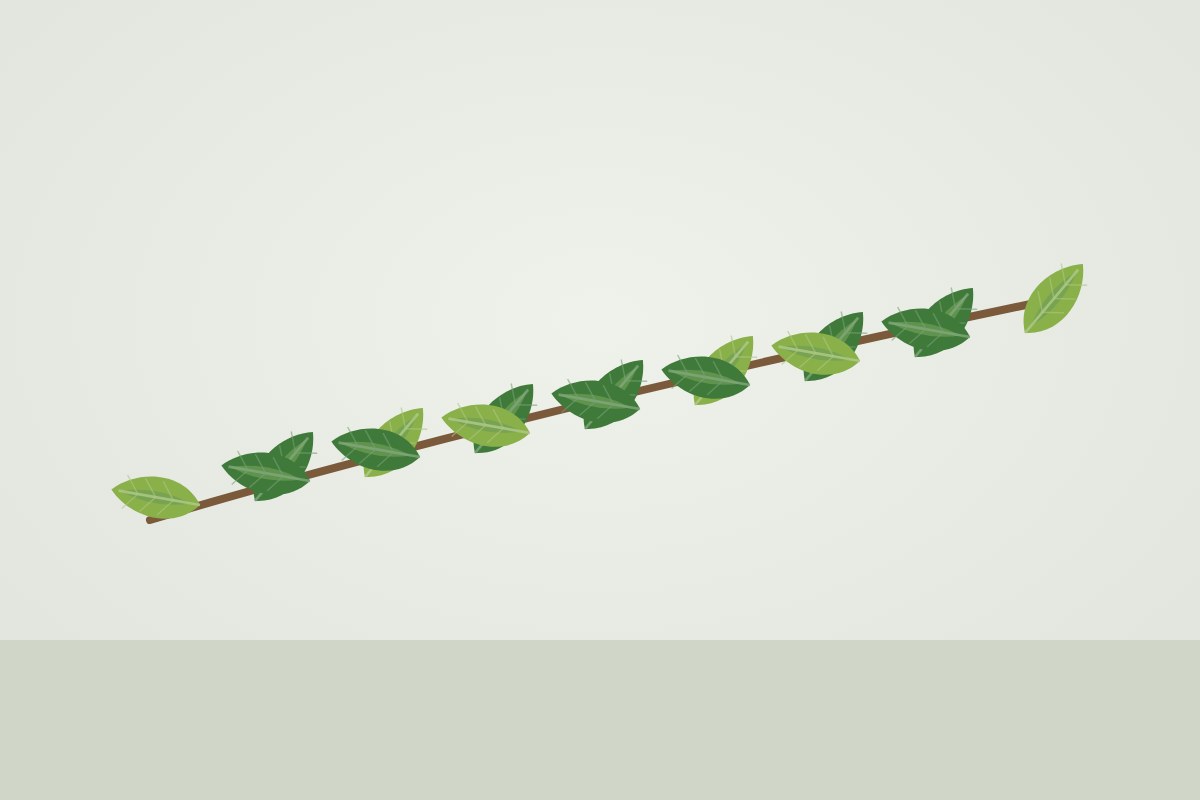
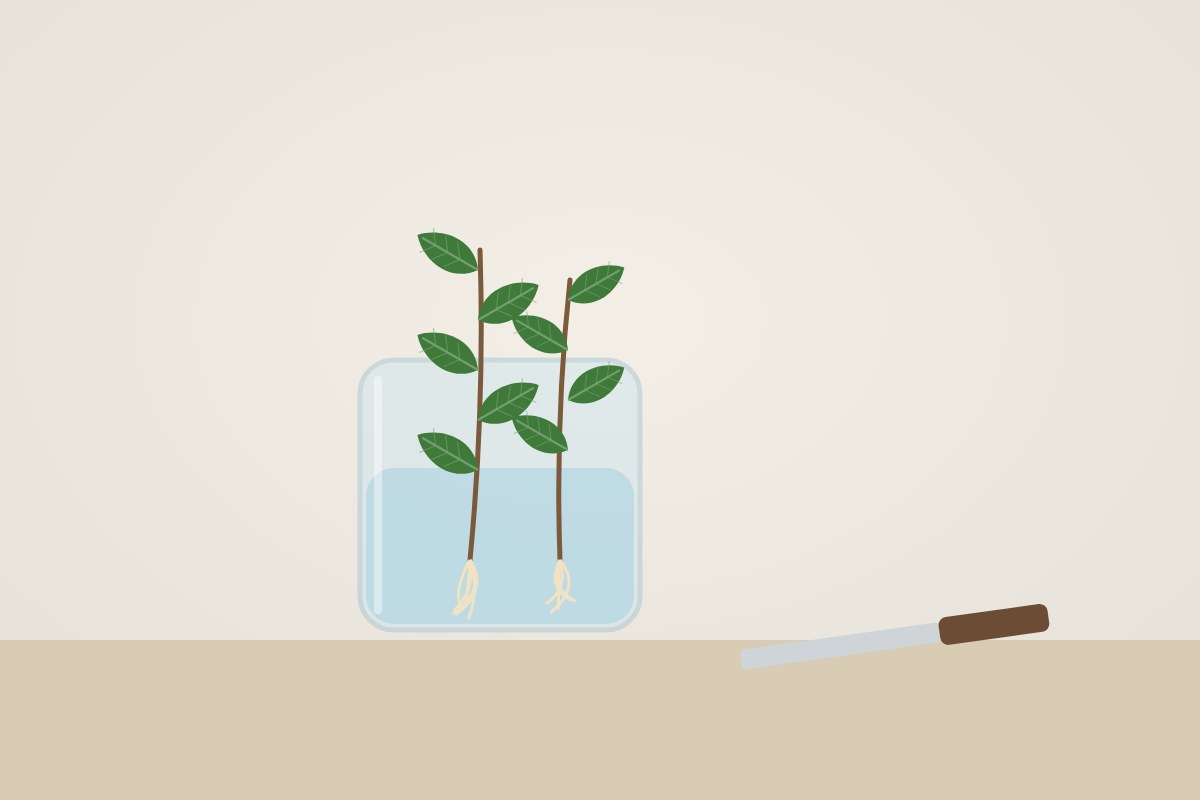
Illustration 4. Fig cuttings root easily in spring and early summer.
| Months | What to do |
|---|---|
| February–April | Pruning, shaping, repotting, cuttings |
| May–August | Regular watering and feeding, monthly shower, check for mites |
| September–October | Last feed, less water, get the humidifier ready |
| November–January | Minimal watering, extra light, protect from radiators and draughts |
Short days and dry air from radiators are the main causes of winter leaf drop. Place the fig as close to a bright window as possible but not touching cold glass, and add a grow light for 10–12 hours a day if needed. Water less, only once the top 3–4 cm has dried, using room-temperature water. Keep humidity at 50 % or more with a humidifier, and do not ventilate so that frosty air blows onto the plant. More tips: houseplant care in the heating season.
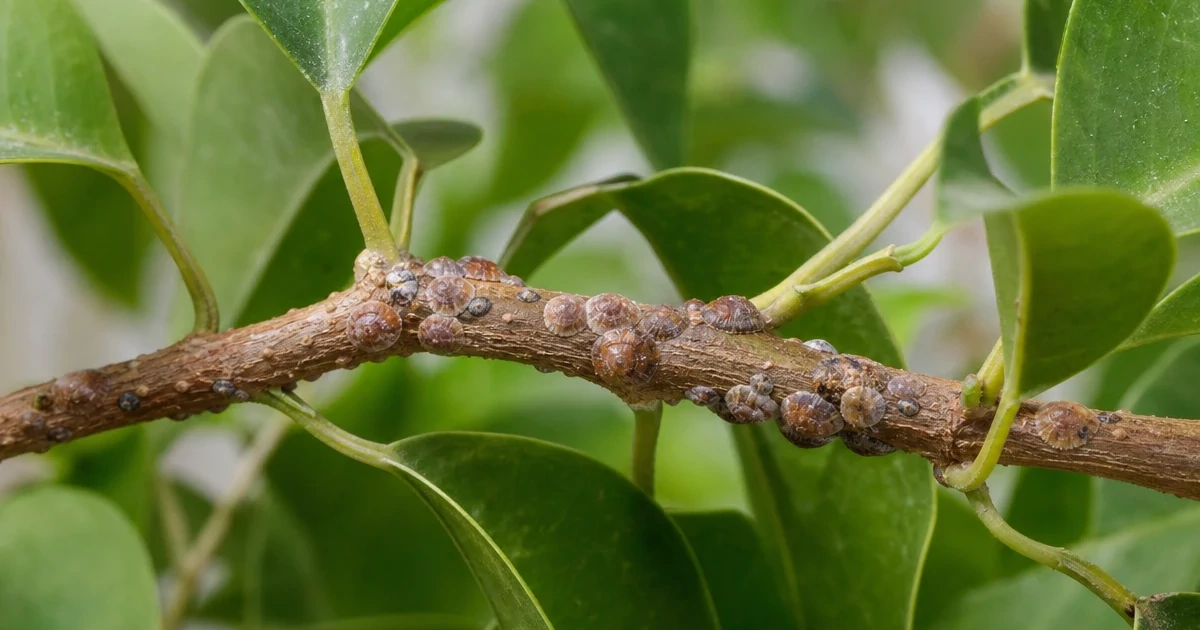
In warm, dry air the weeping fig is most often attacked by spider mites: leaves go dull, get pale speckles and drop. Scale (brown bumps on twigs and sticky residue), thrips and mealybugs also appear. Overwatering causes root rot and dark leaf spots. A weekly check, a warm shower once a month and moderate watering prevent most problems. More on symptoms: houseplant problems.
Fig flowers are hidden inside small round syconia; indoors they appear very rarely and have no ornamental value. The plant is grown for its canopy.
Folklore treats the weeping fig as a symbol of a cosy, prosperous home; there is no science behind it, but no harm either.
The milky sap can irritate skin, and ficus is a known household allergen for sensitive people. It is toxic to cats and dogs: chewing the leaves can cause drooling and vomiting. If you have pets, the parlour palm is a safer choice.
A small Natasja or Kinky makes a lovely gift for a colleague or a housewarming, while a tall standard brightens an office or a bright living room. Add a short note: “do not move it, do not overwater”. Browse more houseplants.
In short. A permanent bright spot, watering once the soil dries, humid air and no draughts, and your weeping fig will delight you with a dense crown for decades.
Usually every 5–7 days in summer and every 10–14 days in winter. Go by the soil: water when the top 2–3 cm is dry.
About 1 m from an east- or west-facing window, in a permanent, draught-free place away from radiators. Variegated cultivars need more light.
In spring take a 10–15 cm tip with 4–6 leaves, rinse off the sap and root it in water or moist mix under a bag at 24–25 °C. Roots appear in 2–4 weeks.
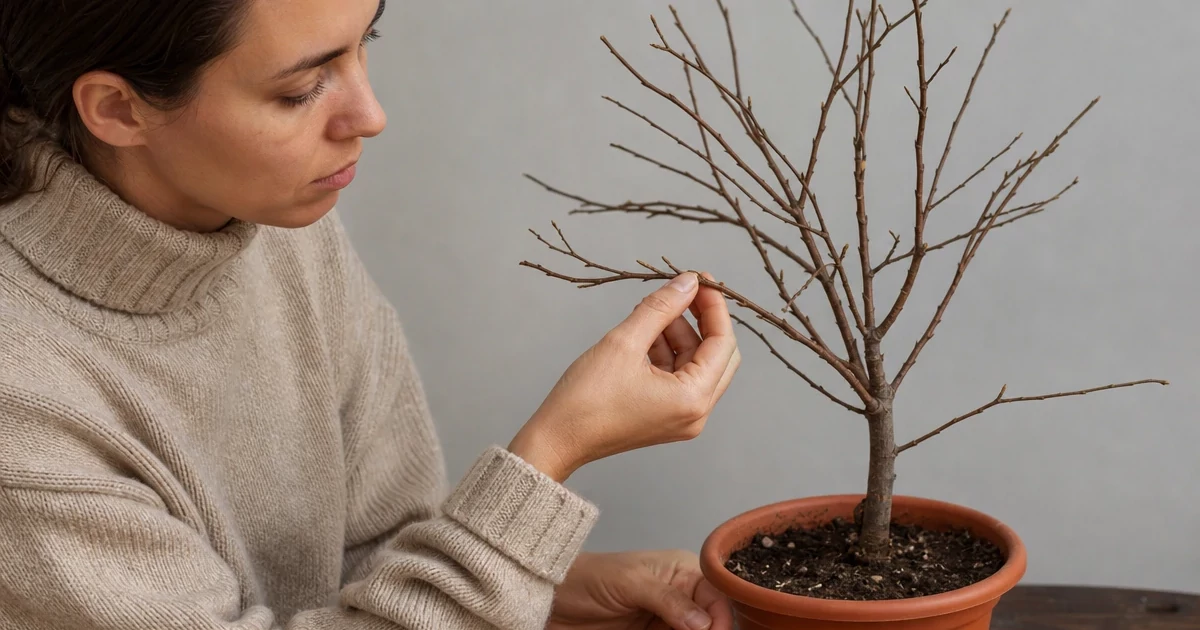
Yes, if the twigs are flexible and the roots healthy. Keep it in bright light, water sparingly and wait 3–6 weeks for new buds.
In spring: young plants yearly, mature ones every 2–3 years, moving the root ball into a pot 2–3 cm larger.

Author: Maria Svitlovir
Graduated from Taras Shevchenko National University of Kyiv, Institute of Biology and Medicine (2001). BSc in Biology, MSc in Horticulture. Writes about plants, works at a garden centre selecting and repotting plants, and contributes to plant reference guides.
© Kyiv 2026 UFL Flower Shop

Trademark UFL №191476 is used under license of the rights holder.
All rights reserved. Any use of materials without a link to the site is prohibited.


 Birthday
 Hydrangeas