
In winter, ordering flowers often comes with one question: will the bouquet freeze on the way? The worry is understandable: cut flowers are mostly water, and frost damages petal tissue. But the ride itself in a warm car poses no threat. The risk lies in the few minutes between the car and the door, and in what happens to the bouquet once it is indoors.
Here is how bouquets are protected in transit, which flowers handle winter best and what the recipient should do in the first half hour.
When the temperature drops below zero, water in petal cells can freeze, and ice crystals damage the cell walls. The damage is not visible straight away: after a few hours in the warmth, petals darken and turn translucent, glassy and limp. That is why even brief exposure to frost without wrapping is undesirable, especially for tropical flowers such as anthuriums and orchids.
The opposite also harms: a bouquet taken from the cold and placed right next to a hot radiator wilts faster. Winter delivery is not only about warmth, it is about gradual change.
The most reliable winter option is flowers in a box: they need no vase, travel well and last in a warm room without extra care, as long as the foam is kept moist.

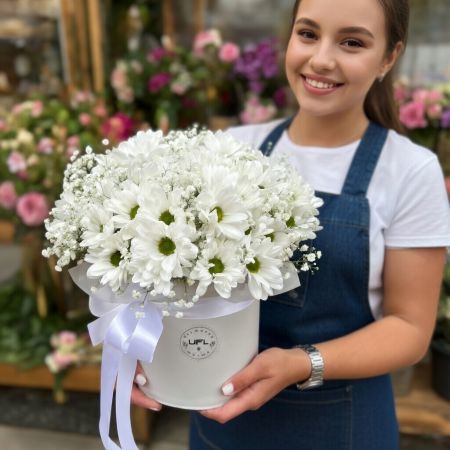
If you want a gift that outlasts the winter, choose a potted plant: potted plants such as phalaenopsis bloom for months. Just keep the pot off a cold windowsill.

More care tips are in how to make a bouquet last longer.
The signs are darkened, watery or translucent petals appearing within a few hours of delivery. Ordinary ageing looks different: petals dry out from the edges. If you notice frost damage, photograph the bouquet in daylight and contact support with your order number on the day of delivery. How to judge flower freshness in general is explained in how to check bouquet freshness.
Winter is no reason to give up on flowers. With the right wrapping and a few minutes of attention at home, a bouquet handles the frost as easily as the summer heat.

Author: Maria Svitlovir
Graduated from Taras Shevchenko National University of Kyiv, Institute of Biology and Medicine (2001). BSc in Biology, MSc in Horticulture. Writes about plants, works at a garden centre selecting and repotting plants, and contributes to plant reference guides.
© Kyiv 2026 UFL Flower Shop

Trademark UFL №191476 is used under license of the rights holder.
All rights reserved. Any use of materials without a link to the site is prohibited.

 Birthday
 Hydrangeas