
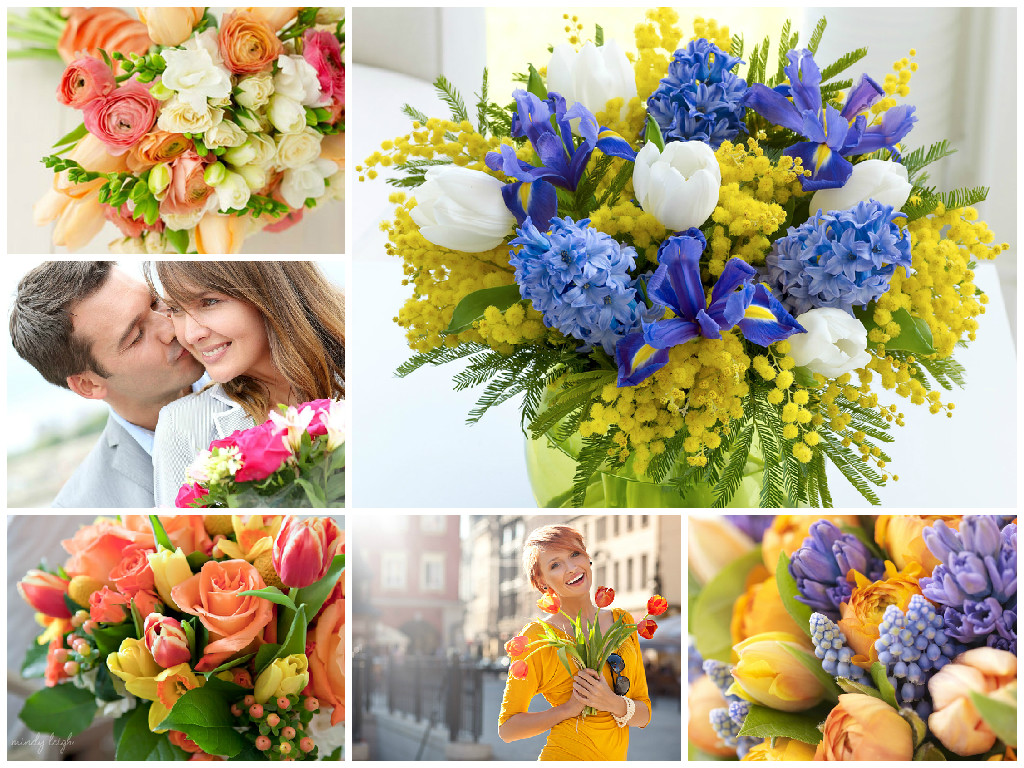
8 March is one of the most flower-filled days of the year. Spring bouquets are given to mothers, wives, colleagues, friends and teachers. Here is which flowers to choose for International Women's Day, what their colours mean, how to put together a bouquet with a message, how to keep tulips and mimosa fresh and why it is best to order in advance.
Spring bouquets for the day are in our tulips, flowers for mom and flowers for a colleague sections.
In the language of flowers each bloom and shade has its own meaning: a red tulip is a declaration of love, yellow means joy and sunshine, white means sincerity and the daffodil stands for spring and renewal. Such a bouquet can come with a card explaining the meanings. More in "The language of flowers". Just remember that a person's favourite flowers matter more than any symbolism.
7–8 March are peak days for florists: demand for tulips and mimosa rises many times over and delivery slots run out. Ordering a few days ahead guarantees the flowers you want and a convenient delivery time.
Hyacinths, daffodils and grape hyacinths in pots, a primrose or a flowering orchid last longer than cut flowers. After flowering, the bulbs can be planted in the garden.
Tulips, mimosa, daffodils and hyacinths, as well as roses and chrysanthemums.
For a small bouquet an odd number, 7–15; for a striking single-variety bouquet, 25–51.
Its tiny flower heads lose moisture quickly in warm, dry air; cool conditions and misting keep it fresh longer.
For the history of the day, see "International Women's Day".
For card messages, see Women's Day wishes.

Author: Maria Svitlovir
Graduated from Taras Shevchenko National University of Kyiv, Institute of Biology and Medicine (2001). BSc in Biology, MSc in Horticulture. Writes about plants, works at a garden centre selecting and repotting plants, and contributes to plant reference guides.
© Kyiv 2026 UFL Flower Shop

Trademark UFL №191476 is used under license of the rights holder.
All rights reserved. Any use of materials without a link to the site is prohibited.


 Birthday
 Hydrangeas
.jpg)

.jpg)

.jpg)


