
 Birthday
 Hydrangeas
This article was prepared with the support of UFL flower delivery. The pomegranate (Punica granatum) is a deciduous subtropical tree or large shrub that reaches 5–6 m in the wild. For the home, choose dwarf forms (Punica granatum 'Nana'), 50–100 cm tall: they flower from May to September, set small ornamental fruit and make excellent bonsai. Below is how to care for a pomegranate all year round so that it flowers and fruits.
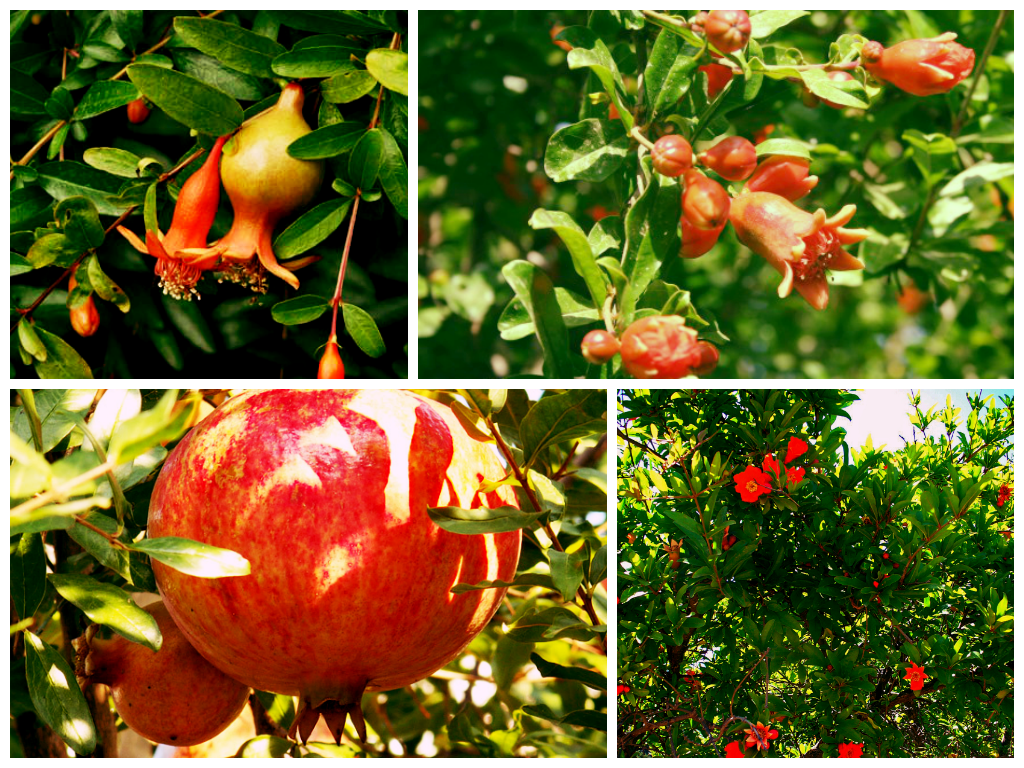
How a pomegranate flowers and fruits
Pomegranate flowers are bright scarlet, less often orange, pink or white, with a thick fleshy calyx. One plant produces two kinds of flowers:
- "jugs" — with a swollen base (the ovary). These are the ones that become fruit;
- "bells" — with a slim base. They are sterile and drop after flowering, which is normal.
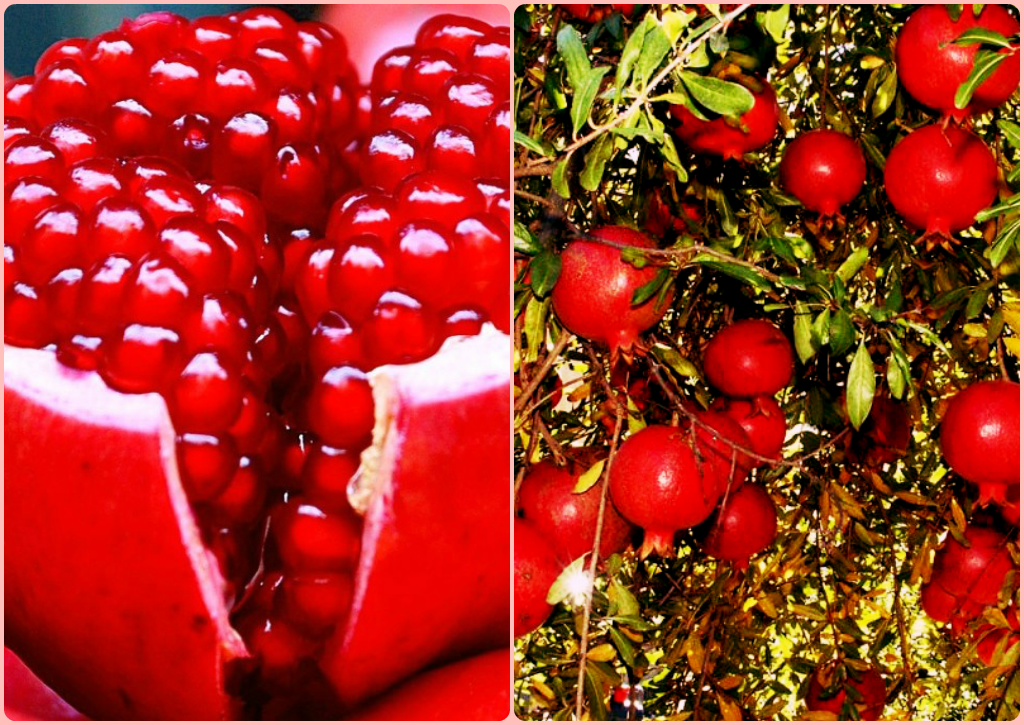
Flowers form at the tips of the current year's shoots. A garden pomegranate grown from seed starts fruiting in 3–5 years, from a cutting in 2–3; dwarf forms flower in their first or second year. A mature tree in the subtropics yields 30–60 kg of fruit, while an indoor pomegranate's fruits are 3–5 cm across — mostly ornamental, though edible. It takes 4–6 months from flower to ripe fruit.
Care through the seasons
| Factor | What it needs |
|---|---|
| Light | Your sunniest window, south or west. In summer, an open balcony or garden. In shade it won't flower. |
| Temperature | 20–25 °C in summer; shade it from midday sun behind glass in a heatwave. 6–12 °C in winter. |
| Watering | Generous in summer, once the top 1–2 cm of soil is dry. In winter, every 2–3 weeks so the root ball doesn't dry out. |
| Humidity | Tolerates dry air, but misting helps in hot weather (avoid the flowers). |
| Soil | Loose and neutral: equal parts loam, leaf mould, compost and sand, with drainage at the bottom. |
| Feeding | Every 2 weeks from March to August: nitrogen-phosphorus in spring, potassium-phosphorus from midsummer. |
| Repotting | Young plants yearly in spring, mature ones every 2–3 years. Keep the pot snug: a slightly root-bound pomegranate flowers more. |
Pruning and shaping
Do the main pruning in late winter, before growth starts: remove weak, crowding and inward-growing shoots and shorten strong ones above an outward-facing bud, leaving 4–5 buds. This produces lots of new shoots, and flowers will appear at their tips in summer. Don't pinch the tips during flowering — you'll cut off the buds. Remove suckers from the roots all season.
Why a pomegranate won't flower
- Too little light. The most common reason: it needs 4–6 hours of direct sun.
- No winter rest. Kept warm all winter, the plant exhausts itself.
- A pot that is too big. The plant grows roots and leaves instead of flowers.
- Wrong pruning. Pinching in summer removes future buds.
- Too much nitrogen. It gives leaves, not flowers.
- Youth. Seedlings of garden varieties need a few years.
Winter rest and hardiness
In autumn an indoor pomegranate drops some or all of its leaves — this is its natural dormancy. Keep it somewhere bright and cool (an insulated balcony, a stairwell, a cold windowsill) and water sparingly. In February or March, bring it into the warmth, prune it and start feeding.
Garden pomegranates survive brief frosts down to about −12…−15 °C, so in Ukraine they are grown outdoors mainly in the south and in Zakarpattia. There, bushes are trained low and spreading, then bent down and covered for winter like grapevines, with conifer branches, fleece or soil. Remove the cover gradually once late frosts are over (usually early May) and water well straight away.
Growing a pomegranate from seed or a cutting
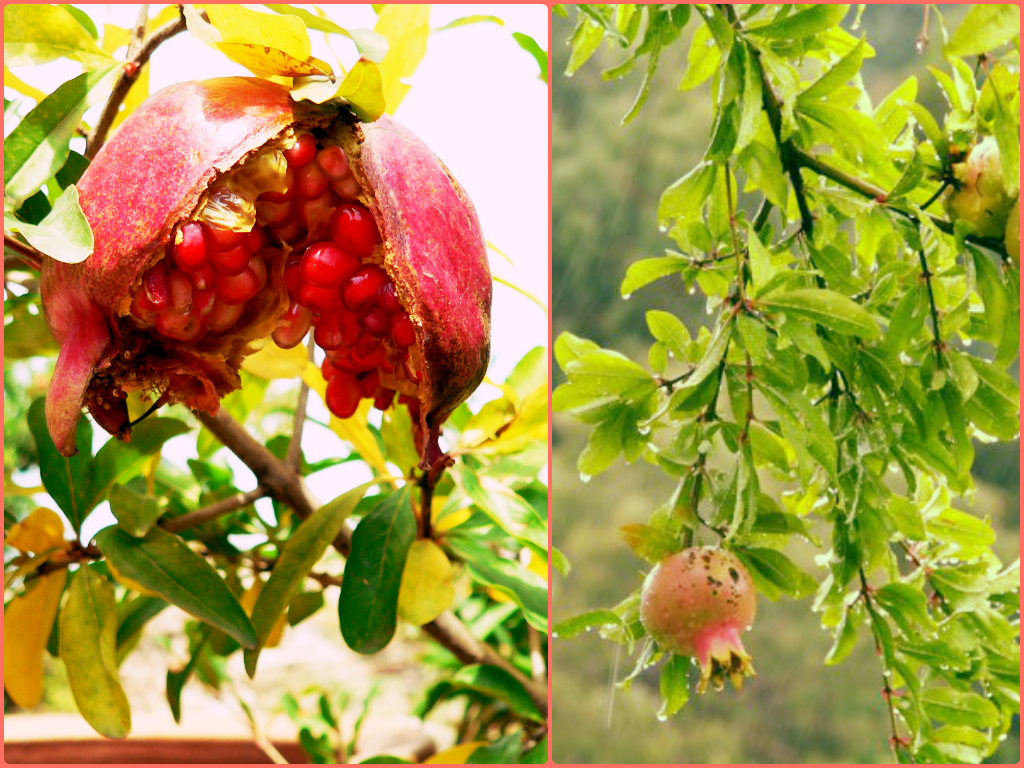
- Seeds. Take seeds from a ripe pomegranate, clean off the pulp, dry them and sow in spring 0.5–1 cm deep in moist, loose compost. Seedlings appear in 2–4 weeks. Seedlings of hybrids may not match the parent fruit.
- Cuttings. In summer, root semi-ripe cuttings 10–15 cm long with 4–5 buds in a peat-sand mix under a cover. These plants flower sooner.
FAQ
Can you eat the fruit of an indoor pomegranate?
Yes, it's edible but small and often sour — it's grown for its looks.
Why is my pomegranate dropping leaves in summer?
Usually because of drying out or overwatering, a sudden change of conditions, or spider mites in dry air.
Do I need to hand-pollinate the flowers?
Pomegranates are self-fertile, but indoors a gentle shake or a soft brush increases fruit set.
Love windowsill plants? Browse our houseplants section for gift ideas and for yourself.

View full-size photo
Author: Maria Svitlovir
Graduated from Taras Shevchenko National University of Kyiv, Institute of Biology and Medicine (2001). BSc in Biology, MSc in Horticulture. Writes about plants, works at a garden centre selecting and repotting plants, and contributes to plant reference guides.