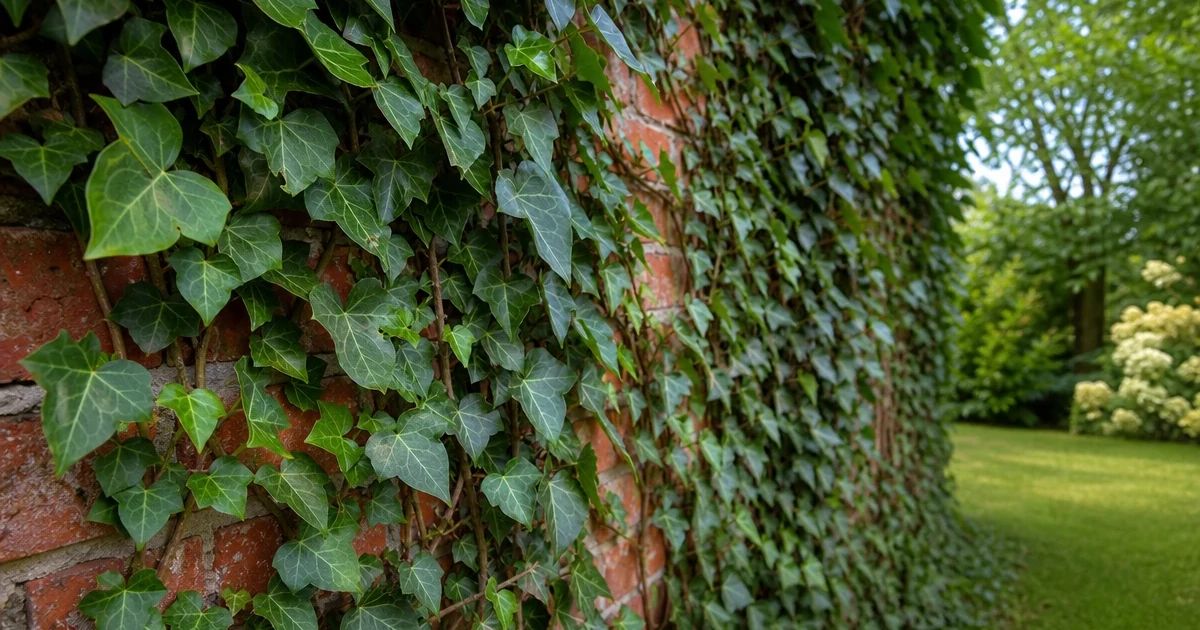
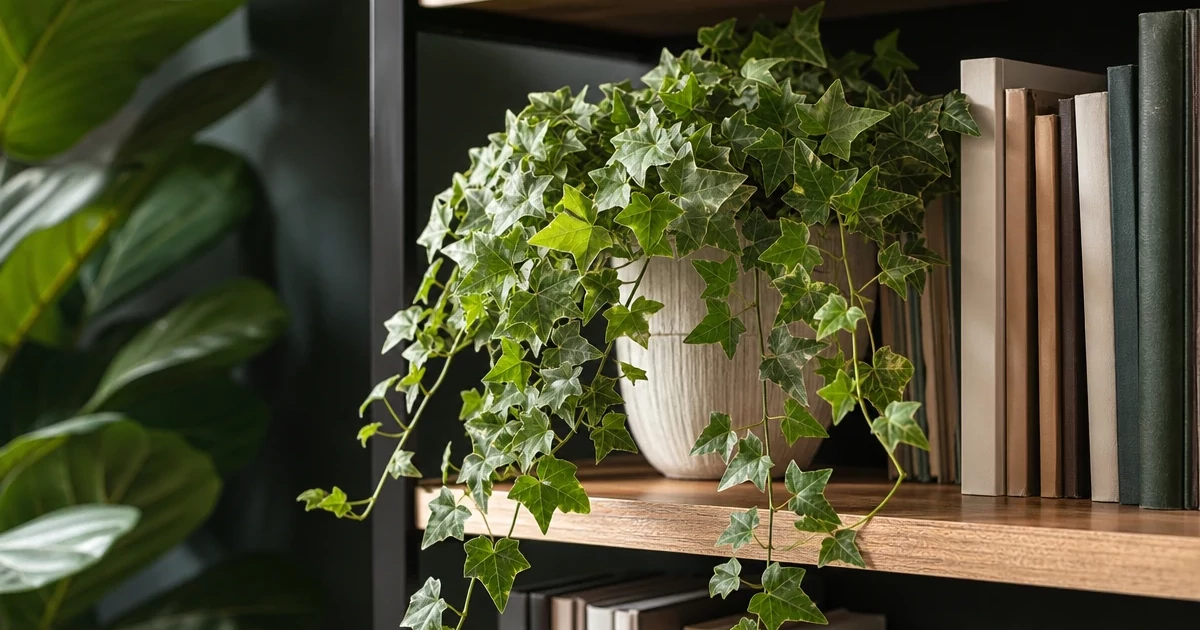
Hedera, or common ivy (Hedera helix), is an evergreen climber with lobed leaves that easily decorates shelves, hanging pots and supports. It grows fast, tolerates partial shade and cool rooms, and rarely gets ill as long as the air isn’t too dry.
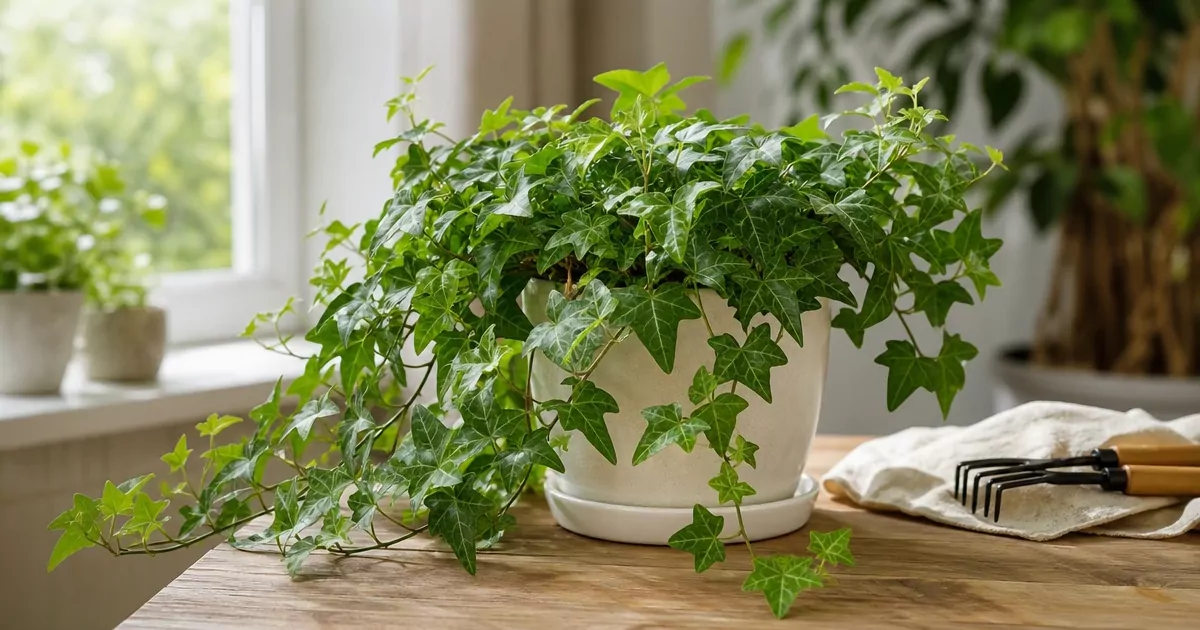
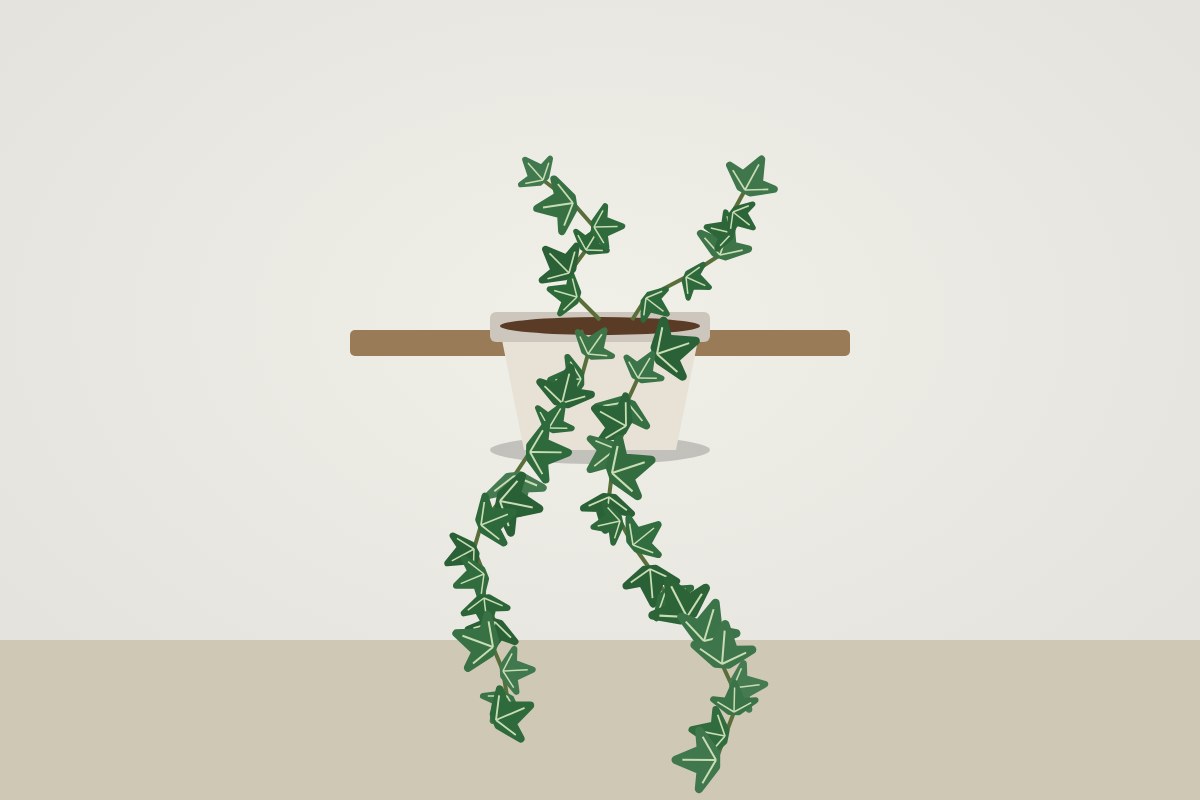
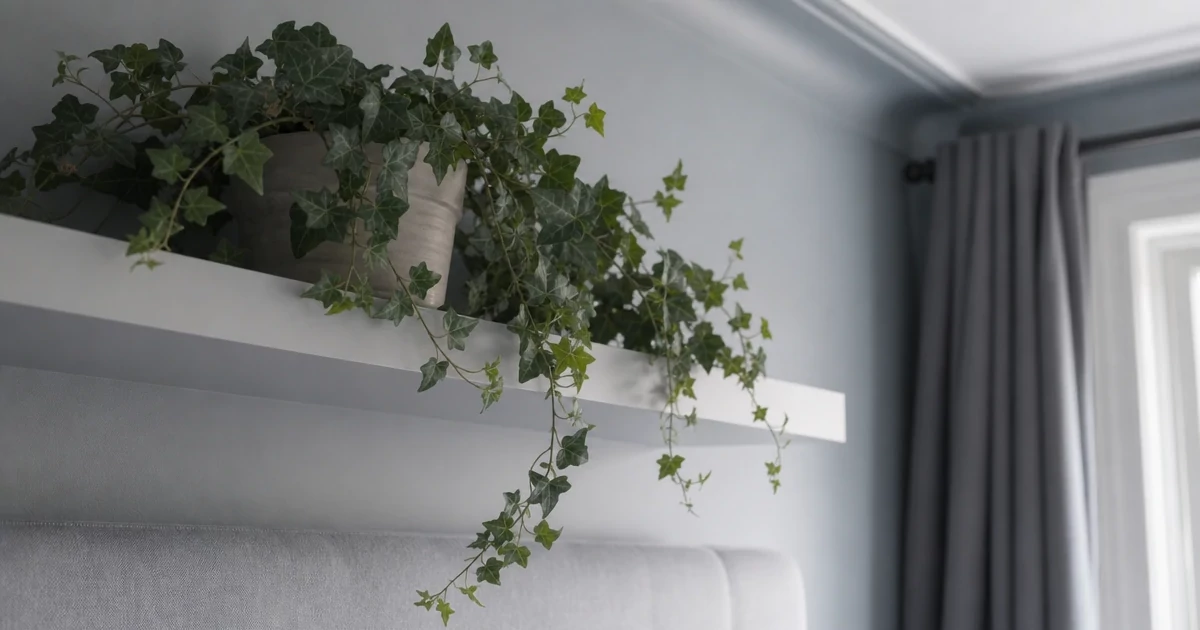
Illustration 1. Long ivy stems trail beautifully from shelves and cupboards.
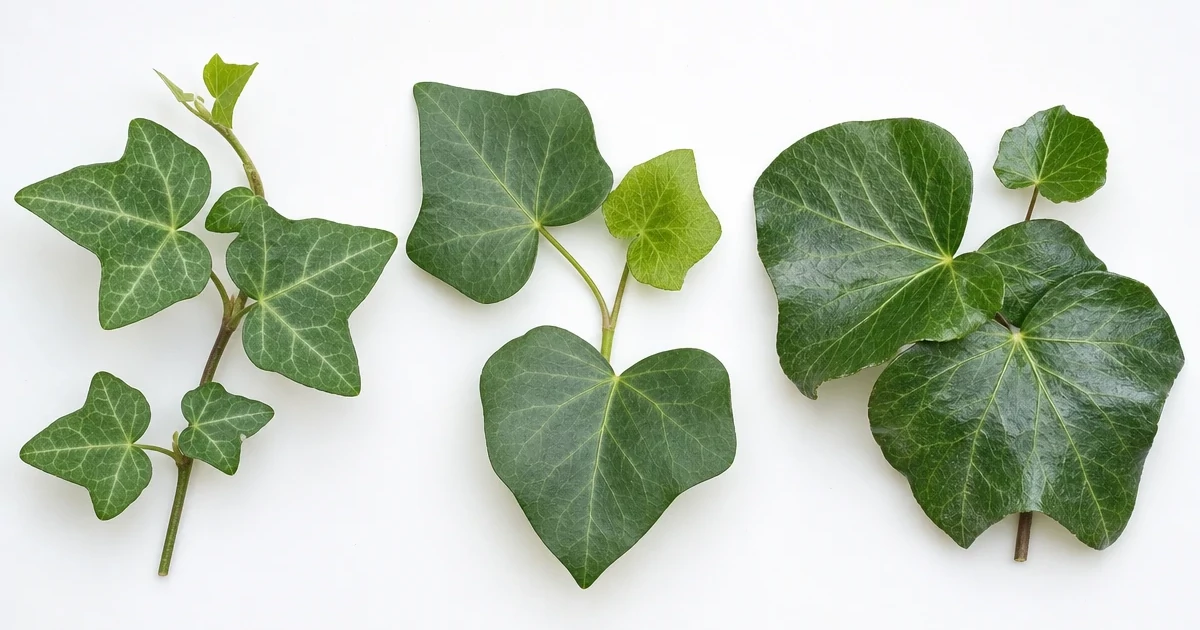
The genus Hedera includes about 15 species of evergreen climbers from Europe, North Africa and Asia. They cling with aerial rootlets and can live for decades. Four species are grown indoors:
Young ivy has lobed leaves and climbs; the adult flowering form with entire leaves and round flower heads almost never develops indoors.
| Factor | Ideal |
|---|---|
| Light | Indirect; green cultivars in partial shade, variegated in bright light |
| Temperature | 16–22 °C in summer, 12–16 °C in winter |
| Humidity | 50 % or more, regular showers |
| Watering | When the top 1–2 cm is dry |
| Soil | Slightly acidic all-purpose mix with perlite |
| Feeding | March–September, every 2 weeks |
| Repotting | Spring, every 1–3 years |
| Propagation | Cuttings, layering, tips |
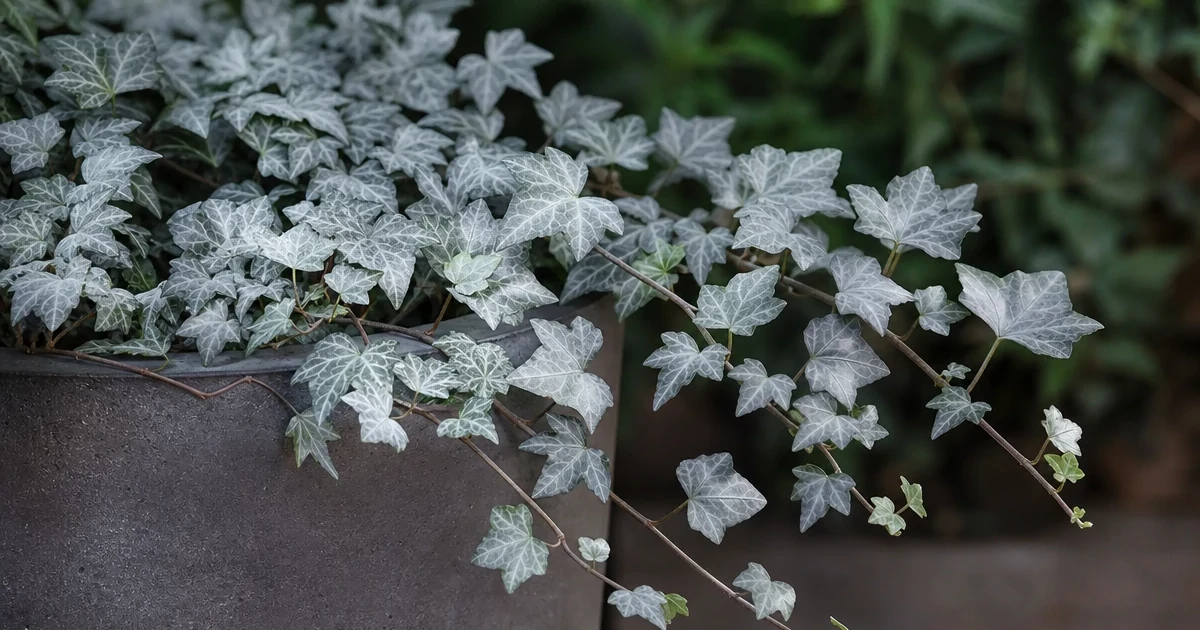
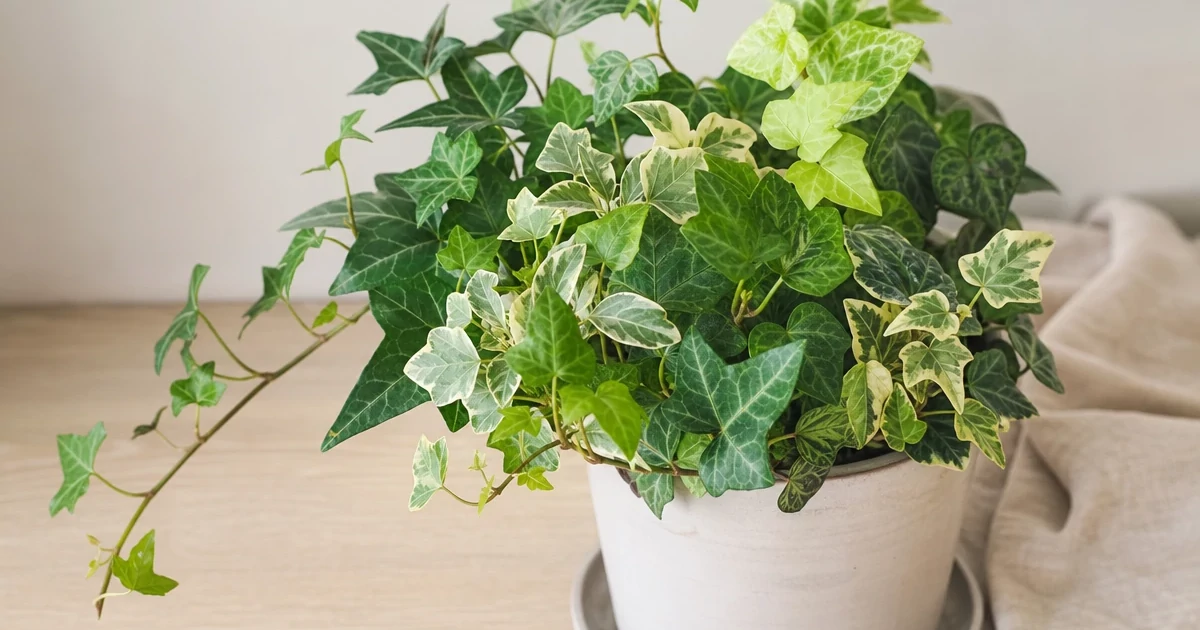
There are hundreds of varieties of common ivy, as well as Canary Island and Persian ivy with larger leaves. They differ in leaf shape and colour:
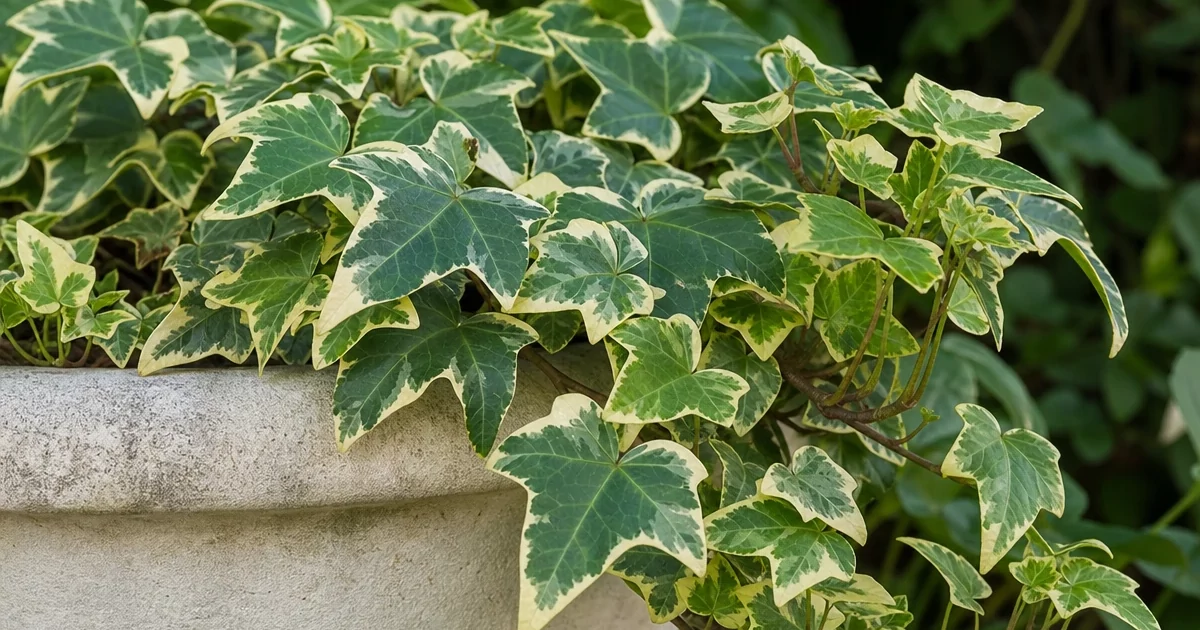
Illustration 2. In shade, variegated varieties turn green and lose their pattern.
Shops often sell ivy mix — several cultivars in one pot. It looks great, but the cultivars grow at different rates, so trim the most vigorous stems now and then so they do not smother the rest. Variegated forms need a brighter spot or they turn green.
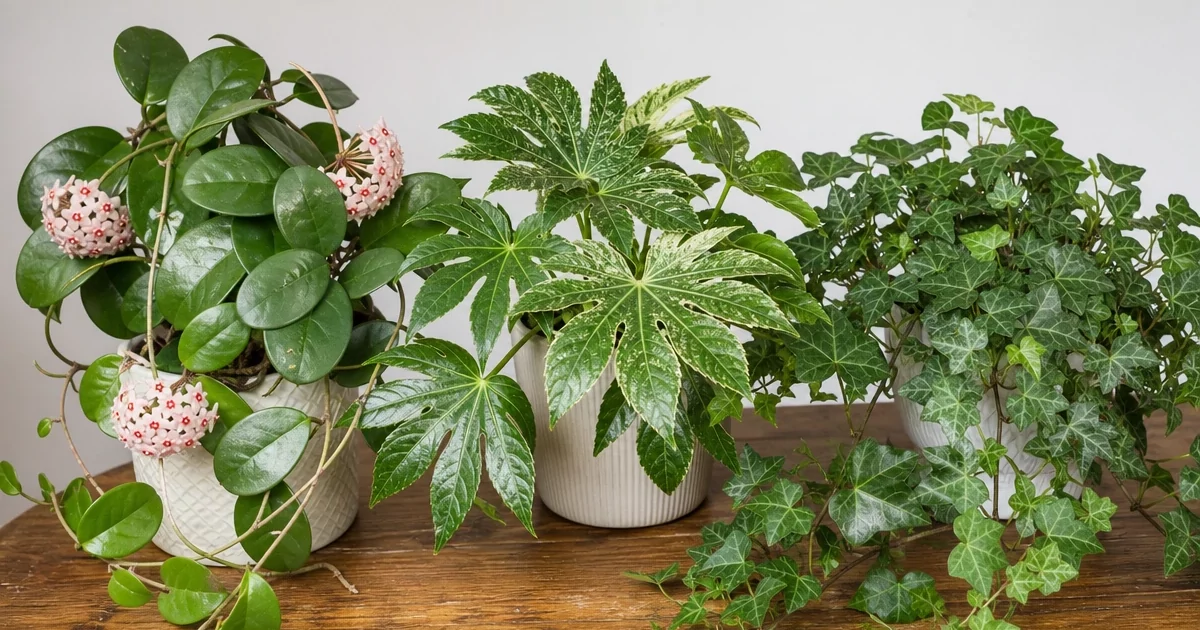
Many trailing plants are called “ivy” even though they are not Hedera and need different care:
The advice below applies to true ivy, Hedera.
Pick a pot with dense stems from the base, no bare patches and no dry leaves. Check leaf undersides and tips: webbing, pale specks or sticky residue mean pests. Variegated cultivars should have a crisp pattern without green reversions. At home keep the new plant apart from your collection for 2 weeks in a bright, cool spot, and do not repot straight away — let it settle.
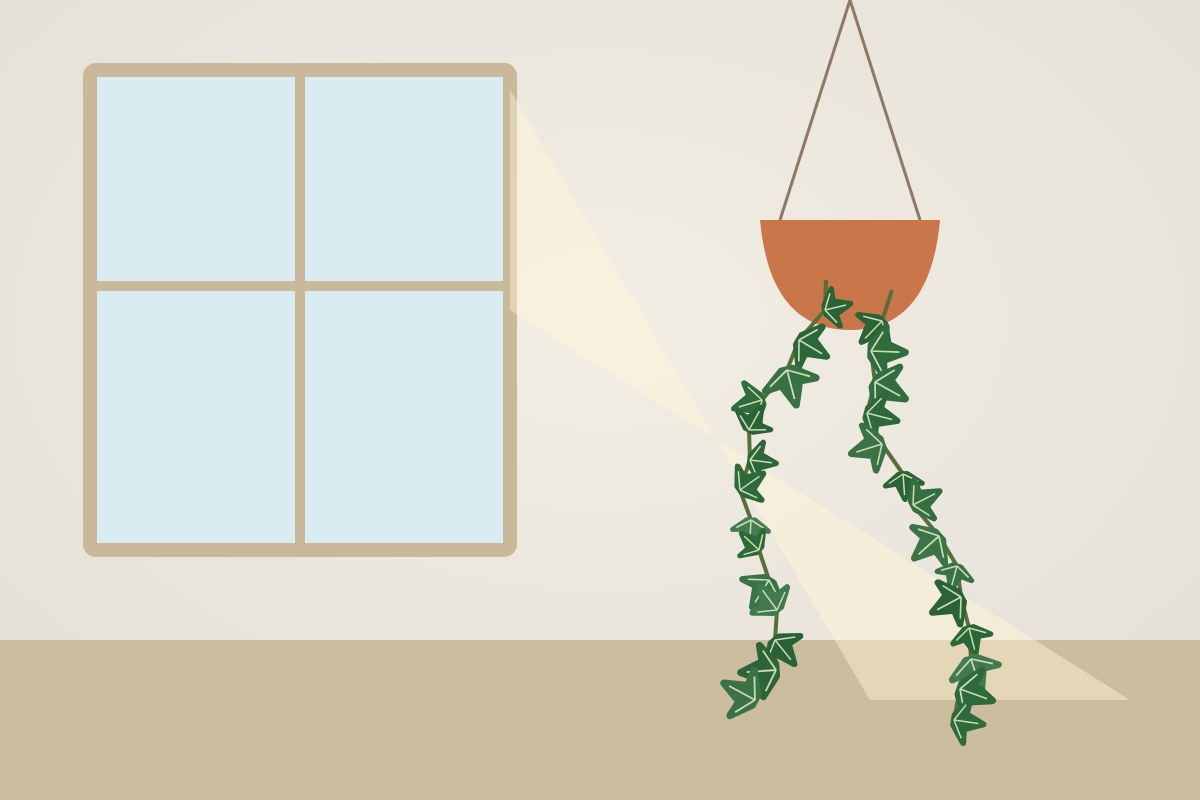
Green varieties grow well in partial shade, even 2–3 m from a window. Variegated ones need bright indirect light. Direct midday sun scorches the leaves.
The ideal temperature is 16–22 °C. In winter ivy likes it cool, 12–15 °C; in a warm, dry room it is attacked by spider mites.
Ivy loves cool, fresh air, so it does best not in the warmest room but where it is 16–20 °C: a bedroom, a bright hallway, a kitchen away from the hob, a bathroom with a window. It looks great on high shelves and cabinets, in hanging pots by a window or on a plant stand. In summer move it to a shaded glazed balcony, where cool humid air makes it noticeably bushier. Keep it away from radiators and air conditioners: hot dry air is ivy’s worst enemy and triggers mite outbreaks.
If your window is shaded by trees or a neighbouring building, or the ivy sits deep inside a room, a grow light helps. A 10–20 W full-spectrum LED 30–50 cm above the leaves for 10–12 hours a day is enough; a timer makes it effortless. Under a lamp variegated cultivars keep their pattern and stems stay compact. In autumn and winter extra light is especially useful, reducing leaf drop and carrying the plant through to spring without bare stems. Just make sure the lamp does not heat or dry the leaves.
Illustration 5. In a hanging pot near a bright window, ivy grows fast and dense.
Ivy is not fussy about soil: a slightly acidic all-purpose foliage-plant mix with perlite (3:1) for drainage works well. Use a wide, shallow pot with holes and 2 cm of drainage — ivy roots stay near the surface.
Repot young plants every spring and mature ones every 2–3 years, when roots poke out of the holes. Go up 2–3 cm and move the root ball intact. Afterwards keep the plant in light shade for a week and do not feed for a month. Full instructions: how to repot a houseplant.
For a bushy plant, pinch out the tips and cut back bare stems in spring. Ivy clings with aerial roots, so it is easy to train on a support such as a moss pole, a hoop or a mesh. From spring to autumn, feed every two weeks with fertiliser for foliage plants.
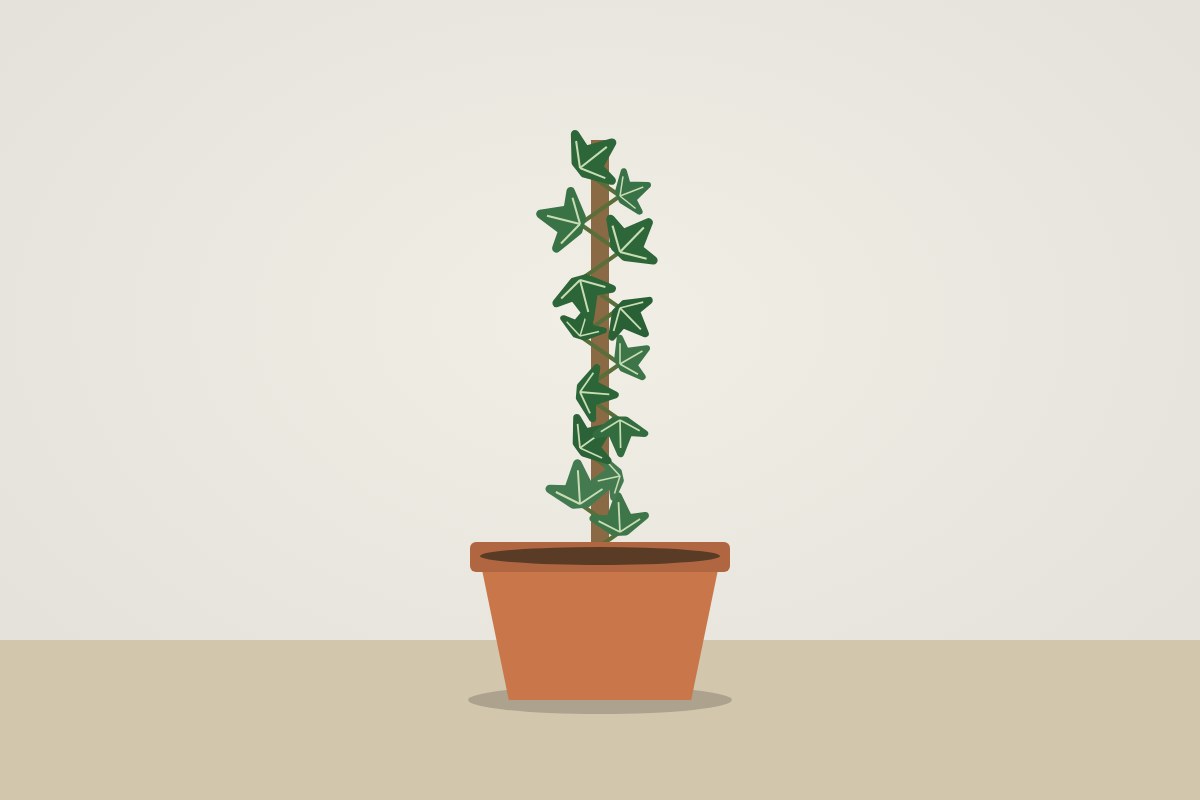
Illustration 3. On a support, ivy turns into a green column.
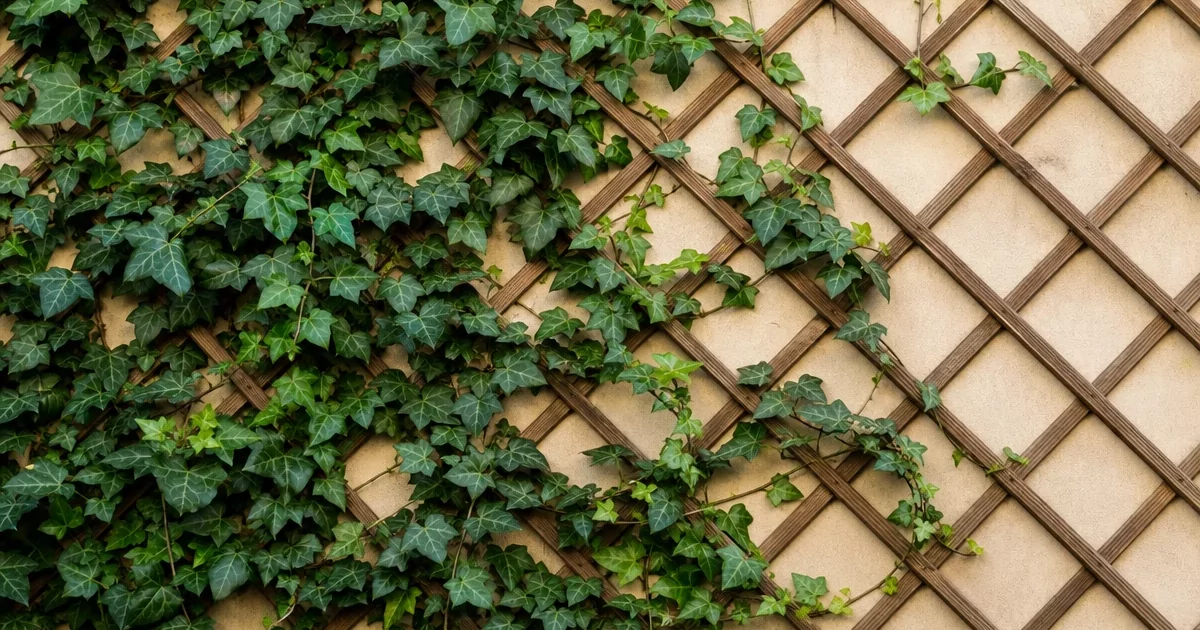
Ivy clings to rough surfaces with its aerial rootlets, so it is easy to train.
Ivy naturally sends out a few long trails while the base goes bare. To keep it bushy:
From March to September apply a liquid balanced foliage-plant fertiliser every 2 weeks at the label dose — half strength for variegated cultivars, as extra nitrogen greens out the pattern. Only feed moist soil to avoid burning the roots. Taper off in autumn and do not feed at all in a cool winter. Signs of hunger are small pale leaves and slow spring growth; signs of excess are white salt crust on the soil and brown tips. Organic options: natural fertilisers for houseplants.
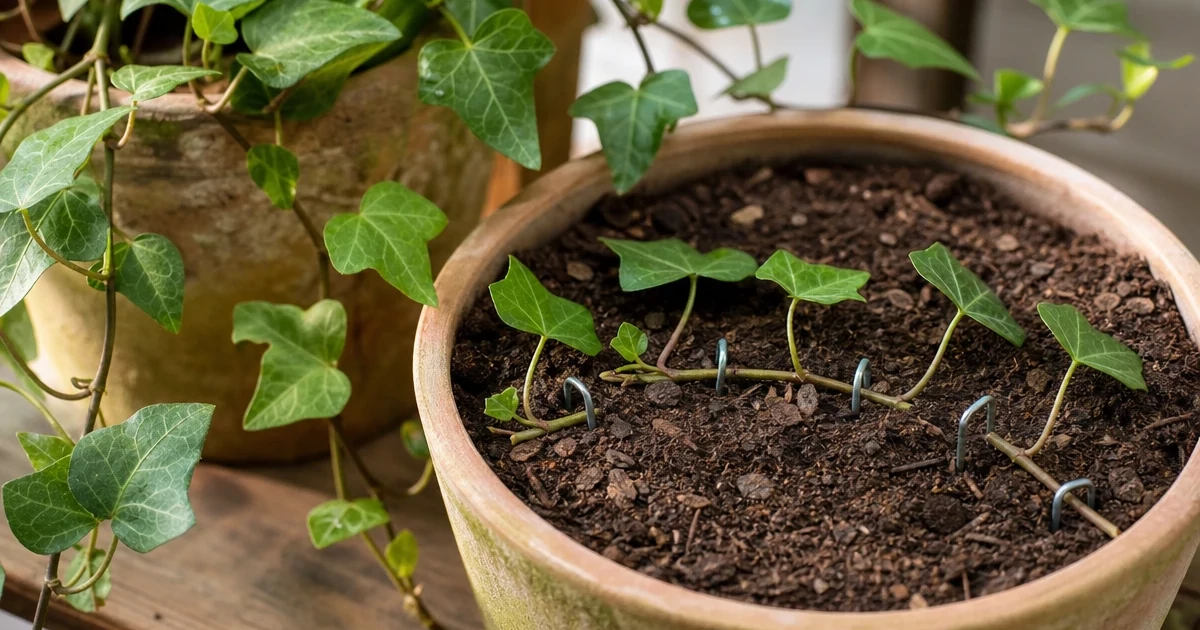
Even simpler, pin a stem to the soil in a neighbouring pot: it will root while still attached to the parent plant.
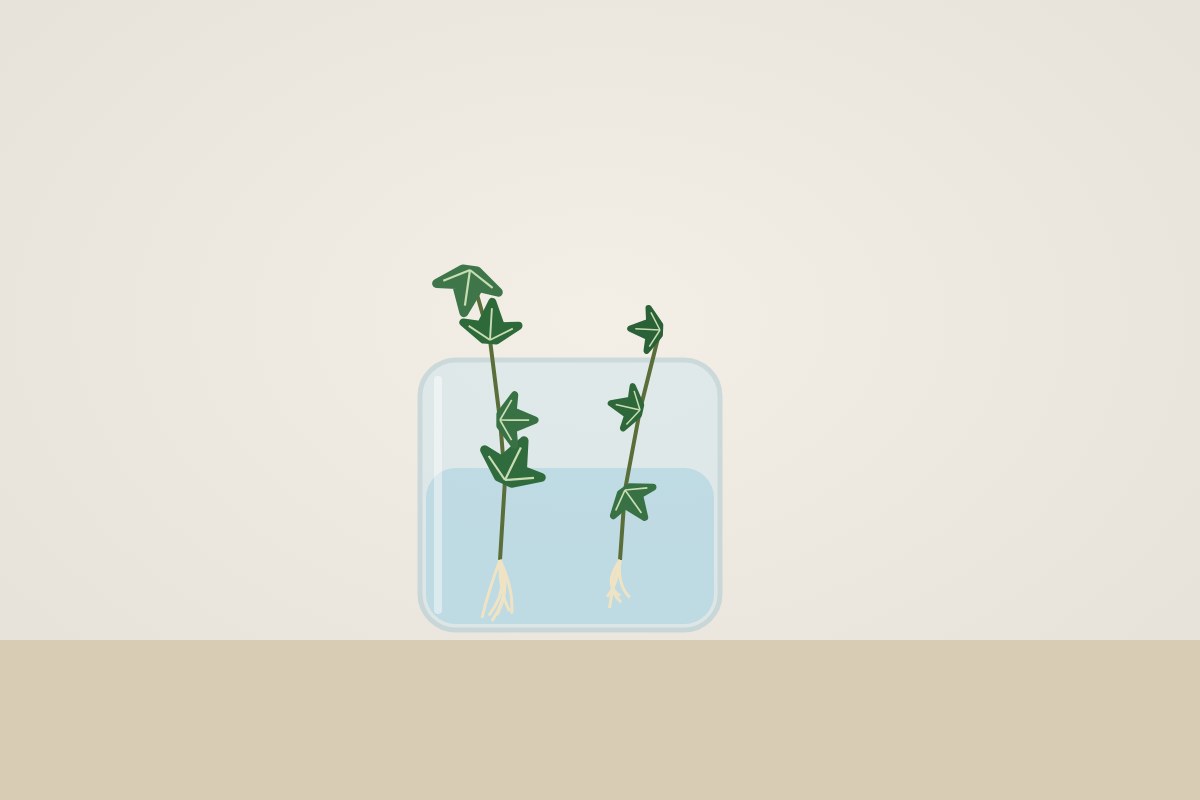
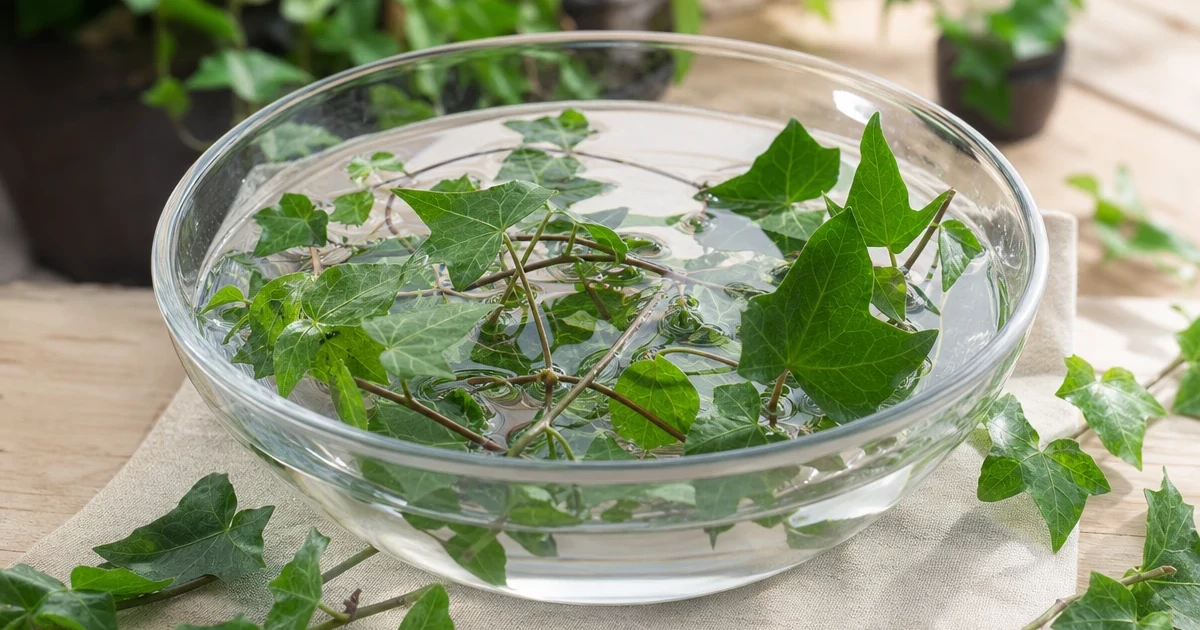
Illustration 4. Ivy roots in water almost without fail.
Besides cuttings, ivy is easy to layer: lay a long stem across a neighbouring pot of moist soil, pin the nodes down and cover them lightly. In 2–3 weeks roots form at the nodes and you can cut the stem from the parent. One stem can yield several plants if you cut it between rooted nodes.
Tip cuttings 10–15 cm long with aerial roots can go straight into water, or plant 3–5 together in a pot for an instantly full look. Spring and summer are best; at 18–22 °C roots appear in 1–3 weeks.
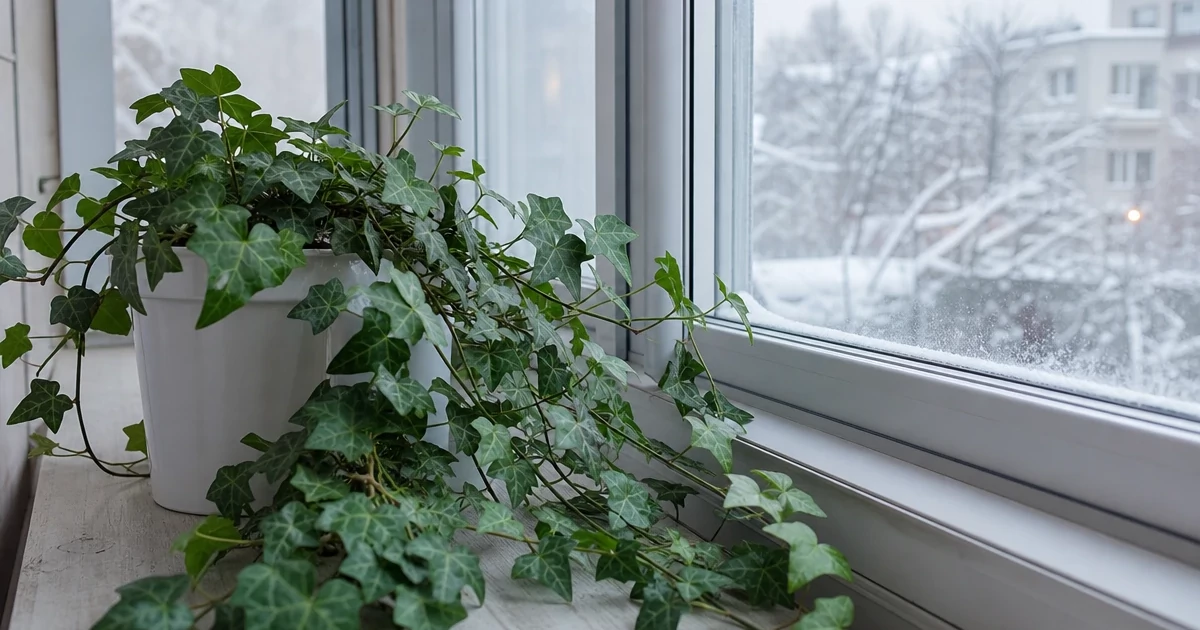
The ideal winter spot for ivy is a bright, cool room at 12–16 °C: an insulated glazed balcony, a cooler bedroom or a windowsill screened from the radiator. There the plant rests, stems do not stretch and mites barely breed. Water rarely — every 10–14 days — do not feed, and ventilate on sunny days without letting frosty air hit the leaves. If you cannot keep it cool, make up for the warmth with humidity: a humidifier, a tray of wet pebbles and a warm shower every 2 weeks. More: houseplant care in the heating season.
More general advice: common houseplant care mistakes.
In water. Ivy stems will live for months in a vase of water — easy decor for a kitchen or shelf. Change the water weekly and add a drop of fertiliser once a month.
In terrariums. Small-leaved cultivars (Eva, Needlepoint) suit open terrariums and moss arrangements; in closed glass containers ivy quickly outgrows the space and needs regular trimming.
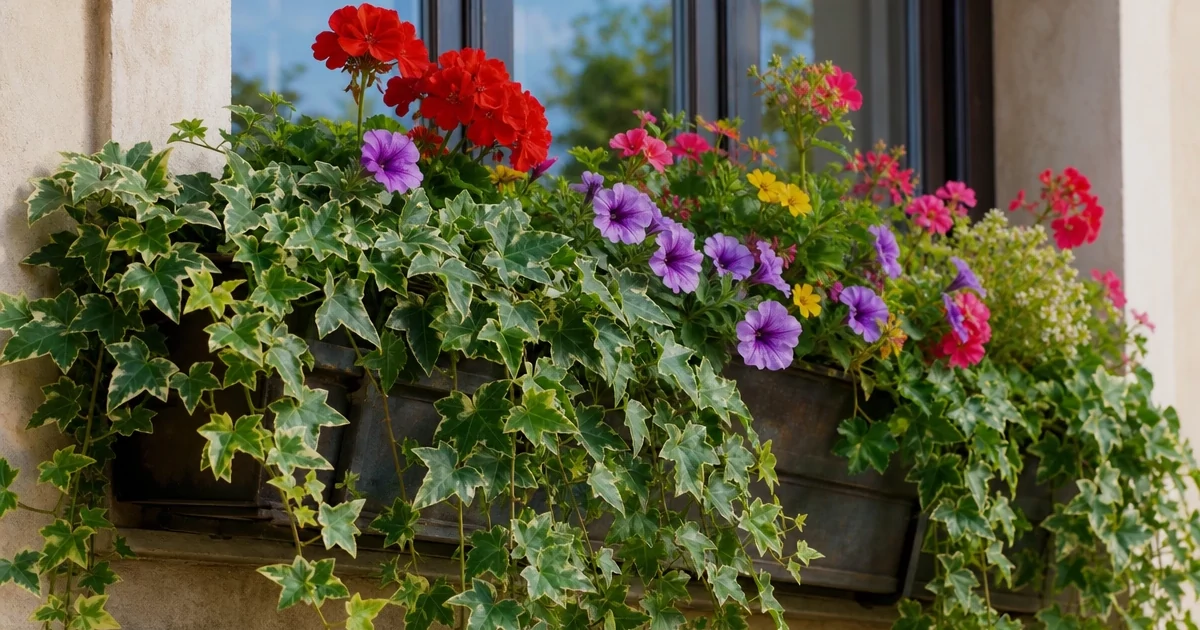
On a balcony. In summer ivy thrives on a shaded balcony or terrace, trailing from window boxes alongside annuals. In autumn, before frost, check it for pests and bring it back indoors after a 2-week quarantine.
Ivy is a versatile “filler”: its trails cover the soil and the rim of large pots with a rubber plant, palms or dracaena, provided they do not need frequent watering. It pairs well with ferns such as the Boston fern, spider plants and fittonia, which all enjoy similar humidity. Do not plant it with succulents, which need a completely different watering routine.
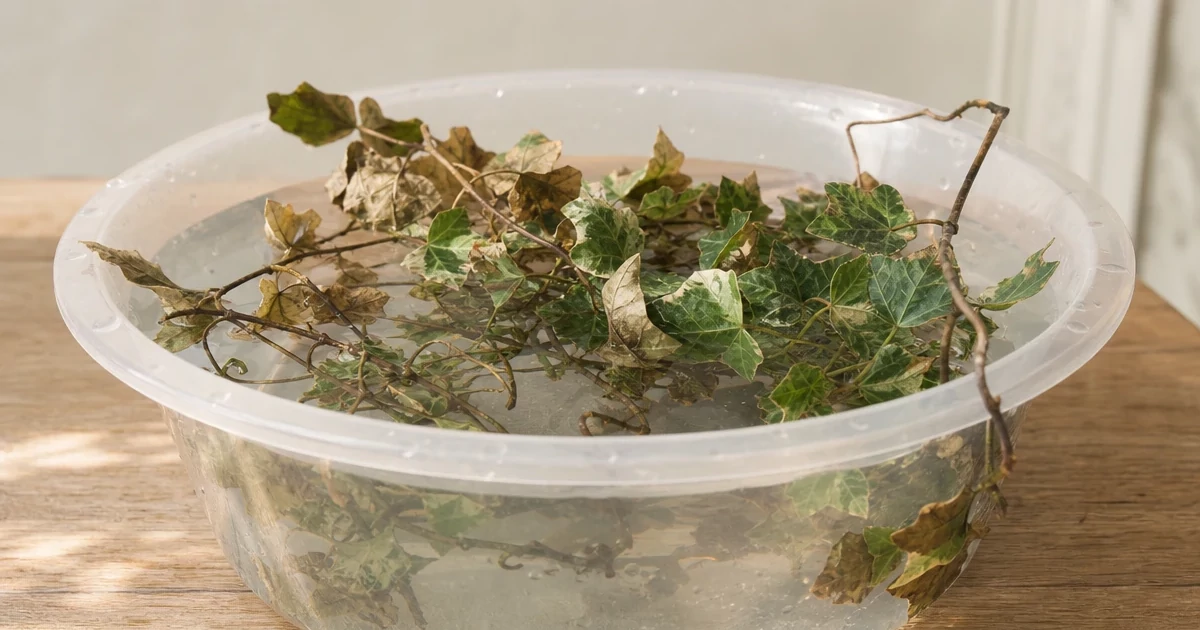
If your ivy has dried out and dropped most of its leaves, do not throw it away yet.
If the soil is wet and stems are soft at the base, the cause is rot: unpot it, trim dark roots and root the healthy tips as cuttings.
| Symptom | Cause | What to do |
|---|---|---|
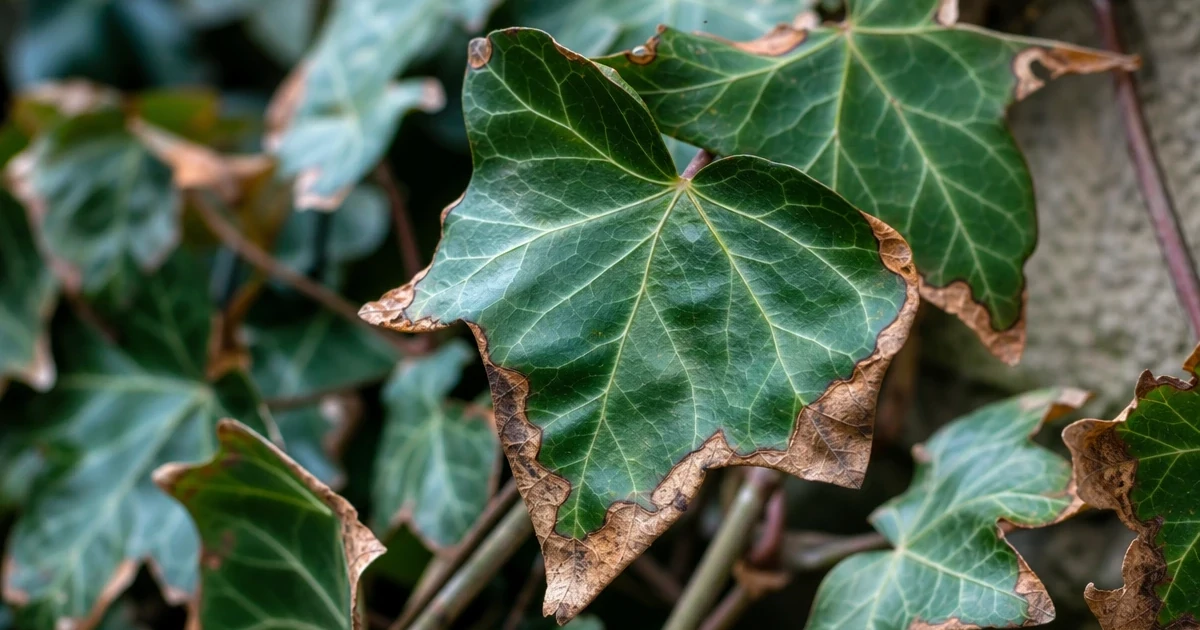
| Leaves dry and brown from the edges | Hot dry air, nearby radiator | Move somewhere cooler, humidifier, shower |
| Lower leaves yellow and drop | Overwatering or cold wet soil | Let it dry, water less, check drainage |
| Variegated leaves turn green | Too little light | Move closer to a window |
| Long bare stems | Low light, warm winter | Prune, move somewhere brighter and cooler |
| Leaves getting smaller | Cramped pot, tired soil | Repot, resume feeding |
| Pale specks, webbing | Spider mites | Shower, miticide, raise humidity |
For a wider symptom guide see houseplant problems.
The main threat is spider mites: in a warm, dry flat ivy is one of the first plants they attack. Scale, aphids on young tips and thrips also appear. Prevention is simple: cool conditions, humidity above 50 %, a warm shower every 2–3 weeks and a weekly look under the leaves. Dense trails are easy to dunk in a bath of warm water for a few seconds.
Botanically it is the same English ivy, but compact, small-leaved and variegated cultivars are chosen for indoors, while the hardiest green forms go into gardens. Garden ivy in Ukraine covers shady walls and fences, survives frost and produces enormous lengths of stem. An indoor cultivar can be planted out if hardened off gradually in spring and given a sheltered shady spot; variegated forms are less hardy and need winter protection. Conversely, a garden cutting rooted in a pot grows well indoors, it just stretches faster.
Eastern European folklore calls ivy a plant that “drives men away”; there is no basis for it, and the same is said of most vines. Elsewhere ivy symbolises fidelity and long life and was woven into wedding wreaths. The only real limits are practical: the leaves are toxic to pets and children, so keep the pot up high.
English ivy often appears on “air-purifying plant” lists following NASA’s well-known 1989 study, which was carried out in sealed chambers. In an ordinary ventilated home a few pots make a negligible difference to air quality — ventilation matters far more. Grow ivy for its looks, not as a substitute for an air purifier.
| Months | Watering and feeding | Tasks |
|---|---|---|
| March–May | Water every 5–7 days, feed every 2 weeks | Pruning, repotting, cuttings |
| June–August | Water more, mist, feed | Shaded balcony, showers, check for mites |
| September–October | Water less, last feed | Bring indoors, quarantine |
| November–February | Water every 10–14 days, no feeding | Cool 12–16 °C, away from radiators |
Ivy cascades brighten a Scandi kitchen, study bookshelves and a bathroom with a window. Small-leaved cultivars suit ceramic pots on a windowsill, while large Canary ivies look best in hanging pots by tall windows. Choose plain green forms for a minimalist interior and variegated Glacier or Goldchild for a classic one. Ivy on a slim wooden trellis can even act as a room divider.
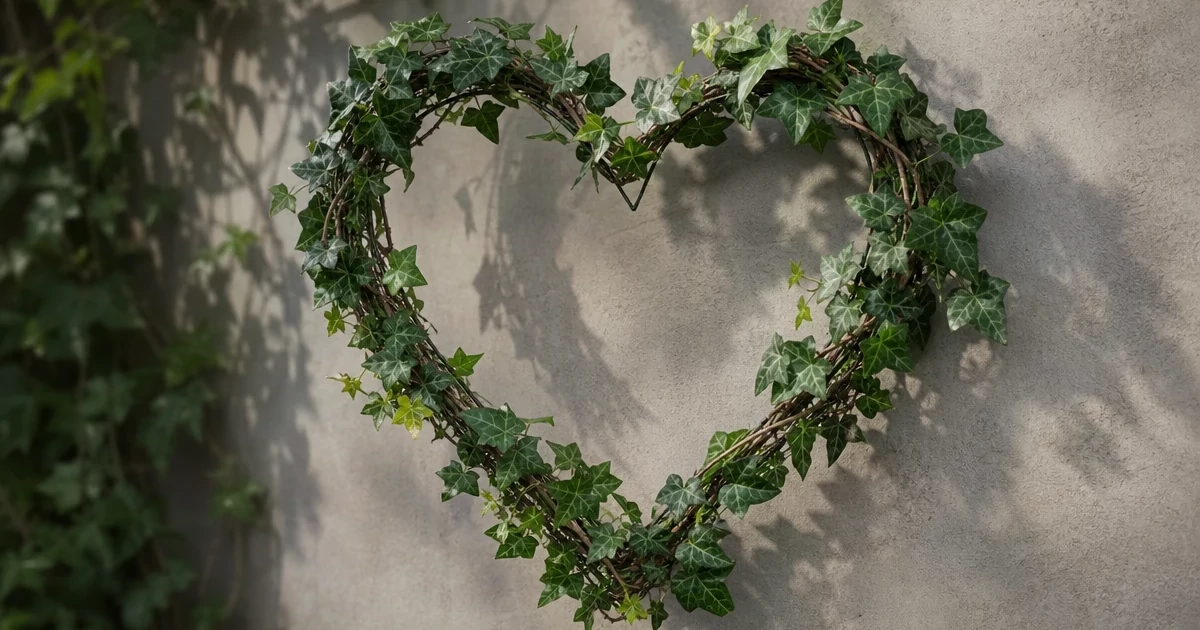
Ivy is an inexpensive, rewarding gift for a cool flat or office; variegated cultivars in a hanging pot look festive. Ivy trails are also used in bouquets and winter arrangements, and a pot with a heart-shaped topiary makes an original present. See more trailing plants and other houseplants.
In short. Indirect light, moderate watering, a cool winter and a regular shower, and ivy will turn any shelf into a green cascade.
Green cultivars grow in partial shade; variegated ones need bright indirect light. Midday sun scorches the leaves.
In summer when the top 1–2 cm is dry, roughly every 5–7 days; in a cool room in winter, every 10–14 days.
Yes, a cool bedroom suits it. Just keep the leaves out of reach of children and pets.
Yes: English ivy is Hedera helix, the common ivy sold as hedera.
Heat and dry air from radiators plus low light. Move it to a cooler, brighter room and raise humidity.
English ivy is hardy and grows outdoors in Ukraine in shade. Plant out in spring after hardening off; give variegated cultivars a sheltered spot.
With good care, for decades. Old plants are rejuvenated by pruning and rooting cuttings.
Usually heat and dry air, too little light or exhausted soil. Repot in spring and start feeding.
Yes, ivy enjoys misting, especially in the heating season. Use settled room-temperature water.
Almost never: only the adult form with entire leaves flowers, and it develops on tall supports outdoors. Indoor plants stay in the juvenile climbing stage.
Not necessarily. Without one it trails from a pot or shelf; with one it climbs into a green column or arch.
They are its natural climbing anchors. On a moist support they help the plant grip and take up moisture; indoors you can leave them.
Yes, ivy mix is a popular combination. Make sure fast growers do not smother slow ones and trim the most vigorous stems.
At 18–22 °C, 1–3 weeks in water or moist mix. Cuttings that already have aerial roots root fastest.
A soft damp sponge or a warm shower. Leaf shine products are unnecessary and clog the pores.

Author: Maria Svitlovir
Graduated from Taras Shevchenko National University of Kyiv, Institute of Biology and Medicine (2001). BSc in Biology, MSc in Horticulture. Writes about plants, works at a garden centre selecting and repotting plants, and contributes to plant reference guides.
© Kyiv 2026 UFL Flower Shop

Trademark UFL №191476 is used under license of the rights holder.
All rights reserved. Any use of materials without a link to the site is prohibited.


 Birthday
 Hydrangeas