
 Birthday
 Hydrangeas
For the Japanese, flowers are not just decoration but a language, a philosophy and part of the calendar. In spring the whole country goes out to admire cherry blossom, in autumn chrysanthemums and maples, and bouquets are chosen with each flower’s meaning in mind. Here are Japan’s main flower traditions and the rules worth knowing if you give flowers to Japanese friends.
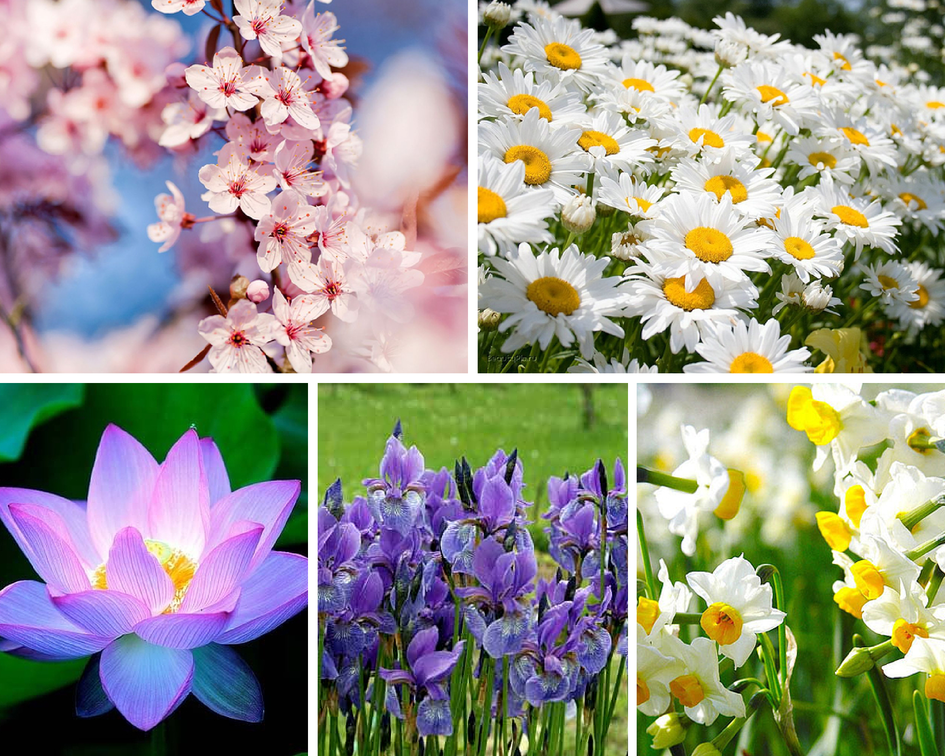
Hanakotoba — the language of flowers
Japan has its own system of flower meanings, hanakotoba. It shapes bouquets and ikebana, the choice of greeting cards and even kimono patterns. Ikebana — the art of arrangement, where line, empty space and seasonality matter — has been developing in Japan for more than 500 years.
Chrysanthemum and sakura
Japan has no official national flower, but two are regarded as national symbols. The chrysanthemum is the emblem of the imperial family: a 16-petal chrysanthemum appears on the imperial seal and the cover of the Japanese passport, and the Order of the Chrysanthemum is the highest state honour. The chrysanthemum festival, Chōyō no Sekku, falls on 9 September (the ninth day of the ninth month), and in autumn many cities hold chrysanthemum shows, some with kiku-ningyō dolls dressed in living flowers.
Sakura is the people’s symbol of Japan. In spring comes hanami, cherry-blossom viewing: people picnic under the trees and forecasters publish daily bloom updates. The quickly falling petals are a reminder of life’s transience.
Ashikaga Flower Park
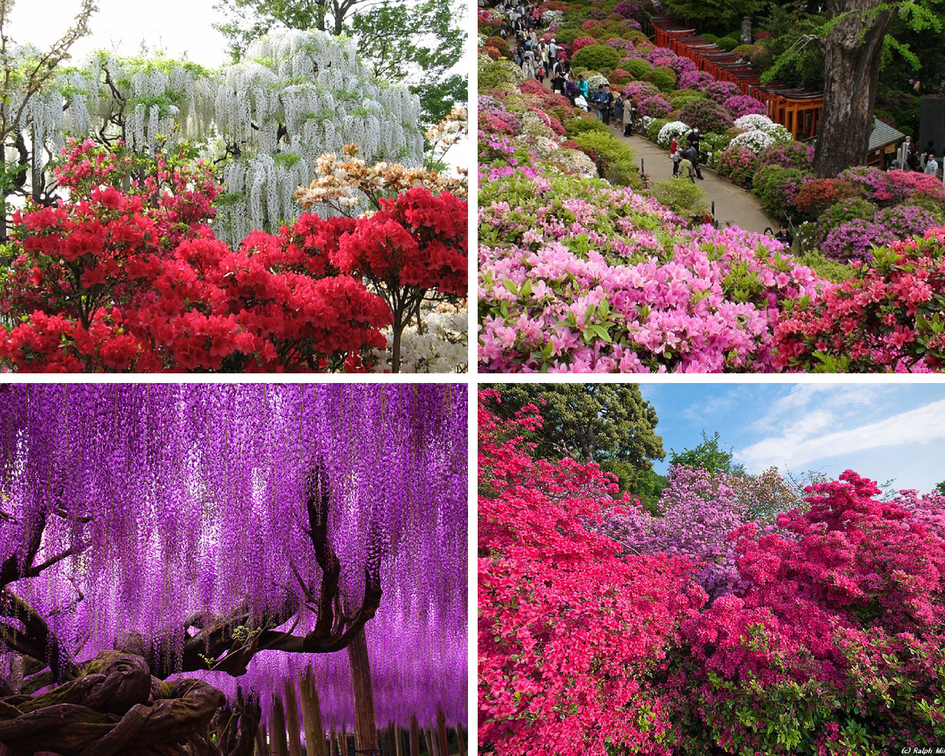
Ashikaga Flower Park in Tochigi Prefecture on Honshu is famous for its wisteria. The oldest vine is over 150 years old; its branches are supported on trellises, forming an enormous flowering canopy. The best time to visit is late April to mid-May, and the park also has tulips, azaleas, roses, hydrangeas and irises, plus one of Japan’s largest winter illuminations.
Flowers at a Japanese wedding
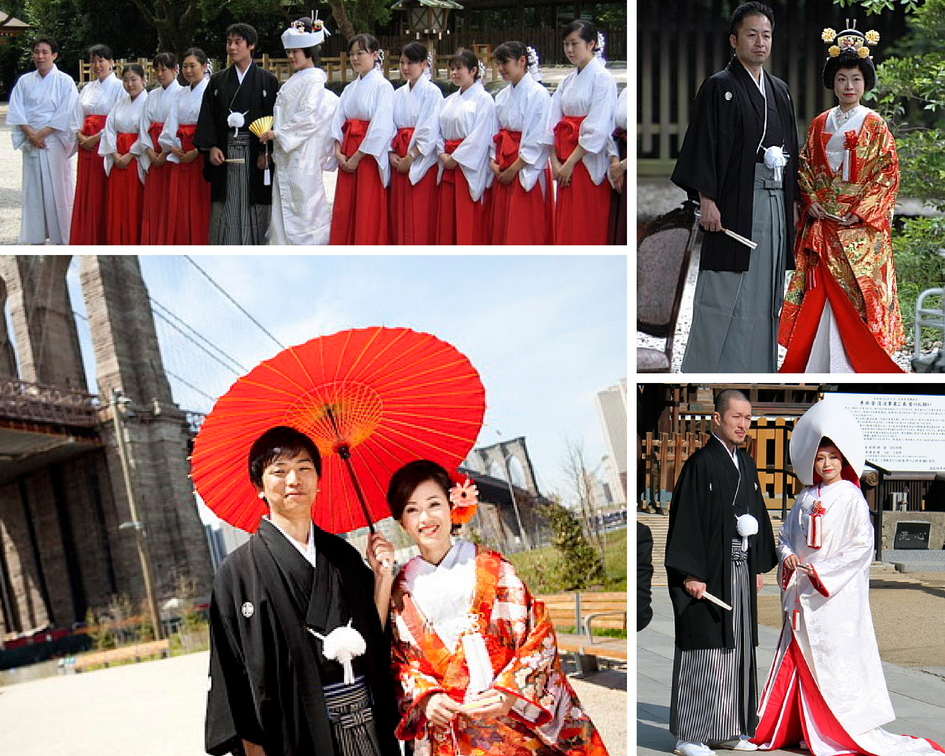
At a traditional Shinto wedding the bride wears a white shiromuku kimono and a tsunokakushi headdress, said to “hide the horns of jealousy”. For the reception she often changes into a colourful kimono, and modern Japanese bridal bouquets happily feature roses, orchids and seasonal flowers.
Flowers and mourning
Japanese funerals usually follow Buddhist rites, and the main mourning flower is the white chrysanthemum. Mourners place flowers in the coffin as they say goodbye. That is why white chrysanthemums and lilies are not given on happy occasions.
Flower etiquette: what not to give
- White chrysanthemums and lilies — funeral flowers.
- Potted plants to someone in hospital — roots suggest the patient will “take root” there.
- 4 or 9 flowers — the numbers sound like the words for “death” and “suffering”.
- Red camellias — their heads drop off whole, which samurai associated with death.
Read about the red spider lily, linked with autumn and remembering ancestors, in higanbana, the flower of autumn.
FAQ
What is Japan’s national flower?
There is no official one: the chrysanthemum (imperial emblem) and sakura (popular symbol) are both regarded as national flowers.
What is hanami?
The spring tradition of viewing cherry blossom, often with picnics under the trees.
Which flowers shouldn’t you give in Japan?
White chrysanthemums and lilies, potted plants to hospital patients, and bouquets of 4 or 9 flowers.
Chrysanthemums for a festive bouquet are available in chrysanthemum delivery in Kyiv.

View full-size photo
Author: Maria Svitlovir
Graduated from Taras Shevchenko National University of Kyiv, Institute of Biology and Medicine (2001). BSc in Biology, MSc in Horticulture. Writes about plants, works at a garden centre selecting and repotting plants, and contributes to plant reference guides.


