UFL logo

Popular Bouquet Flowers: What People Give Most Often

ID:
634
Total views:
16398
Category:
Published:
Updated:


Which flowers do people give most often? To answer with data rather than guesses, we analysed the recipes of more than 4,500 bouquets and arrangements that have appeared in the UFL catalogue over the years. The result is only partly predictable: roses lead by a wide margin, but chrysanthemums, lisianthus and gerberas outrank many glamorous rivals. Below is a ranking of popular bouquet flowers, why people choose them and what is given for different occasions.

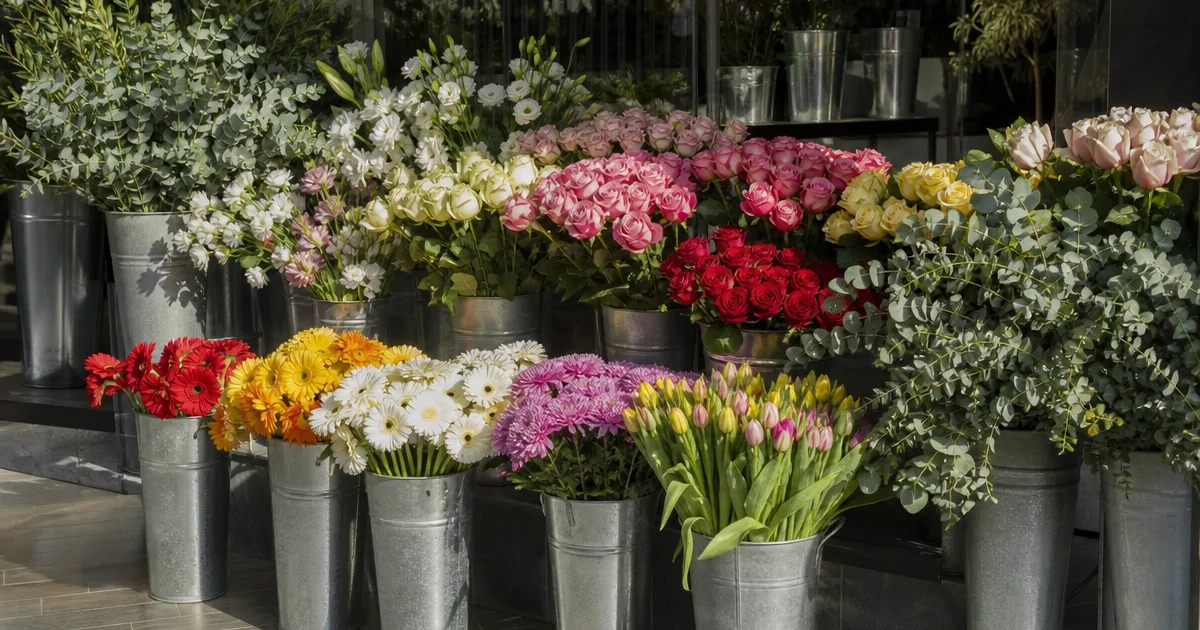
Buckets of flowers in a flower shop
View full-size photo

Ranking of Popular Bouquet Flowers

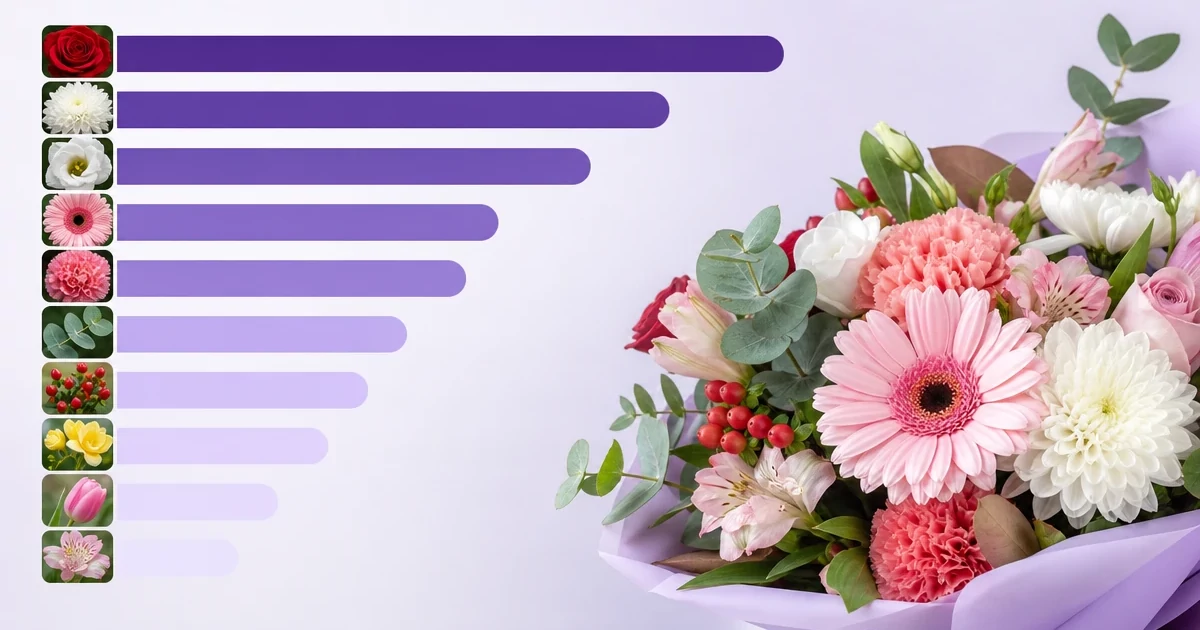
Here is how often different flowers appear in bouquets in our catalogue:

  1. Roses — in almost half of all bouquets; every second one is a spray rose.
  2. Chrysanthemums — in roughly one bouquet in seven.
  3. Lisianthus — roughly one in nine.
  4. Gerberas — one in twelve.
  5. Carnations — as often as gerberas.
  6. Eucalyptus — the most popular foliage.
  7. Hypericum — a berry accent.
  8. Freesias — fragrant spring flowers.
  9. Tulips — the spring leaders.
  10. Alstroemerias — hardy and bright.
  11. Orchids — for elegant arrangements.
  12. Hydrangeas — lush heads for big bouquets.
  13. Calla lilies — elegant single-variety bouquets.
  14. Gypsophila — a light, airy filler.
  15. Statice — a bright dried flower.

Ranking of popular flowers in UFL bouquets
View full-size photo

Why Roses Stay Number One

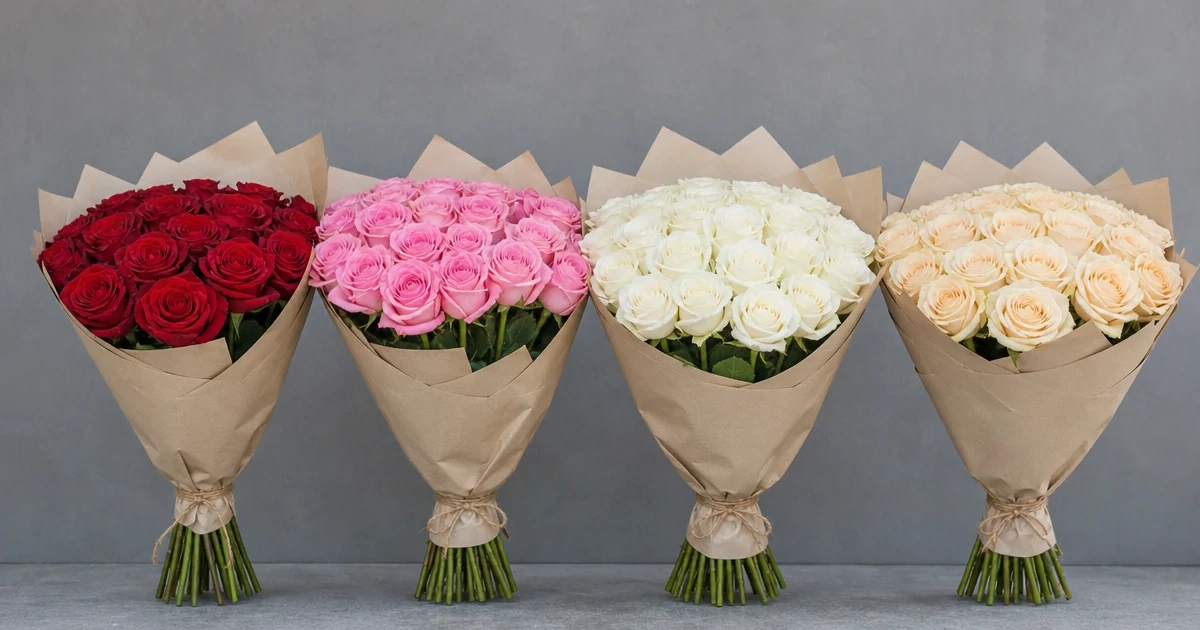
The rose is universal: any colour, size and price, appropriate for any occasion from a date to a jubilee. It combines well with other flowers, lasts long and everyone understands it. The most popular colours are red, pink, white and cream. Colour meanings are in what rose colours mean, and the varieties most often used in bouquets are in rose varieties for bouquets.

Bouquets of red, pink, white and cream roses
View full-size photo

What People Give Most Often by Occasion

  • Birthday — roses, mixes with lisianthus, hydrangea and hypericum.
  • For a partner — red and pink roses, garden roses, roses in a box.
  • For mothers and grandmothers — chrysanthemums, cream roses, alstroemerias, callas.
  • For colleagues and bosses — restrained single-variety bouquets, gerberas, chrysanthemums.
  • For teachers — chrysanthemums, asters, gerberas, pale roses.
  • 8 March — tulips, freesias, mimosa.
  • For men — callas, anthuriums, dark roses, chrysanthemums.

Popular Flowers by Season

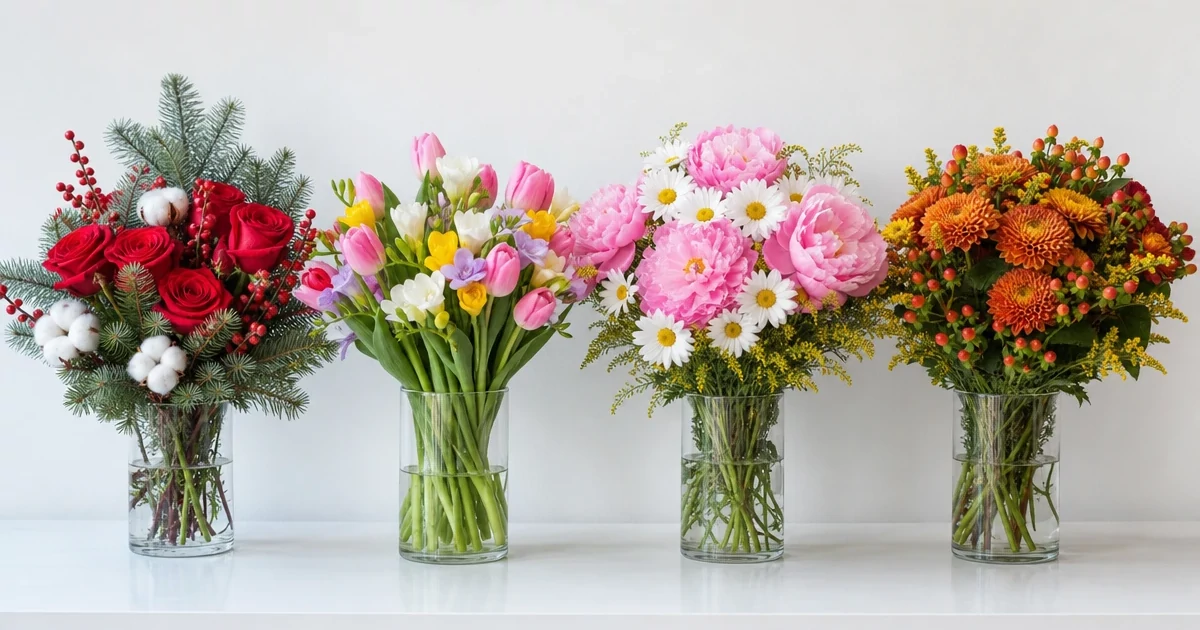
  • Winter — roses, chrysanthemums, carnations, orchids, fir branches, amaryllis.
  • Spring — tulips, freesias, daffodils, ranunculus, mimosa, lilac.
  • Summer — peonies, hydrangeas, sunflowers, daisies, lisianthus.
  • Autumn — chrysanthemums, asters, dahlias, hypericum, berry branches.

A detailed calendar is in seasonal flowers by month.

Seasonal bouquets: winter, spring, summer and autumn
View full-size photo

Popular Bouquet Formats

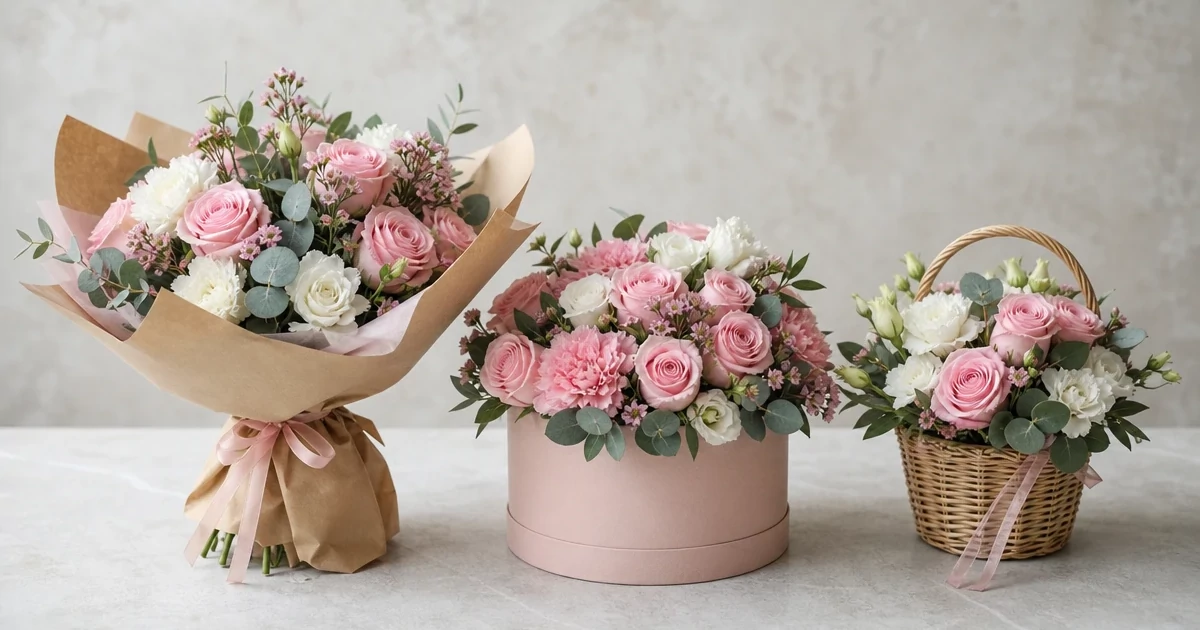
  • A classic paper-wrapped bouquet — the most common format.
  • Flowers in a box — no vase needed, easy to deliver.
  • Single-variety bouquet — usually roses or tulips.
  • Basket — for milestone birthdays and big celebrations.
  • Bouquet with foliage and dried flowers — eucalyptus, ruscus and statice add a natural look.

Bouquet, flower box and basket
View full-size photo

How to Choose When You Do Not Know Their Taste

If you do not know what flowers someone likes, choose proven options from the top of the ranking in a pastel palette: roses with lisianthus or chrysanthemums with alstroemerias. Such bouquets are neutral, long-lasting and suit almost anyone. Names of flowers and foliage used in bouquets are collected in flowers and greenery for bouquets.

FAQ

Which flowers are most popular in bouquets?

Roses, in almost half of all bouquets, followed by chrysanthemums, lisianthus, gerberas and carnations.

What flowers should I give if I do not know their taste?

Roses with lisianthus or chrysanthemums with alstroemerias in a pastel palette.

Which flowers are popular in spring?

Tulips, freesias, daffodils, ranunculus and mimosa.

Author: Maria Svitlovir

Graduated from Taras Shevchenko National University of Kyiv, Institute of Biology and Medicine (2001). BSc in Biology, MSc in Horticulture. Writes about plants, works at a garden centre selecting and repotting plants, and contributes to plant reference guides.